
The top 10 generals who shaped WWI
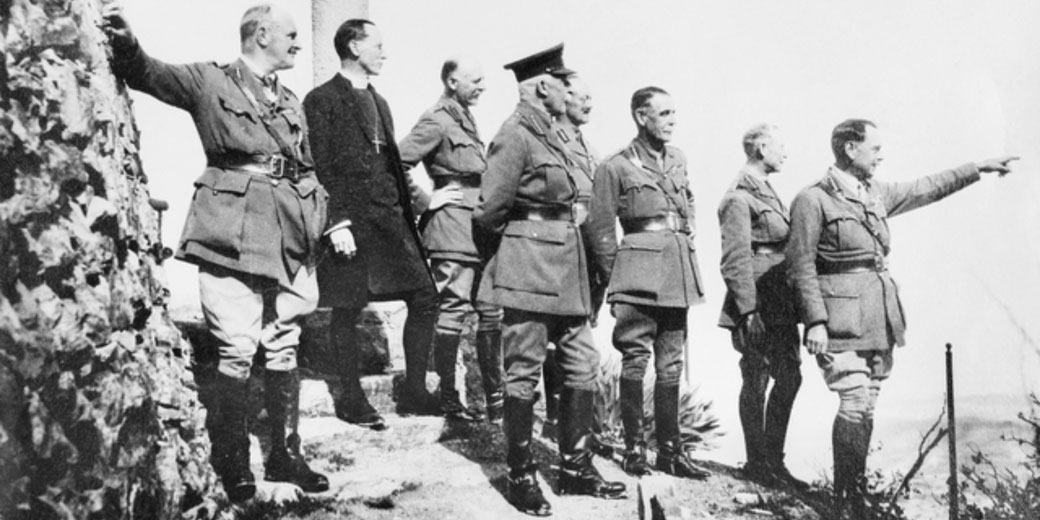
During the First World War, as artillery shattered towns and machine guns turned open ground into killing fields, generals directed the movement of millions from behind trench lines and command centres.
Their choices often determined the timing of offensives, the scale of casualties, and the fate of entire armies across France, Russia, the Balkans, and the Middle East.
While political leaders declared war and diplomats negotiated peace, it was generals like Foch and Ludendorff, as well as figures such as Haig, who fought to break the deadlock of modern industrial war and learned, often too late, what tactics no longer worked.
1. Ferdinand Foch
Born in 1851 in the French town of Tarbes, Ferdinand Foch joined the army as a young man and served in the Franco-Prussian War, where he witnessed the humiliation of French defeat.
Over the next four decades, he had generally studied military theory with great focus and had risen through the ranks, and, in the process, he had developed a reputation for intellectual discipline and offensive doctrine.
At the outbreak of war in August 1914, Foch commanded the French Ninth Army and took part in the First Battle of the Marne, where his contribution to the overall counteroffensive helped halt the German advance just short of Paris and force a general retreat across the Aisne.
Soon after, he continued to lead French forces in key battles, and he generally maintained coordination despite heavy casualties and supply strain.
By 26 March 1918, after the launch of Germany’s Spring Offensive, which involved over one million troops, the Allied governments placed him in overall command as Supreme Commander of the Allied Armies.
From this position, he directed a series of coordinated counteroffensives that began at the Second Battle of the Marne and then continued across the Somme and Flanders and eventually drove German forces back along the Western Front.
As a result, Foch arguably played a central role in the effort to break the stalemate that had dominated the war for years, and his insistence on unity of command helped prevent division between the Allies during their final push toward victory.
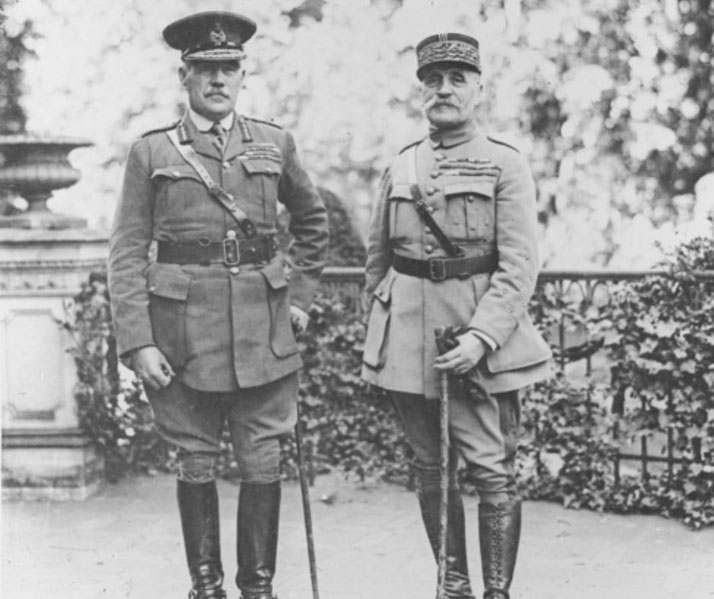
2. Erich Ludendorff
Erich Ludendorff made his name during the war’s earliest days, when he led the assault on the Belgian fortress of Liège and helped crush the Russian Second Army at Tannenberg in August 1914.
That success made the Kaiser notice him and led to his promotion to deputy chief of staff under Paul von Hindenburg.
Together, they oversaw much of the German war effort on the Eastern Front and soon became some of the leading figures within the German military command structure.
By 1916, Ludendorff had come to manage military operations, war production, propaganda, and even domestic policy.
He created a command system that historians have often described as a “silent dictatorship,” in which he issued orders without consulting the civilian government.
In March 1918, he launched the Kaiserschlacht, or Spring Offensive, as he used stormtrooper tactics and surprise attacks to exploit gaps in Allied lines.
The campaign included multiple operations such as Michael, Georgette, Gneisenau, and Blücher-Yorck.
Initially, his troops advanced rapidly, and they captured large areas of territory, though at the cost of an estimated 540,000 to 600,000 casualties.
However, the gains lacked strategic depth, and supply lines could not keep pace. As Allied counterattacks gathered strength by July, Ludendorff’s forces struggled to hold their ground.
By October, as morale collapsed and the front fell apart, he resigned his position.
Afterward, he supported nationalist movements and promoted the false claim that Germany had been “stabbed in the back” by traitors at home, a story that he spread through speeches and publications after 1919, which distorted the truth but influenced later political developments.

3. John J. Pershing
John J. Pershing was born in 1860 in Missouri and had already served in Cuba and the Philippines and along the Mexican border before he took command of the American Expeditionary Forces in 1917.
After arriving in France, he resisted British and French pressure to feed American soldiers directly into depleted Allied units.
Instead, he insisted that U.S. forces fight as a distinct and independent army, though he allowed limited temporary assignments that helped troops gain combat experience.
Initially, his troops lacked battle readiness and required months of training and supply preparation.
Still, by mid-1918, American divisions had taken part in major operations at Cantigny and Belleau Wood.
Then, in September, Pershing led over half a million men in the St. Mihiel Offensive, which cleared a German-held salient and allowed for a coordinated attack in the Meuse-Argonne sector.
Over forty-seven days, American troops pushed through dense forest and entrenched positions under artillery bombardments in what became, by most measures, the largest U.S. operation of the war.
The fighting resulted in over 26,000 American dead. By the end of the war, approximately 2 million American soldiers had deployed to France.
While his tactics sometimes prioritised speed over caution, Pershing’s determination to field an independent American army altered the balance of the Western Front and helped confirm the United States as a rising global power.
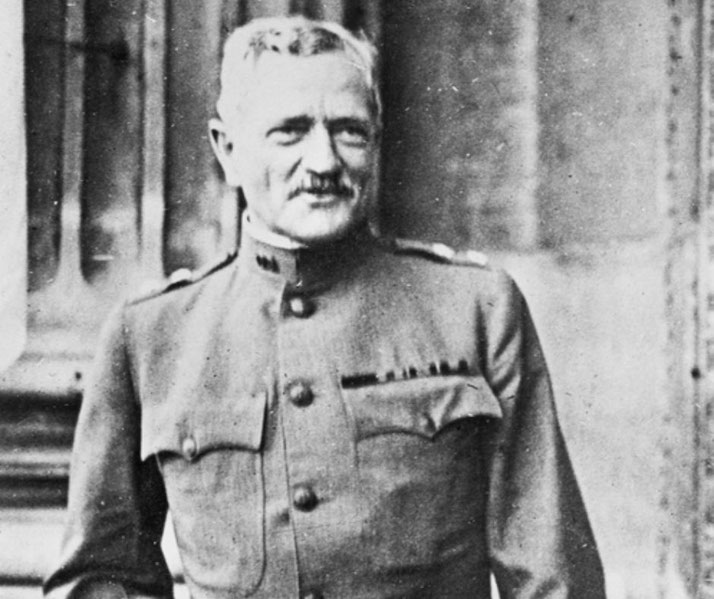
4. Douglas Haig
Douglas Haig took command of the British Expeditionary Force in December 1915, and remained in that role until the war’s end.
Trained at Sandhurst and a veteran of colonial campaigns, Haig brought to the Western Front a firm belief in aggressive warfare and high morale.
In July 1916, he ordered the launch of the Somme offensive to relieve pressure on the French at Verdun and weaken German forces by attrition.
The first day resulted in more than 57,000 British casualties, and the campaign as a whole caused over one million casualties across all sides.
Yet Haig persisted, arguing that German reserves were being drained and that, over time, the combined effect would eventually lead to a breakthrough.
Throughout 1917, he approved further offensives in Flanders, which culminated in the Battle of Passchendaele, which lasted from 31 July to 10 November, though some actions continued until later in the month.
Mud combined with relentless artillery fire and constant counterattacks turned the battlefield into a muddy wasteland, but Haig remained convinced of the need to maintain pressure.
By 1918, the arrival of American troops and the appointment of Foch as Allied commander had shifted the balance.
Haig coordinated closely with both, operating under Foch’s overall authority, and during the Hundred Days Offensive, British forces under his command drove the Germans out of key positions in Amiens and Arras, along with the sector around Cambrai.
At Amiens, in a battle that began on 8 August 1918, Ludendorff described the Allied breakthrough as "the black day of the German Army."
While later historians criticised his inflexibility, others noted that under his leadership, the BEF arguably became the most effective fighting force on the Western Front.
5. Paul von Hindenburg
Paul von Hindenburg had retired before the war, but returned to active duty in August 1914 to take command in East Prussia.
Alongside Ludendorff, he defeated the Russian Second Army at Tannenberg, where he used rail mobility and intercepted messages to encircle and destroy the enemy.
That victory cost the Russians approximately 30,000 killed or wounded and 50,000 captured, and it helped make Hindenburg a national icon.
By 1916, he had replaced Falkenhayn as Chief of the General Staff, which gave him responsibility for the entire German war effort.
While Ludendorff directed most operational details, Hindenburg offered stability and status.
Under his leadership, the German army fortified the Western Front with the Hindenburg Line and adopted unrestricted submarine warfare, and he also supported a war economy that the government controlled more tightly.
Construction of the Hindenburg Line began in late 1916 and was completed in early 1917 as a strategic fallback position.
As the Allied offensives advanced in 1918, Hindenburg acknowledged privately that the war could no longer be won.
On 9 November, he advised the Kaiser to abdicate. After the war, he remained a widely respected figure and was elected President of the Weimar Republic in 1925.
His final political act, which was the appointment of Hitler as Chancellor in 1933, overshadowed his record as a military commander, but did not erase his importance during the war.
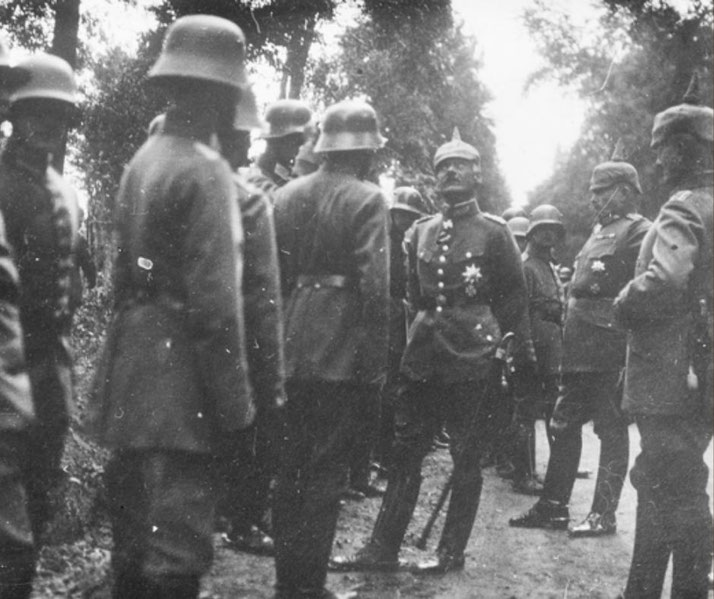
6. Luigi Cadorna
Luigi Cadorna entered the First World War as Chief of Staff of the Italian Army and led Italy’s military campaign after it joined the Allies in 1915.
Known for his rigid discipline and belief in offensive tactics, Cadorna launched a series of frontal assaults along the Isonzo River.
From June 1915 to September 1917, he directed eleven battles in the region, but heavy casualties and limited territorial gains eroded both morale and confidence.
Although Cadorna imposed strict punishments, including summary executions and mass disciplinary actions, he failed to adapt his methods to the changing nature of industrial warfare.
In October 1917, the combined German-Austro-Hungarian attack at Caporetto exploited weak Italian positions, used gas and infiltration tactics, and forced a retreat that led to the loss of over 250,000 troops.
Overall, Italian casualties under Cadorna’s command exceeded 600,000. As panic spread, Cadorna shifted blame and evacuated his headquarters, but the Italian government dismissed him days later and replaced him with General Armando Diaz.
His failures in leadership left a bitter legacy, though he later published memoirs defending his command decisions.
7. Alexei Brusilov
Alexei Brusilov, born in 1853 in Georgia, rose to high command within the Russian Imperial Army and stood out for his attention to training, reconnaissance, and tactical innovation.
In June 1916, he launched what became known as the Brusilov Offensive against Austro-Hungarian forces in Galicia.
Unlike previous Russian offensives, he avoided prolonged artillery barrages and used surprise, short bombardments, and dispersed infantry advances along a wide front to prevent the enemy from concentrating reserves.
Initially, his tactics succeeded. Russian troops broke through multiple sectors, captured thousands of prisoners, and inflicted severe losses that crippled Austria-Hungary’s army for the remainder of the war.
Austro-Hungarian casualties reached approximately 1.5 million. The attack also drew German reinforcements from Verdun and encouraged Romania to enter the war on the Allied side.
Yet as the offensive wore on, Russian supply lines faltered, and reinforcements failed to arrive.
By September, momentum had slowed, and the front stabilised once again.
Despite the eventual halt, Brusilov’s methods influenced future doctrines and demonstrated that even a poorly supplied army could achieve success with flexible leadership and sound planning.
After the 1917 Revolution, Brusilov later joined the Red Army and supported the Bolsheviks during the Russian Civil War.
8. Mustafa Kemal Atatürk
Mustafa Kemal was one of the Ottoman Empire’s most capable officers during the Gallipoli Campaign.
Anticipating an Allied landing at Anzac Cove in April 1915, he quickly moved his forces to the ridges above the beach, where his leadership prevented a rapid Allied advance.
At Chunuk Bair and Lone Pine, he maintained defensive cohesion, issued clear orders, and often fought alongside his men, helping to repel repeated assaults by Australian and New Zealand troops.
During the fighting, he famously ordered his troops, "I do not order you to fight, I order you to die."
As the months dragged on, he remained one of the few officers able to maintain discipline, organise counterattacks, and interpret shifting battlefield conditions.
After Gallipoli, he served in the Caucasus and later in Syria, where he again proved effective in defensive operations.
Following the Ottoman defeat and the Allied occupation of Anatolia, he rejected the Treaty of Sèvres and led the nationalist struggle that founded the modern Turkish Republic.
His reputation as a war hero provided both the credibility and the command authority he used to dismantle the Ottoman monarchy and reshape the state.
His leadership during the later Battle of Sakarya in 1921 confirmed his strategic capabilities in the postwar struggle.
9. Joseph Joffre
Joseph Joffre became Chief of the French General Staff shortly before the war and oversaw the implementation of Plan XVII.
That plan, based on rapid offensives into Alsace-Lorraine, collapsed under the weight of Germany’s Schlieffen Plan.
By early September 1914, German forces had reached the Marne River, threatening Paris.
In response, Joffre reorganised the French armies, removed underperforming commanders, and ordered a counterattack during the First Battle of the Marne, fought from 6 to 12 September, that forced the Germans to retreat to the Aisne and dig in.
His calm demeanour, even during periods of extreme stress, earned him public admiration.
Over the next two years, he supported offensives in Champagne and Artois, though none achieved a decisive breakthrough.
To respond more rapidly to German manoeuvres, Joffre developed a flexible railway-based mobilisation system that allowed French reinforcements to be shifted quickly.
As the war of attrition intensified, criticism grew, especially during the prolonged carnage at Verdun, which resulted in approximately 377,000 French casualties.
In December 1916, he was replaced by General Nivelle, but Parliament created the new rank of Marshal of France in his honour.
Afterward, he played a minor diplomatic role and retired quietly, remembered as the general who had steadied France in its most perilous hour.
10. Arthur Currie
Arthur Currie, born in 1875 in Ontario, began the war as a militia officer and rose quickly through the Canadian Corps.
At the Battle of Vimy Ridge in April 1917, he demonstrated his approach to warfare: meticulous planning, extensive training, and tight coordination between artillery and infantry.
His troops captured the ridge in four days, from 9 to 12 April, using maps, rehearsals, and a creeping barrage that shielded their advance while disorienting German defenders.
The victory came at a cost of approximately 10,600 Canadian casualties.
Currie continued to apply the same methods at Hill 70, Passchendaele, and in the Hundred Days Offensive.
At each stage, he challenged overambitious plans from British superiors and insisted on adjustments to reduce unnecessary losses.
His corps earned a reputation for success under difficult conditions, often seizing objectives that others had failed to take.
After the war, he returned to Canada and became Principal of McGill University.
His leadership helped establish Canada’s military reputation abroad and reinforced national confidence at home, as a country that had proven its capability and sacrifice on the global stage.