
The Battle of Belleau Wood and America’s baptism of fire in WWI
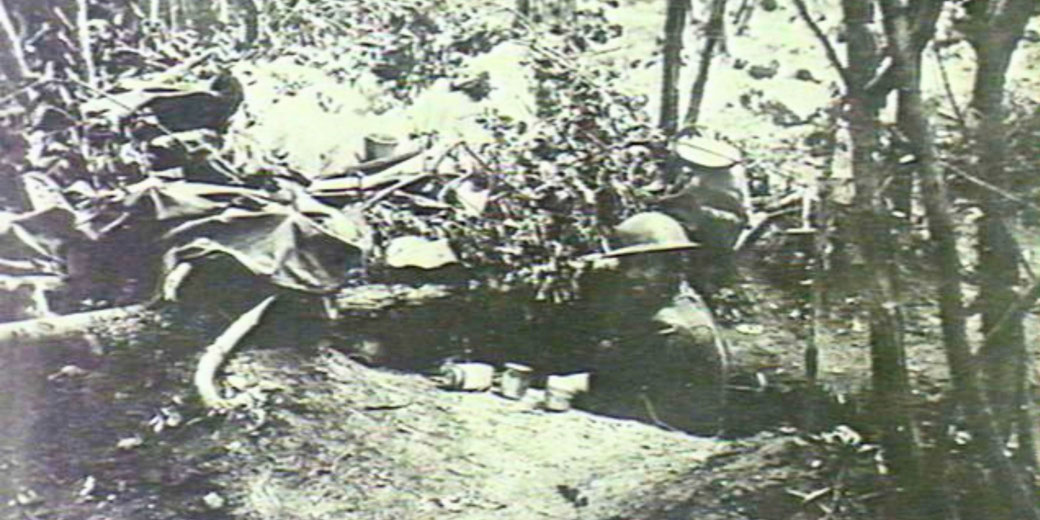
By June 1918, as the German Spring Offensive surged toward Paris, a small hunting preserve near Château-Thierry became the site of some of the most fierce fighting that the United States had yet endured up to that point in the First World War.
Although American troops had only recently landed in France, they now faced a hardened enemy who stood just ninety kilometres from the French capital.
Within the shattered trees and gas-filled trenches of Belleau Wood, U.S. Marines fought a brutal twenty-six-day battle that halted the German advance and transformed America’s reputation on the Western Front.
Strategic situation before the battle
After the collapse of the Eastern Front in 1917, German forces had transferred nearly fifty divisions to the west so that they could break Allied lines before American troops arrived in strength.
Their major assault began in March 1918, known as Operation Michael, and drove deep into French territory.
By late May, German units had crossed the Aisne and had overrun Château-Thierry, then pushed to within striking distance of Paris.
At this point, French commanders, who feared the loss of important railway junctions and access routes to the capital, urgently called for American reinforcements.
General John J. Pershing responded quickly by sending the U.S. 2nd Division, which included the 5th and 6th Marine Regiments, to support the defence of the Marne sector.
These units had nearly 9,500 Marines in total and were joined by Army elements, and they were backed by French artillery batteries from the 167th Division.
The Germans had already begun occupying Belleau Wood and nearby Vaux, which they used to secure their gains and to threaten Allied supply lines that ran toward Paris.
Soon after they arrived on 1 June, the Marines met retreating French troops, who warned of the advancing enemy.
As French officers advised a withdrawal, Captain Lloyd W. Williams of the 5th Marines replied bluntly, “Retreat? Hell, we just got here.”
The marines enter the fray
On 2 June, U.S. troops began to establish defensive positions west of Belleau Wood and to dig shallow trenches as they prepared for what they knew would be violent fighting.
The decision to counterattack came quickly and, on 6 June, the Marines launched their first assault across an open wheat field toward the wooded high ground, which was already heavily fortified by German machine-gun nests.
As they advanced in straight lines and had no artillery cover or accurate terrain maps, they suffered terrible losses.
In the 3rd Battalion, 5th Marines, more than half the men were killed or wounded within a few hours.
However, those who reached the edge of the wood engaged the enemy at close quarters and began driving back the forward German elements.
Significantly, many German soldiers had survived years in the trenches, and they remarked on the Americans’ boldness and refusal to yield under fire.
By the end of the day, the Marines had secured a partial position along the southern perimeter of Belleau Wood.
Although the cost had been severe, American officers such as Major Julius Turrill and Major Benjamin S. Berry ordered fresh battalions forward, determined to drive the enemy out entirely.
The battle now shifted from open field attacks to a close and brutal struggle within the thick forest.
Fighting in the woods
Over the next three weeks, Belleau Wood became a nightmarish battlefield for both sides, since the dense forest hid trenches and fortified machine-gun positions, along with sniper nests hidden high in the trees.
Because the terrain limited visibility, most engagements took place at extremely short range.
American infantrymen were forced to advance under gas attacks and shellfire, and they relied on grenades and pistols, as well as bayonets, to clear each position.
In some instances, they employed trench shotguns to dislodge defenders from bunkers or used flamethrowers to destroy fortified nests.
As fighting grew heavier, German artillery pounded American lines with high explosives and mustard gas shells, turning the forest floor into a churned mass of splintered trees and dead bodies.
Meanwhile, Marines, who fought from one rocky outcrop to another, used small-unit manoeuvres to outflank enemy strongpoints.
In many places, they encountered concealed bunkers that had to be destroyed by hand in close-quarters combat.
Fatigue soon took hold. Men often endured days without rest, while supply lines strained under the constant pressure of battle.
Evacuation of the wounded proved nearly impossible, as German gunners targeted stretcher-bearers and aid stations.
Field Hospital No. 16, which operated near Lucy-le-Bocage, worked around the clock with limited supplies.
Nevertheless, U.S. commanders rotated fresh units into the forest and kept constant pressure on the defenders.
Each tree line became a contested zone, and every gain cost dozens of lives.
The turning point and final assaults
By mid-June, American forces had made slow progress, and French artillery support had begun to wear down German resistance.
On 23 June, the Marines prepared one final assault to drive out the last enemy units from the northern reaches of the wood.
As artillery laid down a rolling barrage, infantry units advanced in waves, and they cleared trenches and knocked out remaining strongpoints.
Under intense fire, German troops mounted desperate counterattacks, yet many had suffered heavy casualties and were running low on ammunition.
Some units began to fall back, and by 26 June, U.S. forces reported that the wood had been fully secured.
General Pershing issued a short but famous statement: “Woods now entirely: U.S. Marine Corps.”
Although fighting continued for a short period on the flanks, the main German positions had been overrun.
By the end of the engagement, the U.S. 2nd Division had sustained 9,777 casualties, including more than 1,800 killed.
German losses are still uncertain, but Allied commanders believed they were equally severe.
How significant was the Battle of Belleau Wood?
Reports of the battle soon reached the United States, where newspapers described the victory in heroic terms.
The name Belleau Wood became a household term and an early symbol of American military commitment to the war.
In recognition of the Marine Brigade’s actions, the French government officially renamed the forest “Bois de la Brigade de Marine” and awarded the unit the Croix de Guerre.
Within the U.S. Marine Corps, Belleau Wood became an especially important moment.
According to postwar accounts, German soldiers had reportedly called the Marines “Teufelshunde,” or Devil Dogs, a nickname the Corps embraced.
Veterans of the battle were honoured with decorations and public ceremonies, and the story of their stand near the Marne entered military tradition.
The nearby Aisne-Marne American Cemetery became the final resting place for many who fell there, where more than 2,200 American soldiers are buried and over 1,000 are listed as missing.
As the war continued, for the U.S. Army and Marine Corps, the battle proved that American troops could match the discipline and fighting spirit of Allied veterans.
However, for the German command, it was a defeat that helped stall their offensive and forced a shift to defensive operations.
By early July, the course of the war had begun to change, and the Allies would soon launch their own counteroffensives.