
The Brusilov Offensive: Russia's bold gamble in World War I
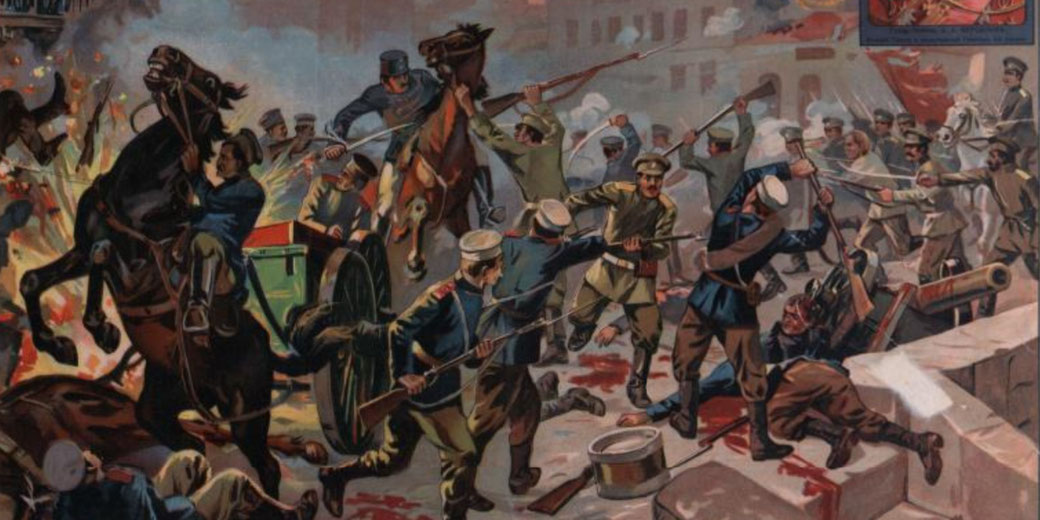
During the summer of 1916, Russia launched a daring and carefully prepared assault that in several sectors shattered Austro-Hungarian lines and temporarily changed the situation on the Eastern Front.
General Aleksei Brusilov commanded the Southwestern Front and introduced tactics that challenged the tsarist army’s outdated reliance on mass attacks and extended bombardments.
He used decentralised command and detailed reconnaissance across a wide front in Galicia, and he coordinated assaults in a way that achieved rapid success that seized key cities and overwhelmed enemy formations, and Germany redeployed forces to contain the breach.
Despite these gains, Russia lacked the supplies and support from the government that were needed to sustain the momentum, and the offensive soon made the overall weakness of the Russian war effort clear.
Russia's dangerous position in 1916
By early 1916, the Russian Empire had reached a point of extreme military and political danger.
The defeats at Tannenberg and the Masurian Lakes had effectively destroyed key armies, while the Great Retreat in 1915 had resulted in the loss of Poland and large areas of Galicia and Lithuania.
At the same time, the army suffered nearly two million casualties during the previous year, and a combination of rail shortages and rising inflation fed growing food shortages and, in many areas, added to unrest on the home front.
Within Stavka, the high command debated their next move. Some generals advised caution and argued that the army needed time to recover from recent losses.
At the same time, Britain and France demanded relief, as Verdun had already bled the French Army dry and preparations for the Somme had demanded German divisions be drawn elsewhere.
And, since Brusilov commanded the Southwestern Front, he offered a plan to take the lead in the fighting.
His goal was to inflict massive losses on Austria-Hungary and, if possible, disrupt German planning in a way that restored Russia’s reputation as a serious ally, rather than trying to reach Berlin or Vienna.
At first glance, his resources seemed too limited because he lacked vast stockpiles of artillery shells, and his troops remained poorly equipped, with supply lines across Ukraine that were still unreliable.
Yet he insisted that doing nothing would worsen morale and embolden the Central Powers.
After he had won reluctant approval from Stavka, Brusilov began to prepare an offensive that would rely on new ideas rather than very large numbers.
How the Brusilov Offensive was intended to work
Unlike previous Russian offensives, which had focused on a single breakthrough point with lengthy shelling and frontal assaults, Brusilov proposed attacks that would start at the same time across roughly a 300-kilometre front.
His strategy aimed to stop the enemy from reacting in time by keeping pressure constant in multiple sectors.
As a result, Austro-Hungarian units would struggle to identify the main effort and shift reserves.
To support this, Brusilov placed great importance on reconnaissance and preparation.
Engineers constructed forward trenches within 100 metres of enemy lines, in some cases as close as 75 metres, which enabled his assault detachments to strike quickly once bombardments ended.
Reconnaissance patrols mapped enemy defences in detail, which allowed accurate targeting by artillery and avoided the waste of random shelling.
Rather than using long preliminary bombardments, he instructed his commanders to use short, intense artillery strikes that lasted only a few hours to keep the attack a surprise.
Importantly, he also decentralised battlefield decisions. Instead of a system in which they waited for Stavka to approve changes, his front-line commanders received the freedom to make use of local successes.
Within his four armies, which included Kaledin’s 8th, Sakharov’s 11th, Shcherbachev’s 7th, and Lechitsky’s 9th, officers trained assault units to bypass strongpoints and infiltrate weak sectors in order to strike command posts.
This method allowed Russian units to penetrate deeper into enemy territory while avoiding the attrition of traditional trench warfare.
At a time when many Russian generals still relied on outdated Napoleonic methods, Brusilov focused on coordination and flexibility based on detailed planning, confident that surprise and decentralisation could break the static front.
The attack begins
On 4 June 1916, Russian artillery opened fire across the entire front of Brusilov’s Southwestern Command.
Within hours, the Austro-Hungarian Fourth and Seventh Armies began to fall apart under the pressure of massed infantry attacks that followed a brief but focused bombardment.
The unexpected speed of the advance shocked both sides. Lutsk fell on 7 June, and within days, Russian forces had captured over 200,000 prisoners and seized enormous stores of weapons and supplies.
Soon after, panic spread through Austro-Hungarian headquarters. German commanders realised how serious the disaster was and dispatched divisions under General Alexander von Linsingen to reinforce collapsing sectors.
As Russian forces pressed forward, they captured Brody and Czernowitz and overran major parts of Bukovina by late August.
By then, Austro-Hungarian and German casualties had reached approximately 1.5 million, with over 20 Austro-Hungarian divisions that could no longer fight effectively.
Some Austro-Hungarian units refused to fight, while others deserted in large numbers, particularly among Slavic troops who no longer believed in the empire’s cause.
The Russian offensive eventually began to slow because supplies could not reach the front fast enough and wounded men overwhelmed field hospitals, as exhausted troops ran low on ammunition.
Despite calls from Brusilov, the Western and Northern Fronts failed to mount proper supporting offensives.
General Evert commanded the Western Front and delayed his attack until August, and achieved little, while General Kuropatkin on the Northern Front cancelled his efforts entirely.
As a result, German and Austro-Hungarian forces began to dig in and regroup, slowing the Russian progress by September.
What impact did the Brusilov Offensive have on WWI?
The Brusilov Offensive caused damage that arguably could not be repaired in the Austro-Hungarian Army, and because entire corps were wiped out and morale shattered, the empire increasingly fell under German military control.
After the summer of 1916, Austria-Hungary could no longer run large offensives on its own, and German generals assumed more control over joint planning.
Shortly after the campaign’s initial success, Romania entered the war on 27 August 1916 because its leaders had believed that Austria-Hungary could be pushed out of Transylvania.
Romanian forces won some early successes in the Carpathians but lacked the training and coordination needed to hold their positions, and their equipment fell short of the demands of mountain warfare.
Within weeks, German and Bulgarian armies under General Falkenhayn and Field Marshal Mackensen launched a counteroffensive that drove deep into Romanian territory.
In response, Russia diverted troops and supplies to support its new ally, which put even more pressure on its already overstretched war effort.
Importantly, the Brusilov Offensive forced the Germans to shift troops from the Western Front.
Dozens of divisions that had originally been intended for the Somme and Verdun were redirected to the East, weakening the German defence against British and French offensives.
At home, the Russian government briefly enjoyed a boost in public confidence. Yet the lack of a clear breakthrough, combined with rising casualties and shortages, brought public anger back by the year’s end.
By late 1916, signs of strain within the Russian Army had grown more visible, as discipline began to break down in several sectors even though full-scale mutinies had not yet erupted and desertions increased.
Food riots erupted in several major cities such as Petrograd and Moscow, and support for the Tsar began to crumble.
Although the Brusilov Offensive had proved Russia could still win battles, it could not hide the fact that the empire’s war effort had reached the limits of what its society and economy could bear.
The most important lessons learnt from the attack
The Brusilov Offensive introduced methods that would later strongly influence 20th-century warfare.
Its use of short artillery barrages and infiltration tactics under decentralised leadership challenged the usual belief that victory could only be achieved by mass attacks.
In several areas, Russian units advanced more than 50 kilometres, a remarkable achievement in trench warfare.
Crucially, the offensive exposed the limits of operational success when separate from what the country could actually support, since without the cooperation of other fronts, Brusilov’s assault could not maintain momentum.
Despite repeated requests for a coordinated effort, Stavka allowed his armies to exhaust themselves alone.
A combination of poor transport infrastructure and unreliable logistics, which together with political interference from the Tsar’s inner circle made the failure to follow up the initial victory even worse.
Austria-Hungary never fully recovered because its army had been badly weakened and its command structure had come under German control.
After 1916, German officers led joint campaigns, and the empire’s need for help from Berlin increased.
For Germany, sending men and supplies to the east had placed significant new pressure on its ability to sustain offensives in France.
And for Russia, the offensive showed a strange contrast: its military could still achieve impressive victories, yet its internal collapse had already begun.
Brusilov’s gamble had briefly lifted hopes, but those hopes soon gave way to revolution, and by early 1917 the Russian Empire began to fall apart in the streets of Petrograd rather than on the battlefield.
Later, Soviet commanders often studied Brusilov’s operations as a model of operational-level offensive tactics that influenced Red Army doctrine during the Second World War.