
Why America couldn't win in Vietnam
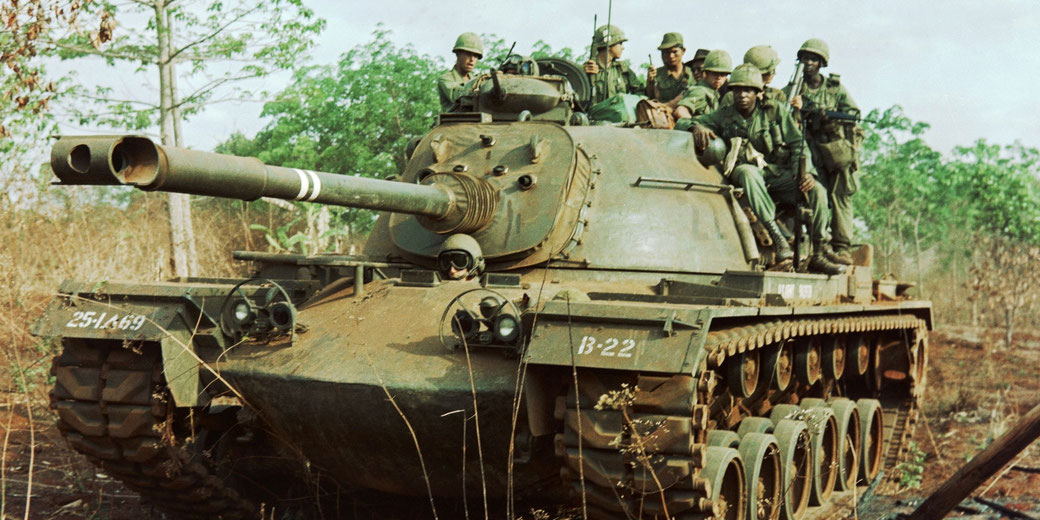
When the United States committed troops to Vietnam in 1965, it did so to prevent a communist takeover of South Vietnam and to uphold its Cold War alliances in order to protect its reputation in the world.
From the outset, American officials believed that a combination of military superiority and economic aid, backed by sustained strategic pressure, could halt the spread of communism in Southeast Asia.
However, as the conflict deepened, the war exposed serious flaws in American planning and revealed deep cultural and political differences between allies, which led to a series of military decisions that proved incapable of delivering a lasting outcome.
Misunderstanding the nature of the war
At the heart of America’s failure lay, in large part, a serious misunderstanding of Vietnamese communism as a single extension of Soviet or Chinese power.
Officials in Washington failed to recognise that North Vietnam’s goals focused on national reunification, which had developed through decades of anti-colonial struggle.
Ho Chi Minh had previously studied and organised in France and the Soviet Union, as well as China, and had built a political program that fused Marxism with Vietnamese nationalism.
By applying the domino theory, first formally outlined by President Eisenhower in 1954, which suggested that the fall of South Vietnam would trigger communist revolutions across the region, American policymakers committed to a war that treated local nationalism as the same as a global conflict over political ideas.
From 1954, when the Geneva Accords temporarily divided Vietnam, the United States worked to build South Vietnam as a pro-Western state.
American advisers who flooded into the region often did not fully understand the social and political forces at play.
The promised national elections scheduled for 1956 were never held, largely due to Diem's refusal, which had received unspoken support from the United States based on intelligence estimates that a communist victory was likely.
Ho Chi Minh led the Democratic Republic of Vietnam and had built support by appealing to both nationalism and land reform.
His forces did not usually operate as a conventional army. Instead, the Viet Cong operated under the political leadership of the National Liberation Front, which was founded in 1960 as a political organisation aligned with North Vietnam.
This movement waged a guerrilla war that relied on a combination of mobility and stealth, supported by close ties to rural populations.
Often, American soldiers who patrolled villages could not distinguish civilians from combatants.
Viet Cong fighters who lived among the people launched attacks and then vanished into jungle terrain or underground tunnel systems.
Despite heavy investment in firepower and technology, American tactics often proved ineffective in dismantling an enemy that did not engage on predictable terms.
Village raids and bombing missions disrupted daily life for many civilians, which caused resentment and made communist forces appear more trustworthy in the eyes of the population.
Flawed military strategy and tactical misjudgements
Initially, American commanders assumed that overwhelming firepower and attrition would lead to victory.
Under General William Westmoreland’s leadership, the military adopted a strategy that focused on kill counts and territory cleared, along with large-scale search-and-destroy operations.
Because the Pentagon relied on body counts as a measure of success, it framed the war as a test of endurance. However, the enemy did not break.
North Vietnamese and Viet Cong units absorbed losses and regrouped before returning.
Importantly, the American approach did not fully account for the communist strategy of long, drawn-out conflict.
General Giap had studied Maoist guerrilla warfare and accepted high casualties as the cost of a long war that would outlast American political will.
Meanwhile, air campaigns such as Operation Rolling Thunder, launched in March 1965 and continued until November 1968, bombed supply lines and villages, as well as forest cover, but did not disrupt the key supplies flowing down the Ho Chi Minh Trail.
This very large network stretched through Laos and Cambodia and was often quickly repaired after attacks.
Communist forces rebuilt roads and bypassed destroyed bridges as they built new roads and tracks across borders.
Even with constant aerial surveillance, American pilots could not prevent the steady movement of troops and equipment into South Vietnam.
By the end of the war, the U.S. had dropped over 7.5 million tons of bombs across Indochina, a total which exceeded the tonnage used in all of World War II.
During key engagements such as the Battle of Ia Drang in 1965 and the Tet Offensive in 1968, American forces that fought at Ia Drang achieved tactical success but ultimately failed to gain lasting long-term advantage.
At Tet, although the Viet Cong suffered heavy losses, the scale of the offensive, which struck more than 100 towns and cities, such as Saigon and Hue, shocked American audiences and shattered claims that the United States had controlled the war’s momentum.
Internally, confidence in Westmoreland’s strategy collapsed, and many political leaders began to question whether victory remained possible under any conditions.
Weakness and instability of South Vietnam
From the beginning, American success depended on the strength and public acceptance of the South Vietnamese government.
However, under President Ngo Dinh Diem, the Republic of Vietnam struggled to unite the population.
Diem ruled from 1955 until his assassination during a CIA-backed coup on 2 November 1963, and favoured Catholic elites and suppressed Buddhist protests, and he refused to implement land reform.
His policies turned rural farmers and urban critics of the government against him alike, which made his regime unpopular even among those who opposed communism.
After his removal, South Vietnam entered a period of instability that included a cycle of coups and short-lived administrations, often troubled by competing military factions.
American officials who were often unable to find a reliable partner poured billions into a state that often could not govern effectively.
Provincial leaders often used foreign aid to enrich themselves or reward loyalists.
The Strategic Hamlet Program was implemented between 1962 and 1964 and was intended to protect villagers from communist infiltration, but it instead displaced between 2.5 and 3.5 million people and left many resentful of foreign intervention.
Significantly, the South Vietnamese army suffered from a pattern of weak leadership and corruption, accompanied by inconsistent training.
While some ARVN units performed well, many lacked the unity and morale necessary for independent operations.
American officers often bypassed them in combat planning or took direct control of operations.
During the Easter Offensive of 1972, South Vietnamese forces required a great deal of American support to repel the assault.
As a result, ARVN forces developed a reliance that weakened their ability to operate without American support.
This failure to build a credible partner force meant that each American withdrawal left the South more vulnerable than before.
Collapse of public support and decline of morale
By 1967, growing numbers of Americans began to question the war’s purpose and cost, and they grew increasingly sceptical about the honesty of official explanations.
Television coverage broadcast images of burned villages and wounded soldiers, alongside confused battlefield reports, into millions of homes.
Public opinion polls revealed rising doubt, with Gallup reporting that only 35 percent of Americans still supported the war after Tet in 1968.
After the Tet Offensive in early 1968, many Americans no longer believed official claims of progress.
Confidence in the government fell sharply, and the credibility gap widened.
Soon, the anti-war movement expanded outside university campuses. Veterans who returned home were disillusioned, and parents of fallen soldiers demanded answers.
Civil rights leaders criticised the unfair share of the burden placed on minority communities, who often served in frontline units.
On 15 October 1969, the Moratorium to End the War in Vietnam brought around 500,000 protesters into the streets of Washington, where they demanded an end to the conflict.
The Pentagon Papers, leaked in 1971, exposed internal government reports that contradicted public statements and showed that officials had misrepresented the war’s goals and its progress.
Among troops on the ground, morale declined. Many had served one-year tours and had rotated out before they could form strong bonds with their units.
Drug use and desertion increased in many units, and incidents of refusal to obey orders also grew.
Fragging incidents in which soldiers attacked their own officers reflected the depth of disillusionment.
These attacks peaked between 1970 and 1971, with over 600 confirmed cases.
Without clear objectives or visible progress, many questioned why they were fighting.
Commanders struggled to maintain order in a war that lacked support both at home and in the field.
Strategic withdrawal and final collapse
Under heavy pressure, President Nixon initiated Vietnamisation in 1969 as a policy that aimed to reduce American troop numbers and hand responsibility over to South Vietnamese forces.
At the same time, Nixon expanded the war into Laos and Cambodia, as he ordered an invasion of Cambodia in April 1970 and later launched an incursion into Laos in February 1971 in an attempt to disrupt enemy supply lines.
These actions intensified protests at home, but they did not produce clear results.
Although the United States signed the Paris Peace Accords on 27 January 1973 and withdrew most forces, the war continued.
North Vietnam had kept its main military strength and launched a series of major offensives after the American departure.
Without air cover and logistical support, South Vietnamese forces struggled to hold territory in many regions.
As northern troops advanced, ARVN units collapsed in key areas. In March 1975, the Central Highlands fell, followed by Hue and Da Nang. On 30 April 1975, North Vietnamese tanks entered Saigon.
The final evacuation of Americans and South Vietnamese allies from the US embassy brought about the collapse of the Republic of Vietnam.
The war left behind widespread destruction on both sides. Over 58,000 Americans had died.
Vietnamese casualties included approximately 2 million civilians and more than 1 million North Vietnamese and Viet Cong soldiers, along with between 200,000 and 250,000 South Vietnamese troops.
Millions had been displaced, and towns and farmland had been destroyed. Agent Orange contamination continued to affect civilians and American veterans with chronic illnesses and birth defects.
Trust in American leadership had been badly damaged, and this loss of trust prompted Congress to pass the War Powers Act in 1973 to limit presidential power to wage war without legislative approval.