
What was the Viet Cong?
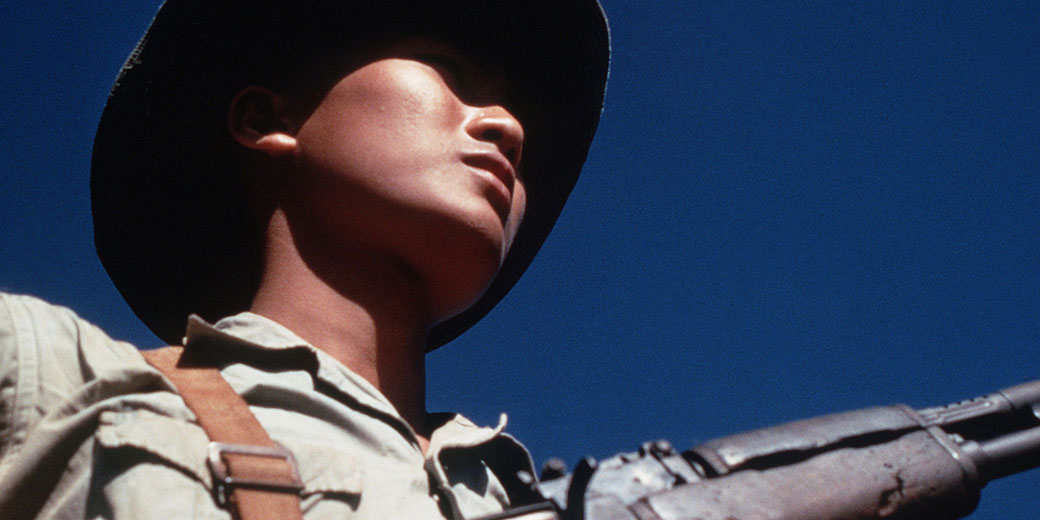
Across the rice paddies and jungle-covered hills of South Vietnam, an invisible enemy waited in silence as it watched and planned its next moves.
During the Vietnam War, many American soldiers feared the Viet Cong for their tactics and for their ability to vanish into villages or tunnels after they launched sudden, deadly attacks.
Beneath their guerrilla warfare lay a carefully built network that drew in communist organisers and peasant sympathisers, as well as full-time fighters who had endured years of war against foreign powers.
Early roots of southern resistance
After Japan surrendered in 1945, Vietnamese communists under Ho Chi Minh declared independence, but France soon attempted to take back control over its former colony.
By late 1946, full-scale war had broken out. Many of the fighters came from the south, at least in the early stages, though they followed orders from the northern-based Viet Minh.
When the First Indochina War ended with the 1954 Geneva Accords, Vietnam was divided for a time at the 17th parallel, and thousands of communist supporters found themselves suddenly stranded in the anti-communist south.
After President Ngo Dinh Diem had refused to hold the national elections promised in the Geneva agreements, many former Viet Minh veterans began to regroup in secret.
Some returned to the north to await new commands, but others stayed behind and slowly rebuilt secret contacts across southern provinces.
American intelligence had already run a series of sabotage missions against North Vietnam when Operation 34A, which officially began in January 1964, replaced earlier CIA-led efforts.
By December 1960, Hanoi directed its southern allies to form the National Liberation Front (NLF), which the Americans referred to as the "Viet Cong," a derogatory shorthand derived from “Việt Nam Cộng-sản” or “Vietnamese Communist.”
Although communist ideology supported the organisation, the movement included peasants angry at land seizures and Buddhists angered by Diem’s persecution.
Many nationalists who opposed foreign interference entered the movement because they saw it as the surest way to remove outside control.
Structure, hierarchy, and direction from the north
As the NLF expanded, it developed both political and military branches that allowed it to control rural regions in many areas without formal state power.
The NLF oversaw the political organisation, and its armed wing, the People’s Liberation Armed Forces (PLAF), conducted military operations.
Fighters fell into several categories: full-time mobile troops and regional units with limited responsibilities, along with local militias who fought close to home.
Estimates suggest that by the mid-1960s, the Viet Cong fielded approximately 100,000 full-time fighters, supported by tens of thousands of militia.
The NLF maintained its identity as a southern-led resistance. In reality, its leadership took orders from the Workers’ Party of Vietnam, based in Hanoi. P
olitburo members in the north often coordinated major offensives, transported supplies down the Ho Chi Minh Trail, and trained officers in jungle warfare.
Senior commanders such as Trần Văn Trà helped oversee strategy, while NLF president Nguyễn Hữu Thọ acted as the political figurehead.
Local commanders, however, made their own decisions when they selected targets or planned ambushes.
That flexibility allowed the Viet Cong to adapt quickly to changing battlefield conditions, while their secret networks gave them access to vital intelligence about enemy movements.
Methods of guerrilla warfare and psychological pressure
Rather than confront US and South Vietnamese forces head-on, Viet Cong fighters usually focused on mobility, sabotage, and surprise.
In most cases, they launched quick strikes against military convoys, firebases, or patrols, then withdrew before reinforcements could arrive.
Mines, booby traps, and spike pits caused constant injuries, and snipers and ambush teams created the sense that no road or village was ever secure.
By 1970, American estimates indicated that mines and booby traps alone had caused over 10% of deaths and nearly a third of total US combat injuries.
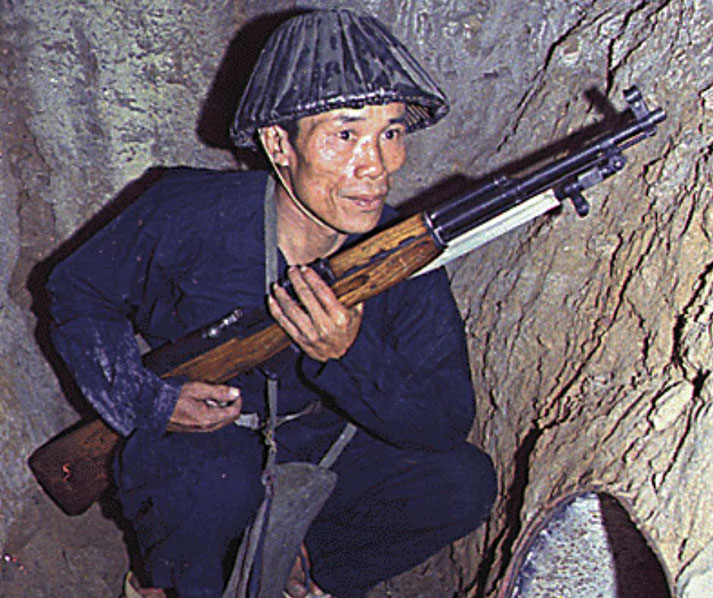
Among their most significant innovations were the tunnel systems that lay hidden under southern villages.
In regions such as Cu Chi, hundreds of kilometres of tunnels often allowed units to hide supplies, set up hospitals, plan attacks, and shelter during bombing raids.
Some tunnels had three or four levels, hidden entrances, and disguised ventilation shafts, which allowed the Viet Cong to outlast far superior firepower.
American soldiers often described how Viet Cong fighters were dressed in black pyjamas and appeared and vanished without warning.
Local support, however, mattered more than the roads and tunnels that moved supplies and fighters.
Local organisers worked to win over villagers by distributing land, organising meetings, or punishing landlords and corrupt officials.
Sometimes persuasion succeeded, but often, fear and intimidation enforced cooperation.
Informants were executed, suspected traitors disappeared, and children were recruited to carry messages or observe foreign soldiers.
In one instance, guerrillas used a funeral procession to smuggle weapons past an American checkpoint, which showed how trickery blurred the lines between civilian and fighter.
Weapons, supply lines, and foreign assistance
Despite their image as barefoot guerrillas, the Viet Cong fought with a mixture of advanced and makeshift weapons.
AK-47 assault rifles, RPGs, and mortars supplied by China and the Soviet Union filled many arsenals.
In addition, fighters often used captured American rifles or older French carbines.
When factory-made weapons were unavailable, they relied on home-made explosives and sharpened bamboo stakes, along with hidden mines assembled with salvaged parts.
Supplies often flowed south along the Ho Chi Minh Trail, which was a network of paths and bridges, with truck routes hidden beneath the jungle canopy of Laos and Cambodia.
American planes dropped millions of tonnes of bombs in an effort to destroy it, but the trail survived and adapted.
Porters, who were often women and teenagers, carried rice and bandages, as well as ammunition, on bicycles or on foot for weeks at a time.
North Vietnamese engineers repaired roads under the cover of night, and soldiers shielded convoys with anti-aircraft guns.
Alongside supply support, political backing from Moscow and Beijing often gave the Viet Cong an important mental advantage.
When they presented themselves as a national liberation movement, they attracted sympathy across much of the developing world and drew recruits who viewed the United States as a colonial occupier.
The Battle of Ap Bac in January 1963 gave them an early morale boost, when a small Viet Cong force held off a much larger South Vietnamese assault supported by American helicopters and advisers, embarrassing officials who had claimed steady progress.
The Tet Offensive and decline of Viet Cong independence
By early 1968, many American military commanders believed that the Viet Cong had been mostly brought under control.
However, on the night of 30 January, communist forces launched a massive coordinated offensive during the Vietnamese New Year, known as Tet.
Over 100 towns and military bases came under attack, along with several cities, including the US Embassy in Saigon.
US and South Vietnamese forces beat back the attacks and caused heavy losses, but the scale and daring of the campaign shocked American audiences, and the belief that the war was nearing a favourable end disappeared quickly.
For the Viet Cong, the operation came at a terrible cost in manpower. North Vietnamese and American sources placed the number of communist fighters killed during Tet between 30,000 and 45,000, and many southern cells never recovered.
After Tet, the North Vietnamese Army (NVA) began to take over most of the direct fighting, while the Viet Cong shifted into supporting roles.
As US forces withdrew under President Nixon’s Vietnamisation policy, the influence of the NLF declined.
Northern regulars took command of major campaigns, and in most cases local guerrillas followed their lead without question.
What happened to the Viet Cong?
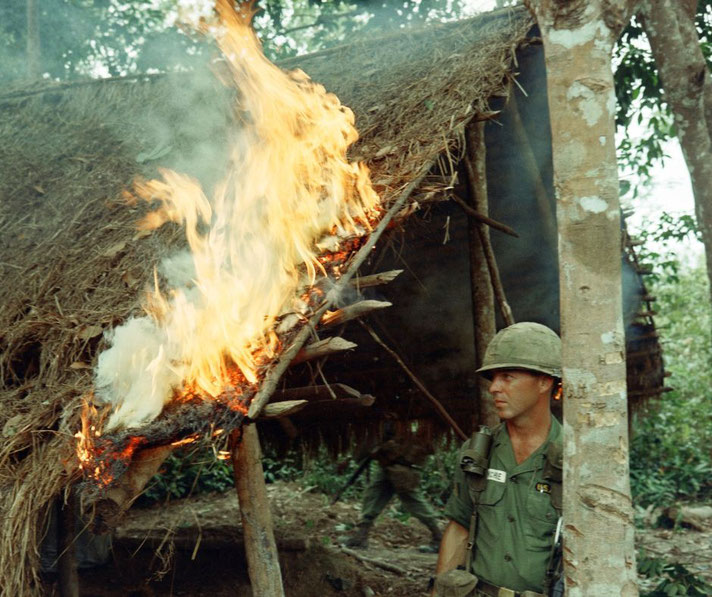
When Saigon fell on 30 April 1975, tanks from the NVA led the final assault, not Viet Cong units.
After the victory, the communist government officially dissolved the NLF and brought its surviving members into the state system.
Some received modest honours or local positions, though many others slipped back into quiet rural lives.
Others faced detention in re-education camps, especially those who had challenged northern orders during the war.
The new Socialist Republic of Vietnam was created in July 1976, merged the Provisional Revolutionary Government into the central authority, rewrote the history of the war to emphasise the unity of northern and southern communists, and it downplayed the independent role of the Viet Cong.
In the decades that followed, former fighters thought about the hardships that they had endured and the political goals that had inspired them.
Some questioned the government’s promises, while others quietly returned to farming and family life.
Their names rarely appeared in official accounts, but their contribution to the war’s outcome was undeniable.