
Was John Calvin the most fanatical of the Protestant reformers?
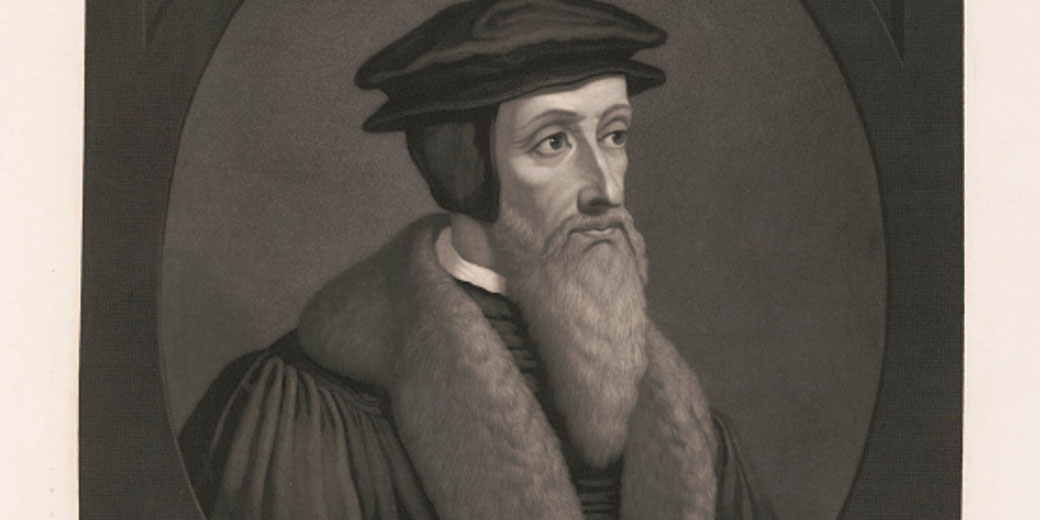
In the world of the 16th-century Reformation, one person has become one of the most famou, and one of the most controversial of all: John Calvin.
He was a man of profound intellect and unwavering faith, who arguably transformed the religious world of Europe with his revolutionary ideas.
From the cobbled streets of Geneva to the far corners of Europe, his teachings reworked Christianity and likely inspired generations of followers, while igniting many controversies.
Who was this uncompromising theologian, and how did his vision forever alter the course of religious history?
The early years of John Calvin's life
John Calvin was born on July 10, 1509, in Noyon, Picardy, a province in the Kingdom of France.
His father, Gérard Cauvin, worked as a notary and secretary to the bishop of Noyon, which afforded the young Calvin a privileged upbringing.
His mother, Jeanne le Franc, was known for her piety and devotion. Calvin's early education had taken place in the Latin school of Noyon, where he showed an aptitude for language and learning.
At the age of 14, Calvin had moved to Paris to continue his studies. He enrolled at the College de la Marche, where he focused on the trivium, which consisted of grammar and rhetoric, as well as logic.
He later transferred to the College de Montaigu, which was known for its rigorous discipline and scholastic philosophy.
It was here that Calvin was introduced to the works of Aristotle and the scholastic method, which would later influence his theological writings.
Calvin's father had initially intended for him to pursue a career in church, which led to his receiving a benefice at the Cathedral of Noyon in 1521.
However, his father's plans changed, and Calvin was directed to study law at the University of Orléans in 1528.
His father believed that a career in law would be more lucrative than one in the church.
Under the guidance of renowned legal scholars such as Pierre de l'Estoile and Andrea Alciato, Calvin excelled in his studies and developed a deep understanding of Roman law.
He later continued his legal studies at the University of Bourges, where he was exposed to humanist ideas and the writings of Erasmus.
Why he converted to Protestantism
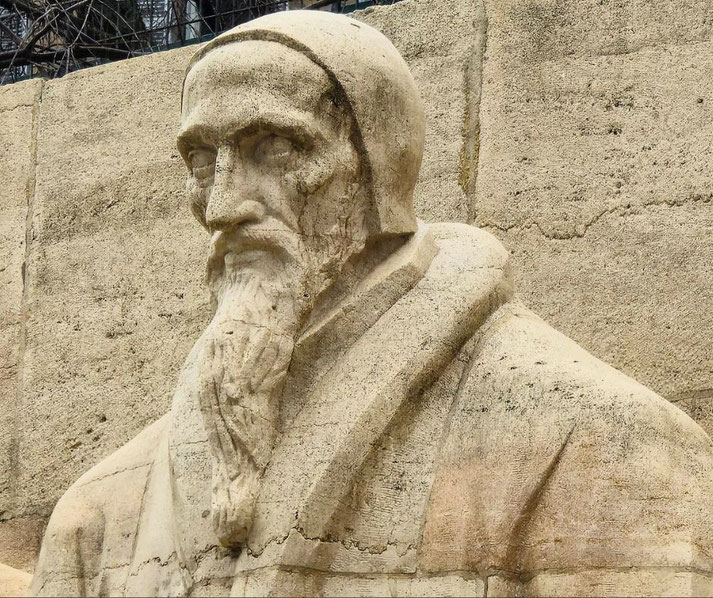
During his studies in law and the humanities, Calvin had also been exposed to the writings of reformers such as Martin Luther and Jacques Lefèvre d'Étaples.
These influences began to challenge his traditional Catholic beliefs. The atmosphere in France was becoming increasingly hostile towards reformist ideas, and Calvin found himself drawn to the intellectual and religious unrest.
Calvin's “sudden conversion”, as he had described it in his preface to the Psalms commentary, was a profound and transformative experience.
He wrote of God's hand turning him from his previous pursuits and calling him to a new path.
This experience led Calvin to embrace Protestant beliefs, including the principles of sola scriptura (scripture alone) and justification by faith alone.
In 1533, Nicolas Cop, who was the rector of the University of Paris and a friend of Calvin's, delivered a speech that was heavily influenced by Protestant ideas.
The speech, which called for reform within the Church, sparked controversy and led to accusations of heresy.
Calvin, who was suspected of having a hand in drafting the speech, was forced to flee Paris to avoid arrest.
How Calvin dominated the city of Geneva
John Calvin's arrival in Geneva in 1536 was a turning point in the city's history and the wider Reformation movement.
He had initially intended to stay for a single night while en route to Strasbourg. However, Calvin was persuaded by William Farel, a fiery reformer, to remain and assist in the reformation efforts in the city.
Farel, who recognised Calvin's intellectual prowess and potential for leadership, implored him to join the cause and warned that God would curse his studies if he refused.
Geneva had been undergoing a period of religious and political upheaval, having recently declared its independence from the Duke of Savoy and the Roman Catholic Church.
The city was ripe for reform, and Calvin's arrival had coincided with a critical moment in its history.
Together with Farel, Calvin set about putting in place a series of radical changes aimed at purifying the church and society.
They introduced a new liturgy and abolished traditional Catholic customs, as well as establishing a form of church administration that emphasised the authority of the Scriptures and the role of the clergy.
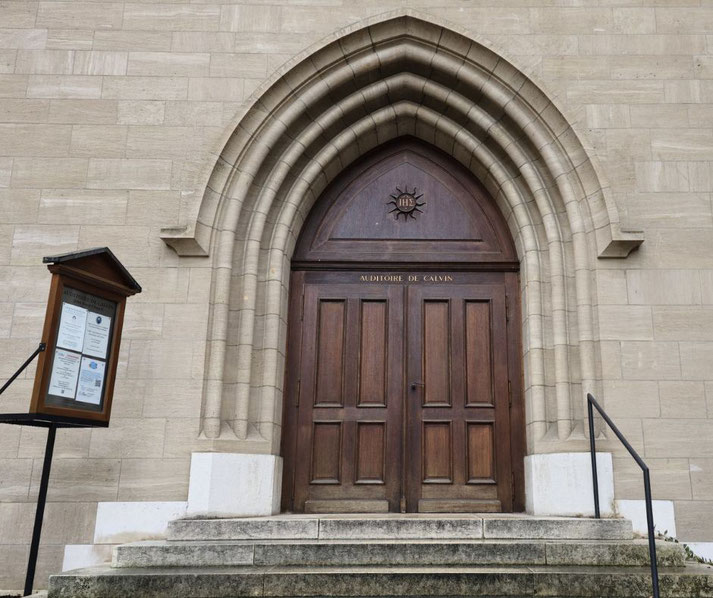
In 1538, Calvin and Farel faced opposition from the city council and were expelled from Geneva due to disputes over the implementation of their reforms, particularly the refusal to administer communion.
Calvin retreated to Strasbourg, where he spent the next three years refining his ideas on church organisation and theology.
During this time, he had also married Idelette de Bure, a widow with two children.
Calvin's exile was short-lived. In 1541, the political situation in Geneva had shifted, and the city council invited him back to lead the reform efforts.
This time, Calvin returned with a clear vision and a mandate to establish a theocratic society based on his principles.
He introduced the Ecclesiastical Ordinances, which outlined the structure of the church and its role in governing the moral and spiritual life of the city.
He also established the Consistory, which was a church court responsible for enforcing moral discipline among the citizens.
Under Calvin's leadership, Geneva became a model of Protestant reform and a haven for religious refugees from across Europe.
The city's academy, which had been founded by Calvin in 1559, attracted scholars and future reformers, and helped spread his ideas well past the city's walls.
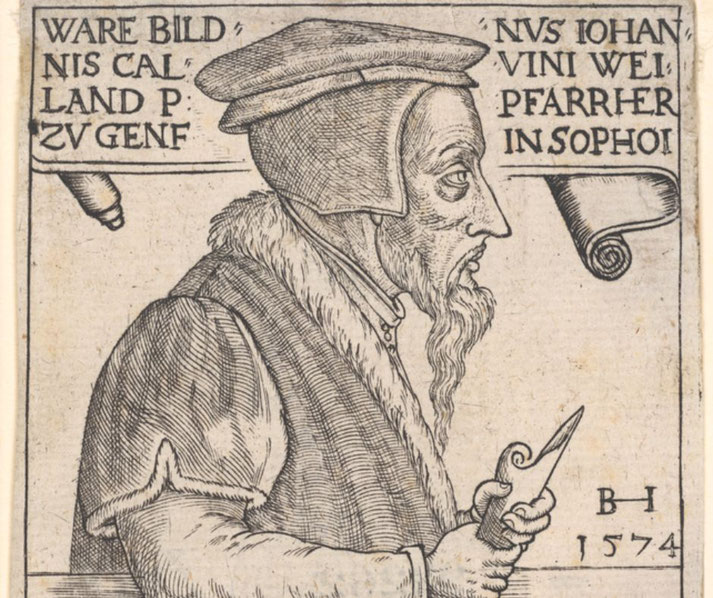
Why were Calvin's ideas so radical?
John Calvin's theological contributions arguably left a lasting impact on the Christian faith, particularly within the Reformed tradition.
His systematic approach to theology, as laid out in his seminal work, the “Institutes of the Christian Religion”, provided a comprehensive framework for understanding Christian doctrine and worship.
One of the central tenets of Calvin's theology was the sovereignty of God. He emphasised that God is the ultimate authority in all aspects of life and salvation.
This belief led to his doctrine of predestination, which asserts that God has preordained the salvation or damnation of individuals based on His holy will, independent of human merit or action.
This concept was both controversial and influential, and helped form the Reformed understanding of salvation and the nature of God's grace.
Calvin also stressed the importance of Scripture as the supreme authority in matters of faith and conduct.
He advocated for the principle of sola Scriptura, meaning that the Bible alone is the ultimate guide for believers.
This emphasis on the authority of Scripture was a cornerstone of the Protestant Reformation and is still a key aspect of Reformed theology.
Another significant contribution of Calvin's was his understanding of the church and its role in society.
He proposed a model of church administration that included elders and deacons, who worked alongside pastors and teachers to oversee the spiritual and moral welfare of the community.
This structure, which is known as the Presbyterian system, aimed to create a disciplined and orderly church that mirrored the sovereignty of God.
Calvin's teachings on the sacraments, particularly the Lord's Supper, also had a profound impact.
He rejected the Catholic doctrine of transubstantiation and instead proposed that Christ is spiritually present in the elements of the Eucharist.
This view aimed to maintain a balance between the physical and spiritual aspects of the sacrament, and emphasised the believer's union with Christ.
How important was Calvin to the reformation?
Following his death on May 27, 1564, Calvin's theological teachings and church reforms continued to influence the development of the Reformed tradition and the wider Protestant Reformation.
His emphasis on the sovereignty of God, the authority of Scripture and the doctrine of predestination became cornerstones of Reformed theology.
His ideas on church administration and the relationship between church and state had laid the groundwork for the development of modern democratic and republican forms of government.
The emphasis on literacy and education in Calvinist communities led to the establishment of schools and universities, which contributed to the spread of literacy and learning.
The spread of Calvinism was helped by the migration of religious refugees from Geneva to other parts of Europe and the New World.
Calvinist thought arguably played a significant role in forming the religious character of countries such as Scotland and the Netherlands, as well as England and the American colonies.
The Presbyterian, Congregationalist and Reformed churches all trace their roots to Calvin's teachings.
Calvin's impact had not been limited to the religious sphere. His work influenced the development of capitalism, with Max Weber famously connecting the Protestant work ethic to the rise of modern capitalism.
The emphasis on hard work and frugality in Calvinist theology, along with stewardship, has been seen as contributing to the economic development of Western societies.
The major controversies about Calvin
John Calvin's theological views and actions as a reformer have been the subject of controversy and criticism, both during his lifetime and in the centuries that followed.
One of the most contentious aspects of his theology is the doctrine of predestination, which suggests that God has predetermined the salvation or damnation of individuals.
Critics argue that this undermines human free will and portrays God as unjust.
This doctrine has been a point of contention within Protestant circles, as well as in debates with Catholic and other Christian theologians.
Calvin's role in the execution of Michael Servetus in 1553 is another major source of controversy.
Servetus, who was a Spanish physician and theologian, was burned at the stake in Geneva for heresy, primarily for his rejection of the Trinity.
Critics have condemned Calvin's involvement in the trial and execution as an example of religious intolerance and the misuse of power.
However, it is important to clarify that although Calvin played a significant role in the prosecution of Servetus, the decision to execute Servetus was ultimately made by the Geneva City Council, and not Calvin himself.
Defenders of Calvin argue that he had acted in accordance with the laws and religious customs of the time, and that he actually tried to have the mode of execution changed to beheading, which was considered less painful.
Calvin's implementation of strict moral and church discipline in Geneva has also drawn criticism.
The Consistory, which was the church court established by Calvin, had wide-ranging powers to oversee the conduct of the citizens, leading to accusations of authoritarianism and invasion of privacy.
The strict regulations on behaviour, including dress codes and bans on dancing and the singing of secular songs, were seen by some as oppressive and indicative of a theocratic regime.
Additionally, Calvin's views on preachers and their authority in the church have been criticised as overly hierarchical and contrary to the Protestant principle of the priesthood of all believers.
His emphasis on the power of the clergy in interpreting and preaching Scripture has reportedly been seen as limiting the role of the laity in the church.