
Elizabeth I, the Virgin Queen who defined an entire era of English history
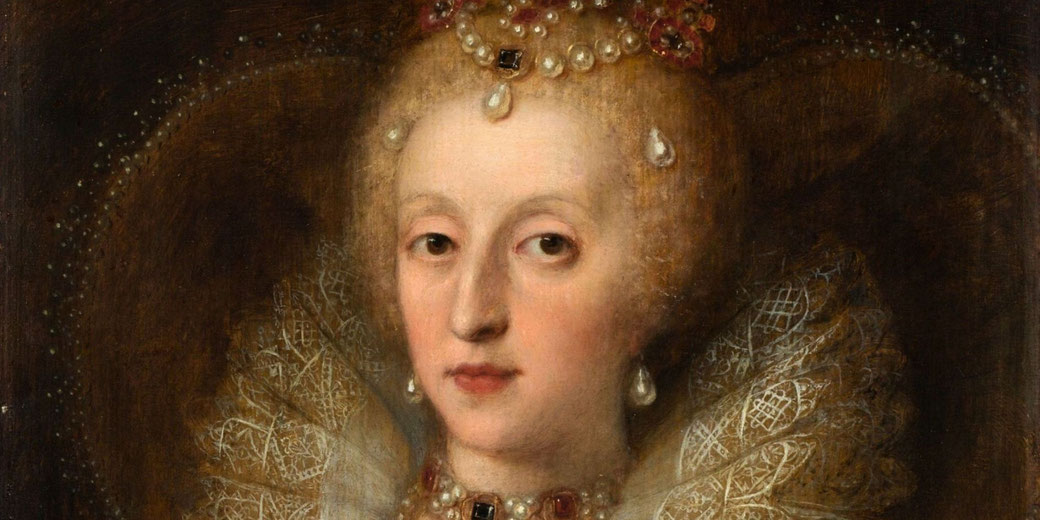
When Elizabeth I ascended the throne, England stood at a crossroads from the result of decades of abrupt religious change and unstable leadership.
Having witnessed the execution of her mother and endured suspicion during her sister’s reign, Elizabeth brought a cautious yet decisive approach to power.
Her coronation settlement, blending Protestant direction with familiar traditions, immediately revealed a strategy aimed at unity instead of any further conflict.
Elizabeth's tragic childhood
Elizabeth was born on September 7, 1533, at Greenwich Palace. She was the daughter of King Henry VIII and his second wife, Anne Boleyn.
Her birth was significant because Henry had broken away from the Roman Catholic Church to marry Anne, as he hoped she would give him a male heir.
Elizabeth’s birth disappointed those who had expected a son, but she was nonetheless declared a princess and given a grand christening.
When Elizabeth was just two and a half years old, her mother, Anne Boleyn, was executed on charges of adultery and incest, as well as treason.
Elizabeth was then declared illegitimate, and her title was reduced from Princess to Lady Elizabeth.
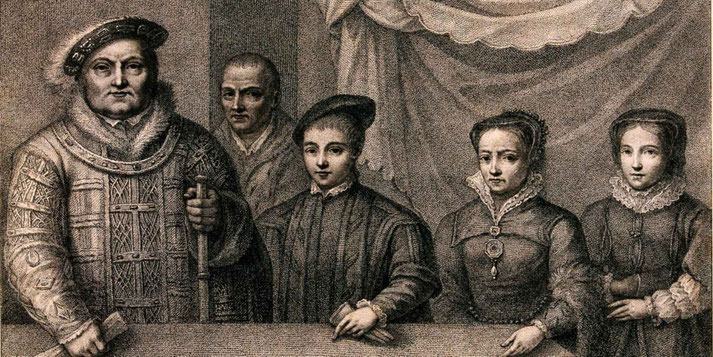
Elizabeth had two half-siblings. Edward VI was the son of Henry VIII and his third wife, Jane Seymour, and Mary I was the daughter of Henry VIII and his first wife, Catherine of Aragon.
Edward ascended to the throne in 1547 but died young, which led to the reign of Mary I, who was also known as ‘Bloody Mary’ for her persecution of Protestants.
Elizabeth was a Protestant and was viewed with suspicion during Mary’s reign, and she was even imprisoned in the Tower of London for a time on suspicion of supporting Protestant rebels.
Becoming Queen of England
Elizabeth’s half-sister, Mary I, died on November 17, 1558. Mary had no children, and Elizabeth was next in line for the throne.
Upon her ascension, Elizabeth inherited a kingdom that was troubled by a number of problems. England had been financially strained due to military campaigns and the lowering of the currency’s value.
The country had also been deeply divided along religious lines, thanks to the shifts between Catholicism and Protestantism during the reigns of Henry VIII and Edward VI, as well as Mary I.
Elizabeth was crowned Queen of England on January 15, 1559, in Westminster Abbey.
The ceremony was conducted with Protestant rites but also included certain traditional elements to reassure Catholics.
Her choice to use both Protestant and Catholic elements in her coronation was a clear signal of her intent to unify her kingdom.
One of Elizabeth’s first acts as queen was to address the religious divisions in the country.
In 1559, she passed the Act of Supremacy, which re-established the monarch as the Supreme Governor of the Church of England, and the Act of Uniformity, which set the standard form of worship.
These acts were designed to create a middle ground between Catholicism and Protestantism, and they led to the establishment of Anglicanism as the state religion.
Elizabeth was generally well-received by her subjects. Her early actions to stabilise the currency and resolve religious differences won her broad support.
The key people Elizabeth relied upon
Elizabeth I’s reign was defined by her ability to surround herself with capable and loyal advisors, as well as her relationships with key figures who played significant roles in her life and rule.
Here are some of the most important people and advisors during her reign:
William Cecil (Lord Burghley)
William Cecil was Elizabeth’s chief advisor and one of the most influential figures during her reign. He held the position of Secretary of State and later became the Lord High Treasurer. Cecil was central to directing both domestic and foreign policy, including matters that related to religion and finance, as well as diplomacy. His careful counsel helped Elizabeth navigate the difficult political environment of her time.
Robert Dudley, Earl of Leicester
Robert Dudley was a close friend and rumoured lover of Elizabeth. Their relationship was the subject of much speculation and controversy. Dudley was a trusted advisor and held various military and administrative posts. His aspirations and the scandal surrounding his wife’s mysterious death, however, made it politically impossible for Elizabeth to marry him, regardless of the rumours and Dudley’s own hopes.
Sir Francis Drake
Sir Francis Drake was an English sea captain and privateer, as well as an explorer. He was a national hero for his exploits against the Spanish, most notably his part in defeating the Spanish Armada in 1588. Elizabeth knighted Drake aboard his ship, the Golden Hind, in 1581, after his circumnavigation of the world.

Sir Walter Raleigh
Sir Walter Raleigh was another favourite of Elizabeth and a man of many talents: explorer, writer, poet, and courtier. He attempted to establish the Roanoke Colony in what is now North Carolina. The colony ultimately failed, but his efforts paved the way for future English colonisation in the New World.
Robert Devereux, Earl of Essex
Robert Devereux was a later favourite of Elizabeth who eventually fell from grace. He was given military commands and other privileges but proved to be impulsive and ineffective. His failed rebellion against Elizabeth’s government led to his execution in 1601.
Sir Francis Walsingham
Known as Elizabeth’s ‘spymaster’, Walsingham created an extensive network of spies and informants across Europe. His efforts were crucial in uncovering plots against Elizabeth, including the Babington Plot, which led to the execution of Mary, Queen of Scots.
The victory over the Spanish Armada
Arguably one of the most defining moments of Elizabeth’s reign was the defeat of the Spanish Armada in 1588.
Spain, under King Philip II, was a staunchly Catholic nation and viewed Protestant England as a threat to the Catholic world order.
Philip II had been married to Elizabeth’s half-sister Mary I, and he saw it as both a religious duty and a political opportunity to bring England back into the Catholic fold.
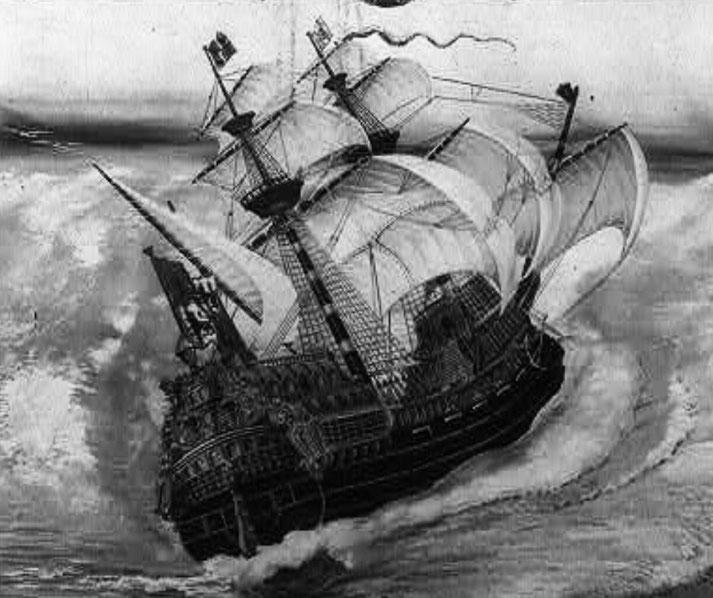
In this charged atmosphere, Philip II took the fateful step of assembling a massive naval fleet, which was known as the Spanish Armada, with the explicit intent of invading England and restoring it to Catholicism.
The fleet was an imposing sight, and it consisted of more than 130 ships and an estimated 30,000 men.
It was one of the largest naval armadas ever assembled up to that point, and it was intended to be Spain’s ultimate effort in subduing England.
The English, however, were far from unprepared. Their navy was smaller, but it was technologically advanced and more manoeuvrable.
Led by seasoned admirals like Sir Francis Drake and John Hawkins, the English engaged the Spanish Armada in a series of skirmishes off the English coast.
A critical moment came when the English deployed fire ships (vessels that were deliberately set ablaze) into the anchored Spanish fleet.
This tactic caused chaos among the Spanish ships and broke their tight formation, which allowed the English navy to gain the upper hand.
The Spanish Armada was then pursued northward along the English coast, which confirmed the failure of Spain’s plan.
The aftermath of this major clash was devastating for Spain. Forced to retreat, the Spanish Armada undertook a dangerous journey around the British Isles to return home.
Many ships had been lost to storms, and thousands of men perished.
The defeat was both a military loss and a personal humiliation for Philip II, and it dealt a significant blow to Spanish prestige on the international stage.
For England, it strengthened the country’s reputation as a formidable naval power and altered the balance of power in Europe.
The defeat of the Spanish Armada was also interpreted as a sign from God, which reinforced the Protestant faith and strengthened Elizabeth’s rule.
The cultural explosion under Elizabeth's rule
The Elizabethan Era became one of the most culturally rich periods in English history, and it is often referred to as a ‘Golden Age’.
This period was distinguished by a flourishing of the arts and exploration, as well as intellectual pursuits.
One of the most significant cultural contributions of this era was in the field of literature and drama.
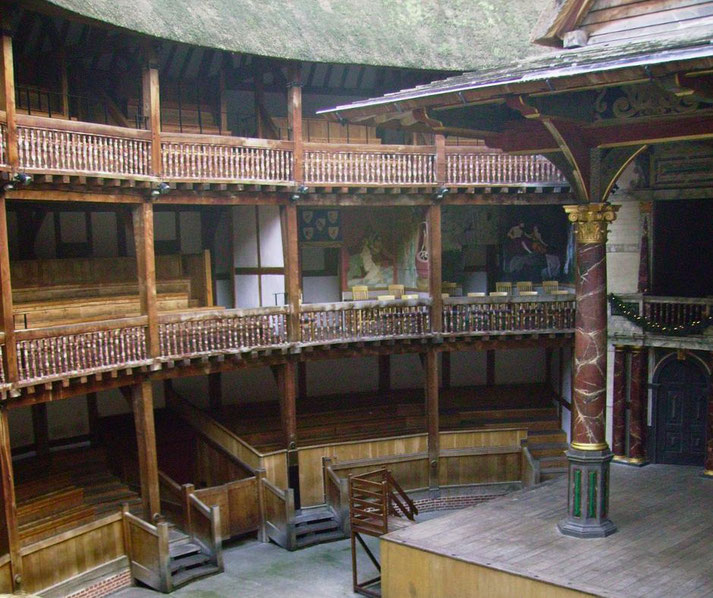
William Shakespeare was perhaps the most famous figure of the Elizabethan Era, and he produced works that were performed at the Globe Theatre and enjoyed the patronage of the royal court.
His plays and sonnets have become central works of English literature and have influenced countless writers and artists for centuries.
The period was also defined by a thirst for exploration and scientific understanding.
Figures like Sir Francis Drake and Sir Walter Raleigh ventured into uncharted territories and contributed to England’s growing naval and colonial power.
Elizabeth's final years and death
The final years of Elizabeth I’s reign were troubled by a number of difficulties. One of the most significant events of Elizabeth’s later reign was the Essex Rebellion in 1601.
Led by Robert Devereux, who was the Earl of Essex and once a favourite of the Queen, the rebellion was a failed attempt to seize power and influence the succession.
Devereux’s execution after the rebellion pointed to the end of an era and highlighted the shifting political dynamics as Elizabeth’s reign drew to a close.
The rebellion also highlighted the Queen’s declining influence and the growing anxieties over the unresolved issue of her succession, given that she had neither married nor produced an heir.
Financial difficulties and military setbacks, particularly in Ireland, also plagued the final years of Elizabeth’s rule.
In the face of these challenges, Elizabeth continued to be a symbol of national unity and strength.
Her famous ‘Golden Speech’ was delivered to the members of the House of Commons in 1601, and it was a moving moment that demonstrated her deep sense of duty and her understanding of the changing times.
Elizabeth I passed away on March 24, 1603, and brought an end to the Tudor dynasty. She was succeeded by James VI of Scotland, who became James I of England and united the crowns of England and Scotland.
Elizabeth I was a capable and versatile ruler whose reign had a lasting impact on England and the wider world.
She left behind a nation that had transformed from a relatively insignificant island kingdom to a major European power.
Under her rule, England had established itself as a naval force and laid the foundations for future colonial expansion, and the country had also experienced a cultural flowering that would leave a lasting impact on the English-speaking world.
As the ‘Virgin Queen’, she broke traditional gender expectations and ruled alone in a male-dominated world.