
Is Mary I England’s most misunderstood queen?
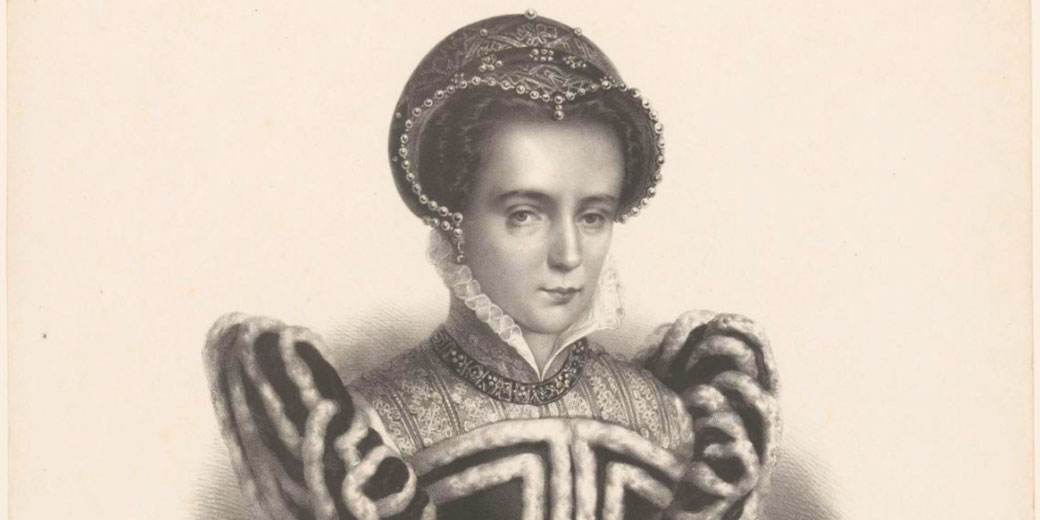
Long before she wore the crown, Mary Tudor had been declared illegitimate, separated from her mother, and forced into submission within her own household.
These early experiences unfolded during England’s break with Rome, placing her at the center of one of the most significant transformations in English history.
As queen, she would draw upon these formative years to pursue a vision of restoration of the nation’s religious beliefs.
Mary's horrible early life
Mary was born on February 18, 1516, at Greenwich Palace, London, to King Henry VIII and his first wife, Catherine of Aragon.
She was their only surviving child, and her birth was initially seen as a disappointment because she was not a male heir.
Mary’s life took a dramatic turn when her father, Henry VIII, tried to annul his marriage to Catherine of Aragon.
Henry was desperate for a male heir, and Catherine had not provided one. The annulment was arguably a significant event for both the royal family and the entire country, as it led to England’s break with the Roman Catholic Church.
In 1533, Henry annulled his marriage to Catherine and declared Mary illegitimate, and her mother was banished from court.
After the annulment, Mary’s relationship with her father became strained. She was separated from her mother and was not allowed to visit her.
Henry VIII married Anne Boleyn, who gave birth to Elizabeth, Mary’s half-sister. Mary was forced to serve as a lady-in-waiting to her infant half-sister, which was likely a humiliating experience for her.
Mary’s half-brother Edward VI ascended to the throne after Henry VIII’s death in 1547. Edward was a staunch Protestant, and his reign saw the further marginalisation of Mary due to her Catholic faith.
She was pressured to abandon Catholicism, which she firmly refused to do.
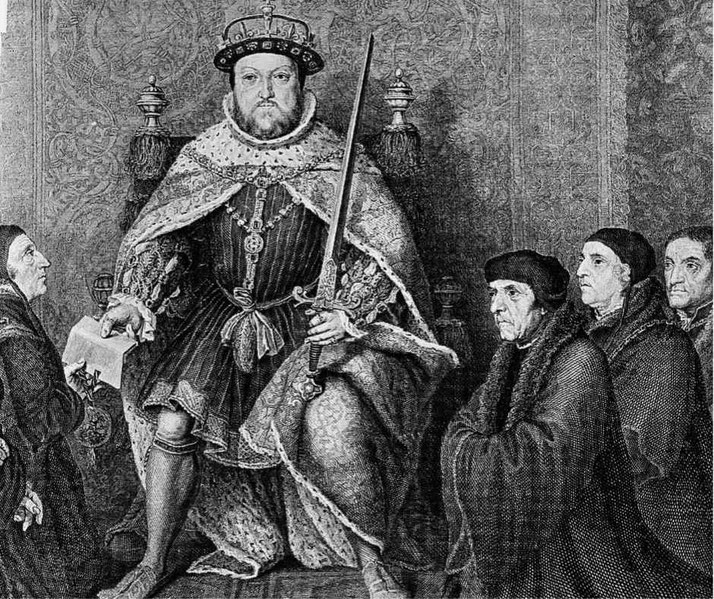
Mary's ascension to the throne
Then, Edward himself died in 1553 at the age of 15, which sparked a succession crisis that would have far-reaching implications for England.
Before his death, Edward VI had tried to prevent the Catholic Mary from ascending to the throne.
He had drafted a “Devise for the Succession”, which bypassed both Mary and her half-sister Elizabeth, in favour of Lady Jane Grey, who was a Protestant and Edward’s cousin once removed.
As a result, Lady Jane Grey was proclaimed queen on July 10, 1553.
Mary was aware of the attempt to deny her the throne and rallied support from the local nobility and commoners alike.
Mary and her supporters marched on London, and they gathered more and more support along the way.
The Privy Council recognised the tide of public opinion and the likelihood of military defeat, and proclaimed Mary queen on July 19, 1553, which effectively ended Jane Grey’s short reign.
Lady Jane Grey was then imprisoned in the Tower of London. Mary was crowned Queen of England on October 1, 1553, at Westminster Abbey.
The ceremony was a lavish affair, and Mary took the opportunity to reaffirm her commitment to Catholicism, which foreshadowed the religious changes that would come.
Why her marriage sparked a rebellion
Mary I then announced that she had decided to marry Philip II of Spain. Philip was the son of Emperor Charles V and was a powerful figure in his own right who was set to inherit the Spanish Empire.
However, the announcement was met with widespread disapproval among the English people and nobility.
They were deeply concerned about becoming subordinate to Spain, which was a powerful Catholic empire.
Additionally, the union was seen as a way to strengthen Catholic influence in England, which was a point of disagreement among the Protestant faction.
The discontent over Mary’s marriage plans resulted in Wyatt's Rebellion, which was led by Sir Thomas Wyatt.
This was a Protestant-led uprising with the primary objectives of overthrowing Mary and preventing her marriage to Philip II.
Wyatt and his supporters also aimed to replace Mary with her Protestant half-sister, Elizabeth.
The rebellion began in January 1554, and it gained some initial momentum as Wyatt led a force from Kent with the intention of marching on London.
Mary acted swiftly to suppress the uprising. She made a public speech at the Guildhall in London, in which she rallied her subjects and reaffirmed her right to choose a husband.
Her passionate speech was effective in rallying public support for her rule.
Wyatt struggled to gain the widespread support that he had hoped for, particularly among the nobility.
The government’s quick actions included the arrest of key figures and the fortification of London, which led to the rebellion’s failure.
Wyatt was captured and later executed. The marriage between Mary and Philip II eventually took place on July 25, 1554, but the public sentiment was far from celebratory.
Her religious policies and the Marian Persecutions
Mary I’s reign was defined by a passionate desire to restore Roman Catholicism in England, a faith that she had faithfully followed throughout her life.
One of her first acts was the repeal of the religious laws that had been enacted under Henry VIII and Edward VI, which effectively undid years of Protestant reforms.
She also reinstated the Heresy Acts, which made it a capital offence to deny the teachings of the Catholic Church.
Mary pursued the support of the Pope and other Catholic monarchs in Europe, most notably through her marriage to Philip II of Spain.
The most infamous aspect of Mary’s religious policies was the series of persecutions against Protestants, which are commonly referred to as the Marian Persecutions.
These began in earnest in 1555 and lasted until the end of her reign in 1558.
Under the guidance of key advisors like Stephen Gardiner, the Bishop of Winchester, and with the papal backing of Pope Paul IV, Mary initiated a severe crackdown on Protestantism.
Prominent Protestant figures, who included bishops and scholars as well as other clergy, were arrested and tried, before often being executed by burning at the stake.
Thomas Cranmer was the Archbishop of Canterbury who had annulled Mary’s parents’ marriage and had been a key figure in the English Reformation, and he was among those executed.
In total, it is estimated that around 300 people were executed for heresy during Mary’s reign, which earned her the nickname “Bloody Mary”.
The dramatic loss of Calais and Mary's death
The loss of Calais in 1558 was a devastating blow to England and to Mary I’s reign. Calais had been under English control since 1347 and was considered a jewel in the English crown, both for its strategic importance and as a symbol of English power on the European continent.
The loss occurred during the last year of Mary’s reign, when French forces that were led by the Duke of Guise successfully besieged the city.
The English mounted a determined defence but were forced to surrender on January 7, 1558.
Mary’s health had been worsening for some time. She had also suffered from a series of phantom pregnancies, which affected her physically and had a significant emotional impact as well.
The loss of Calais weighed heavily on her, and it is said that she remarked that when she died, “Calais” would be found engraved on her heart.
Mary I died on November 17, 1558, likely from ovarian or uterine cancer. The exact cause, however, is not definitively known.
She was succeeded by her half-sister, Elizabeth I, who would go on to rule for 45 years and establish a Protestant England.
How should Mary I be remembered?
Queen Mary I is arguably a divisive figure in English history. Her attempts to restore Catholicism led to a period of intense religious persecution, which earned her a place in history with her infamous nickname.
However, Mary should also be acknowledged as the first Queen Regnant: the first queen in England to rule on her own rather than as a consort. She had significant public support in her early reign and was also able to crush rebellions against her, which indicated her political ability.
As such, Mary I was a layered figure who was influenced by her times and her unwavering faith, and she left a historical reputation that continues to be studied and debated.