
The Desert Fox: the life and career of Erwin Rommel
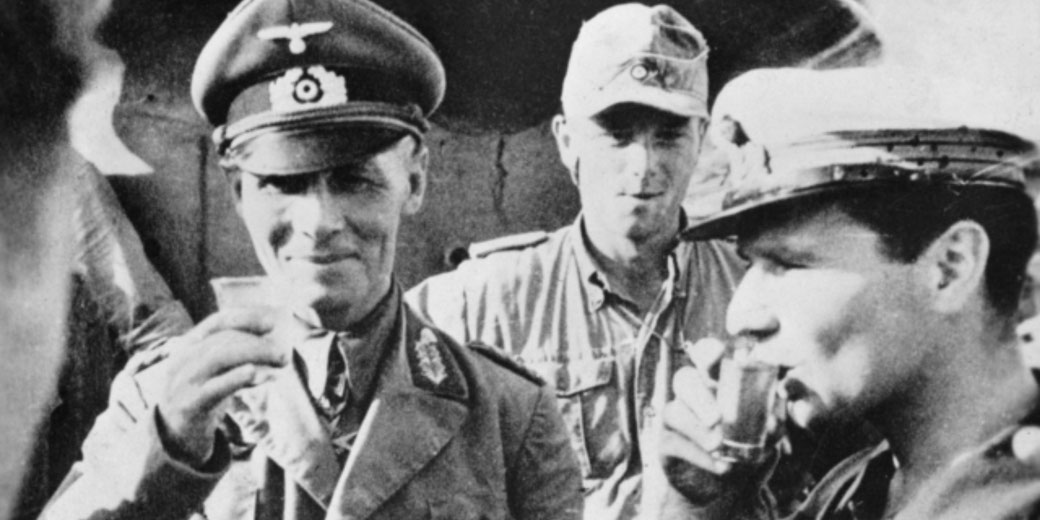
During the Second World War, German Field Marshal Erwin Rommel earned the nickname “Desert Fox” for his rapid advances and notable tactical skill in North Africa, where he outmanoeuvred Allied commanders across vast desert terrain from 1941 to 1943.
While he gained widespread praise for battlefield discipline and humane treatment of prisoners, his later role in the 20 July 1944 conspiracy against Hitler exposed the limits of his loyalty to the regime he once supported.
After his forced suicide and state funeral, wartime reports and memoirs that often contradicted one another and postwar reinterpretations turned Rommel’s life into one of the most debated reputations of any senior commander in the German Army.
Early life and First World War
On 15 November 1891, Erwin Rommel was born in the Swabian town of Heidenheim to a secondary school headmaster and his wife, whose family had long connections to local education.
At first, he felt drawn to engineering, and he chose instead to enter the Officer Cadet School at Danzig in 1910 and received his commission two years later as a lieutenant in the Württemberg Infantry Regiment.
During the First World War, Rommel served on the Western and Eastern fronts, as well as the Italian front.
At Caporetto in October 1917, he led a deep advance against Italian lines near Mount Matajur that resulted in the capture of more than 8,000 prisoners, along with artillery and supplies, while his unit suffered minimal losses.
For this action, he received the Pour le Mérite, which was Germany’s highest military award at the time.
When he emphasised small-unit initiative and careful use of terrain, along with sudden surprise attacks, Rommel developed an approach to warfare that relied largely on flexibility rather than weight of numbers.
After the war, he remained in the Reichswehr, which the Versailles Treaty restricted to 100,000 men, and spent the next decade focused on officer training and development of army doctrine and training ideas.
At this time, Rommel generally avoided political alignment, and he stayed away from paramilitary groups that appeared during the Weimar Republic.
Instead, he developed a reputation as an outstanding instructor whose practical experience appealed to junior officers.
Rise under the Nazi regime
By 1937, Rommel had published Infanterie greift an, a detailed account of his wartime leadership that combined narrative with analysis and became a widely read manual within the German Army at the time.
The book had received fresh attention after 1940, when Rommel’s military successes brought him into the public eye.
Hitler valued military memoirs and admired direct leadership, and he read the book and selected Rommel to lead his personal military escort during the 1939 Polish campaign.
This role placed him in regular contact with Hitler and senior Nazi officials, which later proved very important for his career.
In early 1940, Rommel was given command of the 7th Panzer Division ahead of the invasion of France.
Though he had no previous experience with armoured formations, he adapted quickly and often led from the front.
During the advance through the Ardennes and northern France, his division moved so rapidly that German headquarters often lost track of its location, which prompted officers to refer to it as the “Ghost Division.”
He frequently scouted enemy positions in person, then issued immediate orders to bypass strongpoints and strike at vulnerable support units.
As a result, French resistance collapsed more quickly in his sector than in many others.
His division took part in the capture of large numbers of prisoners, though the total attributed directly to his unit is still uncertain.
After the campaign had concluded, Hitler appointed Rommel to command German forces in North Africa, where Italian troops had suffered repeated defeats at British hands.
In February 1941, Rommel arrived in Libya with a small force that soon became known as the Afrika Korps.
The desert campaigns
At first, Rommel’s orders instructed him to stabilise the front and defend Italian positions.
Instead, he launched an offensive with the limited forces available, and he combined rapid feints and speed with bolder manoeuvres to drive British and Commonwealth troops back to the Egyptian border.
By April 1941, he had retaken Cyrenaica and encircled Allied forces at Tobruk, which reversed months of Italian setbacks.
His ability to direct operations from the front lines when he was often under fire allowed him to make real-time adjustments based on direct observation rather than delayed reports.
The siege of Tobruk lasted 241 days before British forces broke it with Operation Crusader.
Soon, the desert war developed into a long struggle over supply and position.
Rommel clearly understood that without control of ports and reliable convoys, he could not sustain deep offensives.
Even so, he continued to press forward. At the Battle of Gazala in May 1942, he executed a wide flanking manoeuvre that caught the British Eighth Army off guard.
In June, this led to the capture of Tobruk, a key supply centre. Hitler promoted him to Field Marshal the following day, since he recognised the military and symbolic importance of the victory.
Over time, however, Axis supply routes across the Mediterranean came under increasing pressure from Allied submarines and aircraft.
Fuel shortages gradually became critical, and spare parts for tanks arrived too slowly to keep up with battlefield losses.
By October 1942, when the British launched a major attack at El Alamein under General Bernard Montgomery, Rommel’s forces lacked the strength to hold the line.
He requested withdrawal, but Hitler refused. After suffering heavy losses, including nearly 500 tanks and over 30,000 men, Rommel disobeyed orders and retreated westward, narrowly avoiding being surrounded.
By November, Anglo-American forces had landed in Algeria and Morocco during Operation Torch, where they sent more than 100,000 troops and opened a second front in North Africa.
Axis troops soon faced growing pressure from both east and west. Rommel conducted a slow retreat across Libya and continued to fight wherever possible as his forces moved into Tunisia.
After conferring with Hitler in Italy, he returned to Germany in March 1943. The remaining Axis forces surrendered in May, bringing the North African campaign to a close.
Command in Western Europe
Later that year, Hitler placed Rommel in charge of Army Group B, which had the responsibility to defend the coast of northern France from an expected Allied invasion.
After he inspected the Atlantic Wall, Rommel quickly concluded that the permanent defences alone would not stop a determined assault.
He pushed for the installation of more obstacles on the beaches and widespread minefields, supported by defensive positions spread out across likely landing zones.
Importantly, he also argued that German forces must counter the invasion at the shoreline, before Allied troops could organise and expand inland.
However, this strategy conflicted with the views of Field Marshal Gerd von Rundstedt and other senior commanders, who preferred to hold armoured units in reserve for a concentrated counterattack.
The result was a compromise that weakened both strategies and left the German response divided between different ideas about how to fight the battle.
On 6 June 1944, Allied forces landed in Normandy while Rommel was in southern Germany visiting his wife.
Upon his return, he attempted to organise a counterattack but found the Allied beachheads already expanding under heavy air cover.
Over the following weeks, he moved between command posts under constant pressure from Allied artillery and bombers, together with naval guns.
On 17 July, a British fighter squadron attacked his car with machine-gun fire near Livarot, and the crash left him with a fractured skull and several other injuries.
Final days and forced death
While Rommel recovered at home, a group of German officers and civilian plotters who were frustrated with Hitler’s leadership planned to assassinate the Führer.
The failed bomb plot of 20 July 1944 led to mass arrests, which were followed by ruthless interrogations and executions.
Although Rommel had not joined the conspiracy, the Gestapo uncovered evidence that he had spoken with its members and expressed support for negotiating an end to the war.
In a letter dated 15 July 1944, Rommel cautiously urged Hitler to consider ending the war, a stance that contributed to his apparent involvement in the plot.
Some of the plotters viewed him as a potential figurehead in a post-Hitler government, which brought him under further suspicion.
By October, Hitler concluded that Rommel had become a political problem for the regime.
To avoid public disgrace and preserve his reputation as a national hero, the regime offered him a choice.
If he committed suicide, he would receive a state funeral and his family would be spared; if he refused, he would face trial and execution, with likely consequences for his wife and son.
On 14 October 1944, Rommel took poison at his home in Herrlingen, and the Nazi regime announced that he had died from after-effects of his earlier wounds.
Two days later, a public funeral was held at Ulm Cathedral, and senior officials attended it and state media covered the event.
He was buried in Herrlingen cemetery, where a large memorial stone now marks his grave.
Legacy and historical reputation
In the years after the war, Rommel’s battlefield conduct had attracted considerable positive attention from both Allied and German observers.
British generals such as Montgomery often acknowledged his tactical skill, and Winston Churchill praised him in a 1942 speech as a “great general.”
His insistence on treating prisoners well and his refusal to carry out illegal orders combined with his resistance to the scorched earth policy in France contributed to a view that he, in some ways, stood apart from the crimes of the Nazi regime.
During the 1950s and 1960s, West German leaders promoted Rommel as a model officer whose professionalism and honour could help improve the national image of the military.
His image in postwar films and memoirs supported the idea that he had opposed Hitler, even if the full extent of his involvement in the conspiracy is still disputed.
The 1951 film The Desert Fox: The Story of Rommel, which starred James Mason, helped build this image in public memory.
Scholars later pointed out that Rommel had supported the early war aims of the regime and appeared frequently in Nazi propaganda, especially after his victories in France and North Africa.
More recent historians, such as Maurice Remy and Peter Lieb, have questioned the extent of his political opposition to Hitler and whether his dissent stemmed more from practical thinking than clear ideological resistance.
Even so, his military writings remained influential, and officer training schools around the world studied his use of manoeuvre and initiative within a command system that allowed lower-ranking officers to make their own decisions.
His campaigns demonstrated how rapid follow-up attacks and flexible tactics could often achieve success against larger or better-equipped forces.
While historians continue to debate the extent of his political naivety or involvement, Rommel’s career shows the tensions faced by many professional officers under a dictatorship.
His life ended in secrecy, but his reputation continues to invite close study and careful judgment.