
The chaos of AD 193: When there were five different emperors of Rome in one year
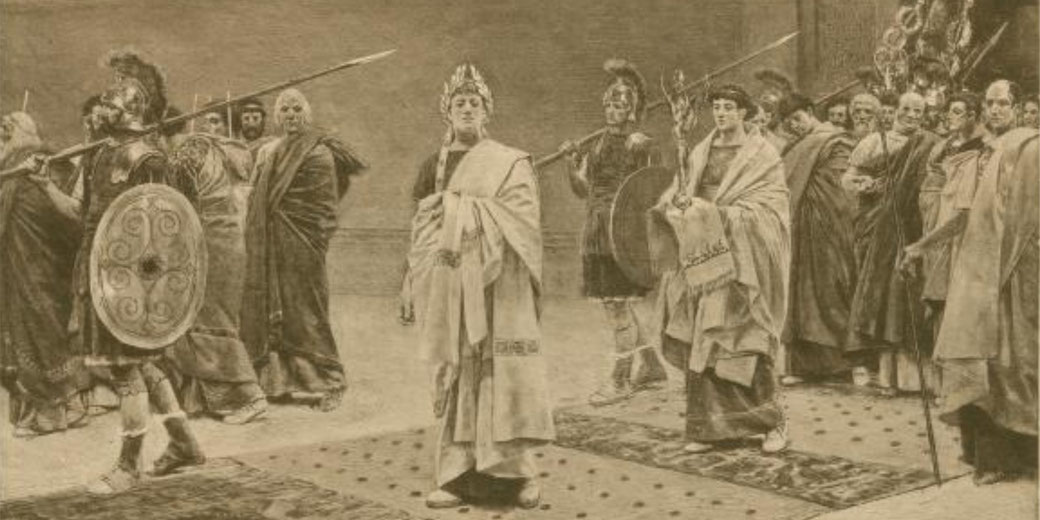
In AD 193, the Roman Empire fell into violent disorder as five different men either seized, bought, or claimed the imperial throne during the course of the year.
Following the sudden assassination of Emperor Commodus on the final day of AD 192, a deadly sequence in which military revolts led to political assassinations and then to usurpations that took advantage of the chaos and destroyed the foundations of imperial power.
For the first time, the imperial title became a prize openly auctioned, bargained for, or taken by force, while armies across the empire abandoned loyalty to Rome in favour of their own commanders.
What caused the Year of the Five Emperors?
By the final days of AD 192, Emperor Commodus had exhausted the patience of the Senate, the military, and the imperial court.
His public claim to be Hercules and his use of religious imagery fed an increasing cruelty born of paranoia that prompted a conspiracy involving key figures inside the palace.
On 31 December, Narcissus, a professional wrestler and close servant, likely strangled the emperor in his bath under orders from Marcia, Laetus, and Eclectus.
Following his death, the Senate immediately declared a damnatio memoriae against him in an effort to erase his name from public inscriptions and memory.
This condemnation was later reversed by Septimius Severus, who appears to have deified Commodus to bolster his own dynastic claims.
After his death, the Senate quickly offered the imperial title to Publius Helvius Pertinax, who was a respected military veteran with a background in civil administration.
Although this choice pleased many senators who desired a return to stability, it failed to consider the growing influence of the military over imperial succession.
The Praetorian Guard, which had played a direct role in removing Commodus, expected a large payment and influence in return for their support.
Soon after the transition, Roman provincial governors had each commanded multiple legions and began to examine the situation in Rome and assess their chances of seizing power.
There was no formal succession law and the army held more authority than the Senate, so those with troops under their command saw an opportunity to bypass tradition.
Consequently, three major claimants emerged from the provinces, and each would contest the throne during the months ahead.
The failed rule of Pertinax
Pertinax was born in Liguria in AD 126 and had earned his rise through the legions by discipline and loyalty rather than wealth or family name.
After he had served in Parthia, Britain, and the Danube provinces, he returned to Rome to take up the post of urban prefect.
Once the Senate had installed him as emperor, he began to implement reforms designed to reverse the corruption and extravagance of Commodus’ final years.
To restore financial integrity, he revalued the denarius, returned lands that had been taken and cut the imperial bureaucracy.
In doing so, he alienated powerful figures who had profited from imperial decay.
Most dangerously, he promised the Praetorian Guard a donativum that he could not fully deliver because he distributed only half of the expected sum and the soldiers viewed this as betrayal.
On 28 March AD 193, a group of Praetorians forced their way into the palace and struck Pertinax down in the courtyard.
Some officers hesitated to respond and none effectively intervened. His death after only eighty-six days in office brought the senatorial influence over the throne to an end and made clear that imperial power rested entirely with armed men.
How Didius Julianus paid to be the next emperor
That same evening, the Praetorian Guard held an auction for the throne inside their fortified camp, which was the Castra Praetoria, in an act without precedent in Roman history.
Outside the gates, two senators, Titus Flavius Sulpicianus and Marcus Didius Julianus, competed openly by offering higher and higher bribes to the guards.
Sulpicianus, who was Pertinax’s father-in-law, had initially gained favour. However, Julianus secured their loyalty by promising 25,000 sesterces to each soldier, a sum that would have required an estimated 200 million sesterces, depending on the true size of the Guard.
By dawn on 29 March, the Senate confirmed his appointment under pressure from the Guard.
When Julianus appeared in public, the Roman people reportedly greeted him with fury and contempt, mocking his lack of military credentials and accusing him of buying the empire like a merchant.
According to Dio Cassius, crowds in the Forum shouted "robber and parricide" as he passed.
His lack of legitimacy became evident immediately, as letters of defiance arrived from the provinces.
Three governors refused to recognise him: Septimius Severus in Pannonia, Pescennius Niger in Syria, and Clodius Albinus in Britain, each commanding veteran legions, and all three prepared for civil war.
Julianus, who attempted to consolidate power, offered further bribes and issued new coinage, but none of his policies could overcome the perception that he had purchased Rome’s highest office without merit or support.
By early June, Severus had marched largely without opposition from the Danube to the gates of Rome because the Praetorian Guard refused to fight.
On 1 June, Julianus was sentenced to death by the Senate, and an officer of the Guard carried out the execution in the palace.
His head was displayed publicly, and his corpse was discarded without honour.
Septimius Severus: The military usurper
Lucius Septimius Severus, who was born in Leptis Magna in AD 145, had served as a lawyer, senator, and provincial governor before taking command of the Danubian legions.
Once Pertinax had died, Severus declared himself emperor on 9 April, claiming to avenge the murdered ruler and restore honour to the empire.
His troops supported him without hesitation, and his march on Rome proceeded rapidly and without resistance.
Upon entering the city, he disbanded the existing Praetorian Guard and replaced them with soldiers from his own army.
He had promised them safety if they surrendered, but he stripped them of rank and banished them from the city.
What is more, he gave rewards to secure loyalty and presented himself as the lawful successor to Pertinax.
Although the Senate gave formal approval, Severus knew his control remained incomplete while powerful generals still held command over the eastern and western provinces.
To delay confrontation in the west, he named Clodius Albinus as Caesar and heir and secured temporary cooperation.
With Albinus pacified, Severus focused on defeating Pescennius Niger, whose position in Syria threatened the unity of the eastern Mediterranean.
Since Niger held Egypt and several wealthy provinces, Severus prepared for a difficult campaign.
Pescennius Niger's war on Rome
Pescennius Niger, who was known for his honour and ability, had governed Syria with dignity during the final years of Commodus’ rule.
In April, his legions declared him emperor, and he quickly gained control of Egypt, Judea, and parts of Asia Minor.
His supporters in the East argued that he offered a lawful alternative to both Julianus and Severus, whom they viewed as usurpers backed by raw force.
Cities such as Antioch and Alexandria aligned with Niger, and he issued coinage under his name while assembling an army to defend his claims.
However, instead of advancing on Italy, he remained in the East, which gave Severus time to gather troops and plan a campaign.
Severus moved swiftly, defeating Niger’s forces at Cyzicus and Nicaea before launching a major assault near the old battlefield of Issus.
In early 194, Niger suffered a final defeat and attempted to escape eastward, but he was caught and executed.
His head, which was severed and preserved, was sent to Rome as a warning to other potential challengers.
Severus then took control of Niger’s territories and punished cities that had offered him support, sometimes reportedly with mass executions or the loss of city rights.
Byzantium, for example, had endured a siege lasting nearly three years and had lost its walls and self-rule, though Severus later rebuilt and restored some of its rights.
Although the eastern threat had been neutralised, Severus still faced a formidable rival in the west.
Clodius Albinus: The last great threat
Clodius Albinus, who was originally from Hadrumetum in North Africa, had governed Roman Britain since the reign of Commodus.
After receiving the title of Caesar from Severus, he waited for further developments and hoped the arrangement would remain stable.
In 195, Severus undercut the agreement by naming his son Caracalla as heir, thereby excluding Albinus from succession.
Albinus responded by declaring himself emperor and crossing into Gaul with a reported 150,000 soldiers, but modern estimates suggest he likely commanded closer to 50,000 to 75,000 men.
His coinage bore the name Imperator Caesar Decimus Clodius Albinus Augustus, and his administration declared war on Severus.
For more than a year, both sides fortified cities, trained soldiers, and prepared for a final confrontation.
On 19 February AD 197, the armies clashed at Lugdunum, a battle that lasted most of the day and ended with a hard-fought victory for Severus.
Albinus either died by suicide or fell in the fighting, and Severus ordered his body mutilated and cast into the Rhône.
His wife and children were executed, and hundreds of his allies were purged in the aftermath.
Although Albinus had declared himself emperor several years after 193, his role in the unfolding power struggle that began that year connected him directly to the chain of events initiated by Commodus’ death.
How disastrous was this year for Rome?
The events of AD 193 effectively confirmed that the Roman Empire no longer had a stable method of succession.
The Senate could no longer determine imperial authority, and the hereditary principle held no weight without military backing.
Armies, not institutions, decided who ruled, and their allegiance could be purchased, traded, or demanded under threat.
As a result of the civil wars that followed, grain routes from Egypt were disrupted, tax revenues fell sharply, and cities across Asia Minor and Gaul suffered substantial damage from military campaigns.
Eastern cities lost privileges, citizens were executed for aiding Niger, and seizures of land and goods became common as Severus enriched his regime.
Byzantium, which had resisted Severus, was nearly destroyed during the siege.
Though the frontier armies remained intact, they had grown accustomed to fighting fellow Romans rather than foreign invaders.
After the events of 193, future emperors understood that, in practice, the support of the legions determined survival more than senatorial decree or approval of the citizens.
The chaotic power struggles of that year set a pattern that would likely trouble the empire for generations, as the throne became a reward for generals rather than a position governed by law.
The old idea of imperial Rome, which had rested on the stability of Augustus' rule, had ended, and a new era of rule by the military had begun.