
What was the mysterious and incredibly valuable substance known as ‘Egyptian Blue’?
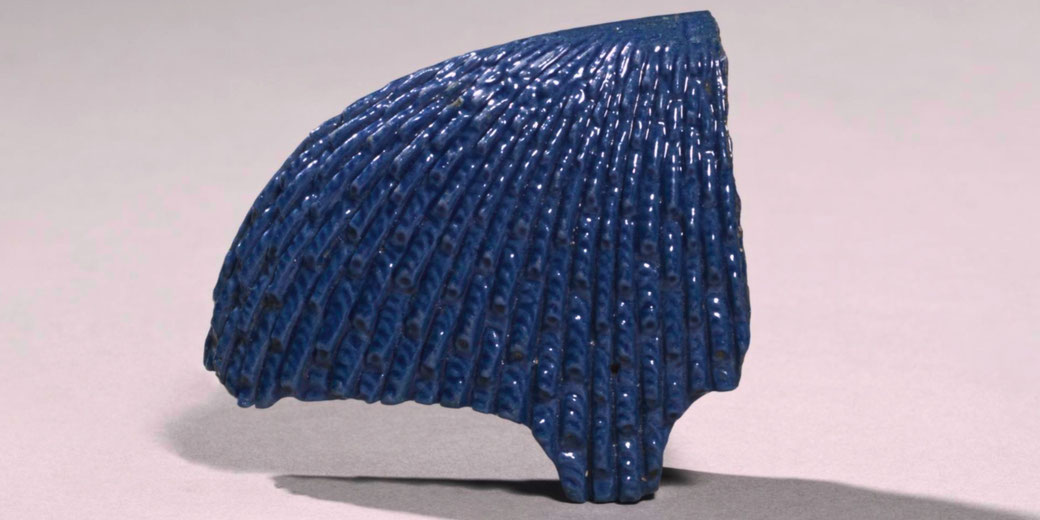
On the ceilings of tombs and the decorated surfaces of coffins, as well as in the jewellery of Egypt’s elite, a brilliant synthetic pigment known as Egyptian Blue appeared as early as the Fourth Dynasty around 2500 BCE, with early uses that scholars have confirmed in elite burials at Saqqara and other Fifth Dynasty contexts.
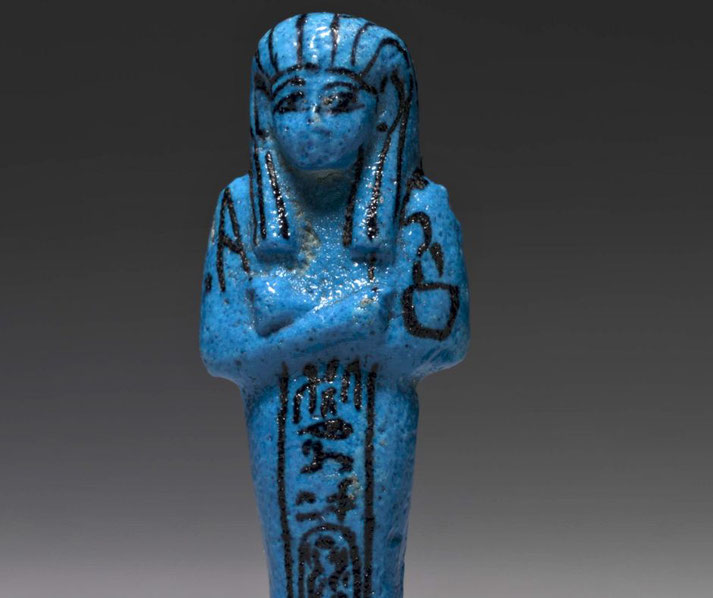
Artisans used it to depict the hair of gods and the garments of the dead, and they coloured the sacred waters of the Nile with the same pigment, which reinforced religious meanings tied to the afterlife and divinity, along with ideas of rebirth.
Although the precise formula disappeared from use by the early medieval period, its intense colour endured on ancient artefacts, but modern scientists have now confirmed that it was the first man-made pigment in recorded history.
Origins and importance in Ancient Egypt
From the Old Kingdom onward, Egyptian artists generally placed great importance on colour symbolism, and by the mid-third millennium BCE, they had begun producing a pigment with a bright colour unlike any naturally occurring mineral.
They often applied Egyptian Blue to statuary and tomb walls, as well as to a range of ritual objects, as a way to signal connections to the sky and the presence of the gods.
Within painted scenes, artists coloured the skin and hair of deities such as Amun and Ra in this pigment, and they sometimes applied it to the beards of gods like Osiris, as seen in temple reliefs and funerary murals such as those in the tomb of Ramesses VI.
In particular, in the royal and noble tombs, including those at Saqqara and Thebes, the pigment framed solar boats and night skies, together with offerings to the gods.
In the Tomb of Rekhmire at Thebes, for instance, Egyptian Blue highlights scenes that show official tribute and acts of worship to the gods.
Many Egyptians viewed the colour as a visual reminder of the heavens and the first waters of Nun.
For that reason, blue also adorned funerary items such as amulets and scarabs, along with strings of glazed faience beads that people intended to guide and protect the dead in the afterlife.
Since such beliefs largely remained consistent throughout Egyptian history, the use of Egyptian Blue persisted from the Old Kingdom into the Roman period.

How was Egyptian Blue made?
To achieve the colour's intensity, artisans typically combined silica-rich sand or crushed quartz with copper compounds and calcium carbonate from limestone, together with a soda-based flux like natron or ash from desert plants.
Once mixed, the compound required heating to between 850 and 1000 degrees Celsius in specially prepared kilns adapted from ceramic firing techniques.
As a result, the chemical reaction produced cuprorivaite, a crystalline compound that appeared blue and glassy.
After the compound cooled, the material was ground into fine powder for use in paints or fused as a glaze.
Although the process might seem straightforward, it demanded close attention to firing time and ingredient purity, as well as the thermal stability of the mixture.
If the balance of materials shifted or if the heat remained uneven, the resulting pigment could lose its colour and appear green or black.
For this reason, pigment production likely became the work of trained specialists who had access to consistent raw materials and well-maintained kilns.
How far was it traded?
As Egyptian power expanded and trade networks developed, Egyptian Blue moved with artists and merchants across the Mediterranean, along with the contacts that existed between different royal courts.
By the Late Bronze Age, Minoan palaces on Crete featured frescoes with vibrant blue pigments, and some scholars have suggested these may have included Egyptian Blue, particularly in marine-themed scenes such as dolphins and floral patterns.
For instance, the Dolphin Fresco from the Palace of Knossos offers a striking example of this influence.
Aegean and Near Eastern artisans either imported finished pigment or imitated the Egyptian production method locally.
Later, during the Greek and Roman periods, Egyptian Blue continued to appear in decorative arts.
Wall paintings in Pompeii and Herculaneum contain clear examples of the pigment, especially in ceiling panels and mythological scenes, along with many of the decorative border patterns.
Egyptian Blue is particularly visible in the House of the Vettii, where it appears in both decorative patterns and scenes with human figures.
The Romans knew it as caeruleum, and it became a preferred colour in elite homes and public baths, along with prominent temples.
Roman workshops likely maintained the technical knowledge to produce the pigment themselves, although some may have imported it from older eastern centres.
Eventually, its use declined as new pigments became more popular and the knowledge of its manufacture faded from common practice.
Rediscovery and scientific analysis in the modern era
For many centuries, Egyptian Blue had remained visible only in works of art that survived, but its method of creation had largely remained unknown.
As pigments like lapis lazuli and azurite became the most common during the medieval and Renaissance periods, Egyptian Blue had all but disappeared from the artist’s palette.
Only in the nineteenth century did scholars begin to analyse ancient paints and glazes, and they used early chemical techniques that later helped scientists rebuild the original methods.
Initial tests had confirmed the presence of copper and silica, but further research was needed to reconstruct the original process.
Gradually, as scientific instruments improved, researchers used spectroscopy and electron microscopy to study pigment samples, and by the early 2000s, researchers from institutions such as the British Museum and the University of Pisa had identified cuprorivaite as the key compound that was responsible for the blue colour.
Significantly, scientists then discovered that Egyptian Blue could emit infrared radiation when it was exposed to visible light, and this reaction showed an unexpected glowing quality called photoluminescence.
That finding helped to open the possibility of using the pigment in infrared sensors and bioimaging tools, as well as in various forms of security technology, and this included experiments with near-infrared luminescence in biomedical imaging and art conservation.
Without intending it, ancient artisans had created a substance with properties suited to twenty-first-century research.