
Historical sources on the Mongols
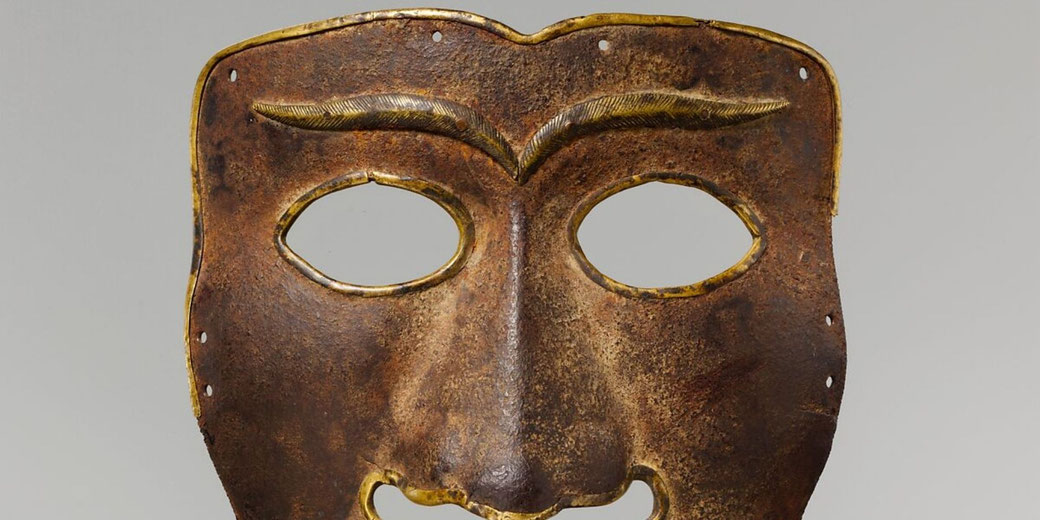
The historical sources on this page examine the rise of Genghis Khan, his early life, the military strength of Mongol armies, and the expansion of the empire under later rulers such as Ogedei Khan and Kublai Khan.
Accounts by Harold Lamb and Jeremiah Curtin describe traditions surrounding Temujin’s birth, his father’s death, his selection as Genghis Khan, and the disputed circumstances of his own death.
Eyewitness descriptions from John of Plano Carpini and Marco Polo provide evidence about Mongol weapons, armour, warfare, leadership, and imperial expansion.
Source 1
Extract A
"Endurance was the first heritage of Genghis Khan, whose birth name was Temujin [a Mongol name meaning 'The Finest Steel']. At the time of his birth his father had been absent on a raid against a tribal enemy, Temujin by name. The affair went well both home and afield; the enemy was made prisoner, and the father, returning, gave to his infant son the name of the captive foe."
Extract B
"He explained to them that they must choose one of their number to have authority over the others. Naturally enough, after the events of the last three years, the choice of the kurultai [a grand council of Mongol chiefs] fell upon Temujin. More than that, the council decided that he was to have a fitting title. A soothsayer [a person believed to be able to predict the future] in the gathering now came forward and announced that his new name should be Genghis Kha Khan, the Greatest of Rulers, the Emperor of All Men."
Extract C
"The council was pleased, and at the unanimous insistence of the khans [Mongol chieftains] Temujin assumed his new title."
Extract D
"After this battle he continued during six years to render himself master of additional kingdoms and cities; until at length, in the siege of a castle named Thaigin, he was struck by an arrow in the knee, died of the wound, and was buried in the mountain of Altai. [Other accounts of Genghis Khan's death record that he died of illness, was struck by lightning, or fell from his horse; historians disagree on what actually happened.]"
Contextual information:
Harold Lamb was an American historian and biographer who published Genghis Khan: The Emperor of All Men in 1927, drawing on Persian and Mongolian chronicles as well as Chinese records. The book was written for a general audience and was one of the most widely read early English-language accounts of Genghis Khan's life and conquests. Lamb had access to a wide range of translated medieval sources that were not yet available to earlier Western historians.
Bibliographical reference:
Lamb, H. (1927). Genghis Khan: The Emperor of All Men (pp. 3, 107–108). Doubleday, Page & Company.
Copyright: Public domain.
Source 2
Extract A
"Some months after the capture of Hoelun, Yessugai [Genghis Khan's father] made attacks on the Tartars [a rival tribe], and among other captives took Temudjin Uge, a chieftain. Hoelun gave birth to a son at that period near the hill Dailiun Baldak. The boy was born grasping a lump of dark blood in his fist very firmly, and since he was born when Temudjin Uge was taken they called the child Temudjin [the future Genghis Khan]. After that Hoelun had three other sons: Kassar, Hochiun and Taimuge, and one daughter, Taimulun."
Extract B
"On the road home he stopped at Cheksar and met Tartars who arranged there a feast for him. Being hungry and thirsty from traveling he halted. His hosts, who knew well that he had captured and killed very many of their people, Temudjin Uge with others, had poison made ready, and gave it in drink to him. Yessugai rode away and reached home in three days, but fell ill on the journey, and his trouble increased as he traveled. 'There is pain in my heart,' said he, 'who is near me?' At that time Munlik, a son of Charaha, happened in at the yurta [a portable tent used as a home by Mongol families], and Yessugai called him. 'My children are young,' said he, 'I went to find a bride for my son Temudjin, and have found her. On the way home I was poisoned by enemies. My heart is very sore in me, so go thou to my brothers and see them, see their wives also. I give thee this as a duty; tell them all that has happened. But first bring me Temudjin very quickly.' Yessugai died shortly after without seeing Temudjin. [Curtin's account says Temujin was thirteen years old when his father died. Some other historical sources record the age as nine or eight; historians disagree on the exact age.]"
Contextual information:
Jeremiah Curtin was an American ethnologist and historian who published The Mongols: A History in 1908, based on Persian and Mongolian primary sources as well as Chinese chronicles. The book covers the rise of Genghis Khan and the expansion of the Mongol Empire across Asia. Curtin drew on a wider body of translated chronicles than most Western writers of his era.
Bibliographical reference:
Adapted from Curtin, J. (1908). The Mongols: A History (pp. 18, 26–27). Little, Brown, and Company.
Copyright: Public domain.
Source 3
"Moreover they are required to have these weapons: two long bows or one good one at least, three quivers full of arrows, and one axe, and ropes to draw engines of war [machines used to attack fortifications, such as catapults]. But the richer have single-edged swords, with sharp points, and somewhat crooked. They have also armed horses, with their shoulders and breasts protected; they have helmets and coats of mail. Some of them have jackets for their horses, made of leather artificially doubled or trebled, shaped upon their bodies."
Contextual information:
John of Plano Carpini was an Italian friar who was sent by Pope Innocent IV in 1245 as a diplomatic envoy to the Mongol court. He travelled through Central Asia and spent time at the court of the Great Khan, making him one of the first Europeans to write a detailed eyewitness account of the Mongols. His History of the Mongols was completed around 1247 and describes Mongol military organisation and battlefield tactics.
Bibliographical reference:
John of Plano Carpini. History of the Mongols (1900, W. W. Rockhill, Trans.; pp. 22–23). Hakluyt Society. (Original work written ca. 1247).
Copyright: Public domain.
Source 4
"To Chingis-khan [Genghis Khan] succeeded Cyhn-khan [Ogedei Khan, Genghis Khan's third son and chosen successor]; the third was Bathyn-khan, the fourth Esu-khan, the fifth Mongu-khan, the sixth Kublai-khan, who became greater and more powerful than all the others, inasmuch as he inherited what his predecessors possessed, and afterwards, during a reign of nearly sixty years, acquired, it may be said, the remainder of the world."
Contextual information:
Marco Polo was a Venetian merchant and traveller who spent approximately seventeen years in Asia, including many years at the court of Kublai Khan in China, from around 1275 to 1292. His account, known as The Travels of Marco Polo, was dictated around 1298 and became the most influential European description of the Mongol Empire and China in the medieval period. Marco Polo had direct personal experience of Kublai Khan's court and administration, making his account a valuable primary source for the later Mongol rulers. [Kublai Khan established the Yuan dynasty in China in 1271 and completed the conquest of China by 1279.]
Bibliographical reference:
Polo, M. The Travels of Marco Polo (1818, W. Marsden, Trans.; Vol. I, p. 31). Cox and Baylis. (Original work written ca. 1298).
Copyright: Public domain.