
Who was the real Pocahontas?
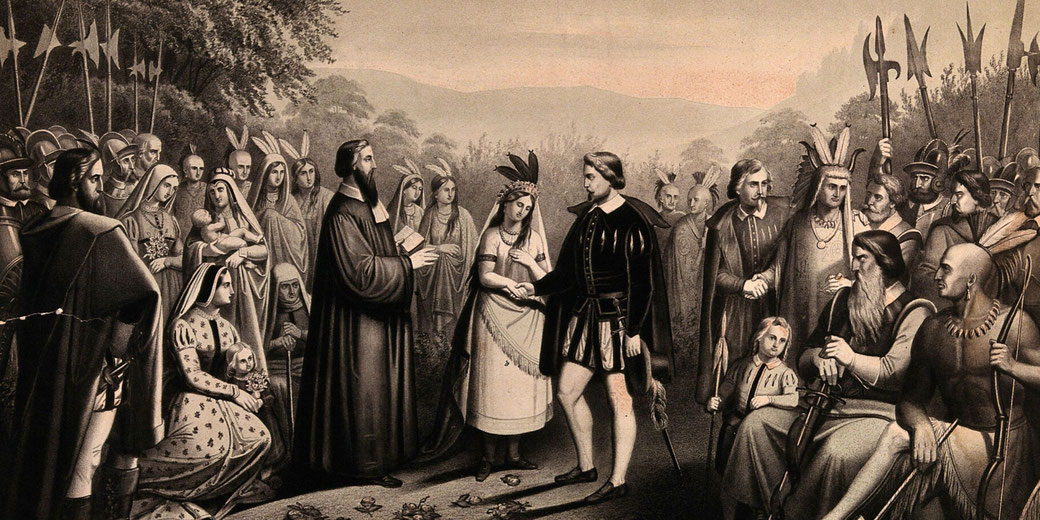
During the first decades of English colonisation in North America, a Powhatan girl named Pocahontas became involved in events that helped ensure Jamestown's survival and contributed to the Virginia Company's increased investment.
Between 1607 and 1617, she moved from a Powhatan chief’s daughter to a baptised Christian married to an English tobacco planter and later became, for a time, a symbol that was paraded before London society.
However, her image was altered by writers, painters, and politicians who often used her story to justify the English conquest of the New World.
Her birth and childhood
Around 1596, Pocahontas was born into the Powhatan town of Werowocomoco, located along the banks of the York River in present-day Virginia.
Her father was Wahunsenacawh, who ruled the Powhatan Confederacy as paramount chief, and his power reached across an alliance of approximately thirty Algonquian-speaking tribes, which controlled much of the Chesapeake Bay region.
The confederacy’s authority rested on the collection of tribute and the ability to exert military force, supported by seasonal agriculture and hunting.
His control covered an estimated population of between 14,000 and 21,000 people.
Her formal name was likely Amonute, though she also carried the private name Matoaka, which was known only within her community.
The nickname 'Pocahontas' meant “playful one” or “mischievous girl,” and it was this name that entered English records.
As the daughter of a powerful chief in a matrilineal society, Pocahontas likely travelled between villages, observed important ceremonies, and learned what was expected of Powhatan leaders.
At this time, her father gradually expanded his influence by demanding tribute from surrounding groups, by establishing new settlements, and by incorporating less powerful chiefs into his authority.
Consequently, Pocahontas grew up during a period of increased regional control. Werowocomoco served as the political centre of this growing power, and although she lived within a system that valued community ties and seasonal rhythms, her father’s growing political power meant she also stood in the path of foreign interests that arrived by sea.
Encountering outsiders
In May 1607, English settlers founded Jamestown along the James River. They arrived under the sponsorship of the Virginia Company, which primarily sought profit from trade and resources.
However, their poor planning and a lack of agricultural knowledge, combined with the colonists' unfamiliarity with the climate, largely produced hunger and disease that caused many early deaths.
Initially, Wahunsenacawh considered the settlers potential trade partners or subordinates and provided limited assistance in exchange for tools, copper, and weapons. C
ommon trade items included metal hatchets, bells, and coloured beads.
It was at this stage that Pocahontas first appeared in English accounts. On several occasions, she delivered food to the starving colonists, possibly as part of a deliberate diplomatic action.
Among the Powhatan, elite women sometimes performed ceremonial roles during inter-tribal negotiations or alliance-building events, which probably meant that her visits were the result of direct instructions from Powhatan leaders rather than her own personal choice.
Soon after, conflict replaced cautious exchange as English demands for more food and land sparked violence, while Powhatan attacks on isolated settlements provoked retaliation.
By the time of the Starving Time in 1609–10, Pocahontas had disappeared from English accounts, which suggests that she may have been absent from Jamestown.
As tensions escalated, her involvement shifted from voluntary appearances at Jamestown to forced separation from her people.
Meeting John Smith
During an expedition in December 1607, Captain John Smith was captured by Powhatan warriors and brought before Wahunsenacawh.
According to Smith’s later writings, Pocahontas intervened and saved his life by covering his head with her own as warriors prepared to strike.
However, this version of events appeared for the first time in 1624, long after Pocahontas’s death and years after Smith had left Virginia.
Specifically, it was published in The Generall Historie of Virginia, a work that combined Smith’s memories with wider colonial narratives.
However, earlier records, including Smith’s initial reports, made no mention of such a dramatic rescue, so historians have suggested that he may have misunderstood a ritual ceremony in which his symbolic death and rebirth indicated his temporary adoption into the Powhatan world.
Under those circumstances, Pocahontas’s role may have followed a choreographed tradition rather than a spontaneous act of compassion.
As a result, her involvement in the episode remains uncertain. Regardless, John Smith had departed Virginia in 1609 due to an injury and never returned.
During the years that followed, Pocahontas’s life had changed dramatically.
The kidnap and marriage of Pocahontas
During renewed conflict between the English and the Powhatan, Captain Samuel Argall planned in 1613 to kidnap Pocahontas to use as leverage.
He persuaded a local tribal leader, Japazaws of the Patawomeck, to lure her onto his ship and, when she had then been taken by force, she was taken first to Jamestown and later to Henricus (a fortified settlement upriver from Jamestown), where she remained in English custody.
Wahunsenacawh responded with demands for her return but refused to meet English conditions involving prisoners and stolen goods.
While in English custody, Pocahontas had received religious instruction and had eventually converted to Christianity.
In 1614, she was baptised as “Rebecca” and married John Rolfe, a widowed planter who had introduced a profitable tobacco strain.
Rolfe claimed spiritual reasons for the marriage in a letter to Governor Dale, yet the union provided the Virginia Company with a convenient example of native conversion and submission to English culture.
As a result of her marriage, a period of temporary peace followed, which helped reduce attacks and secured a fragile truce between the colonists and Powhatan leaders.
She gave birth to a son, Thomas, the following year. Her new life as a Christian wife on a tobacco plantation removed her from her role within Powhatan society and placed her at the centre of English propaganda efforts.
English sources portrayed the marriage as a symbol of unity, but it grew out of coercion and captivity and from strategic calculation by colonial leaders, as she had no ability to return to her people or to reject the cultural transformation imposed upon her.
Her incredible journey to England
In 1616, the Virginia Company arranged for Pocahontas to travel to England with her husband, son, along with a group of Powhatan attendants.
Their goal was to present her as proof that native peoples could be “civilised” and to secure greater financial investment in the colony.
As a result, she sailed aboard the Treasurer and arrived in London in June, where she became the subject of great public interest.
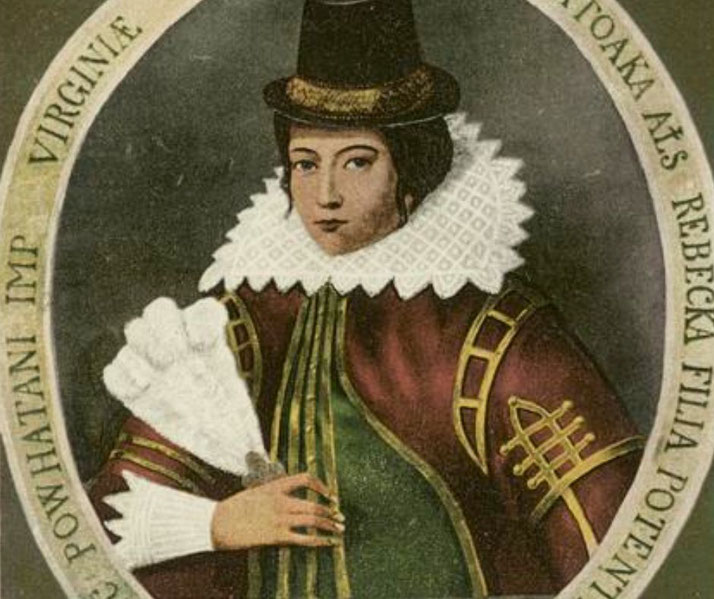
Shortly after her arrival, she attended plays at the Globe Theatre, visited churches, and posed for a painted portrait in English dress.
The artist Simon van de Passe created the best-known image of her, which was widely reproduced, and the company arranged for her to meet influential figures and provided accommodations suited to her new role as a diplomatic figure.
Public events introduced her as “Lady Rebecca,” and pamphlets praised her Christian virtue.
During this time, she encountered John Smith again, who had returned to England.
Their brief meeting included an emotional exchange, according to Smith’s later account, but Pocahontas allegedly criticised him for abandoning her people and dishonouring earlier promises.
The meeting exposed tensions that colonial accounts often ignored, as it made clear her awareness of betrayal and manipulation.
By early 1617, she had grown unwell with a respiratory infection such as pneumonia or tuberculosis, which had progressed rapidly during the cold English winter.
Her tragic death away from her homeland
In March 1617, the Rolfes prepared to return to Virginia aboard the ship George, which was docked at Gravesend.
Before departure, Pocahontas collapsed and died at the age of approximately twenty or twenty-one.
Her burial, which had taken place on 21 March at St George’s Church, left a grave whose location was lost after a later fire destroyed the building.
A commemorative statue of her is located near the church in Gravesend.
Her son Thomas, who remained in England and was raised by English relatives, eventually returned to Virginia.
John Rolfe continued his tobacco operations until his death in 1622. Soon after, another major conflict between the English and the Powhatan broke out, undoing the fragile peace her marriage had helped establish.
Her death removed the symbolic figure the English had used to frame native relations, so without her presence the use of her image intensified, while real political relationships fell apart.
The Powhatan Confederacy entered a period of rapid decline when land seizures and armed attacks took territory and disease weakened its people.
Her brief life had ended far from the world into which she was born, and the decisions that determined her fate were made by others who valued her more for what she could symbolise than for who she actually was.
Why people still talk about Pocahontas today
Over the following centuries, writers, artists, and educators repeated her story in altered forms.
In particular, seventeenth-century colonists described her as a Christian success story, while later authors depicted her as a romantic peacemaker.
In each version, historical accuracy was replaced by invention, and her symbolic value took priority over her lived experience.
During the nineteenth century, she became a popular figure in American historical writing.
Her name was used to promote a vision of peaceful settlement, and her marriage was portrayed as a model of interracial harmony.
In reality, the use of her image concealed the violence and coercion of colonisation.
More recently, historians such as Camilla Townsend and Helen Rountree have worked to recover the real Pocahontas through examination of primary documents and through reconsideration of Powhatan oral traditions.
She existed first as a political hostage and later as a diplomatic figure who became a young woman forced into English domestic life.
Today, debates over how she is remembered continue, as her life prompts questions about how Indigenous women are remembered and how colonisation is taught.
She did not choose the role that history assigned to her. Yet, understanding the full nature of her experience helps present her as more than a legend.
She witnessed invasion, suffered manipulation, and became a casualty of empire.