
Steel predators: The silent threat of German U-boats in WWI
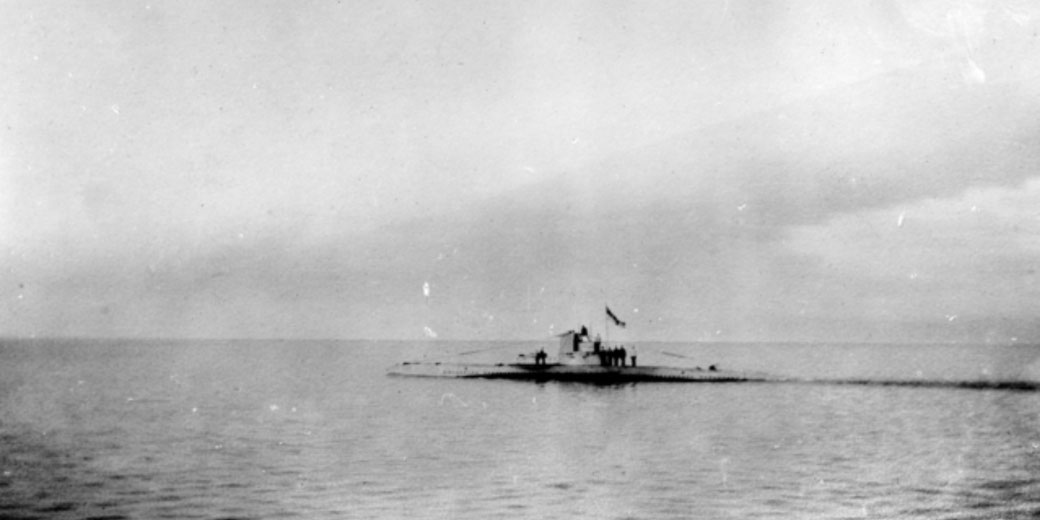
Beneath the restless, grey surface of the Atlantic Ocean, a new kind of terror that came from modern technology waited to strike at the heart of global trade during the First World War.
Naval warfare had previously relied largely on the visible show of power through massive dreadnoughts and line-of-battle ships.
The introduction of the German Unterseeboot changed this pattern and helped turn the open sea into a dangerous space where death arrived without warning from the deep.
German naval planners recognised that the submarine offered a possible way to bypass the usual strength of the British Royal Navy, but this type of vessel helped change the rules of engagement and introduced a cold, planned method to naval fighting.
As a result, the ocean floor eventually became the final resting place for many thousands of sailors and for millions of tons of shipping as a result of this underwater campaign.
What were 'U-boats'?
The term 'U-boat' came from the German word Unterseeboot, which translated literally to 'undersea boat'.
German engineers designed these vessels as surface craft that had the temporary ability to dive for attack or escape.
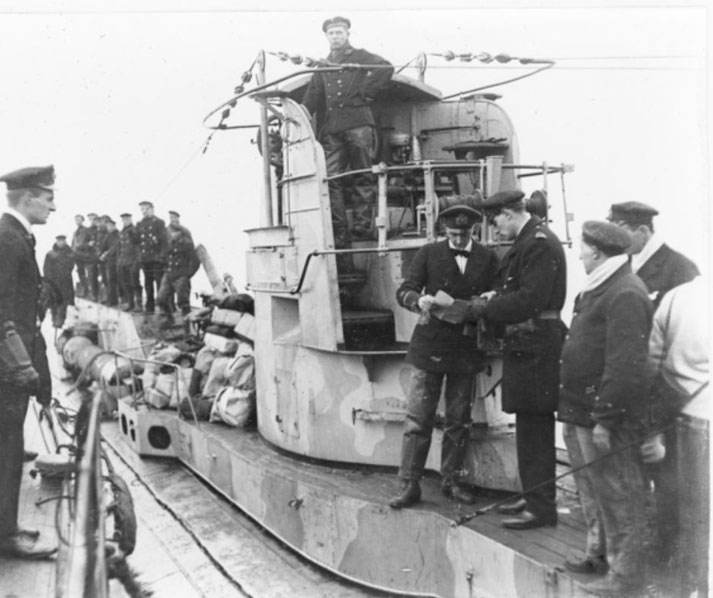
The standard U-boat of the Great War had a long, round pressure hull encased within a more streamlined outer hull, and this outer shell improved its movement and safety when the vessel travelled on the surface.
Inside the pressure hull, a crew of thirty to forty men lived in cramped, humid conditions surrounded by a maze of valves, pipes, and machinery.
The air inside often became unpleasant with the smell of diesel oil, sweat, and food that the crew cooked.
Power systems on these vessels used a two-engine setup, as diesel engines powered the submarine while it stayed on the surface and at the same time recharged the large banks of batteries that were located beneath the deck.
Once submerged, the crew switched power to electric motors so the boat could move quietly and avoid detection.
Oxygen supply stayed limited, which forced commanders to surface frequently to recharge batteries and bring in fresh air.
The main weapons consisted of torpedo tubes located in the bow and stern, along with a deck gun that the crew used against smaller targets to save torpedoes.
Why they were the technical marvel of their age
German naval technology advanced very quickly in the years before 1914. The Kaiserliche Marine (Imperial Navy) had invested heavily in improving the abilities of their underwater fleet.
Optical equipment gave German commanders a significant advantage. Carl Zeiss was a well-known optics manufacturer and had produced periscopes that offered excellent clarity and light transmission, which allowed captains to identify targets from greater distances even in low-light conditions.
These periscopes used carefully designed prism systems that could withstand the high pressure of deep dives.
Navigation and targeting systems had also improved compared to earlier designs.
The gyrocompass replaced the traditional magnetic compass, which worked poorly inside a steel hull and used the rotation of the earth to find true north.
This allowed for much more accurate underwater navigation. Also, torpedo technology had advanced steadily alongside the vessels themselves.
The G7a torpedo used a compressed-air heater engine and carried a 160-kilogram hexanite warhead.
It travelled at speeds of up to 40 knots. Later classes of submarines that included the U-93 type had an operational range of 9,000 nautical miles.
This long range allowed German patrols to reach the eastern coast of North America and the shipping lanes of the mid-Atlantic.
The strategic importance of U-boats in WWI
Admiral Alfred von Tirpitz understood that the German High Seas Fleet could not hope to defeat the British Royal Navy in a direct head-to-head battle.
The British Grand Fleet kept a distant blockade that effectively cut Germany off from overseas trade, but the U-boats offered the German Empire an important counter-blockade strategy.
As such, German planners identified the dependence that Great Britain had on imported food and raw materials as a serious weakness.
They calculated that sinking a set amount of merchant shipping each month would cripple the British economy and force a surrender.
Early actions already showed the deadly potential of the submarine against warships.
On 22 September 1914, U-9 was commanded by Otto Weddigen and intercepted three British armoured cruisers, HMS Aboukir, HMS Hogue, and HMS Cressy, off the Dutch coast.
Weddigen sank all three vessels in less than an hour and nearly 1,500 British sailors died in the attack.
This attack showed that even a single, small underwater craft could destroy important naval ships without any damage to the submarine itself.
A such, the focus of the U-boat arm soon moved away from attacks on warships and turned to a campaign of Guerre de Course, or commerce raids that aimed to choke the Allied supply lines.
The brutal nature of unrestricted submarine warfare
International maritime law at first controlled how submarine attacks should take place.
The 'Cruiser Rules' required a submarine to surface, signal a merchant vessel to stop, and allow the crew to abandon ship before sinking the target.
Obedience to these rules became increasingly dangerous for U-boat crews. British merchant ships began to carry hidden deck guns and received orders that told them to ram surfaced submarines.
In response, Germany declared the waters surrounding the British Isles a war zone on 4 February 1915.
Commanders then received permission to attack vessels without warning. On 7 May 1915, U-20 was under the command of Walther Schwieger and fired a torpedo at the RMS Lusitania off the coast of Ireland.
The liner sank in eighteen minutes, ad the disaster killed 1,198 people, and 128 American citizens were among the dead.
Global anger followed the sinking. Germany temporarily restricted its submarine operations to calm neutral nations, particularly the United States.
The German High Command eventually decided that the only path to victory lay in the restart of unrestricted submarine warfare.
Kaiser Wilhelm II signed the order for the campaign to begin again on 1 February 1917.
The German naval staff estimated that sinking 600,000 tons of shipping per month would force Britain to sue for peace within five months.
U-boat captains torpedoed neutral and enemy ships alike. The ocean became a zone of total war where hospital ships, tankers, and freighters often faced immediate destruction.
How the Allies responded to the U-boat threat
The British Admiralty struggled to find an effective answer during the early years of the war, as anti-submarine nets and armed patrols largely failed to stop the losses.
Prime Minister David Lloyd George eventually overruled the Admiralty's doubts and ordered the introduction of the convoy system in 1917, which involved grouping merchant ships together under the escort of destroyers and corvettes.
The concentration of targets forced U-boats to attack well-defended formations rather than pick off isolated stragglers.
Also, new technology greatly helped the Allied effort, as naval researchers developed the hydrophone, a passive sound-detection device that allowed surface ships to detect the sound of U-boat propellers and engines underwater.
Once a destroyer found a submarine, it dropped depth charges. These canisters contained high explosives and a hydrostatic fuse set to explode at a specific depth.
The resulting shock wave in the water could crack or crush the pressure hull of a nearby submarine.
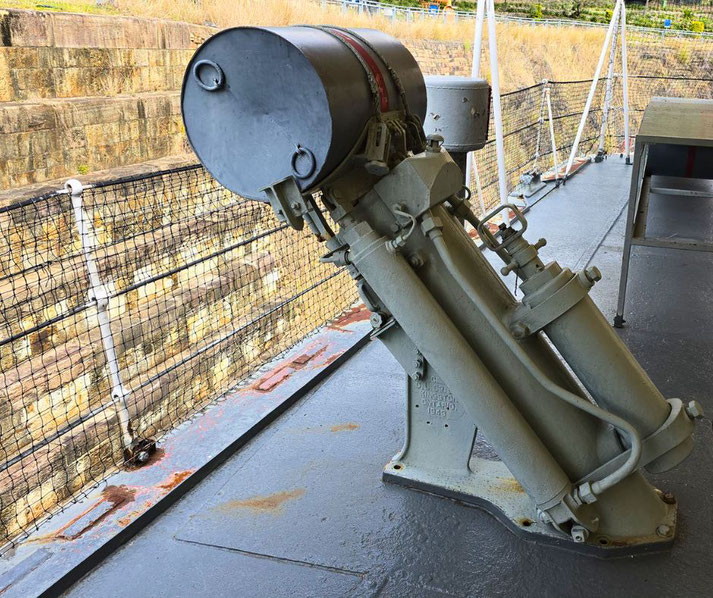
The United States Navy added significant help to the anti-submarine effort after its entry into the war in April 1917.
American and British forces worked together on the North Sea Mine Barrage in 1918.
This huge engineering project placed more than 70,000 mines across the northern exit of the North Sea, and stretched from the Orkney Islands to Norway and aimed to trap German submarines within the North Sea.
The decline and end of the U-boat menace
The effectiveness of the U-boat campaign fell as Allied countermeasures took hold. S
hipping losses had peaked in April 1917 but then dropped steadily, which meant that the convoy system reduced the number of targets available to German commanders.
German shipyards could not build replacement submarines quickly enough to keep up with operational losses.
Experienced crews died at a very fast and unsustainable rate, and new recruits lacked the training to operate their modern submarines effectively against increasingly aggressive Allied escorts.
Finally, the failure of the Spring Offensive on the Western Front in 1918 happened at the same time as the collapse of the U-boat strategy at sea.
The submarine fleet had ultimately failed to starve Britain into submission before the arrival of American manpower and, by October 1918, the German government suspended commerce raiding in a final attempt to secure favourable armistice terms.
The fighting officially ended on 11 November 1918. Under the terms of the Armistice, Germany agreed to surrender its submarines.
The U-boats sailed to the British naval base at Harwich, where their crews disembarked for the final time.
The surrender ended the first Battle of the Atlantic.