
The revolutionary WWI convoy system that outsmarted the deadly German U-Boats
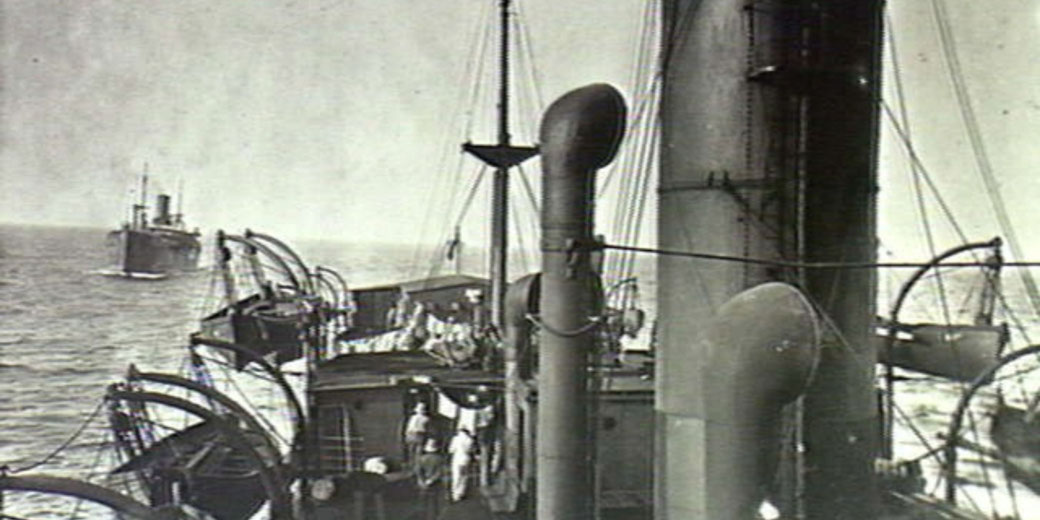
Across the Atlantic’s vast shipping lanes, a silent predator had begun to strike with increasing frequency. German U-boats often targeted Allied merchant vessels with careful accuracy so that the submarines launched torpedoes without warning and then vanished beneath the waves.
As British supply routes collapsed under the pressure and the monthly loss of cargo tonnage soared past a million tons, naval leaders adopted a radical defensive system that relied on tightly organised intelligence work and close cooperation to blunt the submarine threat and prevent the collapse of the British war effort.
The devastating German U-Boat menace
At the start of the war, German naval commanders saw their submarine fleet as a major weapon that could challenge British control at sea.
U-boats, or Unterseeboote, were submarines that allowed Germany to bypass the Royal Navy’s surface strength and strike directly at Allied trade.
On 4 February 1915, Germany declared the seas surrounding the British Isles a war zone.
From that point, merchant vessels risked destruction that often came without warning.
By May 1915, the dangers had become undeniable. The sinking of the Lusitania, which killed 1,198 civilians including 128 Americans, shocked public opinion and demonstrated the destructive potential of unrestricted submarine warfare.
Although the United States remained neutral, the diplomatic consequences of the attack encouraged future Allied support and drew global attention to the growing maritime crisis.
Eventually, German leaders had concluded that, in their view, only a constant submarine campaign could break Britain’s resistance.
In December 1916, Admiral Henning von Holtzendorff sent a detailed report to the Kaiser in which he argued that if Germany targeted all shipping, whether military or civilian, Britain could be starved into surrender within six months.
On 1 February 1917, unrestricted submarine warfare resumed at full scale.
Within weeks, losses became increasingly disastrous. Between February and April, German U-boats sank over 1,000 Allied and neutral ships.
In April alone, Allied losses approached 860,000 gross tons, marking the peak of monthly shipping losses during the war.
During this period, up to 25 percent of merchant vessels that sailed to Britain in certain months failed to arrive and the situation threatened to paralyse Britain’s economy and drain essential war supplies, which created the serious risk of food shortages across much of the population.
U-boats prowled the English Channel, the Irish Sea, and the Western Approaches, and they struck at ships that sailed alone or with minimal protection.
How the WWI convoy system worked
By May 1917, under pressure from Prime Minister David Lloyd George, the Admiralty approved a trial convoy from Gibraltar.
That convoy had reached Britain safely, and its success led to wider use of the system.
As a defensive concept, the convoy reversed earlier assumptions about naval protection and introduced a new approach to maritime logistics.
A typical convoy included between twenty and fifty merchant ships, which were grouped into columns and moved at the pace of the slowest vessel.
Naval escorts were primarily destroyers and sloops supported by armed trawlers, and they patrolled the outer edges.
Each convoy was typically guarded by 6 to 12 escort vessels, including V and W-class destroyers and Flower-class sloops, although some coastal convoys operated with fewer escorts depending on availability.
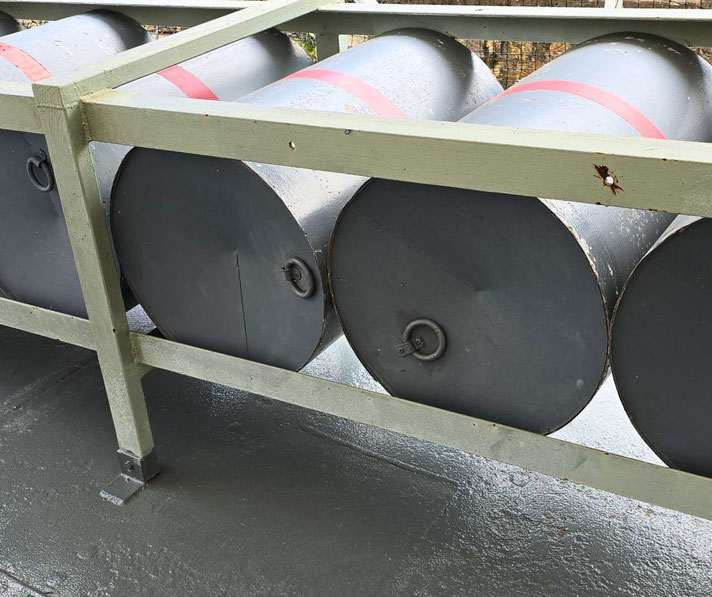
Each escort maintained a set position to screen against submarines, using hydrophones to detect submerged threats and depth charges to drive them off or destroy them.
Crucially, convoy operations relied on secrecy and careful coordination on routes that were chosen by the Admiralty based on available intelligence.
Sailing orders were distributed in sealed envelopes, opened only at sea. Wireless messages kept ships informed of course changes, while signal flags and lights maintained order within the formation.
At night, blackout conditions concealed the convoy’s position, and ships altered course periodically to confuse submarine targeting.
Importantly, British codebreakers at Room 40 contributed to the success of convoys, as they had already broken several German naval ciphers and decrypted the Zimmermann Telegram in early 1917, and decrypted German naval signals, which identified U-boat patrol zones, and then passed the information to planners.
Convoy routes were then adjusted accordingly, allowing ships to avoid known submarine concentrations.
This coordination between intelligence and naval command reduced the risk of ambush and improved the chances of each convoy’s survival.
As more convoys succeeded, the system expanded rapidly and, by the end of 1917, over 80 percent of transatlantic shipping had sailed in convoy.
Meanwhile, regular convoys operated on routes that ran from North America, West Africa, the Mediterranean, and the Indian Ocean.
After the United States entered the war in April 1917, it contributed both merchant vessels and destroyers.
By the end of 1918, the U.S. Navy had deployed over 70 destroyers and 35,000 personnel to European waters, enabling the Allies to protect a wider range of shipping lanes.
What is more, shared codes and common training, supported by unified planning, made the system increasingly efficient.
By mid-1918, the convoy system had effectively become a central part of Allied maritime strategy.
It provided a reliable method for the movement of food, oil, ammunition, and troops, even as U-boats continued to lurk offshore.
Was the convoy system successful?
For Allied planners, the results were striking. In the six months prior to the widespread use of convoys, over three million gross tons of shipping had been lost.
In the following six months, losses dropped to just over 1.4 million tons. Attacks on convoyed ships generally remained rare. In July 1917, 45 of 88 unescorted ships were sunk, yet only two of approximately 385 ships that sailed in convoy failed to reach port.
Under convoy protection, merchant vessels no longer sailed as isolated targets.
Instead, they moved as a coordinated group, supported by trained escorts equipped to respond immediately to submarine sightings.
Submarine commanders, who often understood the risks, hesitated before attacking well-defended convoys, aware that any offensive might lead to pursuit, damage, or destruction.
Meanwhile, Allied shipbuilding ramped up to the point that the British “Standard Ship” programme introduced 12 modular vessel designs, including the ‘War A’ type, which allowed faster construction and easier repair.
American shipyards launched Emergency Fleet Corporation vessels in large numbers, which filled the gaps that earlier sinkings had created and increased transatlantic shipping capacity.
As a result, Allied shipping capacity gradually recovered.
U-boat crews faced worsening odds as patrols grew longer and more dangerous, with fewer successes to report.
Submarines that had previously returned to port with victory tallies began arriving empty-handed or did not return at all.
In the final quarter of 1917, German U-boat losses rose to over 20 per month. By 1918, Allied forces had destroyed over 60 German submarines, with postwar records indicating that the number may have reached 70.
As their effectiveness declined, German morale fell and naval strategy faltered.
Eventually, the promise of a winning U-boat blockade effectively collapsed.
Instead of defeating Britain, unrestricted submarine warfare sped up American involvement and brought the United States Navy into the Atlantic theatre.
The convoy system had shifted the balance of maritime power by outthinking the U-boats instead of trying to outgun them.
How the convoy system changed naval warfare
The adoption of convoy tactics created a major change in naval thinking for many admirals and planners.
Until 1917, naval strategy prioritised large battles between capital ships.
Submarines disrupted that model by striking invisibly and evading surface fleets.
Convoys offered a different option, one that focused on survival and coordination as a form of deterrence rather than aggressive confrontation.
During the interwar period, naval writers and officers who studied the convoy system closely drew important lessons from it.
Training manuals incorporated convoy procedures that officer schools emphasised as a core subject in anti-submarine defence.
When World War Two began in 1939, Britain almost immediately reintroduced convoys.
The Battle of the Atlantic would once again revolve around the same principles first tested in 1917: coordinated intelligence work and multi-ship formations supported by defensive screening.
The HX convoy route from Halifax to Liverpool was first formalised during WWI and remained very important throughout the second conflict.
The development of new technology also largely grew out of the convoy era. Sonar and radar, which improved submarine detection, became key tools for convoy defence, while scort carriers launched aircraft that widened a convoy’s defensive reach.
Also, depth charge throwers and ahead-throwing weapons were devices that increased the ability of escorts to strike first.
These new weapons and systems built directly on the early groundwork laid during the First World War.
After the war, British and American naval leadership continued to improve convoy strategies.
The Admiralty preserved operational records, while the U.S. Navy developed combined escort tactics based on lessons learned in both wars.
Therefore, Allied cooperation, first forged through the necessity of convoy protection, became a foundation for future military alliances and joint maritime operations.