The miraculous Christmas Truce of 1914: When WWI soldiers on both sides (briefly) stopped war
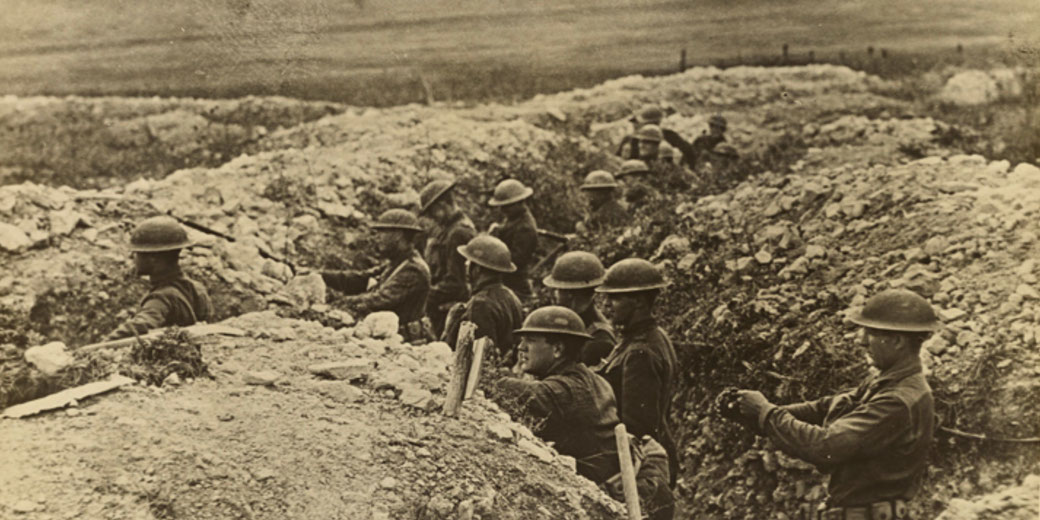
As December snow settled over the battle-scarred fields of Flanders and northern France, the war's first Christmas delivered something that few had anticipated.
Between trenches littered with corpses and the shattered ruins of villages, some British and German soldiers met face to face with greetings and carols, with handshakes, rather than rifles.
For one brief period in late December 1914, several units along the Western Front laid down their arms without orders, paused the violence, and found common humanity in the middle of industrial slaughter.
Why the world was at war in 1914
By mid-1914, decades of military alliances, imperial rivalries, and nationalist tensions had left Europe on a knife’s edge.
On 28 June, Archduke Franz Ferdinand was heir to the Austro-Hungarian throne and was shot dead by Gavrilo Princip, a Bosnian Serb affiliated with a pan-Slavic revolutionary group, and because of that, Austria-Hungary issued an ultimatum to Serbia, which demanded compliance with terms that were designed to provoke refusal.
Within weeks, major European powers activated treaties and deployed armies. On 1 August, Germany declared war on Russia to support Austria-Hungary, and two days later, declared war on France.
After Germany’s army crossed into Belgium on 4 August, Britain responded by declaring war on Germany.
Each nation had prepared detailed war plans, and once mobilisations began, diplomatic options collapsed.
Soon after, the German advance into France stalled at the Battle of the Marne in September, so both sides dug trenches that stretched approximately 750 kilometres, from the North Sea to the Swiss frontier.
Combat soon turned into a war of attrition, where machine guns and artillery, backed by barbed wire, usually ensured high casualties with minimal territorial gain.
By Christmas 1914, total casualties on all fronts had exceeded one million, which included those killed, wounded, and missing.
Conditions often deteriorated rapidly. Troops often suffered in waterlogged dugouts, endured swarms of lice and rats, and faced the constant terror of shelling or sniper fire.
By December, many soldiers had already lost friends, had endured frostbite, and had become emotionally worn down.
Why did the Christmas Truce happen?
Amid conditions that had grown worse and front lines that had not moved, the lead-up to Christmas saw reluctance among troops, which had increased against fresh attacks.
In several sectors, soldiers began to hear carols that drifted from the opposite trenches.
Many German troops had received Christmas trees from home, which they placed atop their trench edges and lit with candles, and they sang familiar hymns such as Stille Nacht.
Nearby British soldiers heard the melody and responded with their own songs and greetings.
At first, soldiers simply called out to each other or waved. Then, as confidence grew, small groups began to leave the safety of their trenches.
Often, they raised their hands or displayed makeshift flags to show they came unarmed.
As the hours passed, small groups from opposing sides began to meet in no man's land, where they talked and exchanged food or tobacco, then offered tokens such as buttons or hats.
In many cases, soldiers agreed not to fire unless attacked, and they created unofficial ceasefires that lasted across Christmas Eve and well into Christmas Day.
Some officers ignored the friendly contact with the enemy, either out of sympathy or recognition that their men needed rest.
The ceasefires spread unevenly, and some sectors saw continued shelling, yet the widespread desire among frontline troops to suspend the war for Christmas proved strong enough to overcome orders and routine.
The truce was most common along the British-held sectors, with historians who estimated that between 30,000 and 100,000 soldiers may have taken part, particularly in areas held by units such as the Royal Warwickshire Regiment, the London Rifle Brigade, and the 1st Scots Guards.
French and Belgian soldiers participated less frequently, in part due to the harsher occupation of their homeland and stronger resentment toward the German forces that had occupied much of their homeland, and some limited truces did occur along portions of the French front.
The remarkable events of Christmas Day 1914
By early morning on 25 December, large numbers of soldiers stepped across the wire and greeted each other openly in the space between their trenches.
Many spoke hesitantly in a mixture of French and German, along with some English, and they used hand gestures or shared songs to communicate.
Several German troops had worked in Britain before the war and struck up conversations with English soldiers, trading names and home towns, then stories of their lives before August.
Soon after, burial parties formed as men took the opportunity to retrieve corpses that had been lying in no man’s land for weeks.
Some conducted joint funeral services, led by chaplains or commanding officers, who read prayers aloud as men from both sides stood silently.
Rifleman Graham Williams of the London Rifle Brigade later recalled how “they finished their carol and we thought that we ought to retaliate in some way, so we sang The First Nowell.”
Others took photographs, shared cigarettes, or simply watched the scene unfold in disbelief.
In a few locations, soldiers arranged spur-of-the-moment football matches. One of the most well-known incidents occurred near the Ypres Salient, where men of the Royal Warwickshire Regiment and German Saxon units kicked around a ball in the icy mud.
Reports described laughter and cheering, along with a spirit of mutual enjoyment that lasted until dusk.
No formal match structure existed, and no independent documentation survives outside letters and journals.
The image of a game played between enemies stuck in the memory of those present and later became one of the most long-lasting symbols of the truce, even though historians note that reports of football matches came only from personal letters and no formal evidence or photographs have survived.

After nightfall, many soldiers returned to their trenches under an unspoken agreement not to resume fire until they had received direct orders.
Some truces continued for another day or two, and these were rare and confined to isolated stretches of the front.
Others ended quickly once superior officers issued commands or replaced units. By 27 December, most sectors had returned to open conflict.
Why did the war continue despite the truce?
Shortly after reports of the truce reached senior command, British and French high-ranking officers issued orders that banned any further contact with the enemy, and German command issued similar warnings in several sectors.
Commanders feared that such friendly contact with the enemy would undermine morale, encourage desertion, or reduce the willingness to fight.
Reinforcements replaced units that had fraternised, and clear instructions were issued that prohibited further ceasefires, regardless of occasion or circumstance.
Importantly, the truce had no official approval and relied entirely on the goodwill of soldiers at the front.
Once fresh troops had arrived or orders had returned, the routines of war soon resumed with full force.
Machine guns and sniper fire reappeared, along with renewed artillery barrages, and within days, the war returned to its grim rhythm.
Army leadership on both sides implemented more frequent troop rotations and tighter surveillance, backed by disciplinary action to prevent similar events from recurring.
Later developments hardened attitudes, and by 1915 the introduction of poison gas and long-range bombardment, plus new tactics, increased the brutality of the conflict.
Propaganda, which had already played a role from the war’s outset, intensified in 1915 and increasingly portrayed the enemy as uncivilised, barbaric, or treacherous, in many posters and reports.
As a result, the idea of contact with the enemy without violence became unthinkable.
No similar large-scale truce occurred in later years, not even during future Christmases, as the war’s demands grew more unforgiving.
Why was the Christmas Truce an important event?
The Christmas Truce did not end the First World War or alter any strategic outcome, yet it is often regarded as one of the most extraordinary events in the history of modern warfare.
For a brief time, the war’s industrialised violence gave way to simple human interaction.
Men who had been conditioned to see each other as enemies showed that they could still recognise some shared traditions and language, and they still treated each other with dignity.
Soldiers’ letters and diaries offered detailed accounts of the truce. British newspapers published extracts from letters home, where soldiers described Germans as respectful, kind, and even friendly.
German papers printed similar reports. Families on both sides responded with surprise and relief, pleased to hear that their sons had experienced peace, if only for a day.
Over time, the event took on some symbolic weight, as writers and filmmakers returned to it again and again, and historians who returned to it as well used it to illustrate the limits of propaganda and the persistence of humanity even in the worst conditions.
The 2005 film Joyeux Noël portrayed the truce’s events to modern audiences and helped renew public interest.
Its scope was limited and its consequences short-lived, yet the Christmas Truce of 1914 stood apart from the wider war, as it demonstrated that the fighting men, those who endured the trenches, not those who gave the orders, had some power, even briefly, to choose peace over destruction.