
The forgotten story of Gavrilo Princip, the man who started World War One
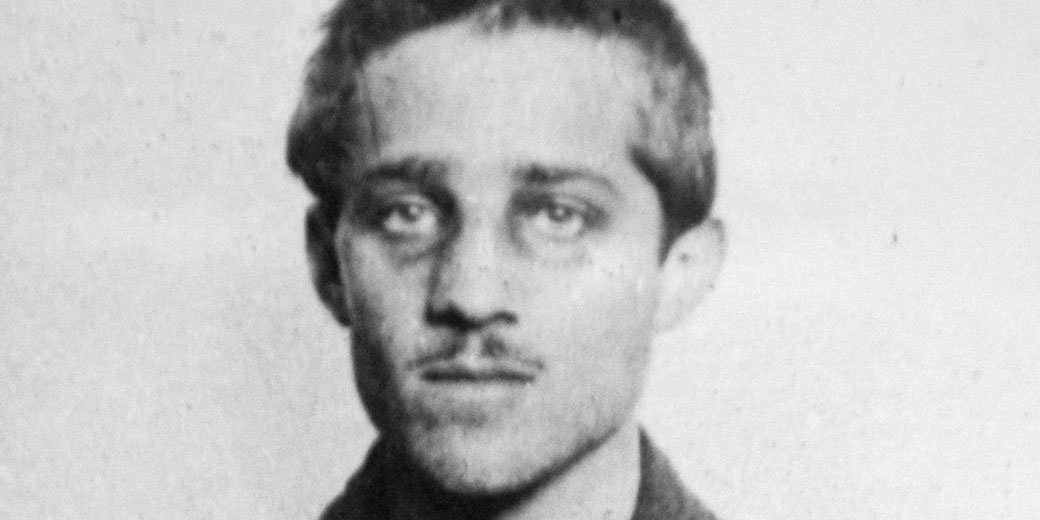
On 28 June 1914, a nineteen-year-old Bosnian Serb named Gavrilo Princip stepped forward and fired two shots into a passing motorcade in Sarajevo.
His bullets killed Archduke Franz Ferdinand of Austria and Duchess Sophie, setting off a diplomatic chain reaction that escalated into the First World War.
Although the consequences of that moment have been studied endlessly, the life and motivations of the man behind the gun have often received only passing attention.
However, his story grew out of poverty and a radical nationalist ideology and shows how a single act by an isolated youth could expose the serious problems inside the European empires.
His early life and interest in politics
Gavrilo Princip was born on 25 July 1894 in the village of Obljaj, near Bosansko Grahovo in western Bosnia.
At the time, the region lay under Austro-Hungarian rule, since the empire had annexed it in 1908 after three decades of administrative control that began with the 1878 Congress of Berlin.
His parents, Petar and Marija, lived as subsistence farmers in a one-room stone house without electricity or plumbing, and they lived on the edge of poverty and depended on a mix of small crops and seasonal work.
His father had been a former postman and insisted that Gavrilo walk twelve kilometres each day to school.
Even so, the family valued education, as, in 1907, his older brother Jovan Princip paid for him to study in Sarajevo, where he boarded at a Serbian Orthodox school.
He quickly developed a reputation as a quiet but intense student who read constantly and questioned authority.
By 1910, he had transferred to a grammar school in Tuzla, although his aggressive behaviour and constant trouble at school, particularly those linked to anti-imperial sentiments, led to his expulsion.
Soon after, he returned to Sarajevo, where his resentment towards foreign rule grew even more intense amid unrest that intensified after the annexation of Bosnia.
In 1912, he travelled to Belgrade, the capital of the Kingdom of Serbia, where he encountered revolutionary circles that exposed him to pan-Slavic ideology.
There, he joined Mlada Bosna (Young Bosnia), a secretive group of students and intellectuals who believed that violent action could free South Slavs from imperial control.
He absorbed nationalist literature, idolised assassins who had killed tyrants, and imagined a new political order built on sacrifice and struggle.
The road to Sarajevo
At the same time, Princip had made contact with members of Unification or Death, better known as the Black Hand.
Officially called Ujedinjenje ili Smrt, the organisation was led by Dragutin Dimitrijević, also known as "Apis," who had previously orchestrated the 1903 assassination of King Alexander I of Serbia.
This secret group included senior Serbian army officers and worked behind the scenes to undermine Austro-Hungarian authority and often supported nationalist resistance in Bosnia.
With access to weapons and training from military operatives such as Major Vojislav Tankosić, who provided assistance to members of the plot, Black Hand members sometimes encouraged action against imperial officials, although they remained cautious about provoking open war.
By early 1914, the announcement that Archduke Franz Ferdinand would visit Sarajevo on 28 June offered a symbolic and strategic target, since that date, Vidovdan, held immense importance for Serbs, as it commemorated the anniversary of the 1389 Battle of Kosovo.
To Princip and his comrades, the archduke’s visit on such a day seemed to represent an intentional insult.
As a result a plan took shape within weeks to assassinate him during the motorcade.
Eventually, six young men were selected to carry out the attack. With pistols and bombs, along with opium-laced cyanide capsules supplied by nationalist agents, they crossed the border into Bosnia and positioned themselves along the planned route.
Princip was among the most committed of the group and took his place near the Latin Bridge.
Earlier that day, Nedeljko Čabrinović had thrown a grenade at the archduke’s car, which failed to detonate as intended and instead injured several attendants.
The other conspirators, including Trifko Grabež, Vaso Čubrilović, and Muhamed Mehmedbašić, remained at their posts, though their chances dwindled as the convoy accelerated and escaped.
Princip believed he had missed his chance.
What happened during the assassination?
Shortly after the failed bombing, the archduke insisted on visiting the hospital to see the wounded, and as he travelled there, his driver, Leopold Loyka, made a wrong turn off Appel Quay and entered Franz Josef Street.
The car came to a halt near a row of shops where Princip happened to be at that moment.
The change in route had not been communicated to the driver, who attempted to reverse the car, which stalled.
Suddenly, Princip stepped forward, drew his FN Model 1910 pistol, a .380 calibre weapon manufactured by Fabrique Nationale in Belgium, and fired twice.
The first bullet struck Franz Ferdinand in the neck, and the second pierced the abdomen of Duchess Sophie.
Both victims lost consciousness almost immediately. The car reversed and sped away, but it was too late.
Within minutes, both the heir to the Austro-Hungarian throne and his wife were dead.
Police seized Princip on the spot before the crowd could beat him to death. He attempted suicide with a cyanide capsule, which failed to work and instead caused violent vomiting.
During interrogation, he confessed and identified his co-conspirators. He had not yet turned twenty, and under Austro-Hungarian law he was too young for the death penalty, so a military court sentenced him to the maximum penalty allowed: twenty years’ imprisonment.
Harsh treatment in prison and death
After sentencing, authorities transferred Princip to the fortress prison of Theresienstadt in Bohemia, where he remained under constant surveillance.
His cell was known as Cell No. 1 in the Small Fortress and lacked heating and sunlight, and the severe conditions quickly began to destroy his health.
He suffered from malnutrition and untreated injuries, and the severe isolation gradually wore down both his body and his mind.
Eventually, tuberculosis spread through his body and settled in his bones, and this infection led to Pott’s disease.
His right arm developed gangrene and had to be amputated by prison doctors in 1917.
He lived in agony, shackled to the wall, and starved of both food and human contact.
During his time in prison, he used charcoal to scrawl messages and slogans on the cell walls, some of which remained visible after the war.
On 28 April 1918, after nearly four years in captivity, he died of complications from his illness, and at that time he weighed just forty kilograms.
His body was buried in a secret grave to stop nationalists from turning him into a hero, though, after the war, his remains were recovered and reburied in Sarajevo beneath a memorial chapel.
How he influenced Europe even after his death
Within weeks of the assassination, Europe plunged into war. On 23 July 1914, Austria-Hungary delivered a very strict ultimatum to Serbia.
However, Serbia accepted most of the demands and refused some parts of the ultimatum.
On 28 July, Austria-Hungary declared war, and in response Russia mobilised in defence of Serbia, Germany declared war on Russia and France, and when German forces invaded Belgium, Britain entered the conflict.
By August, the First World War had begun, and, as a result, it eventually killed an estimated 20 million people, of whom roughly 10 million were soldiers, and toppled four major empires.
Scholars have long debated the extent to which Princip intended to provoke such a scale of violence.
He believed that killing the archduke would inspire South Slavs to rise against imperial rule and did not imagine that it would trigger a global conflict.
In postwar Yugoslavia, nationalist leaders often honoured him as a martyr who died for the unification of his people.
However, outside that region, he often appeared to critics as a dangerous fanatic whose short-sighted act helped to unleash a war that destroyed four empires.
In modern Bosnia and Herzegovina, his reputation is still very divisive, with memory of him divided along ethnic and political lines.
Today, there is a small museum in Sarajevo at the site of the assassination, and the weapon used in the killing is still on display in Vienna’s Museum of Military History.
Tourists still walk past the corner where the car stopped, often without knowing the full weight of what happened there.
Ultimately, Gavrilo Princip was a teenager who experienced injustice and a growing extreme despair, and helped to set in motion a war that altered the modern world.
His life was stripped of myth and judged by its consequences, and is often seen as one of the most important tragedies of the twentieth century.