
Why Judaism, Islam, and Christianity are similar but yet very different
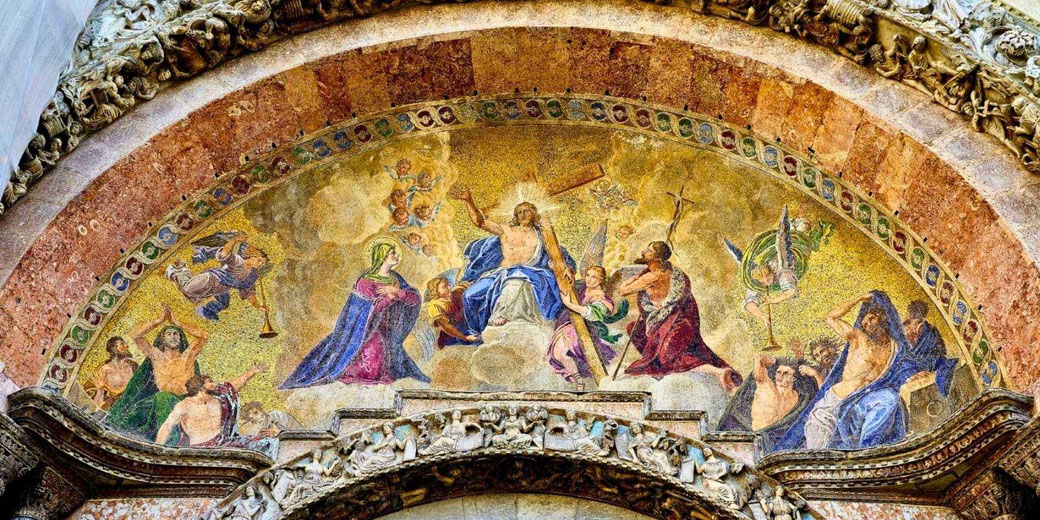
Across the ancient Near East, three religions developed that continue to influence the beliefs of billions of people across the modern world.
Judaism, Christianity, and Islam each claim descent from Abraham, a man who, according to tradition, entered into a covenant with a single, all-powerful God.
Although they share origins in the same region and often honour the same figures, they developed separate teachings, sacred texts, and religious customs that now distinguish them in practice and belief.
Who was Abraham?
According to the biblical account, Abraham lived sometime between 2000 and 1500 BC and originally came from Ur, a city in Mesopotamia near the lower Euphrates River in what is now southern Iraq.
After he had received a call from God, he travelled to Canaan, where he was promised descendants and land as signs of God’s favour.
For Jewish tradition, Abraham became the founding father of the Israelites and the first person to receive God’s covenant, as described in Genesis 17:5 when his name was changed from Abram to Abraham.
From an Islamic perspective, Abraham, known as Ibrahim, was a prophet who rejected idol worship and showed complete obedience to God.
Islamic tradition holds that he built the Kaaba at Mecca with his son Ishmael and prepared to sacrifice his son at God’s command, a moment remembered during Eid al-Adha.
For Christians, Abraham became a spiritual example whose faith, rather than bloodline, formed the model for salvation.
Finally, in Christianity, the apostle Paul’s letters described Abraham as a special religious person who was justified by belief, not law, which made him the father of all people who have faith in God.
Judaism
Judaism probably began among the early Israelites in Canaan, a region later known as Israel and Judah, where the descendants of Abraham had settled and had developed a religion organised around tribes.
During the 13th century BC, the tradition says that Moses received the Torah on Mount Sinai, which included commandments that were meant to guide personal actions and worship within community life.
The Torah consists of five books: Genesis, Exodus, Leviticus, Numbers, and Deuteronomy.
Over time, these laws became the foundation of Jewish religious identity, maintained even after the destruction of the Second Temple in AD 70 by the Romans under Titus.
Jewish worship takes place in synagogues, which is a dedicated building for prayer, reading of scripture, and religious education.
While the ancient priesthood ended with the loss of the Temple, authority shifted to rabbis, who teach, interpret Jewish law, and guide religious communities.
Rabbis receive formal training in the study of sacred texts and care for communities, as well as continuing the work of influential figures such as Hillel and Akiva.
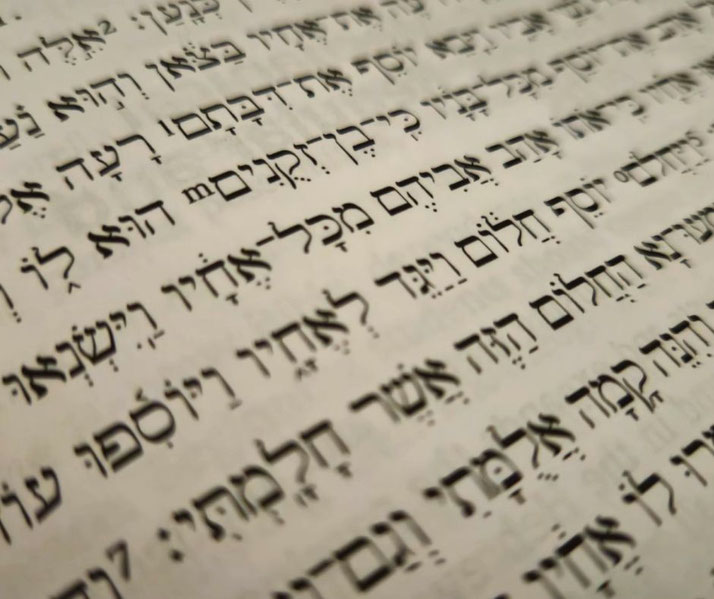
The central scripture of Judaism is the Tanakh, which includes the Torah (Law) and the two other sections known as Nevi’im (Prophets) and Ketuvim (Writings).
In addition, rabbinic commentary preserved in the Mishnah (c. 200 CE) and the Babylonian Talmud (completed c. 500 CE) provides guidance for the interpretation and application of religious law across generations.
Together, these texts define Jewish practice and ethics, as well as belief.
At present, the largest Jewish populations generally live in Israel and the United States.
While smaller communities still live in Europe and South America, as well as Australia, many were displaced or destroyed during the twentieth century due to antisemitic violence and war.
Today, there are approximately 15 million Jews worldwide.
Christianity
Christianity developed in the first century AD in the Roman province of Judea, mainly among Jewish communities.
Jesus of Nazareth taught during the reign of the Roman emepror Tiberius, but he was crucified in Jerusalem around AD 30 to 33.
His disciples, convinced that he had risen from the dead, began to spread his message throughout the eastern Mediterranean.
Early Christian communities included both Jews and Gentiles (people who weren't Jews), but differences in belief that grew over time eventually led to a distinct religion.
Paul’s letters from the AD 50s helped define early Christian belief, and later councils such as Nicaea in AD 325 made key ideas clearer.
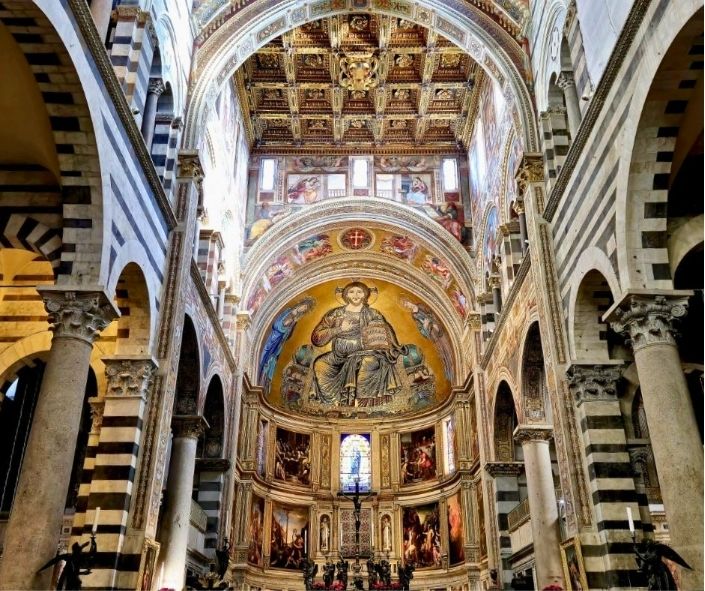
Churches became the primary spaces for Christian worship. From early gatherings in homes to later basilicas and cathedrals, churches provided places for prayer and preaching, as well as sacraments such as baptism and communion.
Religious leadership varies across denominations. Catholic and Orthodox churches maintain bishops and priests, along with deacons, while Protestant groups often rely on pastors or ministers who lead worship and interpret scripture.
The split between Catholic and Orthodox churches in the Great Schism of 1054 and the rise of Protestantism with reformers like Martin Luther in 1517 show the variety within Christianity.
Christian scripture consists of the Bible, which includes the Old Testament, which is closely aligned with the Hebrew Bible, and the New Testament, which contains the Gospels, the Acts of the Apostles, epistles by early Church leaders, and the Book of Revelation.
Christians regard the New Testament as the final word on salvation, focused on the life, death, and resurrection of Jesus.
Views of the afterlife typically include belief in heaven and hell, based on a person’s acceptance of Christ and moral conduct.
Today, Christianity is generally strongest in Europe, the Americas, sub-Saharan Africa, and the Philippines.
Missionary work, colonisation, and migration have contributed to the global spread of Christian belief over the last two thousand years, which now exists in hundreds of denominational forms.
Current estimates place the global Christian population at around 2.4 billion.
Islam
Islam began in the city of Mecca during the early seventh century AD. At the age of 40, Muhammad began to receive revelations that Muslims believe came directly from God, conveyed by the angel Jibril.
Those messages, which were delivered over 22 years, addressed moral behaviour and justice in matters of worship, and they were later written down as the Quran.
During the caliphate of Uthman (r. AD 644–656), the Quran was compiled into its final written form.
However, opposition in the city of Mecca forced Muhammad and his followers to migrate to Medina in AD 622, an event known as the Hijra.
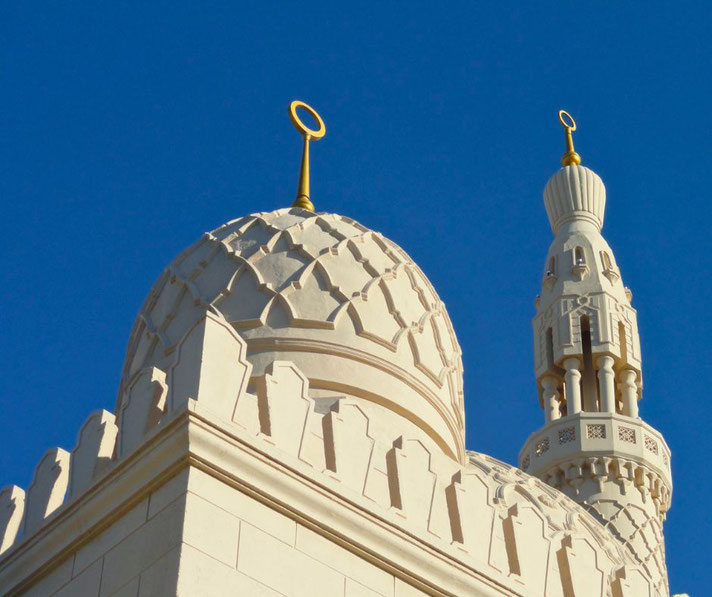
Mosques are the main places of Muslim worship. They contain a prayer hall that faces Mecca, together with a pulpit (minbar) for the Friday sermon, as well as a mihrab, a niche that indicates the qibla.
Separate areas for men and women are also common. Religious leadership includes imams, who lead daily prayers, and scholars known as ulama, who interpret Islamic law based on the Quran and traditions of the Prophet.
The Quran continues to be Islam’s primary scripture. It is written in Arabic and considered by Muslims to be the unaltered word of God.
Additional texts known as Hadith record Muhammad’s words and actions and it offers practical guidance on prayer, fasting, family relations, and ethics.
One widely used collection is Sahih al-Bukhari. Major Islamic legal schools such as the Hanafi, Shafi’i, Maliki, and Hanbali schools developed from these sources.
Muslims believe in Paradise (Jannah) and Hell (Jahannam), where judgment depends on faith and deeds.
Most Muslims live in countries across North Africa, the Middle East, South Asia, and Southeast Asia.
The largest national population is in Indonesia, followed by significant numbers in Pakistan, India, Bangladesh, Turkey, and Egypt.
Muslim minorities also exist in Europe, the United States, and Australia, and current global estimates place the Muslim population at over 1.9 billion.
Similarities between the Abrahamic faiths
All three religions teach belief in a single, all-powerful God who created the universe, gives moral law, and judges human actions.
Also, each faith relies on sacred scripture that records revelation from God and guidance.
Prophets such as Abraham and Moses, along with David appear in all three traditions, although their roles and stories differ.
Jesus appears in both Christianity and Islam, where he is known as Isa, a prophet born of Mary.
Additionally, prayer and almsgiving, along with fasting form essential parts of religious life.
Each religion includes periods of reflection and special festivals. Ideas about the afterlife (including judgment and reward, as well as punishment) are central to belief, as is the idea that God communicates with humanity through chosen messengers.
Sacred languages also are important: Hebrew and Aramaic in Judaism, Greek in Eastern Christianity, Latin in Western Christianity, and Arabic in Islam.
Differences between the Abrahamic faiths
Judaism places primary importance on the covenant between God and the Israelites, expressed through law and community religious life.
In contrast, Christianity teaches that Jesus Christ, as the Son of God, fulfilled the promises of the Old Testament and provided salvation through his death and resurrection.
Meanwhile, Islam maintains that Muhammad received the final revelation, correcting earlier scriptures and restoring the message of pure monotheism.
Their scriptures differ in content, format, and language. The Tanakh is written mostly in Hebrew, whiel the Christian Bible includes Hebrew and Greek texts, and the Quran is written in Arabic.
Worship spaces vary in both design and purpose. Synagogues emphasise study and prayer, churches focus on communal worship and sacramental rites, and mosques centre on disciplined prayer and instruction.
Religious leadership has different structures and responsibilities. Rabbis act as legal and spiritual guides.
Christian clergy conduct sacraments, preach doctrine, and administer pastoral care.
Muslim imams and scholars lead prayer and interpret religious law that comes from God based on textual sources.
Growth during the early Middle Ages
During the early medieval period, Christianity expanded rapidly throughout Europe.
After the conversion of Constantine and the establishment of Christianity as the state religion of the empire, bishops and monks, together with missionaries spread the faith among Germanic and Celtic peoples, together with Slavic groups.
Christian monasteries kept important texts and educated leaders, and they also held regions together under common doctrine.
At the same time, Islam spread across the Arabian Peninsula and into nearby regions, and within a century of Muhammad’s death, Muslim rule reached from Spain to Central Asia.
Islamic civilisation promoted Arabic as the language of scripture and scholarship, as well as administration, which helped bring together believers across a wide area under a shared religious culture.
Jewish communities were often scattered by conquest and forced movement and lived under both Christian and Muslim rulers.
In Muslim lands such as Al-Andalus, many Jews enjoyed periods of relative freedom to study and trade, and they added to theology and science, as well as philosophy.
Jewish philosopher Maimonides was active in twelfth-century Egypt and produced influential works in Jewish law and medicine.
In Christian Europe, legal restrictions and persecution created periods of hardship, but religious life continued in synagogues and yeshivas, where sacred texts remained central.
Although Judaism, Christianity, and Islam trace their beginnings to the same region and honour many of the same figures, their different answers to questions of law and prophecy, as well as salvation created separate paths.
Each faith formed its own sacred writings and leadership structures, along with ritual life, which developed over centuries of belief and experience.