
How the Spanish destroyed the Inca Empire

By the early 16th century, the powerful Inca Empire stretched along the Andes Mountains and covered present-day Peru, Ecuador, Bolivia, and parts of Chile and Argentina, as well as Colombia.
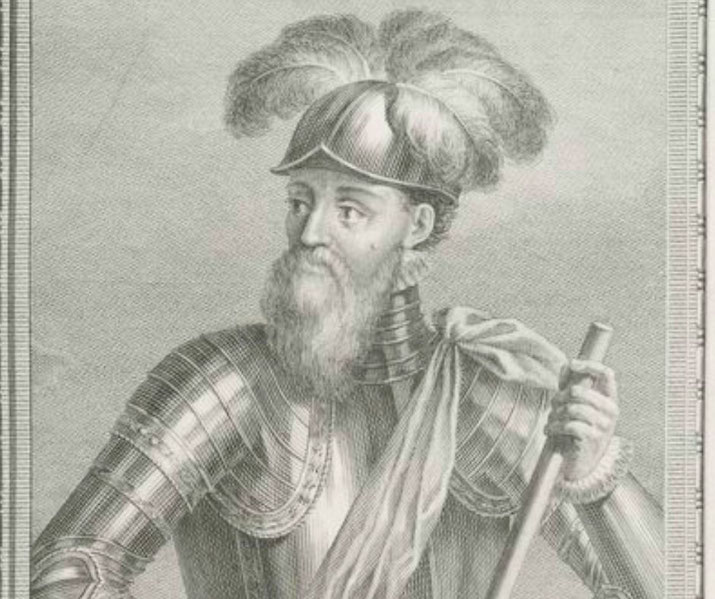
However, in the 1530s, this mighty empire faced a serious challenge from a small group of Spanish conquistadors who were led by Francisco Pizarro.
Why the Inca Empire was in crisis
The Incas had a well-organised society, with a centralised government and a powerful army.
They built impressive cities like Machu Picchu developed advanced agricultural techniques.
Their road system was arguably one of the most sophisticated in the ancient world, and it connected distant parts of the empire.
However, the empire also had internal problems. When the Spanish arrived, the Incas had been recovering from a civil war between two royal brothers, Atahualpa and Huáscar.
This division had arguably weakened the empire and made it more vulnerable to outside threats.
The arrival of the Spanish
Francisco Pizarro and his small band of soldiers arrived on the coast of Peru in 1532.
They were driven by a desire for wealth and a determination to expand Spain’s territories.
The Spanish had a few advantages over the Incas. They had horses, which the Incas had never seen before, and they had steel weapons and armour, which were superior to the bronze and stone tools of the Incas.
Additionally, the Spanish brought with them diseases like smallpox, to which the native population had no immunity.
These diseases likely spread rapidly and weakened the Inca population.
The capture of Atahualpa
One of the turning points in the conquest was the capture of the Inca ruler, Atahualpa.
Pizarro invited Atahualpa to a meeting in the town of Cajamarca. When Atahualpa arrived with a large group of followers who were unarmed, the Spanish ambushed them.
Many Incas were killed, and Atahualpa was taken prisoner. In exchange for his release, Atahualpa promised the Spanish a room that was filled with gold and silver.
Even after they had received the ransom, the Spanish executed Atahualpa, which further weakened the Inca leadership.

The fall of Cusco and the end of an empire
With Atahualpa gone, the Spanish marched towards Cusco, the capital of the Inca Empire.
The Inca forces that were left fought fiercely, but the city fell to the Spanish in 1533.
The Spanish rebuilt a city on the ruins of Cusco. However, Pizarro established a new city on the coast that he called Lima in 1535, and it became the capital of the Viceroyalty of Peru.
Cusco continued to be an important city, but its importance was reduced under Spanish rule.
The conquest of the Inca Empire by the Spanish was a combination of military strategy and superior weaponry, as well as the exploitation of divisions that existed within Inca society.
The fall of the Inca Empire brought about the end of thousands of years of indigenous control in the Andes and the beginning of nearly three centuries of Spanish colonial rule.