
The Silk Road was an ancient superhighway that connected Europe and Asia

The Silk Road was a network of trade routes that connected the East and West for centuries, and it allowed for interaction between many different cultures and empires.
This extensive network was a series of pathways and trade routes rather than a single road. These routes stretched over 4,000 miles and linked China with the Mediterranean Sea.
It connected the powerful Chinese, Roman, Persian, and later Byzantine and Ottoman empires, among others. This interaction likely caused the cities along the Silk Road to become melting pots of culture and knowledge, where scholars and traders from different parts of the world could meet and exchange ideas.
When and why did the Silk Road begin?
The Silk Road began around the 2nd century BCE, after the Han Dynasty in China had made efforts to establish trade and diplomatic relations with Western countries.
This initiative was led by the Chinese emperor Wu and was driven by the desire to secure allies and trade goods, especially horses, that were important for the military.
The mission of Zhang Qian to the Western regions, which had aimed to form alliances against the nomadic Xiongnu tribes, was a significant starting point.
Zhang Qian’s mission did not succeed in its immediate diplomatic goals, but it opened routes and provided information about the rich trading opportunities outside China’s borders.
How goods travelled between Europe and Asia
The Silk Road spanned thousands of miles, which connected the East with the West, and it included several key locations that were critical to its purpose as a network of trade routes.
The Silk Road started from the ancient capital of Xi’an in China and branched out through the Gansu corridor.
It then stretched across the deserts of Central Asia, which included the Taklamakan Desert, which was known for its difficult conditions and the oasis cities that dotted its edges, such as Kashgar and Hotan, as well as Dunhuang.
These cities were important rest and trade hubs for caravans.
From Central Asia, the routes continued further west and passed through cities like Samarkand and Bukhara in present-day Uzbekistan, which were central to trade and cultural exchanges due to their strategic locations and rich resources.
The road then forked towards the south through the Iranian Plateau, which included cities like Tehran, and to the northwest through the Caucasus and Anatolia regions, and it reached Byzantine Constantinople (modern-day Istanbul, Turkey), which acted as a gateway between Asia and Europe.
Another branch moved southward from Central Asia into the Indian subcontinent and linked to ports on the coast of India, which then connected to maritime trade routes.
This interconnected network of trade routes linked major empires and cities and also enabled remote regions to interact with the wider world, which arguably made places like Xi’an, Samarkand, Bukhara, and Constantinople key locations in the history of global trade and cultural exchange.
What items were sold and traded along the Silk Road?
The Silk Road made possible the exchange of a wide variety of goods that were highly prized in different parts of the world, and it created a global network of trade that was arguably unmatched in its scope and range.
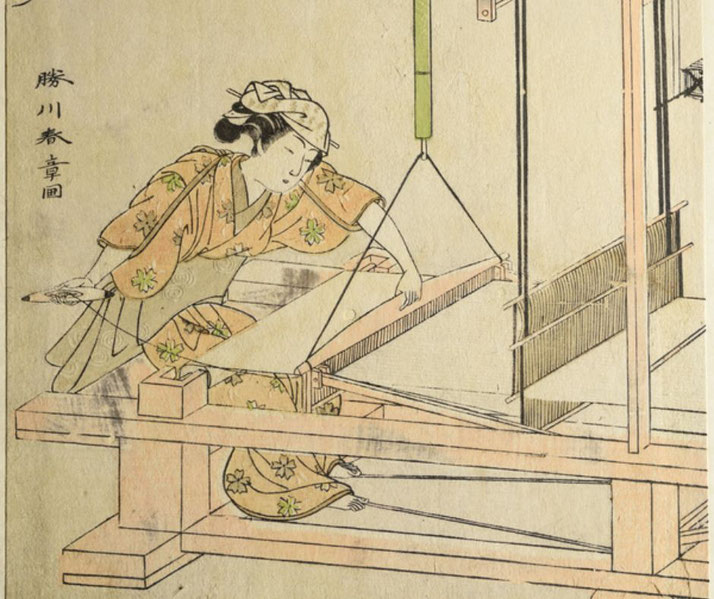
As the name of the route suggests, silk was one of the most desired goods, which originated from China and was highly valued in Rome and Persia, as well as other parts of Europe, for its beauty and luxury.
The trade, however, was far from being limited to silk. Goods such as spices, which included pepper and cloves, as well as cinnamon, from India and Southeast Asia, were generally in high demand in Europe for their use in flavouring and preserving food.
Precious stones and metals also moved along these routes, as gold and silver from Europe travelled eastward, and jade and rubies, as well as lapis lazuli, moved west from Asia.
Textiles, which included fine woollen goods from Central Asia and cotton from India, were traded widely, along with carpets and tapestries, as well as other handmade crafts that captured the varied artistic traditions of the Silk Road cultures.
In addition to these material goods, the Silk Road was important in the exchange of knowledge and culture, as well as religion.
Technologies such as papermaking and gunpowder, as well as the practice of printing, spread from China to the West and significantly impacted European societies.
Religious beliefs and traditions, which included Buddhism, Christianity, and Islam, were also spread along these routes and influenced the spiritual and cultural character of many regions across continents.
Agricultural products, which included various grains and fruits, were traded locally and over long distances, which introduced new food crops to distant lands.
Medicinal herbs and knowledge of their uses were exchanged between healers and scholars, which contributed to the spread of medical knowledge.
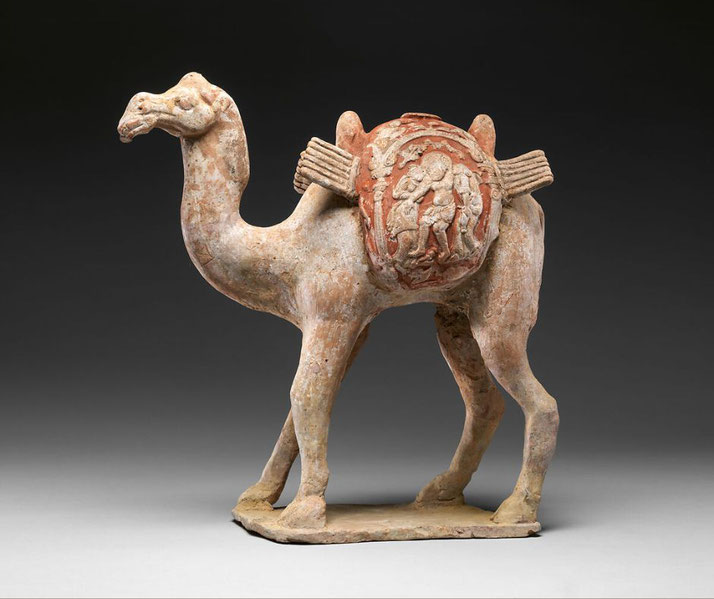
Horses and camels, as well as other livestock, were highly valued both as transport animals and for their part in warfare and agriculture, and they moved primarily from the steppes of Central Asia to markets in China and the Middle East.

Why did the Silk Road disappear?
By the end of the 15th century, European explorers such as Vasco da Gama had discovered sea routes to Asia around the Cape of Good Hope, which provided a means of transporting goods that was both faster and cheaper, as well as safer, than the overland Silk Road.
The spread of the Black Death in the 14th century had also contributed to the decline in the Silk Road’s usage.
The pandemic, which had travelled along the trade routes from Asia to Europe, resulted in the deaths of millions, which disrupted trade and caused economic instability.
Furthermore, the Mongol Empire, which had provided a measure of stability and safety for traders on the Silk Road in the 13th and early 14th centuries, began to break apart after the mid-14th century.
This break-up led to increased risks for traders due to the lack of a unifying power that could ensure safe passage across the large territories.
Finally, political changes in the regions that surrounded the Silk Road further contributed to its decline.
The fall of Constantinople to the Ottoman Empire in 1453 and the subsequent control of the surrounding regions had made the traditional land routes to the East more difficult and costly for European traders.
The Ottomans’ monopoly policies and taxes increased the costs for European merchants, which encouraged the search for alternative trade routes.