
Feasting on peacock and porpoise, and the weird world of medieval cuisine

In a great hall lit by torchlight, guests might have watched a gilded peacock carried in after cooks had carefully reattached its skin so its feathers could be shown in full splendour.
Such dishes were deliberate performances that aimed to impress as much as feed the guests, and they exposed the values of a society that cared greatly about rank and reputation.
In that way, medieval cuisine gives us a clear way into a world in which food expressed power, together with belief and skill.
How people thought about food in the Middle Ages
The medieval period lasted about a thousand years and brought major social and economic change, along with shifts in culture.
Feudalism ordered society. From rulers to serfs, people held distinct places, and those places influenced their food and table habits.
In most places, diets depended on local crops and game, together with fish from nearby waters.
This created clear differences from one region to another because local conditions and the season both mattered.
People in coastal regions often had better access to fish, while people in fertile valleys could grow more crops and raise more livestock.
Feasting was an important part of medieval life, especially among nobles and royal courts.
These meals were also seen as public displays of wealth and status, and they also advertised power.
Dishes were made to impress and often used imported ingredients or difficult preparation. Many were also presented with striking decoration.
These feasts also showed the cooks' skill and the resources of the household.
At the other end of society, most peasants and serfs ate a simpler diet.
Grain dominated their meals, especially barley and oats, with rye also common.
They also ate vegetables and legumes, with a small range of fruit. Meat was uncommon and was usually saved for special occasions.

How diets varied in different parts of medieval Europe
In different parts of Europe, food habits changed sharply with geography. From the cold north to the Mediterranean coast, climate and available resources affected diets and produced foods that can seem strange today.
In Northern Europe, long winters made food preservation necessary. People relied on smoking and drying, and they also fermented many foods.
Scandinavians ate lutefisk, a dried whitefish, usually cod, that had been treated with lye and had turned soft and jelly-like.
Pickled herring and other fermented fish also became staples. Game such as reindeer and wildfowl appeared often on the table.
Around the Mediterranean, sunnier climates and fertile soils supported diets with more fresh produce.
Olives and grapes were common, and people also ate figs and leafy greens.
People also kept using garum, which was a fermented fish sauce that the Romans had prized. Its smell was strong and its flavour intense.
In the British Isles, diets drew on both sea and land. People ate common grains and vegetables, and many also liked eels or lampreys, a jawless fish regarded as a delicacy.
Further east, trade routes brought Middle Eastern and Asian tastes into Europe.
By the later Middle Ages, wealthy kitchens had begun to use cinnamon and cloves more often, with pepper as well.
The strangest foods eaten in the Middle Ages
Medieval people ate some foods that can still surprise modern readers. One striking example lay in the range of meats set before the wealthy.
Alongside ordinary meats such as chicken and pork, households with money also offered beef and a wide range of game.
Peacock and swan appeared at great feasts, and some tables even offered heron or porpoise.
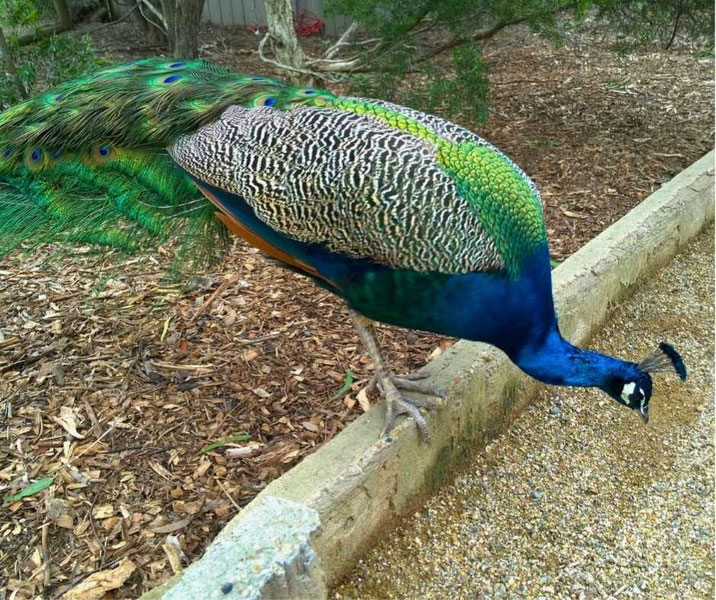
Roasted peacock was sometimes presented in full plumage as a show of luxury.
Flavours could also seem strange to modern diners. For example, they had something called verjuice, which was made from unripe grapes or crab apples, gave many dishes a sharp sour taste.
The wealthy also used expensive spices. One unusual example was grains of paradise, a peppery spice from West Africa.
Sweet and savoury combinations were common, and cooks often paired meat with fruit and sugar, then added spice.
Blancmange was a good example. It was usually made from chicken and rice in almond milk, with sugar mixed through it.
Lent produced some unusual substitutes. Since meat was forbidden, people turned to almond milk and more fish.
Church authorities even classed some aquatic birds, including puffins, as fish so that diets could vary during Lent.
Why medieval people used food as medicine
Food and health were closely connected in the Middle Ages, as medical thinking in this period rested heavily on humoral theory.
The theory came from ancient Greece and held that the body contained four humours: blood, black bile, yellow bile, and phlegm.
Good health depended on keeping these humours in balance.
People believed that each food had qualities such as heat or coldness, dryness or moisture.
These qualities did not refer to literal temperature or water content. They referred to the effects people thought food had on the body.
Red meat was treated as hot and dry. Fish was treated as cold and wet.
People were often advised to eat according to their own bodily make-up and the season.
Many foods were also thought to heal, such as honey, which was valued as a sweetener and for its power to fight infection.
Likewise, sage was said to improve memory, while ginger was taken to settle the stomach.
Theriac was one famous remedy. It mixed many ingredients, including opium and myrrh, and some recipes also used viper's flesh.
People treated it as a universal antidote. Some also praised garum for health, in spite of its strong smell.
Fasting had a religious purpose, and many also thought it helped cleanse the body and restore humoral balance.
The role religion played in food choices
In the Middle Ages, the spheres of the sacred and the everyday were deeply intertwined, and food was no exception to this.
Both religious doctrines and popular superstitions exerted a strong influence on what people ate, how they ate it, and when they ate it.
Christianity, being the dominant religion in Europe during the Middle Ages, had a profound impact on dietary habits.
The liturgical calendar was punctuated by numerous feast days and periods of fasting, each dictating specific food practices.
During the 40-day period of Lent, for instance, all animal products were prohibited, which led to the creation of various substitutes, including the extensive use of almond milk and stockfish.
Similarly, during Advent, fasting was practiced on certain days, and more fish and vegetarian dishes were consumed.
Certain foods were specifically associated with religious celebrations. At Christmas, a boar's head was traditionally served as a symbol of sacrifice and abundance.
Simnel cake, a fruitcake with layers of almond paste, was associated with Mothering Sunday in the British Isles, a day in Lent when people visited their 'mother' church.
Superstition also played a significant role in shaping food practices. Certain foods were considered lucky or protective.
For example, it was commonly believed that carrying a bit of bread saved from a meal could protect one from harm.
Similarly, ale was often blessed to ward off evil spirits before it was consumed.
The 'Doctrine of Signatures', a popular belief during this time, proposed that the physical appearance of a plant indicated its healing properties.
For instance, walnuts, because of their resemblance to the human brain, were believed to be beneficial for brain ailments.
Even the way food was consumed was influenced by superstition. For example, it was considered bad luck to overturn a loaf of bread, to spill salt, or to leave a plate of food unfinished.
The art and gaudiness of medieval feasts
Feasting was a cornerstone of medieval social life. Whether to mark religious observances, celebrate victories, or commemorate special occasions, feasts were grand affairs that demonstrated wealth, power, and status.
The dishes served at these events were as much about spectacle and entertainment as they were about satisfying hunger.
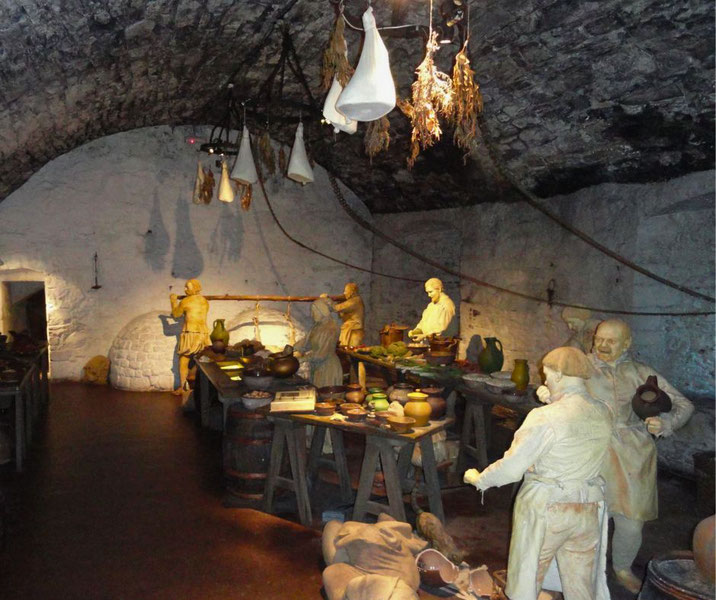
A grand medieval banquet was a lavish spectacle. Tables were laden with multiple courses, featuring a bewildering variety of dishes.
The practice of disguising food was also popular during these events. Cooks would often prepare dishes to look like something else entirely, such as shaping a meat pie to look like a fruit, or crafting a sweet dessert to resemble a roast.
Another oddity was the 'cockentrice' - a dish created by sewing the front of a piglet and the rear of a capon together, then roasting the resulting creature to amaze the banquet guests.
One of the most elaborate aspects of a medieval banquet was the presentation of 'sotelties' or 'subtleties', intricate edible sculptures that were meant to entertain and amuse guests between courses.
These creations, often made of sugar paste, marzipan, or gelatin, depicted scenes from religious, historical, or chivalric narratives.
They were a testament to the medieval love of spectacle and storytelling.
Drinks, too, were not without their quirks. A variety of ales, meads, and wines were commonly served.
One unusual concoction was 'Hippocras', a spiced wine named after Hippocrates, which was often served at the end of a feast and believed to aid digestion.
Can we recreate medieval foods today?
As we seek to understand the Middle Ages through the lens of food, there is a growing interest in recreating medieval recipes in modern kitchens.
These culinary time-travels provide us not only a hands-on (and mouth-on!) experience of history but also offer interesting insights into the evolution of our food culture and taste preferences.
Modern attempts to recreate medieval food often start with deciphering medieval cookbooks, or 'Forme of Cury' as they were known.
These recipes, however, come with their own set of challenges. They usually lack specific measurements, have unfamiliar terminology, and often call for ingredients that are hard to source or are no longer consumed.
Nevertheless, these difficulties have not deterred food historians and cooking enthusiasts from bringing medieval dishes to life.
Some recreations focus on the extravagant subtleties, like the gilded peacocks or the mythical cockentrice, primarily for their artistic and dramatic appeal.
Others attempt to recreate the daily fare of the average medieval person, such as pottage (a kind of thick stew made from grains, legumes, and vegetables), bread, and ale.
These recipes, albeit less glamorous, offer a taste of the mundane realities of medieval life.
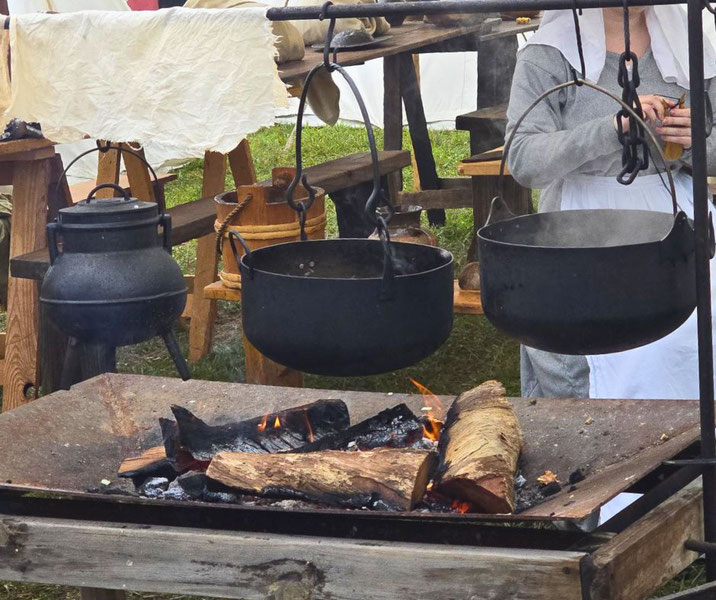
There are even some food establishments and festivals today that offer a medieval dining experience, complete with period-appropriate dishes, utensils, and entertainment.
These provide an immersive way to explore the medieval past and its idiosyncratic gastronomy.
Recreating medieval food is about more than just replicating old recipes. It's about engaging with history in a tangible, sensory way.
It's about understanding our culinary roots and the journey our food culture has taken over the centuries.