
How Martin Luther challenged the might of the Catholic Church
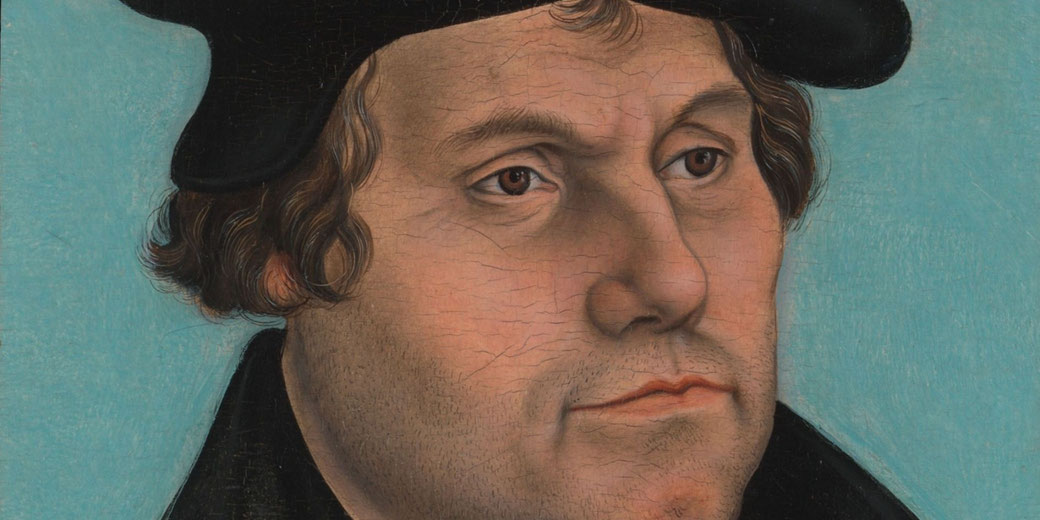
In a world where religious authority was not often challenged, Martin Luther became an important voice of dissent.
His daring act of nailing the 95 Theses to the door of the Castle Church in Wittenberg triggered a firestorm that would forever change Christianity.
Luther's bold critique of the Catholic Church's practices, particularly the sale of indulgences, set him on a collision course with the most powerful institution of his time.
As he translated the Bible into the language of the people and championed the principle of salvation by faith alone, Luther changed the course of history itself.
Martin Luther's early life
Martin Luther was born on November 10, 1483, in Eisleben, Saxony, in what is now Germany.
His father, Hans Luther, was a miner and later a smelter owner, and his mother, Margarethe, came from a small but respectable family.
Hans Luther was determined to see his son rise above the life of a miner, so planned for Martin to become a lawyer.
Martin had begun his education at a local school in Mansfeld, where he learned reading and writing, as well as Latin.
In 1497, he was sent to Magdeburg to attend a school run by the Brethren of the Common Life, which was a lay religious order that emphasised piety and simplicity.
After a year in Magdeburg, Luther moved to Eisenach to continue his studies.
In 1501, at the age of 17, he enrolled at the University of Erfurt, which was one of the leading universities in Germany at the time.
He had received his Bachelor's degree in 1502 and his Master's degree in 1505, and excelled in his studies of the liberal arts.
However, Luther's life took a dramatic turn in July 1505 when, during a thunderstorm, he was nearly struck by lightning.
Terrified, he vowed to become a monk if he survived, a promise that he had fulfilled by entering the Augustinian monastery in Erfurt just two weeks later.
Luther's decision to become a monk was the beginning of his theological education.
He was ordained as a priest in 1507 and had begun to study theology at the University of Erfurt.
In 1508, he was sent to the newly founded University of Wittenberg to teach theology.
Why did Martin Luther challenge the Church?
Martin Luther's growing disillusionment with the Catholic Church reached a tipping point in 1517, triggered by the widespread sale of indulgences.
Indulgences were certificates sold by the Church that purported to reduce the time souls spent in purgatory for their sins.
Johann Tetzel, who was a Dominican friar, was famously selling indulgences near Wittenberg to fund the construction of St Peter's Basilica in Rome.
Luther was appalled by the custom, and viewed it as a corrupt exploitation of the faithful's fear and ignorance.
On October 31, 1517, Luther took an important stand against this abuse by posting his 95 Theses on the door of the Castle Church in Wittenberg.
This act was likely an invitation to an academic debate on the theology and effectiveness of indulgences rather than initially intended as a challenge to the Church's authority.
However, the theses had quickly spread throughout Germany and further afield, thanks to the recent invention of the printing press.
In his theses, Luther argued that salvation could not be bought but was a gift from God, which was received through faith.
He criticised the pope's role in the sale of indulgences, asserting that the pope had no power to release souls from purgatory.
Luther's criticism reached further than indulgences to other church customs that he found unbiblical, such as the emphasis on relics and pilgrimages.

How the Church responded to Luther
The controversy surrounding Martin Luther's 95 Theses and later writings escalated, leading to his excommunication by Pope Leo X on January 3, 1521.
The papal bull Decet Romanum Pontificem declared Luther a heretic and cut him off from the Church.
Despite this, Luther had stayed defiant, publicly burning the bull and other church documents in Wittenberg, which symbolised his rejection of papal authority.
The situation reached a climax at the Diet of Worms in April 1521. This imperial assembly, which was convened by Emperor Charles V, was held in the city of Worms, Germany.
Luther was summoned to appear before the assembly to take back his teachings.
In a room filled with princes and bishops, along with other high-ranking officials, Luther stood firm.
When asked if he would withdraw his writings, he famously replied, “Unless I am convinced by Scripture and plain reason, I do not accept the authority of popes and councils, for they have contradicted each other, my conscience is captive to the Word of God. I cannot and I will not recant anything, for to go against conscience is neither right nor safe. God help me. Amen.”

Luther's refusal to recant at the Diet of Worms marked a turning point in the Reformation.
The Edict of Worms, issued by Emperor Charles V shortly after the assembly, declared Luther an outlaw, banning his writings and requiring his arrest.
However, Luther was whisked away to safety by Frederick the Wise, Elector of Saxony, who hid him in the Wartburg Castle.
Translating the Bible for the German people
During his time in hiding at Wartburg Castle, Martin Luther embarked on one of his most significant contributions to Christianity: the translation of the New Testament into German.
This translation, which was completed in 1522, made the scriptures accessible to the common people for the first time, allowing them to read and interpret the Bible for themselves.
Luther's translation was based on the Greek text rather than the Latin Vulgate, and his clear, forceful language struck a chord with the German-speaking populace.
This translation was arguably central to the spread of Lutheran ideas and the development of the German language.
Luther's theological contributions reached further than his translation of the Bible.
He had challenged the Catholic Church's teachings on several key points, most notably the doctrine of justification.
Luther argued that salvation was a gift from God, which was received through faith alone (sola fide), rather than through good works or the intercession of the Church.
This principle had become a cornerstone of Lutheran theology and a defining feature of Protestantism.
Luther also emphasised the priesthood of all believers, asserting that every Christian had direct access to God without the need for a priestly go-between.
This democratisation of faith challenged the hierarchical structure of the Catholic Church and empowered individuals in their religious lives.
Additionally, Luther's catechisms, which were written in 1529, provided a simple, clear summary of Lutheran beliefs for the education of the laity and clergy.
His emphasis on preaching and congregational singing in the vernacular transformed Christian worship, and made it more participatory and accessible.
Later years and death of Martin Luther
Luther's health had begun to decline in the early 1540s, but he stayed active in church affairs.
In 1545, he had published a severe polemic against the Jewish community, which has been widely criticised for its anti-Semitic content.
This aspect of Luther's history has generally been a source of controversy and reflection within the Lutheran tradition.
Martin Luther died on February 18, 1546, in Eisleben, the town of his birth.
He was buried in the Castle Church in Wittenberg, where he had posted his 95 Theses nearly three decades earlier.