
The forgotten marriage between Guildford Dudley and Lady Jane Grey
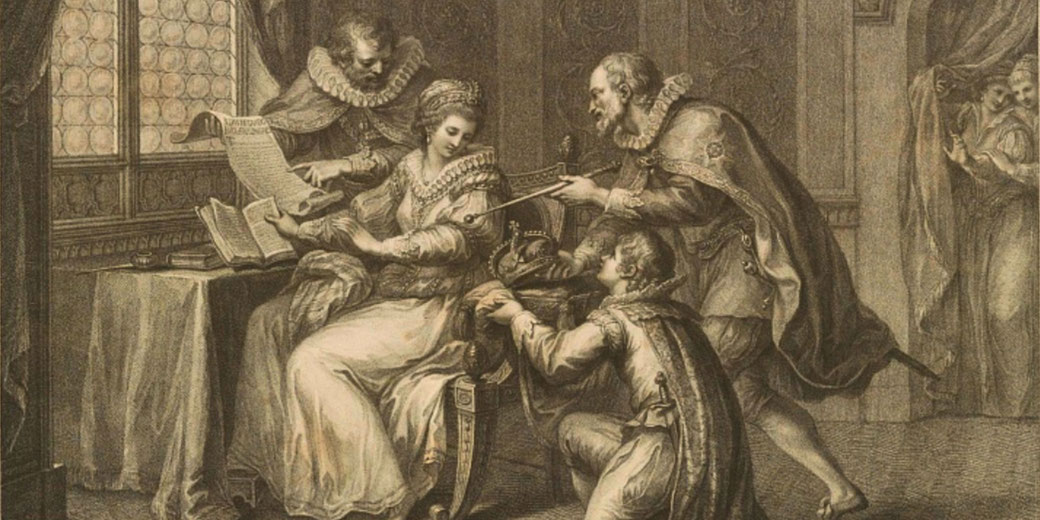
During the summer of 1553, as the Tudor court rushed to control the line of succession before Edward VI’s death, one young nobleman entered the historical spotlight under dangerous circumstances.
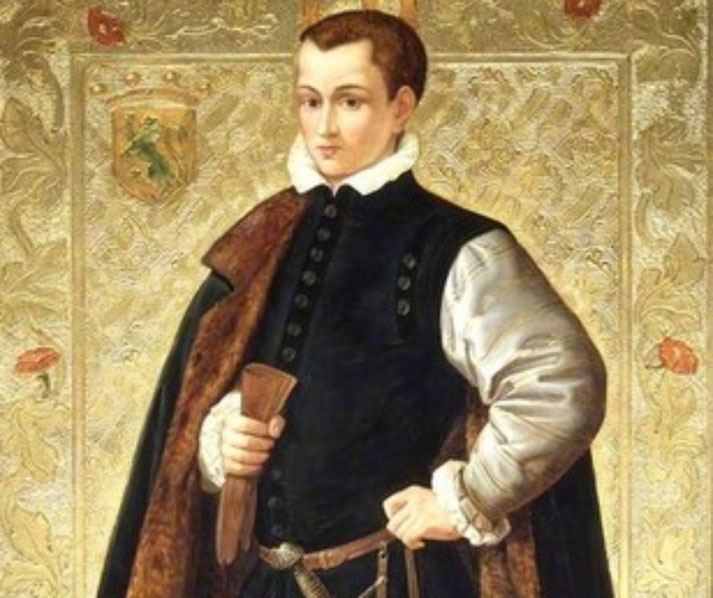
Guildford Dudley was the teenage son of the Duke of Northumberland and became the husband of Lady Jane Grey, whose disputed reign as queen lasted just nine days before she was overthrown.
He did not deliver speeches, lead troops, or issue royal decrees, yet his fate was sealed by the plans of others, and he met the axe on Tower Hill less than a year after his arranged marriage.
Born around 1536 or 1537, Guildford was only sixteen or seventeen when he died.
The Dudley family’s political reach
From the mid-1530s, Guildford Dudley grew up surrounded by court politics and religious upheaval.
His father was John Dudley, and he rose fairly rapidly under Henry VIII and became Duke of Northumberland in 1551 after he suppressed Kett’s Rebellion and helped remove Edward Seymour from power.
By 1550, he had become the leading figure in the king’s council and held almost complete authority under the young Edward VI for a time.
As Lord President of the Council, Northumberland dictated policy and directed the Privy Council, then he pushed Protestant reforms that matched his political interests.
Guildford’s mother was Jane Guildford, and she came from a noble family background and maintained close ties to Queen Katherine Parr, which enhanced the Dudleys’ standing at court.
To secure the family’s control of the succession, Northumberland had already arranged a politically useful match between Guildford and Lady Jane Grey, a Protestant great-granddaughter of Henry VII.
The marriage took place on 25 May 1553 during a triple wedding at Durham House that united Jane and her sisters to members of the Dudley circle.
Guildford married Jane, while her sister Lady Catherine Grey wed Lord Herbert, the son of the Earl of Pembroke, and Guildford’s sister Katherine Dudley married Henry Hastings, heir to the Earl of Huntingdon.
Guildford was still in his teens when the wedding took place.
Edward VI’s death and the succession crisis
By early June 1553, Edward VI’s health had collapsed due to tuberculosis, and he no longer had the strength to conduct state business.
Aware that Mary Tudor stood next in line but would return England to Catholicism, Northumberland persuaded Edward to sign the Devise for the Succession, a document that bypassed Mary and Elizabeth in favour of Lady Jane Grey.
This attempt to secure a Protestant future depended largely on a rapid transition and legal moves backed by the Privy Council and military commanders.
Edward died on 6 July 1553, though news of his death had been deliberately withheld to allow Northumberland to prepare.
On 10 July, Jane was escorted to the Tower of London and proclaimed queen by city officials who acted under council orders. Guildford walked beside her in richly embroidered robes.
Many at court expected him to be declared king, but Jane resisted and insisted that the title of king required Parliamentary approval.
According to later Protestant accounts, she stated that Guildford might become king "only by my permission".
Reports suggest that Guildford was frustrated by her refusal and withdrew from public duties and expressed resentment at being denied royal status, yet his private views stayed unrecorded.
During their brief time in the Tower, Guildford was treated with a measure of formal respect, as he dined in state and guards accompanied him, evne though his role stayed undefined.
Collapse of the plot and their arrest
Meanwhile, Mary Tudor rode to Kenninghall in Norfolk, where she began to rally support from nobles and local communities, which included many clergy, that still saw her as the rightful heir.
As her numbers grew, several councillors abandoned Jane’s cause and declared for Mary.
So, on 19 July the Privy Council changed its position and proclaimed Mary queen.
That same day, Jane and Guildford, along with other key members of the Dudley faction, were arrested and confined within the Tower.
Northumberland was captured in Cambridge after he had tried to stop Mary’s forces and was quickly tried and executed on 22 August.
Before his death, he publicly converted to Catholicism and pleaded for mercy, a public move that differed from the quieter end later faced by his son.
Jane and Guildford were considered minors with little direct responsibility and stayed imprisoned as Mary’s advisors debated their fate.
On 13 November, both appeared in court under formal charges of high treason.
They were convicted and received death sentences, though surviving records do not confirm whether they entered formal pleas.
Mary did not immediately enforce the verdicts, perhaps since she wanted to preserve peace and spare figures whom many viewed as pawns rather than conspirators.
Her hesitation was likely influenced by the advice of Charles V's ambassador, Simon Renard.
Some diplomatic reports suggest Charles V favoured mercy, but it was unclear whether Philip of Spain personally stepped in.
The Wyatt Rebellion and Mary’s final decision
Early in 1554, a new crisis began when Sir Thomas Wyatt raised an armed rebellion in response to Mary’s decision to marry Philip of Spain.
The marriage proposal stirred fears of foreign control and intensified Protestant resistance.
Wyatt and his supporters hoped to unseat Mary and install Elizabeth, but their rebellion failed to capture London.
Guildford and Jane had no part in the plot, yet the uprising placed pressure on Mary to remove all possible rivals to secure her position.
Soon after the rebellion’s defeat, Mary signed the execution orders. On 12 February 1554, Guildford was led from the Tower to Tower Hill, where a scaffold awaited him.
Observers described his calm manner and reported that he spoke only a few words before he knelt at the block.
Chroniclers such as Raphael Holinshed described his calmness and religious devotion, though few specific details survive.
Shortly afterward, his corpse was brought back through the Tower gates as Jane prepared for her own execution inside the fortress.
Some accounts claim she saw his body return from her window, though others dispute whether she was in a position to witness it.
She was executed shortly after. Both were buried in the Chapel of St Peter ad Vincula within the Tower grounds.
Historical silence and Guildford’s obscurity
Over the following decades, historians and writers largely ignored Guildford Dudley or treated him as an extension of Jane’s story.
Without surviving letters, speeches, or written accounts, his character stayed a matter of speculation.
Later fictional works often portrayed him as selfish or sulking, but these depictions relied on fiction rather than firsthand evidence.
Some chroniclers mentioned an episode during imprisonment when Guildford requested to dine with Jane, only to be refused, a moment that suggested further emotional distance in their final days.
Still, Guildford never led a plot or gave an order, yet his connection to the Dudley attempt to control the crown made the government see him as someone it could sacrifice.
His silence in the historical record mirrors his limited power during the crisis itself.
Removed from the court and then from the world before reaching adulthood, Guildford Dudley became one of the many young casualties of Tudor court politics.