
How the Catholic Church's Counter-Reformation responded to the Protestant challenge
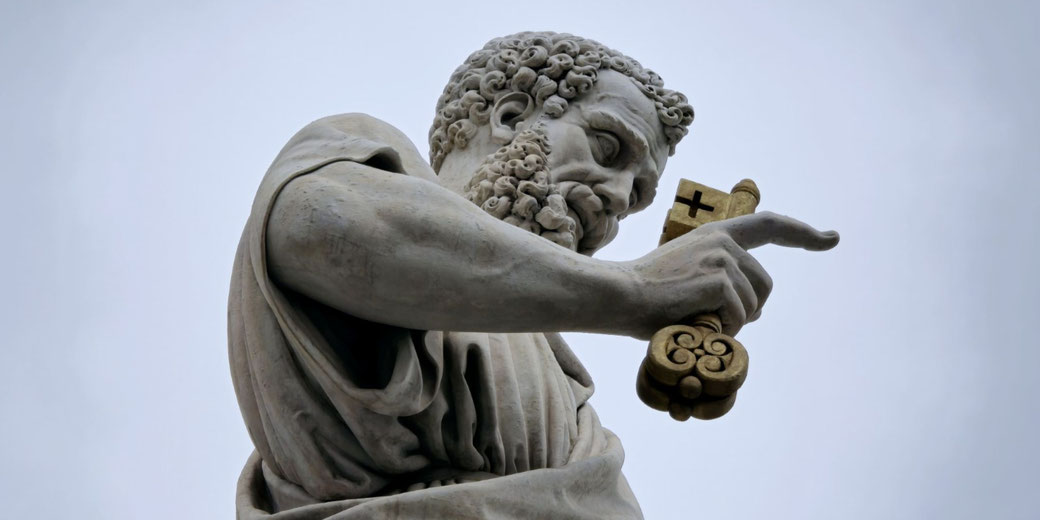
The 16th century Protestant Reformation sent shockwaves through Christendom, and the Catholic Church mounted a powerful counteroffensive.
This period was known as the Counter-Reformation and was a time of intense self-examination and passionate spiritual renewal, as well as daring institutional reform.
At the heart of this movement was the Council of Trent, which aimed to address the criticisms that had been levelled by the Reformers and to express a clear and unified doctrine.
The era also witnessed the rise of influential religious orders like the Jesuits, who became the leaders of Catholic education and missionary work.
Through a blend of art and architecture, as well as activism, the Counter-Reformation worked to reclaim the hearts and minds of believers and to strengthen the foundations of the Catholic faith for generations to come.
The Protestant crisis facing the Church
The Protestant Reformation was initiated by Martin Luther's Ninety-Five Theses in 1517 and challenged the authority and doctrines of the Roman Catholic Church, which led to widespread religious upheaval across Europe.
Luther's call for reform criticised actions such as the sale of indulgences and the corruption that had developed within the Church, and it struck a chord with many who were disillusioned by what they perceived as the moral and spiritual decay of the institution.
As the movement built up momentum, other reformers like John Calvin and Huldrych Zwingli contributed their own theological perspectives and further fragmented the Christian faith into various denominations.
The Catholic Church was confronted with the growing threat of Protestantism and realised the urgent need for internal reform and a powerful response to the criticisms that had been levied against it.
This period of Catholic revival officially began with the calling of the Council of Trent in 1545.

How the Council of Trent sought to fix things
The Council of Trent was convened in the small city of Trento in northern Italy and was arguably one of the Catholic Church's most important ecumenical councils.
The council spanned over 18 years, from 1545 to 1563, with intermittent sessions, and it was a cornerstone of the Counter-Reformation.
One of the council's primary objectives was to clarify and reaffirm the core beliefs of the Catholic faith in response to Protestant critiques.
It upheld the authority of the Pope and the Church's tradition alongside the Scriptures, which was a direct counter to the sola scriptura principle that had been advocated by many Reformers.
The council also reaffirmed the seven sacraments and the doctrine of transubstantiation in the Eucharist, as well as the necessity of both faith and good works for salvation.
In addition to theological matters, the Council of Trent initiated a series of reforms aimed at addressing the moral and administrative issues within the Church.
It ordered the establishment of seminaries for the proper training of priests, which was a move that aimed to enhance the clergy's spiritual and intellectual formation.
The council also addressed the need for a more disciplined and moral lifestyle among the clergy, and it condemned both simony and nepotism and enforced celibacy.
The council's decrees on liturgy led to the standardisation of the Mass and the creation of the Roman Missal, which had stayed largely unchanged until the Second Vatican Council in the 20th century.
This uniformity in liturgical ceremonies helped to foster a sense of unity and identity within the Catholic Church.

The explosion of new religious orders
The Counter-Reformation saw the rise and revitalisation of religious orders that were generally important in the Catholic Church's efforts to renew its spiritual vigour and expand its influence.
Among these, the Society of Jesus (or the Jesuits) was founded by Ignatius of Loyola in 1540, and it was particularly notable for its commitment to education and missionary work, as well as the defence of the Catholic faith.
The Jesuits established schools and colleges across Europe and provided a rigorous education that combined religious instruction with humanistic studies.
Their educational institutions became centres of intellectual and spiritual formation, which attracted students from various social backgrounds and contributed to the spread of Catholicism.
In addition to their educational endeavours, the Jesuits were also active missionaries who ventured into Asia and Africa, as well as the Americas.
They adapted to local cultures and languages, and they aimed to convert indigenous peoples to Christianity in a way that respected their customs and traditions.
The Jesuits' missionary efforts expanded the geographical reach of the Catholic Church, and they also brought new knowledge and understanding of distant lands and cultures back to Europe.
Other religious orders were also significant during the Counter-Reformation.
The Capuchins were a reform branch of the Franciscans, and they focused on preaching and ministering to the poor in a way that embodied the ideals of simplicity and poverty.
The Discalced Carmelites were reformed by figures like Teresa of Ávila and John of the Cross, and they emphasised contemplative prayer and mysticism, which contributed to the spiritual renewal within the Church.

How art was used to encourage reform
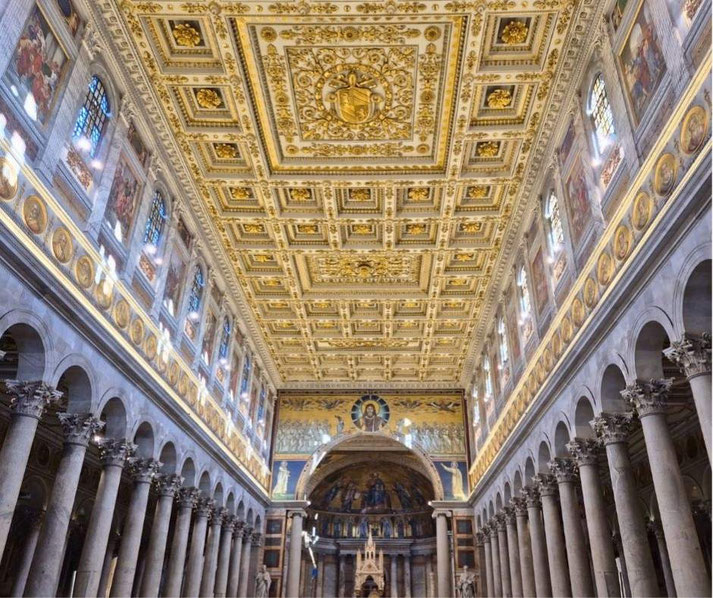
The Counter-Reformation had a profound impact on art and architecture and gave rise to the Baroque style, which became a powerful tool for religious expression and persuasion.
Baroque art and architecture were known for their emotional intensity and dynamic movement, as well as their dramatic use of light and shadow.
These elements were used to captivate the viewer and evoke spiritual awe, as well as to convey the majesty and power of the Catholic Church.
In painting, artists like Caravaggio and Peter Paul Rubens, as well as Guido Reni, used realistic depictions and vivid contrasts of light and dark, as well as dramatic compositions, to bring biblical stories and saints' lives to life.
Their works were designed to inspire devotion and reinforce Catholic teachings, and they acted as visual sermons that communicated the Church's messages in a direct and compelling manner.
Baroque architecture was exemplified by the works of architects like Gian Lorenzo Bernini and Francesco Borromini, and it was known for its grand structures and decorative flourishes, as well as a sense of movement and theatricality.
Churches and cathedrals were designed with sweeping facades and detailed altarpieces, as well as fine stuccowork, which created a sense of awe and wonder that aimed to draw the faithful closer to the sacred.
One of the most iconic examples of Baroque architecture is arguably St Peter's Basilica in Rome, which has a magnificent dome and expansive colonnades.
Bernini's design for the square and his Baldacchino inside the basilica embody the Baroque style's ability to convey the Church's power and glory.
The use of art and architecture during the Counter-Reformation was about more than aesthetic beauty, and it was arguably a strategic response to the Reformation's challenge.
By engaging the senses and emotions, the Church aimed to reaffirm its authority and attract believers back to the fold.
Did the Counter-Reformation work?
Politically, the Counter-Reformation likely had a stabilising effect in some regions, as the Catholic Church aimed to reaffirm its authority and align with ruling powers to counter the spread of Protestantism.
In countries like Spain and Italy, the close relationship between the Church and the state reinforced the power of the monarchy and the influence of Catholicism in public life.
However, in other parts of Europe, such as the Holy Roman Empire, religious tensions that had been worsened by the Counter-Reformation contributed to conflicts like the Thirty Years' War (1618-1648), which had devastating effects on society.
The Counter-Reformation also had a social impact through its missionary activities, which led to the spread of Christianity and the establishment of Catholic communities in various parts of the world.
In the Americas and Africa, as well as Asia, missionaries preached the Gospel and also provided education and healthcare, which contributed to the social development of these regions.