What made Alexander ‘the Great’?
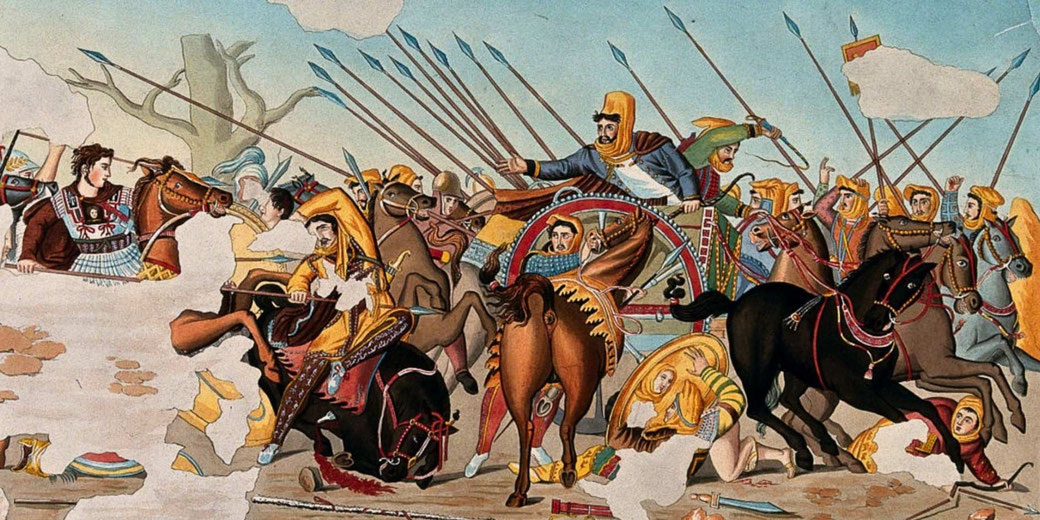
Alexander III of Macedon, who is better known as Alexander the Great, was born in 356 BCE in the city of Pella. His parents were King Philip II of Macedon and Queen Olympias.
He created one of the largest empires in history and is recognised as one of the only military leaders in history who was never defeated in battle.
Alexander’s early life
When Alexander was young, he showed great talent along with a sharp intelligence.
After his father Philip had recognised these qualities, he made sure that Alexander received an excellent education.
One of his teachers was the philosopher Aristotle, who taught him philosophy and science as well as the arts.
Thanks to Aristotle’s influence, Alexander grew to love Greek culture, which inspired him to share Greek ideas as he grew his empire.
Alexander’s mother Olympias also had a considerable influence on him. She told him that he was descended from the hero Achilles and from the god Zeus.
Because he believed this, Alexander felt that he had a special purpose to fulfil.
How Alexander became king
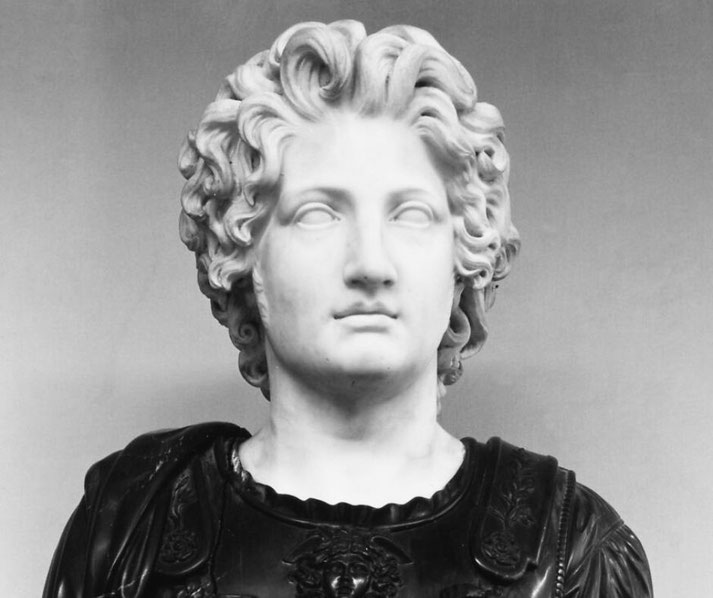
When his father was killed in 336 BCE, Alexander became king at only 20 years old.
At once, he moved to stop revolts in Greece by destroying the city of Thebes in order to warn other Greek states not to rebel in the same way.
Soon after he had become king, Alexander decided to continue his father’s plan to take over the Persian Empire, which was the most powerful kingdom at the time.
From this point, this became his main obsession.
Alexander’s conquests
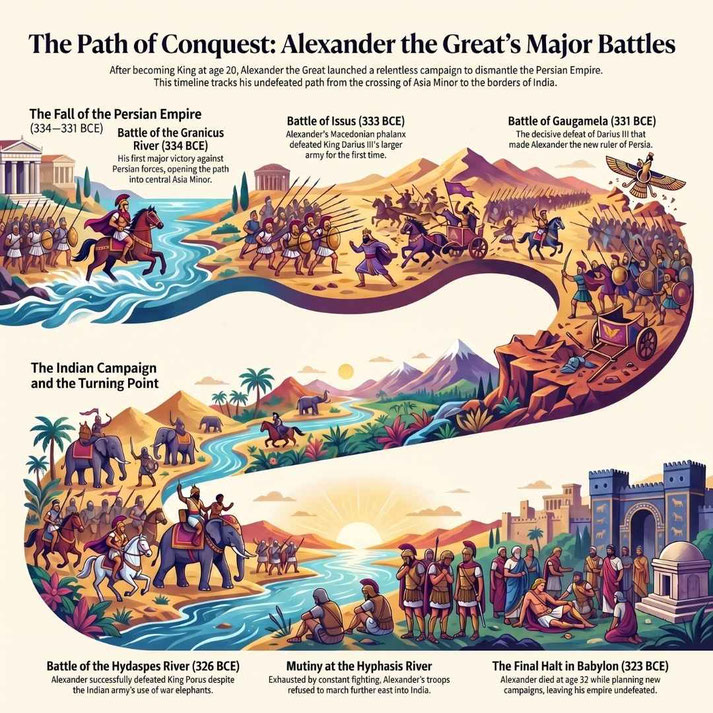
Alexander began his campaign against Persia in 334 BCE when he crossed from Greece into Asia Minor, which was the western region of his enemy’s empire.
His first major battle was at the Granicus River, where he defeated the Persian forces and had opened the way into central Asia Minor.
In 333 BCE, he met King Darius III of Persia at the Battle of Issus. Alexander’s forces were smaller, but he won the battle because of the powerful Macedonian phalanx. Darius, on the other hand, managed to escape.
The following year, Alexander attacked the island city of Tyre and captured it after seven months of siege.
After he had captured Tyre, he moved south and entered Egypt. There, the people welcomed him as a hero who had freed them from Persian rule.
When Alexander was in Egypt, he founded the new city of Alexandria, which was named after himself.
That city would later become a major centre of Greek learning and culture.
Then, in 331 BCE, Alexander faced Darius III again at the Battle of Gaugamela, near what is now Mosul in Iraq.
Once more, he won even though the Persian army was much larger. Darius fled again, and this time he was killed by his own men.
Alexander was now also the ruler of Persia.
Expansion into the East
After he had taken control of the empire, Alexander wanted to push even farther east. In 327 BCE, he crossed the Hindu Kush mountains and entered India.
His most famous conflict there was the Battle of the Hydaspes River in 326 BCE against King Porus.
The Indian army was led by King Porus, who had terrifying war elephants, but Alexander still managed to defeat his enemy.
At the end of the battle, Alexander was so impressed by King Porus’ bravery that he allowed him to continue ruling his kingdom under Alexander’s control.
Over time, Alexander’s army grew tired of constant fighting and refused to go farther east.
When his troops refused to march any further at the Hyphasis River, Alexander decided to finally turn back and start the journey home.
How did Alexander the Great die?
On the way back to Babylon, Alexander encountered a series of challenges, which included the crossing of the brutal Gedrosian Desert, where many of his soldiers died.
Eventually, in 323 BCE, Alexander reached Babylon but had begun planning new military campaigns.
In June of that year, he suddenly became sick and died at the age of 32.
Historians are still unsure about the exact cause of his death, with theories that range from poisoning to illness.
After Alexander’s death, his empire, which had stretched from Greece to India, was divided among his leading generals, who were known as the Diadochi.
This split led to the creation of several new kingdoms.
Why is Alexander so famous?
Alexander the Great spread Greek culture and philosophy as well as science across his enormous empire, which eventually influenced the development of the Roman Empire and Western civilisation.
His idea of a single empire encouraged trade and cultural exchange, along with the blending of traditions between East and West.
More famously, Alexander’s incredible military success also inspired future leaders such as Julius Caesar and Napoleon Bonaparte.