
Infamously brutal: The 9 worst dictators in modern history
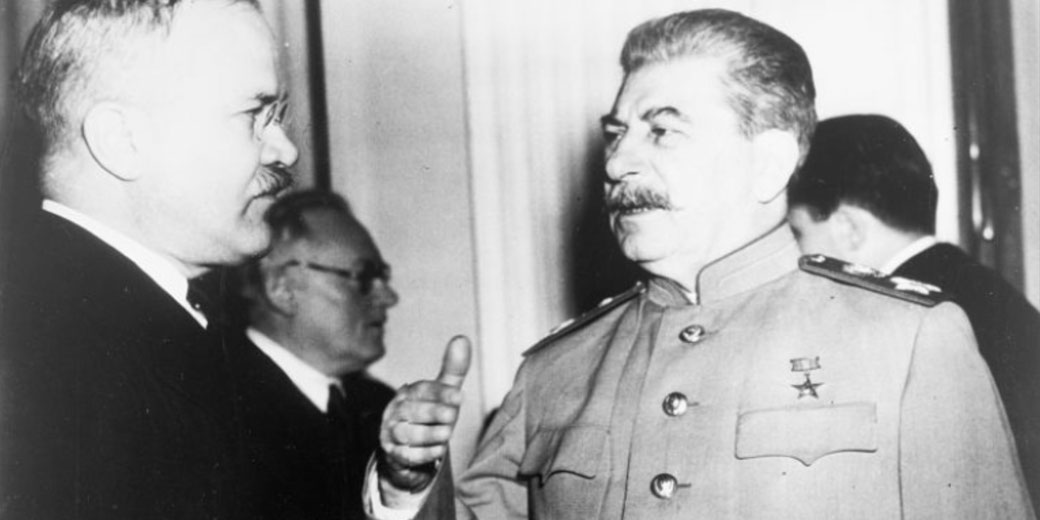
From the gas chambers of Auschwitz to the labour camps of Siberia, the modern era has witnessed several regimes that caused mass death under the rule of one man.
These dictators built police states and destroyed civil institutions that might otherwise restrain them, then treated the murder of civilians as a matter of national policy.
With total control over armies, courts, media, and ideology, they effectively turned entire nations into instruments of terror and removed almost any trace of opposition.
What makes someone a dictator?
A dictator typically centralises power to the point that almost no other authority can challenge their decisions.
They do not tolerate rivals, courts, parliaments, or free elections. Early support often comes from the military or a revolutionary party that believes it will benefit from the change, but once power is secured, the system of repression expands.
A such, the state transforms into a weapon used against its own population.
Often, the dictator uses a secret police force to monitor speech and behaviour.
Citizens are punished for their actions and even for what authorities claim are their intentions, and confessions extracted under torture become legal evidence.
Public rituals and state propaganda often work together with rewritten school curricula and replace free thought with loyalty.
Over time, the dictator becomes tied so closely to the identity of the state itself that they appear the same.
1. Adolf Hitler (Germany, 1933-1945)
After his appointment as Chancellor in January 1933, Adolf Hitler moved quickly to tighten his grip on power.
Following the Reichstag Fire on 27 February, he pushed through emergency legislation that suspended civil liberties and allowed mass arrests.
The Reichstag Fire Decree and Enabling Act gave him the authority to bypass parliament and arrest political enemies, and it turned any dissent against himself or the party into a crime.
As a result, the Nazi Party absorbed the machinery of state and outlawed other political groups.
With help from the Gestapo and SS, it then turned Germany into a one-party dictatorship within months and extinguished organised opposition.
As his grip tightened, Hitler began a campaign of racial persecution that soon escalated into industrial genocide.
The invasion of Poland in 1939 triggered World War II, but the war also provided cover for the Final Solution.
Over six million Jews were murdered. Approximately 1.1 million died at Auschwitz alone, and millions of others were targeted as racial, political, or social enemies.
The Nazi regime used death camps and mobile killing squads, and it relied on forced labour to carry out mass murder across occupied Europe.
By the time Hitler took his own life in April 1945, an estimated 70 million people had died as a result of the global war he initiated, with the toll including civilian and military casualties from multiple nations and areas of fighting.

2. Joseph Stalin (Soviet Union, 1924-1953)
After Lenin’s death in 1924, Stalin worked his way into uncontested control of the Soviet Union.
He sidelined his rivals through party appointments and controlled access to state resources, and he used accusations of counterrevolution to justify arrests.
Eventually, the state worked as an extension of his personal authority.
During the Great Purge of the late 1930s, Stalin ordered the execution or imprisonment of hundreds of thousands, and among them were prominent Bolsheviks such as Nikolai Bukharin and Genrikh Yagoda.
Trials that were often scripted used invented charges and produced outcomes that were decided in advance.
Those not executed were sent to Gulag camps across the USSR, where hard labour and starvation, together with freezing conditions, killed an estimated 1.5 to 2 million people, according to most scholarly assessments.
Meanwhile, collectivisation policies imposed on Ukraine and other republics triggered famine by forcing peasants to surrender crops as the state withheld food.
The Holodomor alone killed approximately four million people, yet Soviet media denied the famine and punished those who spoke of it.
By the end of his rule, Stalin had transformed the USSR into a society largely controlled by fear and silence.
3. Mao Zedong (China, 1949-1976)
After the Chinese Communist Party had seized victory in the civil war, Mao Zedong began reconstructing the country’s economic and social order.
He abolished private property and disbanded religious institutions, and he imposed party loyalty across all areas of life.
Power flowed downward from the Politburo, but real decisions rested with Mao, who demanded absolute obedience.
In 1958, Mao launched the Great Leap Forward, which combined agricultural collectivisation with unrealistic production quotas.
Village officials inflated grain production reports to avoid punishment, and this led the state to seize grain that did not exist.
As a result, millions starved in silence. Between 30 and 45 million people died over the next four years.
Later, in 1966, Mao launched the Cultural Revolution and declared war on supposed capitalist elements within the party and society.
Students who formed Red Guard units often shouted slogans like 'Destroy the Four Olds' as they destroyed temples and attacked teachers, and they carried out public humiliations in cities and villages.
Schools closed, intellectuals were imprisoned or killed, and an estimated 1.5 to 2 million people died as traditional culture was replaced with violent ideology.
Mao retained power until his death in 1976, and he is widely regarded by historians as having caused more civilian deaths than any other leader of the century.
4. Pol Pot (Cambodia, 1975-1979)
After the Khmer Rouge had taken control of Phnom Penh in April 1975, Pol Pot began an extreme change to Cambodian society.
His vision rejected cities and capitalism and condemned all forms of education not approved by the revolution.
Government workers, teachers, monks, and shopkeepers were forced from their homes and marched into the countryside under armed guard.
Soon, the regime abolished currency and religion and attacked family ties under the Year Zero policy.
At the same time, mass executions began in prisons and in fields such as the Choeung Ek killing fields.
Anyone who wore glasses, spoke a foreign language, or had a university degree was treated as a threat to national purity.
The regime established sites like Tuol Sleng prison, where victims were photographed, tortured, and executed.
At least 1.7 million Cambodians died between 1975 and 1979: some through starvation, others through forced labour or execution.
Only the Vietnamese invasion in December 1978 ended Pol Pot’s rule, though he lived for decades afterwards without trial.
5. Kim Il-sung (North Korea, 1948-1994)
After Korea had been divided following World War II, Kim Il-sung became the Soviet-backed leader of the North and built one of the most rigid dictatorships of the Cold War.
He outlawed private property and abolished all other political parties, and he turned the state into a personal cult centred on the Korean Workers’ Party.
Every citizen was required to display portraits of Kim in their homes and memorise his speeches in school.
By 1950, he had launched a full-scale invasion of South Korea, and this action triggered a three-year war that caused destruction across the peninsula and killed an estimated 2.5 to 3 million people.
After the armistice, his regime turned inwards and developed one of the most extreme surveillance systems in history.
Political prisoners included children of accused traitors and were sent to labour camps, where many died of disease, hunger, or execution, often determined by their classification based on family background under the songbun system.
The country’s isolation grew deeper over time, and during the 1990s, famine killed between 600,000 and 2 million people.
His son Kim Jong-il succeeded him after his death in 1994, continuing the dynastic dictatorship that he had established.
6. Saddam Hussein (Iraq, 1979-2003)
Saddam Hussein ruled Iraq with an unstable mixture of nationalism and fear, combined with ruthless violence.
After he had formally assumed the presidency in 1979, he planned a purge of the Ba’ath Party and executed dozens of senior officials on false charges.
His secret police tortured political detainees and crushed public dissent, and they imposed loyalty through intimidation.
Not long after coming to power, he launched a war against Iran in 1980. Over the next eight years, the conflict produced one of the deadliest wars of the second half of the century, killing more than a million people.
During that war, Saddam used chemical weapons such as mustard gas and nerve agents against Iranian troops and Kurdish civilians, notably during the 1988 Halabja gas attack, which killed around 5,000 people.
His invasion of Kuwait in 1990 led to the Gulf War and subsequent international sanctions.
Yet inside Iraq, the regime maintained its grip by suppressing Shia and Kurdish uprisings with brutal efficiency, and one example of this brutality was the Anfal campaign, which killed tens of thousands of Kurds.
After the US-led invasion in 2003, Saddam was captured, tried, and executed by hanging in 2006.
7. Idi Amin (Uganda, 1971-1979)
Idi Amin came to power in a military coup and turned Uganda into a state ruled by fear and ethnic violence.
He dismantled parliamentary institutions, murdered political opponents, and declared himself President for Life.
His rule produced mass killings that targeted rival tribes and religious leaders, as well as perceived enemies within the army, with many victims executed by the State Research Bureau.
In 1972, Amin ordered the expulsion of nearly 80,000 Ugandan Asians, many of whom had been the backbone of the business sector.
Their departure triggered economic collapse and social unrest. Amin’s regime used death squads to carry out abductions and executions.
One example was the murder of Anglican Archbishop Janani Luwum in 1977, and it often disposed of bodies in rivers and mass graves.
As his behaviour grew more erratic, international pressure mounted. Eventually, in 1979, after his forces attempted to annex part of Tanzania, he was overthrown by a joint Ugandan–Tanzanian military effort.
He lived the rest of his life in exile and never stood trial for the estimated 300,000 to 500,000 deaths under his rule.
8. Francisco Franco (Spain, 1939-1975)
After he had won the Spanish Civil War, Francisco Franco built a regime grounded in military authority and Catholic conservatism, along with constant suppression of dissent.
He outlawed political parties and closed trade unions, and he imprisoned thousands of left-wing opponents.
In the early years of his dictatorship, thousands were executed, and many more faced long-term detention in terrible conditions.
Franco’s Spain stayed out of World War II, but the regime sympathised with Axis powers and sent the Blue Division to fight alongside Nazi forces on the Eastern Front.
Back home, the government suppressed regional cultures and banned minority languages like Catalan and Basque, and it rewrote history textbooks to reinforce national unity under a single authoritarian vision.
Economic growth began in the 1950s, yet political repression continued until his death in 1975, enforced through censorship laws and the Movimiento Nacional.
His handpicked successor was King Juan Carlos, and he moved Spain toward democracy, ending one of the longest-standing fascist regimes in Europe.
9. Muammar Gaddafi (Libya, 1969-2011)
After he had led a military takeover without open fighting in 1969, Muammar Gaddafi declared himself the revolutionary guide of Libya.
In 1977, he proclaimed the country a 'Jamahiriya' and dismantled all formal political institutions.
The country’s laws became subject to his personal belief system, a mix of Islamic rhetoric and socialist slogans that he presented in his Green Book.
Political opposition was outlawed, and security services crushed dissent through imprisonment and torture, as well as execution.
Over time, Gaddafi funded armed groups abroad, and among these groups were those responsible for bombings and assassinations.
Domestically, he suppressed critics and staged public executions, while many disappeared into secret prisons such as Abu Salim, where over 1,200 inmates were killed in 1996.
In 1988, Libyan agents carried out the bombing of Pan Am Flight 103 over Lockerbie, killing 270 people.
As popular uprisings spread across North Africa in 2011, protests erupted in Libya. Gaddafi responded with violence, ordering troops to fire on civilians and shell residential areas.
NATO forces intervened, and rebel fighters eventually captured and killed him in Sirte, ending his 42-year dictatorship.