
The 9 worst military disasters of the 20th century

Between 1914 and 1954, millions of soldiers died in battles that failed to meet their objectives and destroyed the confidence of commanders who had believed in quick victories.
During this period, military campaigns expanded in size, intensity, and technological scale, but many armies continued to repeat errors that had already proven costly.
Rather than learning from earlier failures, commanders frequently misjudged enemy tactics, ignored terrain and logistics, or placed unqualified trust in untested plans, which then collapsed under pressure.
1. Battle of the Somme (1916)
On 1 July 1916, British and French forces began a major joint offensive along a 25-kilometre section of the Western Front in northern France, with the aim of relieving pressure on French troops at Verdun and break the German trench line.
General Sir Douglas Haig relied on a very large artillery barrage to destroy enemy positions before the infantry advanced.
Over seven days, approximately 1.7 million shells were fired at German lines, but a high proportion failed to detonate, and many barbed wire entanglements remained intact.
German troops under General Fritz von Below had constructed deep reinforced dugouts and withstood the bombardment with minimal losses.
At 7:30 a.m., British soldiers advanced in rigid lines across no-man’s land, weighed down by heavy packs and who moved under the assumption that resistance had already been stopped.
German machine-gunners had emerged from the dugouts and cut down the attackers with precise, concentrated fire.
By nightfall, British casualties exceeded 57,000, which included nearly 20,000 killed, the bloodiest day in British military history.
Despite the shocking losses, Haig continued the offensive into November. At a cost of more than one million casualties across both sides, the Allies advanced only 10 kilometres.
The Somme shows just how poorly coordinated bombardments, inflexible tactics, and flawed expectations could produce mass slaughter without achieving any strategic breakthrough.
Unfortunately, limited gains, such as the capture of Thiepval and Beaumont-Hamel, offered little consolation for the scale of the disaster.

2. Gallipoli Campaign (1915-1916)
In early 1915, Winston Churchill, then First Lord of the Admiralty, urged a naval assault on the Ottoman Empire to open the Dardanelles Strait and secure a sea route to Russia.
Allied planners believed that naval bombardments followed by amphibious landings would break Ottoman resistance.
On 25 April, British, Australian, New Zealand, and French troops landed on the Gallipoli Peninsula under fire, with ANZAC forces coming ashore at what became known as Anzac Cove.
From the outset, the plan unravelled. Ottoman forces, who were led by Mustafa Kemal and his 19th Division, occupied the high ground and used it to great effect.
Poor maps, inadequate reconnaissance, and confused orders led to disorganised landings, with troops pinned down on steep slopes.
As positions stabilised, the campaign turned into trench warfare marked by shortages of food, water, and ammunition.
By midyear, disease had spread rapidly through the ranks, and morale had deteriorated.
Command indecision, logistical failures, and relentless Ottoman resistance halted all progress.
By December, British commanders ordered a withdrawal, which was completed in January 1916.
The operation failed to achieve its objectives and cost the Allies over 250,000 casualties. Total losses across both sides likely exceeded 500,000.
The failure at Gallipoli damaged Allied prestige, discredited key leaders such as Churchill, who resigned from the Admiralty, and strengthened the Ottoman resolve to continue the war.
For Australians and New Zealanders, it became a defining national experience, forever tied to the sacrifices of the ANZACs who died on its beaches and ridges.
3. Battle of Caporetto (1917)
On 24 October 1917, Austro-Hungarian and German forces launched a coordinated offensive against Italian positions along the Isonzo front near Caporetto.
General Luigi Cadorna had spread his troops thinly across a mountainous region that had limited roads and poor communication.
He expected minor attacks and remained unaware of the scale of the coming assault.
They used infiltration tactics, poison gas, and elite stormtrooper units under General Otto von Below and General Krafft von Dellmensingen, the attackers broke through Italian lines and rapidly bypassed defensive strongpoints. Resistance collapsed in several sectors.
Units deserted or surrendered in large numbers, while command and supply structures fell apart under pressure.
Italian discipline deteriorated into open panic.
Over the next fortnight, enemy forces had advanced more than 100 kilometres.
Around 275,000 Italians were taken prisoner, and over 40,000 were killed or wounded.
The Italian Second Army bore the brunt of the collapse. In response, the Italian government dismissed Cadorna and pleaded for Allied support to prevent a total collapse of the front.
In reality, Caporetto exposed serious weaknesses in the Italian army’s organisation and leadership.
But, the disaster forced the military to adopt reforms and rely more heavily on Allied cooperation to stabilise the war effort.

4. Battle of Stalingrad (1942-1943)
In August 1942, Hitler ordered General Friedrich Paulus and the German Sixth Army to capture Stalingrad, a key industrial city on the Volga River.
He expected that securing the city would protect the German southern flank and interrupt Soviet supply lines.
Luftwaffe bombers flattened Stalingrad’s city centre, which initially allowed German infantry to advance without obstruction.
Soon after, the fighting changed when Soviet General Vasily Chuikov turned the ruins into a defensive advantage, by directing troops to fight in buildings, sewers, and rubble.
As a result, each block became a battleground, with snipers, grenades, and booby traps bleeding German units dry.
Losses mounted on both sides as neither could achieve a clear advantage.
On 19 November, Soviet forces launched a massive counteroffensive, Operation Uranus, which targeted weaker Romanian and Hungarian units guarding the German flanks.
Within days, the Soviet pincers had met and encircled the Sixth Army. Paulus requested permission to withdraw, but Hitler refused and insisted on holding the city.
The Luftwaffe’s airlift proved insufficient, and as winter closed in, hunger and frostbite devastated the encircled forces.
On 2 February 1943, the final German units surrendered. Out of over 300,000 men, only a few thousand returned to Germany.
The German defeat shattered Hitler’s credibility as a military strategist and demonstrated the Red Army’s growing ability to coordinate massive, multi-front operations.
Axis casualties, including German, Romanian, and Hungarian losses, are usually estimated to have exceeded 800,000, while Soviet losses, including civilian deaths, likely surpassed one million.
5. Operation Market Garden (1944)
On 17 September 1944, Field Marshal Bernard Montgomery launched an far‑reaching plan to seize a series of bridges in the Netherlands using airborne forces.
Codenamed Operation Market Garden, the objective was to secure a route into Germany and shorten the war by months.
American, British, and Polish paratroopers dropped behind enemy lines to capture key bridges while British XXX Corps advanced to meet them.
Initially, the plan succeeded in parts. Ground forces linked up with the American 82nd and 101st Airborne Divisions at Eindhoven and Nijmegen.
However, the operation faltered at Arnhem, where the British 1st Airborne Division encountered unexpectedly strong German resistance from the II SS Panzer Corps, including the 9th and 10th SS Panzer Divisions.
Poor weather disrupted air support, and radio failure left units cut off.
Supplies dropped by air fell into German hands, and reinforcements failed to break through.
After nine days of brutal street fighting, the surviving paratroopers withdrew across the Rhine.
Arnhem had not been secured, and, in total, more than 17,000 Allied troops were killed, wounded, or captured.
Operation Market Garden's failure extended the war into the bitter winter of 1944 and left the northern Netherlands under occupation until spring.
6. Battle of the Kasserine Pass (1943)
In February 1943, German and Italian forces under Field Marshal Erwin Rommel launched an assault on inexperienced American units in Tunisia.
The Kasserine Pass, which was a narrow mountain corridor, became the main point of attack. U.S. forces, many of whom had not seen combat before, and received conflicting orders from their commanders, including Major General Lloyd Fredendall.
As Rommel’s tanks and infantry broke through the pass, they quickly overwhelmed isolated American positions.
Panic spread, and logistical confusion slowed down the response. Entire units retreated without orders, leaving equipment and wounded behind.
The 10th Panzer Division played a key role in the breakthrough.
Eventually, British reinforcements and American counterattacks stabilised the front, but the damage had already been done.
The U.S. suffered between 6,000 and 7,000 casualties and lost large quantities of armour and supplies.
The defeat embarrassed American leadership but triggered essential reforms.
General Eisenhower replaced underperforming commanders, introduced better training programs, and reorganised the command structure.
As such, Kasserine became a costly lesson in the realities of modern warfare and coalition coordination.
7. Battle of the Java Sea (1942)
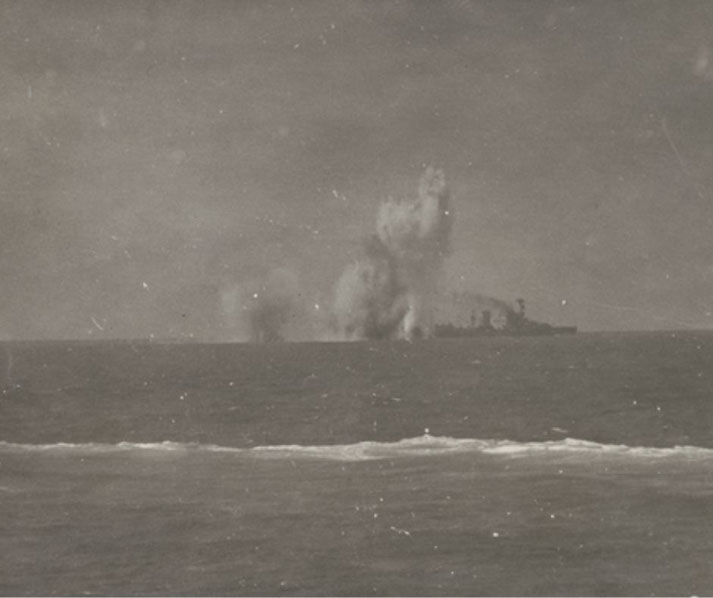
On 27 February 1942, the Allies attempted to stop the Japanese advance into the Dutch East Indies by sending a multinational fleet to engage a superior Japanese naval force in the Java Sea.
Rear Admiral Karel Doorman led a mixed group of American, British, Dutch, and Australian ships that lacked cohesive doctrine or effective communication.
Japanese forces under Vice Admiral Takeo Takagi, equipped with powerful torpedoes and supported by reconnaissance aircraft, launched coordinated attacks that sank five Allied ships during the main battle.
However, poor coordination and outdated tactics left the Allied fleet vulnerable, and Japanese gunners maintained the initiative from the outset.
Key ships lost included De Ruyter, Java, Kortenaer, and Exeter. Over the following two days, additional Allied vessels were destroyed or scuttled as the Japanese completed their naval sweep.
Within days, the surviving Allied vessels were hunted down or scuttled. Admiral Doorman went down with his flagship De Ruyter, and the Japanese occupied Java soon after.
The battle’s outcome destroyed Allied naval strength in the region and allowed Japan to dominate the western Pacific.
It also demonstrated how disunity between allied forces, outdated equipment, and lack of air support could doom even well-intentioned resistance efforts
8. Battle of Chosin Reservoir (1950)
In November 1950, United Nations forces pushed deep into North Korea following their successful landings at Inchon and the recapture of Seoul.
General Douglas MacArthur believed the war was nearly won. However, Chinese forces had crossed the Yalu River in secret, and by late November, the U.S. 1st Marine Division and attached units found themselves surrounded at the Chosin Reservoir.
Chinese forces struck with overwhelming numbers (estimated at over 120,000 troops operating across the broader front) cutting off supply lines and launching wave assaults in freezing temperatures.
Ammunition froze, diesel turned to slush, and medical supplies became useless.
Despite the horrible conditions, the Marines held their positions and began a disciplined fighting withdrawal toward the port of Hungnam.
Army units from the 7th Infantry Division also participated in the breakout. Over 17 days, U.N. forces inflicted heavy casualties on the Chinese but lost over 17,000 troops to battle, frostbite, and exposure.
The evacuation at Hungnam rescued over 90,000 soldiers and civilians, making it one of the largest sealifts in military history.
However, it was the end of U.N. hopes for total victory. The Chosin battle forced a long-term stalemate and redefined American expectations about the war.
It showed the limits of rapid advances, the consequences of ignoring enemy intentions, and the brutal effects of winter warfare in mountainous terrain
9. Battle of Dien Bien Phu (1954)
In late 1953, the French army established a heavily fortified base at Dien Bien Phu in a remote valley of northern Vietnam.
General Henri Navarre believed the Viet Minh would attack in open battle and that French artillery and air support would guarantee victory.
Supplies had to be flown in, as no roads reached the base. General Võ Nguyên Giáp did not oblige with a conventional assault.
Instead, he constructed supply lines through jungle and mountain terrain and hauled heavy artillery into the surrounding highlands.
By March 1954, Viet Minh forces (numbering around 50,000) surrounded the valley and began a siege that the French were unprepared to resist.
Day by day, Viet Minh artillery destroyed French positions, while infantry attacks overwhelmed outposts such as “Gabrielle” and “Isabelle.”
Air drops became increasingly inaccurate as anti-aircraft fire intensified. By 7 May, the garrison surrendered.
Over 10,000 French troops went into captivity, and fewer than 4,000 ever returned.
Estimates of French killed and wounded bring total casualties to around 16,000.
French morale at home collapsed and Dien Bien Phu ended France’s colonial desires in Indochina which led to the 1954 Geneva Accords, which divided Vietnam at the 17th parallel.
The battle exposed how underestimating an opponent’s ingenuity and willpower could lead to complete strategic collapse.
The Viet Minh suffered at least 23,000 losses.