The Atlantic Wall: Hitler's failed fortress against the Allies
By late 1941, Adolf Hitler had begun to believe that the greatest threat to Nazi Germany would come from across the English Channel.
With every month that passed, Allied air raids increased and British agents multiplied as American supplies surged into Britain.
In response, Hitler ordered the creation of the Atlantic Wall, a 2,400-kilometre-long chain of coastal defences designed to repel an Allied invasion and prevent any landing on the shores of occupied Europe.
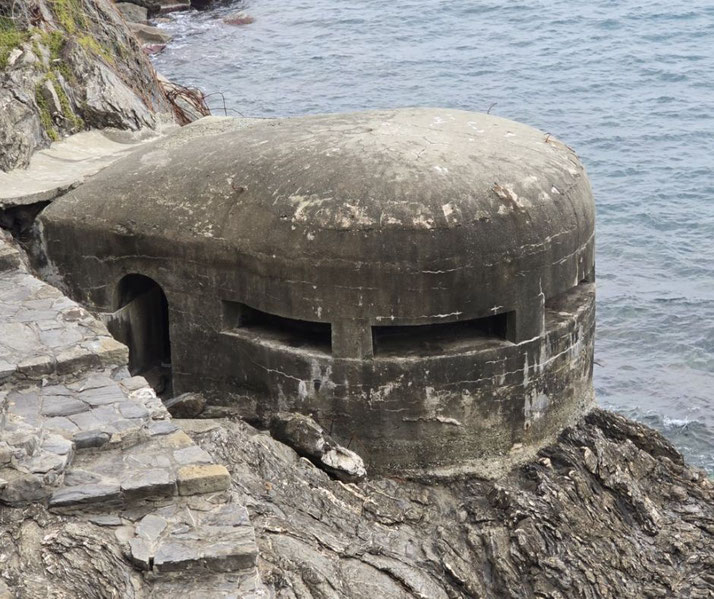
The project would eventually involve the construction of more than 15,000 bunkers and pillboxes, along with numerous firing positions, which together formed what was meant to be a continuous barrier from Norway to the Spanish border.
Planning Hitler’s Atlantic fortress
In March 1942, during a meeting with his senior staff, Hitler instructed his engineers to build a continuous system of fortifications.
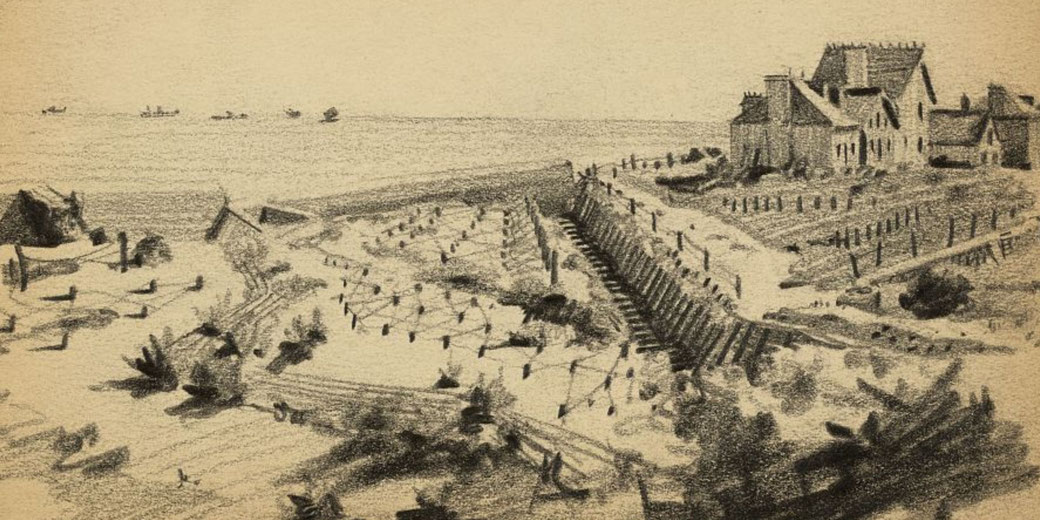
He imagined a line of bunkers and batteries, together with thick belts of beach obstacles so difficult to cross that they would crush any seaborne assault before it could secure a firm position on land.
Organisation Todt had already constructed roads and tunnels for the regime, as well as death camps, and it received orders to manage the project and organise and use its large network of labourers and machines, along with very large amounts of concrete.
At the peak of construction, Organisation Todt coordinated over 600,000 workers, and this total included thousands who had been forced into labour through the Service du Travail Obligatoire.
Across thousands of kilometres, construction began almost at once. Heavy artillery batteries were installed on key headlands along the coast, while pillboxes and observation posts lined the more exposed beaches.
Large areas near harbours and ports received heavy defences, especially at Pas de Calais, where German intelligence wrongly believed the Allied invasion would occur.
Elsewhere, engineers installed minefields and tank traps, along with further layers of beach obstacles.
Inland fields were filled with the so-called “Rommel’s asparagus”, wooden stakes that were designed to damage gliders during airborne landings, while separate beach defences such as hedgehogs and ramps were deployed along the shoreline to slow down landing craft.
Many bunkers followed standardised designs, such as the Regelbau 612 used for artillery, and the 669 designed to house anti-tank guns.
Initially, the project moved quickly in well-supplied areas. However, shortages of materials and labour, as well as transport capacity, soon slowed progress.
Engineers reused French steel, cut local limestone from nearby quarries, and pressed thousands of forced labourers into service.
Many had come from occupied countries, where they had lived in poor conditions and had suffered beatings or execution if they disobeyed orders.
As a result, sabotage became relatively common, and construction standards often varied a lot from one region to another.
Some workers had passed information to the French Resistance or to Allied intelligence, which had used the details to plan targeted air raids on key sites.
Meanwhile, Hitler handed responsibility for coastal defence to Field Marshal Gerd von Rundstedt, who managed overall command, and later brought in General Erwin Rommel, whose experience in mobile desert warfare strongly influenced his aggressive approach.
Rommel received his appointment in November 1943 and argued that the wall must stop the Allies at the shoreline and that all available obstacles, mines, and firepower should be placed directly on the beaches.
Rundstedt disagreed. He wanted to allow the Allies to land, then try to strike back with concentrated armoured units held in reserve.
Hitler failed to resolve the dispute, which meant the German command structure remained divided when it most needed unity.
Problems with design, supply, and leadership
From the start, the Atlantic Wall had suffered from serious design problems and problems in how labour had been used, together with ongoing confusion in overall strategy.
Organisation Todt was experienced in large-scale construction and ultimately lacked the capacity to complete the entire project under wartime pressures.
By mid-1943, the workforce had grown to include thousands of Soviet prisoners and Polish civilians, as well as large numbers of French conscripts, who had often worked under extremely hard conditions with limited tools and scarce food.
Many who worked on the wall died during construction or attempted escape, and some managed to sneak out information to Allied intelligence networks.
At the same time, the layout of the wall came from a mix of local decisions rather than a single clear strategy.
Some regions were packed with fortifications and gun emplacements, while others remained relatively lightly defended or unfinished.
German commanders often focused resources around harbours and major roads, which left long stretches of beach with only very limited protection.
Rommel grew increasingly frustrated as he visited sectors personally, and he ordered the installation of more beach obstacles and mine belts, reinforced by anti-tank walls.
By mid-1944, engineers had laid over 500,000 mines and installed more than 6.5 million wooden stakes, and they also strung 1.2 million metres of barbed wire along key stretches of the coastline.
Still, many of his recommendations came too late or lacked the necessary manpower to implement fully.
Importantly, Allied deception campaigns widened the existing cracks in the German strategy.
Operation Fortitude fed false intelligence into German channels, and it used radio broadcasts and fake military units, all of which were designed to make the Wehrmacht believe that the invasion would occur at Pas de Calais.
One key element was the fake First U.S. Army Group under General George S. Patton, which used inflatable tanks and dummy landing craft, supported by carefully faked radio traffic to mislead German observers.
Evidence from German and Allied sources suggests that Hitler believed the ruse.
He kept his strongest reserves, including the 12th SS Panzer Division Hitlerjugend and the elite Panzer Lehr Division, largely stationed far from Normandy, which gave the Allies an opening that German commanders failed to close.
Internally, Rommel and Rundstedt clashed more often. Rommel pushed for immediate action and faster reinforcement of beaches, with greater decentralised decision-making.
Rundstedt continued to favour traditional tactics based on counteroffensives and depth.
Hitler was increasingly paranoid and indecisive, and refused to delegate full authority to either man.
He kept tight control of armoured divisions and refused to release them without personal authorisation, which delayed German responses when they mattered most.
D-Day and the collapse of the Wall
On 6 June 1944, as stormy weather gave way to overcast skies, the Allies launched Operation Overlord.
More than 150,000 troops landed on five beaches: Utah, Omaha, Gold, Juno, and Sword, supported by thousands of ships and aircraft, together with armoured formations of tanks.
German defenders opened fire from bunkers and cliffs, along with the dunes, but they failed to stop the landings.
At Omaha Beach, American forces endured the worst resistance, with elements of the 352nd Infantry Division entrenched in fortified positions overlooking the shore.
Many of these troops had only recently been moved from Saint-Lô to reinforce the coastal sector.
Even so, by mid-afternoon, engineers had cleared many of the mines and tank traps, and infantry units began advancing inland.
At other beaches, the wall offered even less resistance. Canadian troops at Juno quickly defeated the defenders, while British forces pushed through Gold and Sword despite on-and-off fire.
Paratroopers who had been dropped behind enemy lines the night before had already disrupted many communications lines and cut off some reinforcements, then destroyed key bridges.
At Utah, badly scattered parachute drops sent American airborne units across a wide area, but they managed to regroup and block German counterattacks from reaching the beach.
Hitler had promised that the Atlantic Wall would hold back any invasion, and it failed within hours.
Allied casualties on D-Day reached roughly 10,000, including about 4,000 dead, with the heaviest losses suffered by American forces at Omaha Beach.
Several factors had contributed to the collapse, and some gun emplacements had lacked trained crews or ammunition.
Many of the bunkers had been poorly built or never completed, and coastal radar systems, damaged in earlier raids, could not track the Allied fleet.
Anti-aircraft units struggled to respond effectively under constant bombardment.
More importantly, the defenders lacked flexibility. German forces could not move or change position quickly due to Allied air superiority and Hitler’s refusal to release the Panzer reserves.
As a result, by the time German armoured divisions began moving, the Allies had already established secure positions on the beaches.
Once the Allies broke through the coastal line, the Atlantic Wall lost its purpose.
Attempts to counterattack failed to regain lost ground, and the Wehrmacht fell back under pressure from constant landings and air attacks.