
The USS Liberty Incident: Why did Israel attack an American ship during the Six-Day War?
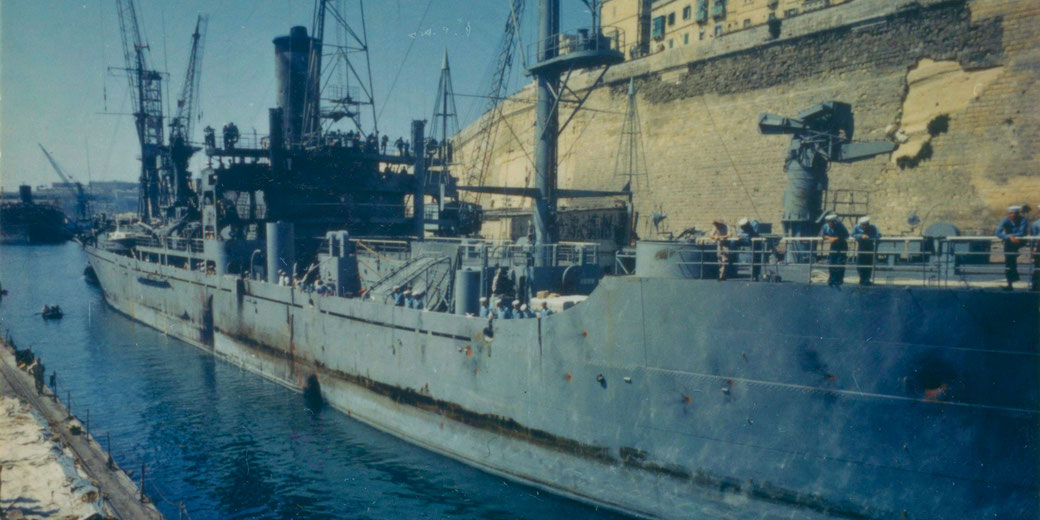
During the fourth day of the Six-Day War, on 8 June 1967, a United States Navy intelligence ship came under continuous deadly attack from Israeli forces in international waters.
Over the course of an hour, the USS Liberty was struck repeatedly by Israeli fighter jets and torpedo boats, which killed thirty-four crew members and seriously wounded 171 others, according to official counts.
Although Israel later claimed the assault was a case of mistaken identity, the event sparked decades of suspicion and unresolved accusations, particularly among survivors and intelligence officials who believed the truth had been buried to protect the US-Israeli relationship during the Cold War.
What was the USS Liberty?
As a signals intelligence ship, the USS Liberty (AGTR-5), which was a Belmont-class technical research ship, had been assigned to collect and monitor electronic communications off the coast of the Sinai Peninsula, where intense fighting was underway between Israel and its Arab neighbours.
The Liberty displaced over 10,000 tons and had specialised SIGINT equipment, was operating under the command of Captain William L. McGonagle, carrying a crew of 294, including Navy personnel, Marines, and National Security Agency technicians.
According to Navy records, the ship, which displayed a large American flag, bore standard hull markings and had no combat role.
It had arrived in the region on 7 June and had begun operations within range of both Israeli and Egyptian military communications.

The events of 8 June 1967
Earlier that day, Israeli aircraft had made several passes over the Liberty and they had flown low enough that crew members could see them and wave, according to crew accounts.
Based on standard naval practice, those aboard the ship believed they had been identified as a neutral party and posed no threat.
By early afternoon, conditions remained clear, and the crew continued monitoring radio traffic.
Without warning, a formation of Israeli Mirage III jets launched a planned attack, firing rockets and cannons at the vessel, which crew members later described as "sudden".
The first wave struck the ship’s antennas, bridge, and deck structures, which disabled key systems and started fires that spread rapidly.
Soon after, a second wave of Israeli Dassault Mystère aircraft dropped napalm on the ship, which damaged communications and injured crew members who attempted to contain the damage.
Although the Liberty had no effective means of defence, the crew worked to send calls for help.
After several failed attempts, a backup radio operator had managed to get a working transmission through, as that message reached the US Sixth Fleet, which quickly sent aircraft from the nearby carriers USS America (CV-66) and USS Saratoga (CV-60) to aid the Liberty.
However, the order was cancelled soon after launch, reportedly due to concerns that the aircraft were armed with nuclear weapons and did not have the right conventional weapons for the situation.
Minutes later, three Israeli torpedo boats closed in and opened fire with machine guns while approaching the damaged vessel.
They launched torpedoes, one of which struck the starboard side near the research compartments, which killed twenty-five men instantly and caused a large hole in the hull.
Some reports suggest that five torpedoes were fired, but this number is disputed.
Below deck, sailors struggled to contain the flooding, rescue trapped crewmen, and keep the ship from capsizing.
On the bridge, Captain McGonagle was bleeding heavily from shrapnel wounds, and refused to evacuate and continued directing damage control efforts.
His leadership and refusal to abandon the ship later led to him receiving the Medal of Honor, though the ceremony took place without the usual public recognition.
What reasons were given for the attack?
Shortly after the torpedo strike, Israeli forces ceased fire and offered assistance.
Israel later admitted responsibility for the attack and stated officially that their military had misidentified the Liberty as the El Quseir, a far smaller Egyptian horse transport vessel.
Israeli authorities blamed poor coordination between air and naval units and said no flag had been visible during the engagement.
Several survivors later testified that the ship had flown a 5-by-8-foot American flag, which was replaced by a larger 7-by-13-foot storm flag after the first was destroyed.
Only one flag flew at a time, though both were reportedly visible during different phases of the attack.
The US government accepted the explanation and limited its response to formal protests and financial settlements because an Israeli military inquiry and a US Navy Court of Inquiry both supported the claim of mistaken identity.
Even so, survivors and several high-ranking US officials publicly disputed the official account.
They insisted that the Liberty had been operating in clear weather, displayed American flags throughout the engagement, and could not reasonably have been confused with an unarmed Egyptian transport ship.
Crew members testified that Israeli aircraft made repeated close-range passes before the strike and that lifeboats launched during the attack were later found full of bullet holes.
Israeli and US inquiries denied that lifeboats were intentionally fired upon.
Survivor testimony maintained that machine-gun fire struck them after they were deployed, which violated the Geneva Conventions.
Over time, several theories won support about why Israeli forces may have targeted the Liberty deliberately.
According to one theory, Israeli commanders may have wished to hide the killing of Egyptian prisoners of war at El-Arish, which the Liberty could have overheard by monitoring signals.
Another explanation suggested that Israeli leaders feared the ship would expose their planned offensive into the Golan Heights, which had not yet been approved internationally.
A further possibility held that the ship’s ability to collect intelligence posed a risk to Israel’s efforts to rapidly secure territorial gains before international pressure halted hostilities.
None of these theories have been confirmed, but they remain prominent in survivor accounts and independent investigations.
Curious government responses
At the time, the Johnson administration made a deliberate decision not to escalate the situation because officials viewed stability in the region as a higher priority and did not want to risk weakening ties with Israel at a critical Cold War moment.
As a result, the US government accepted Israel’s apology and approved $6.7 million in compensation across three settlements from 1967 to 1980.
It did not conduct a fully independent public investigation. Congressional committees avoided the issue, and many documents related to the event had been kept secret or heavily edited for decades.
The Navy’s inquiry was completed within ten days, but it did not include cross-examination of Israeli pilots or commanders.
Since then, surviving crew members continued to challenge the official narrative.
Many expressed frustration that political considerations had prompted officials to dismiss their testimony and to block its wider circulation, which left survivors with few ways to seek justice.
Some former intelligence and military officials included Admiral Thomas Moorer and NSA veterans and echoed those concerns and supported calls for a new investigation.
In 2003, Moorer chaired an Independent Commission of Inquiry that concluded the attack was intentional and argued that, based on their review, the facts had been hidden and that the men who died aboard the Liberty had never received proper recognition or justice.
To this day, the USS Liberty Memorial Library in Grafton, Wisconsin remembers those lost and the ongoing campaign by survivors to have their voices heard.
Even today, the USS Liberty incident is still one of the most disputed naval engagements in American history.
It showed how military alliances could break down when strategic interests mattered more than accountability, but the full truth may never be confirmed.
The testimonies of those who survived the attack remind readers of the cost of silence and the need for transparency among allies.
For the men of the Liberty, the battle never ended with the ceasefire: it continued in the long fight to be heard.