
What was the difference between the SS and the SA in Nazi Germany?
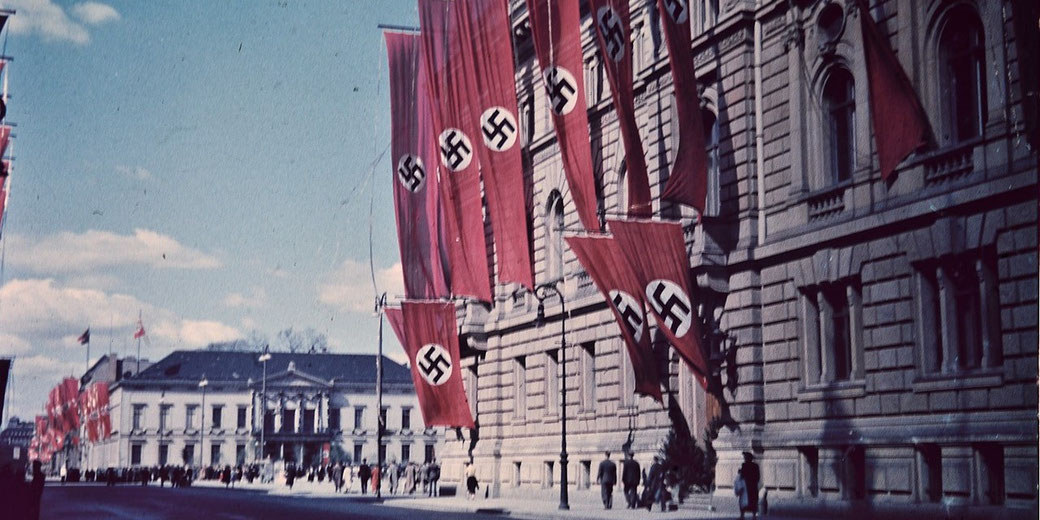
Some of the most violent paramilitary forces in twentieth-century Europe were the SS and SA, which both influenced Nazi Germany through terror and political violence under strict loyalty to the party.
Both groups helped Adolf Hitler take control of Germany, yet their methods, internal roles, and later effects largely followed separate paths.
While the SA shocked the public with street-level brutality, the SS developed a state-backed system of surveillance that enforced racial policies and carried out planned repression.
The origins of both as paramilitary organisations
After the First World War, Germany had experienced military defeat, revolution, and occupation, which led to a political gap and the breakdown of national confidence.
Armed militias, which were often composed of former soldiers, had filled the streets and had promised to protect the country from communists and internal enemies.
Many of them joined the Freikorps, which helped crush uprisings but stayed outside the official military structure.
In 1921, Adolf Hitler created a paramilitary wing for the Nazi Party to defend speakers and threaten opponents.
First called the “Gymnastic and Sports Division,” it quickly became known as the Sturmabteilung, or SA. It acted to cause disturbance and spread violent propaganda, which turned rallies into battlegrounds and transformed the party into a movement defined by action rather than debate.
The SA first gained national attention during Hitler’s failed Beer Hall Putsch in November 1923, when its members helped storm a Munich beer hall in an attempt to overthrow the Bavarian government.
At first, the SA gained strength by recruiting street fighters, ex-soldiers, and working-class men who largely despised the Treaty of Versailles and saw the Weimar Republic as weak.
When it staged large marches, provoked fights with communists, and attacked Jewish businesses, the SA built a reputation for chaos that helped attract attention to the Nazi message.
Its leaders promoted violence as a necessary part of national rebirth. Prominent Nazis such as Julius Streicher supported the party's more extreme views and shared elements of the SA’s vision of social transformation, although he remained more influential as a propagandist than as a paramilitary figure.
Meanwhile, in 1925, Hitler authorised the formation of a smaller group that would stay loyal to him personally.
This group was the Schutzstaffel, or SS, which began as a bodyguard unit under the command of Julius Schreck and later Heinrich Himmler.
Unlike the SA, which relied on mass support, the SS developed slowly and valued internal discipline expressed through racial purity tests and complete loyalty to Hitler’s orders.
By the end of the 1920s, the SS had begun to separate more clearly from the SA in terms of recruitment, structure, and aims because Himmler had imposed strict entry rules and had started to model the SS on historical military orders.
Its members followed a detailed code and avoided the fighting behaviour seen in SA circles.
Who were the SA?
The SA grew directly out of the Freikorps and had largely inherited its aggression, loyalty to nationalism, and hatred for socialism.
It appealed to lower-class Germans who wanted order and revenge. Many members who had seen combat in the First World War carried personal anger into street politics.
By 1933, under the command of Ernst Röhm, the SA likely numbered around 2 million members, with growth continuing into 1934 before the purge because in January 1931, Hitler had appointed Röhm as Chief of Staff of the SA, granting him broad authority to expand the organisation’s size and influence.
Röhm, a long-time ally of Hitler, wanted the SA to take control of Germany’s armed forces and replace the professional officer class.
His vision included a “people’s army” that answered to the Nazi Party and not to the generals, as that idea angered both the army and conservative leaders who had helped bring Hitler to power.
Importantly, Röhm also pushed for economic reforms and a second Nazi revolution that would probably have shared out wealth and reshaped German society.
For some, he represented the radical wing of National Socialism that could no longer be controlled.
For others in the party, including Himmler and Göring, he posed a direct threat to their own power.
As a result, Hitler authorised a purge of the SA leadership in June 1934 as the operation, known as the Night of the Long Knives, used the SS and Gestapo to eliminate Röhm and dozens of senior officers.
The purge gained support from the army, which feared Röhm’s plans, and allowed Hitler to remove a rival while claiming to restore order as the SA lost its authority and faded into the background.
It continued to exist in name but no longer influenced national policy or party strategy as its days of controlling the streets had ended, and the group became a minor presence in Nazi Germany.
Although weakened, the SA stayed active during events like Kristallnacht in November 1938, when its members participated in the destruction of Jewish homes, synagogues, and businesses across Germany.
Who were the SS?
The SS began as a loyal guard unit, but under Himmler, it grew into a large organisation that operated across all levels of the state because Himmler had used ideology and strict discipline to build a force that obeyed orders without hesitation.
Its structure resembled a military order more than a political militia.
First, Himmler required all members to prove their racial ancestry and undergo political education, as the SS rejected mass recruitment and focused instead on creating an elite corps that would carry out Hitler’s racial and security goals.
Over time, the SS took control of Germany’s police forces and intelligence services.
By 1936, Himmler had been appointed Chief of the German Police, which largely allowed him to strengthen control over the Gestapo and criminal police, though they were officially part of the Interior Ministry until 1939, as administrative reorganisation into the SS structure occurred with the creation of the RSHA in 1939.
The SS also ran the concentration camp system through its Death’s Head Units.
These forces often imprisoned Jews, communists, political enemies, and so-called undesirables, who were held under vague or false charges.
During the invasion of the Soviet Union, SS-led Einsatzgruppen followed the army into newly captured areas and carried out mass shootings of Jews, Roma, and political commissars and murdered over one million people in 1941 alone, before the death camps of Aktion Reinhard became fully operational in 1942.
During the Second World War, the SS expanded its role by forming the Waffen-SS, a combat wing that fought on the front lines but remained under party control.
Meanwhile, the SS planned and carried out the Holocaust, managed deportations, and oversaw occupied territories.
Its offices handled every detail of racial classification, forced labour, and mass killing.
The SS also managed institutions like the RuSHA, which oversaw racial screening, Lebensborn homes, and the Germanisation of occupied territories.
By the final years of the war, the Waffen-SS and associated branches had likely exceeded 900,000 members combined, though this figure included auxiliary and non-German units.
It largely operated as a state inside the state, as it combined political loyalty with racial ideology to carry out military tasks in a way that made it central to the Nazi regime.
Its leaders largely controlled economic networks, ran forced labour camps, and gave orders that led directly to mass murder.
From 1942, the SS managed its own economic network through the SS-Wirtschafts-Verwaltungshauptamt, which oversaw forced labour enterprises and benefited from confiscated Jewish property.
The key differences
The SA valued public violence, visible power, and mass participation. It relied on display and confrontation to spread fear and project strength.
Its power came from its numbers and noisy demonstrations that fostered a revolutionary spirit.
The SS largely operated in silence and shadows. It prized secrecy and a form of elite service founded on personal loyalty to Hitler.
Its members received training in ideology that extended to intelligence gathering and administrative control.
Rather than attacking crowds in the street, it tracked enemies, managed prisons, and eliminated opponents through legal and extra-legal means.
For example, the SA disrupted socialist meetings and physically assaulted political enemies in public view.
The SS contrasted with the SA by sending agents to infiltrate communities, arrest individuals without warning, and deliver them to camps under official cover.
After the Blomberg–Fritsch Affair in 1938 weakened the army’s independence, Himmler and the SS strengthened their control over state security and intelligence.
Visually, the differences were just as sharp. The SA wore brown uniforms that suggested populism and low status, while the SS wore tailored black uniforms with silver trim, which projected a neat professional image that matched its internal structure.
Its skull insignia was the Totenkopf, which evoked a tradition of Prussian military elite units and showed its readiness for death and sacrifice as part of ideological warfare.
Both were part of the Nazi system
Ultimately, each group helped the Nazi Party rise to power, but their roles changed once Hitler consolidated control.
The SA fought in the streets, shouted slogans, and scared voters into silence, which largely made the Nazi movement loud, violent, and visible.
The SS made it permanent. It took over policing and racial enforcement and then undertook long-term planning.
It helped Hitler rule through fear, removed dissent, and carried out mass murder with careful coordination.
At different stages, each group expressed a different face of Nazi power. The SA opened the door. The SS locked it behind them.