
How did the American Revolution inspire the French Revolution?
When the Marquis de Lafayette presented his draft of the Declaration of the Rights of Man and of the Citizen to the French National Assembly on 11 July 1789, he did so with the assistance of Thomas Jefferson, who had authored America’s Declaration of Independence thirteen years earlier.
The collaboration between these two men arguably captured something profound about the relationship between the American and French revolutions: ideas about liberty and self-government that had taken root in North America were now being transplanted into European soil.
As France spiralled toward its own revolutionary crisis in the late 1780s, the successful American experiment in republican government provided both a practical example and a philosophical framework that French reformers drew upon extensively.
The soldiers who crossed the Atlantic
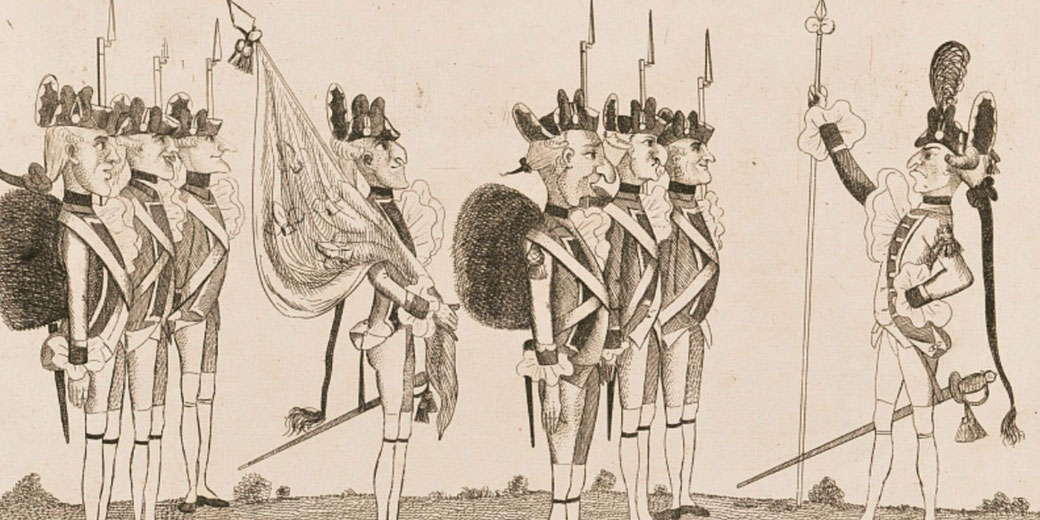
Between 1778 and 1783, France committed approximately 12,000 soldiers along with a substantial naval fleet to the American war effort, as King Louis XVI saw an opportunity to weaken Britain after France’s humiliating defeat in the Seven Years’ War.
Among these soldiers, the most prominent was the Marquis de Lafayette, a 19-year-old aristocrat who had already volunteered for the Continental Army in 1777 and had received a commission as a major general.
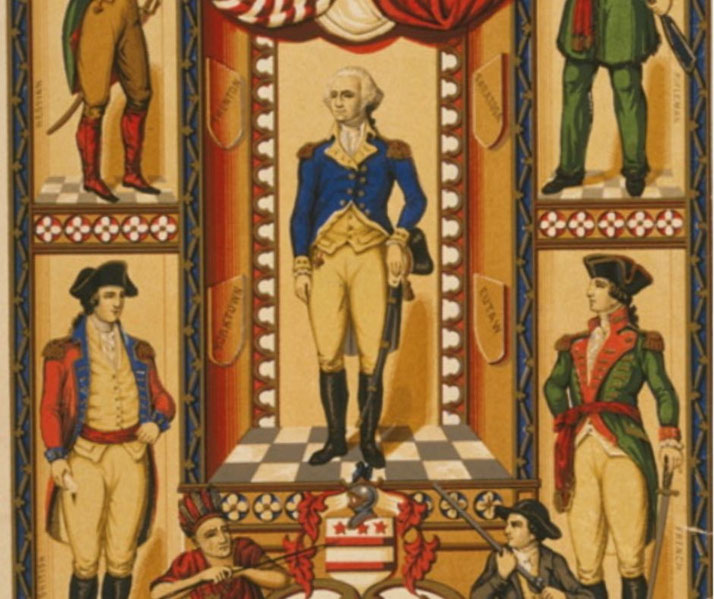
Lafayette fought at the Battle of Brandywine and endured the winter at Valley Forge alongside George Washington, as well as helping to trap the British forces under Lord Cornwallis at Yorktown in 1781, which led directly to the British surrender.
For the thousands of French officers and soldiers who fought in America, the experience was arguably transformative.
They witnessed a working society without hereditary aristocracy, where ordinary citizens debated policy and participated in their own political life.
After returning to France, these veterans carried with them a new set of expectations about what political life could look like, and many of them became vocal critics of the ancien régime’s rigid class structure.
Lafayette himself became a leading figure among those who believed France needed a similar transformation, and his personal connections with Washington and Jefferson gave him both credibility and a sense of mission.
The financial cost of supporting a revolution
France’s involvement in the American Revolution also produced a devastating financial consequence that accelerated the crisis at home.
The war cost France approximately 1.3 billion livres, a sum that the crown had borrowed rather than raised through taxation, because the nobility and clergy enjoyed widespread exemptions from direct taxes.
By the mid-1780s, interest payments on the national debt consumed roughly half of the government’s annual revenue, which made it nearly impossible for the state to meet its ordinary expenses.
Finance Minister Jacques Necker had used loans rather than new taxes to fund the American war, and when his successor Charles Alexandre de Calonne attempted to impose taxes on the privileged orders in 1786, the nobility refused.
Unable to resolve the fiscal crisis through normal channels, King Louis XVI took the fateful step of convening the Estates-General in May 1789, a representative assembly that had not met since 1614.
The decision to call the Estates-General created the political opening that reformers and revolutionaries needed to challenge royal authority, which means the financial burden of supporting the American Revolution had a direct causal connection to the political upheaval that followed in France.
How American ideas entered French political thought
Enlightenment philosophy had circulated widely in France for decades before 1789, and thinkers such as Montesquieu and Rousseau had already developed theories about the separation of powers and popular sovereignty.
The American Revolution gave these abstract ideas a concrete demonstration.
When the thirteen colonies successfully overthrew British rule and established a republic that was governed by a written constitution, French reformers could point to a real-world example of Enlightenment principles put into action.
Thomas Jefferson’s role in spreading American ideas to France was particularly significant.
As the American ambassador to France from 1785 to 1789, Jefferson lived in Paris during the critical years leading up to the revolution, and he regularly met with French reformers who were eager to learn from the American experience.
He advised Lafayette on the drafting of the Declaration of the Rights of Man and annotated early versions of the document, which drew heavily on concepts from the American Bill of Rights and the Virginia Declaration of Rights.
The final version of the French declaration, which was adopted by the National Assembly on 26 August 1789, contained language about natural rights and popular sovereignty that had a recognisable resemblance to its American predecessors.
Benjamin Franklin had also been enormously influential during his time as American ambassador to France from 1778 to 1785.
Franklin became a celebrity in Parisian salons, where he built relationships with intellectuals and political figures who would later support the revolution.
His public image as a plain-spoken republican philosopher made the American cause fashionable among the French educated classes, and his diplomatic success in securing the Franco-American alliance in 1778 arguably demonstrated that a republic could conduct foreign affairs on equal terms with a monarchy.
The proof that monarchies could be challenged
Perhaps the most important contribution the American Revolution made to the French Revolution was psychological.
Before 1776, the idea of successfully overthrowing a powerful monarchy and replacing it with a republic had been largely theoretical.
The American victory over Britain proved that such a transformation was possible and that a government that was founded on the consent of the governed could actually operate in the real world.
For French citizens who were already frustrated with the privileges of the aristocracy and the inefficiency of royal government, the American example offered hope.
Pamphlets that celebrated the American Revolution circulated widely in France during the 1780s, and the language of rights and liberty that Americans had used to justify their rebellion provided a vocabulary that French reformers adopted.
When the Estates-General convened and the Third Estate declared itself the National Assembly in June 1789, the delegates drew explicitly on American precedents in demanding a written constitution and a declaration of rights.
The American Revolution also demonstrated that revolution did not necessarily lead to chaos.
The orderly transition of power under the new American Constitution, which was ratified in 1788, reassured French moderates that it was possible to dismantle an old political system and construct a new one without permanent disorder.
Of course, the French Revolution took a very different course than the American one, and it descended into the Reign of Terror by 1793.
The conditions in France were different because centuries of feudal privilege and a catastrophic fiscal crisis had created far more volatile circumstances, and this ensured that the revolutionary process would be significantly more violent.