
The remarkable life of George Washington
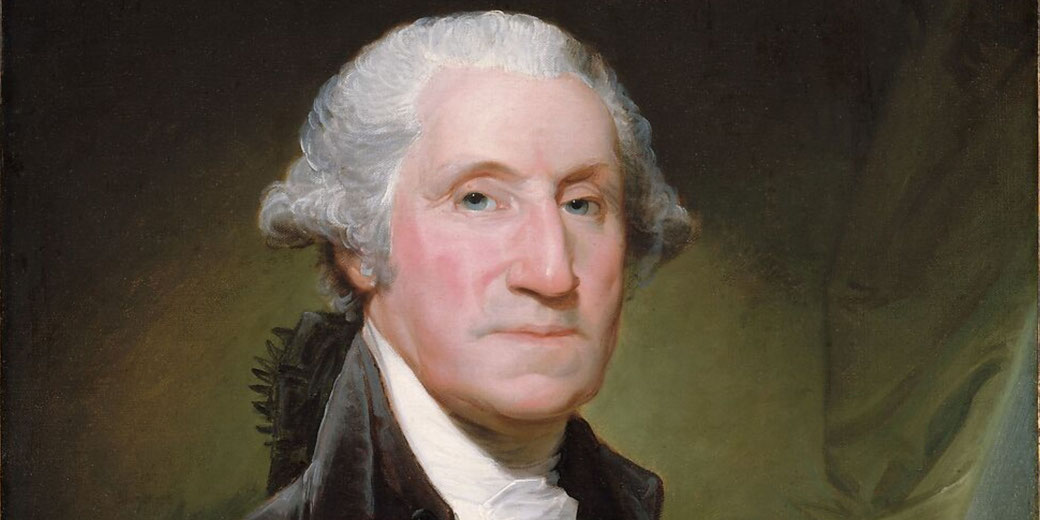
At key moments in the eighteenth century, George Washington influenced the course of the revolution, largely governed a fragile republic during its early years, and left a pattern of leadership that later generations would follow.
As commander of the Continental Army, he helped secure American independence by holding the military together across eight years of war.
Also, as the first President of the United States, he helped define the limits of executive power and demonstrated that authority could be exercised without tyranny.
Washington's early life and military career
George Washington was born on 22 February 1732 at Pope’s Creek in Westmoreland County, Virginia.
His father, Augustine Washington, operated tobacco plantations using enslaved labour and held local office as a justice of the peace.
His mother, Mary Ball Washington, assumed responsibility for the family after Augustine’s death in 1743, when George was only eleven.
Without access to university education, George began working as a land surveyor in his teens, where he measured frontier plots in the Shenandoah Valley, which gave him familiarity with western lands.
By sixteen, Washington had secured employment with the Fairfax family, which allowed him to use his earnings to purchase land in the Ohio Valley.
His connection with Lord Fairfax, which introduced him to the world of Virginia’s landed gentry, helped him build a reputation for reliability and hard work.
His surveying work was officially commissioned by the Northern Neck Proprietary, which was at the time an extensive land grant controlled by the Fairfax family and spanned more than five million acres.
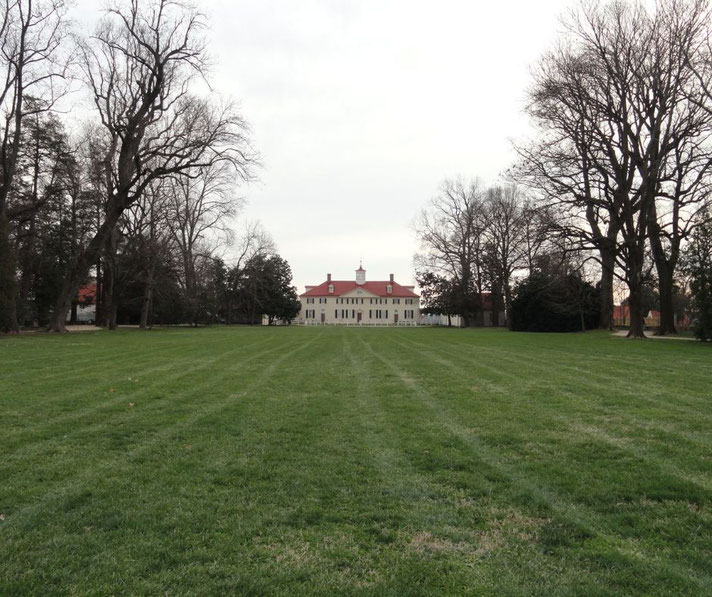
After the death of his half-brother Lawrence in 1752, George eventually leased Mount Vernon following the death of Lawrence's widow in 1761 and inherited it formally in 1762 after the death of Lawrence’s daughter.
The estate remained central to him throughout his life.
In 1753, the royal governor of Virginia, Robert Dinwiddie, entrusted the twenty-one-year-old Washington with a mission to deliver a warning to French forces encroaching on British-claimed land in the Ohio River Valley.
This clash contributed significantly to the outbreak of the French and Indian War.
The following year he returned with a small military detachment and ambushed a French patrol at Jumonville Glen, where the French commander Joseph Coulon de Jumonville was killed under circumstances that became a source of controversy.
Initially, Washington lacked command experience and made critical errors. During the construction of Fort Necessity, he chose a low-lying location surrounded by woods, which allowed French and Native forces to fire into the defences with little exposure.
After a day of fighting, Washington surrendered the fort on one of the few occasions in his life on which he had done so.
Yet he received recognition in the colonies for his bravery and quickly became a central figure in Virginia’s military efforts.
After he had survived General Edward Braddock’s failed campaign against Fort Duquesne in 1755, Washington soon became a respected officer.
During the chaotic retreat, he coordinated supply wagons, rallied survivors, and earned praise for his calmness under fire.
One observer noted his "coolness and resolution" amid the panic. He later commanded Virginia’s provincial regiment but became increasingly frustrated with colonial military organisation and with British officers who did not treat colonial commanders as equals.
In 1758, after the British capture of Fort Duquesne, Washington resigned his commission and returned to civilian life, marrying Martha Custis the following year and managing the Mount Vernon estate.
Becoming the hero of the American Revolution
By the mid-1770s, colonial resistance to British rule had escalated into open conflict.
Washington had won political influence through his service in the Virginia House of Burgesses and his support for non-importation agreements that aimed to pressure Parliament to repeal unpopular taxes.
In 1775, after the outbreak of hostilities at Lexington and Concord, the Second Continental Congress appointed him commander-in-chief of the Continental Army.
From the outset, Washington faced immediate serious problems, as the army largely lacked trained personnel and the logistical resources required for sustained operations.
Officers received commissions based on political considerations, and discipline varied across regional lines.
Over time, Washington created order and turned a loose collection of militias into an effective army.
After he had fortified Dorchester Heights with artillery brought from Fort Ticonderoga, he forced the British to evacuate Boston in March 1776 without launching a direct assault.
Later that year, his army suffered major defeats during the New York campaign, after which British forces under General William Howe captured Long Island and Manhattan, pushing Washington’s troops into New Jersey.
On the night of 25 December 1776, he launched a surprise counterattack by crossing the ice-choked Delaware River and defeating the Hessian garrison at Trenton on the morning of the 26th, capturing approximately 900 prisoners.
This was a key morale boost because desertions had increased and morale had declined as winter approached.
A second victory at Princeton followed on 3 January 1777, restoring confidence in his leadership.
For the remainder of the war, Washington generally avoided major engagements unless conditions favoured his forces.
During the harsh winter at Valley Forge in 1777–78, he kept the army together while Baron von Steuben, who was a Prussian officer, introduced a system of drills that improved battlefield discipline.
The army’s strength at Valley Forge initially began around 12,000 men, though illness and desertion reduced this number significantly.
Washington worked with General Rochambeau to coordinate allied operations because French entry into the war in 1778 had shifted the strategic balance.
By 1781, they had marched south to besiege Yorktown, where British General Charles Cornwallis surrendered on 19 October.
The war’s formal end came with the Treaty of Paris in 1783.
His decision to give up power voluntarily largely earned him international admiration and strengthened the principle that military leaders were subordinate to civilian authority, which Washington had demonstrated by resigning his commission before Congress in Annapolis that December.
How did Washington become president?
The Articles of Confederation proved too weak to hold the states together due to trade disputes and unpaid debts which exposed weaknesses and left the states without an effective central authority.
This alarmed Washington, who had returned to Mount Vernon with the hope of remaining in private life.
In 1787, he accepted the presidency of the Constitutional Convention in Philadelphia.
Although he rarely spoke during the debates, his presence encouraged unity.
Delegates produced a new Constitution that created a stronger federal government, and public calls for Washington to serve as president soon followed.
In 1789, the Electoral College voted unanimously in his favour, and he took the oath of office on 30 April in New York City.
Washington approached the presidency with deliberate caution. Knowing that his actions would set examples, he balanced authority with restraint.
He assembled a group of executive advisers who were later referred to as the Cabinet, favouring men with talent and political experience.
Alexander Hamilton became Secretary of the Treasury and proposed a national bank, while Thomas Jefferson, who served as Secretary of State, opposed centralised finance and promoted agrarian interests.
Washington attempted to reconcile their opposing views but often supported Hamilton’s measures, particularly those that strengthened federal control.
In 1792, Washington won re-election without opposition. As partisan divisions deepened, he grew increasingly disillusioned with factionalism and feared that political rivalry would threaten national unity.
During his second term, he faced new crises, including the Whiskey Rebellion of 1794.
After farmers in western Pennsylvania resisted a federal tax on distilled spirits, Washington called out the militia and led troops partway to the region.
His show of force ended the uprising without bloodshed and confirmed federal authority to enforce the law.
Was Washington a good president?
Washington’s presidency created a template for executive power that emphasised national interest over personal advantage.
He set limits by declining grand titles, insisting on formal separation from partisan loyalties, and eventually stepping down after two terms.
Yet he also used his influence to shape policy behind the scenes, particularly in matters of finance and diplomacy.
In 1793, as European powers went to war, Washington issued a proclamation declaring American neutrality, as he believed involvement would likely divide the country and threaten its survival.
The decision disappointed those who expected support for revolutionary France, but it avoided war and preserved trade.
In 1794, the United States negotiated Jay’s Treaty with Britain. The agreement, signed on 19 November and ratified the following year, addressed unresolved issues from the 1783 Treaty of Paris, including British military posts on American soil and pre-war debts, and secured British withdrawal from other frontier posts.
Critics, including Jefferson and Madison, viewed it as a concession that favoured British merchants.
Even so, it prevented a renewed conflict and reinforced the idea that diplomacy could preserve peace.
By 1796, Washington had grown tired of public life and refused a third term. His Farewell Address, which Alexander Hamilton helped to draft and which was published in the American Daily Advertiser, urged Americans to avoid foreign entanglements, warned against regional splits, and discouraged the influence of permanent political parties.
What did Washington do after he retired?
In retirement, Washington returned to Mount Vernon and resumed management of his estate where he oversaw plantation operations, implemented crop rotations, and remained active in correspondence with national figures.
While he supported the administration of President John Adams, he declined invitations to re-enter public office.
In 1798, tensions with France led to the creation of a provisional army, and Adams named Washington its commander.
He accepted out of duty but assigned day-to-day planning and operational control to Alexander Hamilton, who became his unofficial second-in-command.
The conflict never escalated into full war, and Washington remained at home.
One evening, he developed a sore throat which worsened rapidly because on 12 December 1799 he had ridden across his property in freezing rain and snow to inspect his farms.
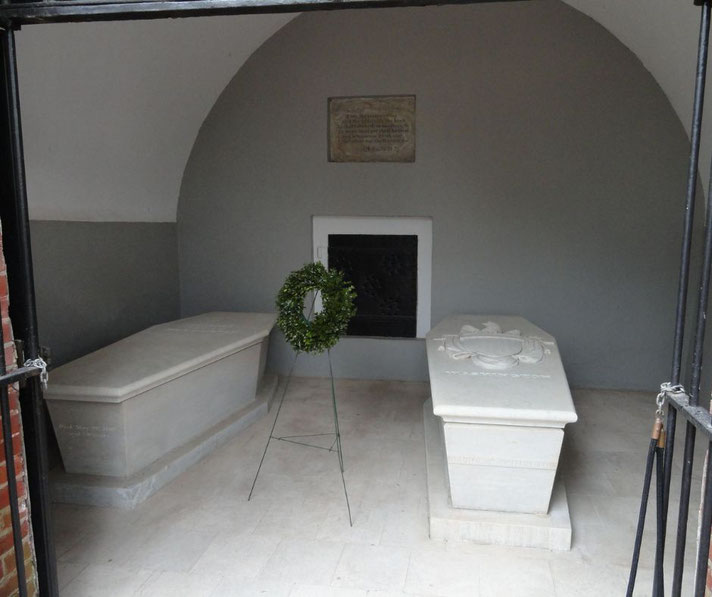
Physicians applied treatments that included bloodletting and mercury-based purgatives, which had only weakened him further, and on the night of 14 December he died at the age of sixty-seven.
His death prompted national mourning, and eulogies praised his refusal to seize power at moments when he could have ruled by force.
The dark side of Washington's life
Throughout his life, Washington enslaved people and benefited directly from forced labour.
At Mount Vernon, over 300 individuals lived and worked under conditions he controlled, though not all were his legal property.
By 1799, he owned 123 enslaved individuals directly, while the remainder belonged to the Custis estate, which Martha had inherited from her first husband.
Although he expressed discomfort with slavery in private, Washington took no public stand against it while in office.
He signed the Fugitive Slave Act of 1793, which allowed owners to retrieve runaways from free states.
After Ona Judge, a young woman enslaved in his household, escaped in 1796, Washington attempted to have her returned, even after she had settled in New Hampshire and started a new life.
Hercules, an enslaved chef in his household, also escaped in 1797 while living in Philadelphia.
In his will, he ordered that the 123 enslaved people he personally owned should be freed after Martha’s death.
She had manumitted them earlier out of concern for her safety, but the majority of enslaved people at Mount Vernon remained under Custis control and were not freed until decades later.
To circumvent Pennsylvania’s Gradual Abolition Act of 1780, which stipulated that enslaved individuals who had resided in the state for more than six months could claim their freedom, Washington rotated enslaved workers out of Philadelphia during his presidency.
Washington's decision to free some enslaved individuals stood out in some respects among his contemporaries, yet it did not amount to a rejection of the institution itself.
However, to understand his record fully, one must consider the power he gave up alongside the power he exercised.
He defended liberty for some while denying it to others. His contributions to American independence and republican government are widely recognised, but they exist alongside actions that upheld the very injustice the Revolution claimed to oppose.