
The unbelievable moments when Nazi Germany hosted the Olympic Games in 1936
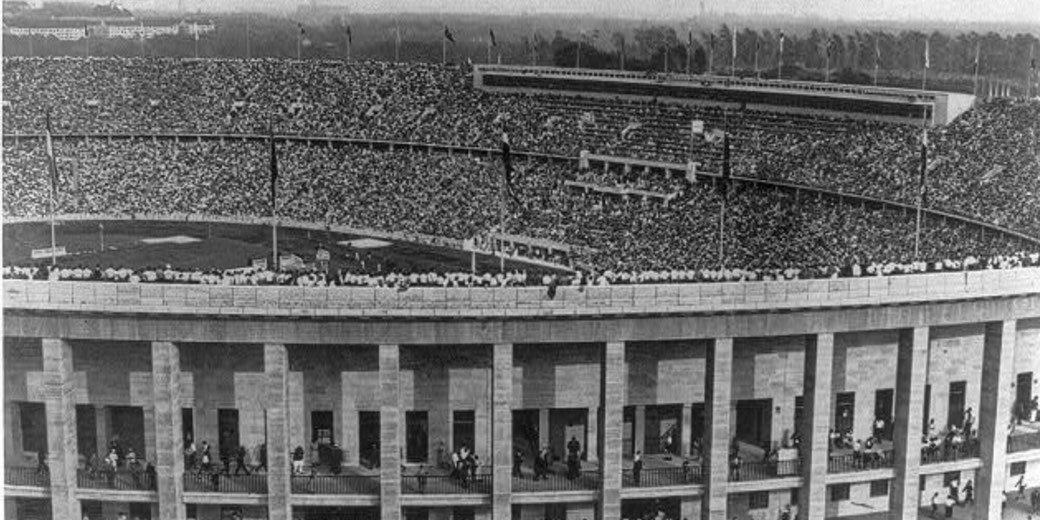
During the summer of 1936, beneath swastika-draped towers and among carefully staged military parades, Nazi Germany hosted the XI Olympic Games in Berlin as a highly effective act of political manipulation.
Instead of promoting unity and peace, as originally intended by the International Olympic Committee in 1931, the event enabled Adolf Hitler’s regime to disguise its racial persecution and growing authoritarianism behind an international spectacle.
Because the regime coordinated impressive architecture and tight media control, and because it extended carefully managed hospitality to foreign visitors, the Nazis transformed the Olympic Games into a propaganda weapon that projected an image of order and strength while largely concealing the regime’s true aims.
The awarding of the games and Nazi preparations
Initially, when Berlin secured the right to host the Games in May 1931, Germany remained under the democratic Weimar Republic, and the Olympic Committee viewed the decision as a symbolic gesture to restore Germany’s international standing after the First World War.
Berlin won the vote over Barcelona by 43 to 16. At that stage, few anticipated how rapidly political change would change the nature of the event.
By January 1933, Adolf Hitler had become Chancellor, and within eighteen months he had effectively dismantled democratic institutions and replaced them with a one-party totalitarian regime.
Soon after Hitler had tightened his control, Propaganda Minister Joseph Goebbels identified the Games as an opportunity to legitimise Nazi rule on a global stage.
He diverted state funds toward a large and carefully planned campaign that aimed to impress international spectators while at the same time reinforcing domestic support.
The regime allocated over 42 million Reichsmarks to the project, a significant portion of which primarily funded large-scale construction and ceremonies and events.
For this purpose, architect Werner March designed the very large Olympiastadion, which seated over 100,000 and featured wide stone fronts and symmetrical columns that suggested Roman power and style, along with imperial symbols that echoed Prussian discipline.
He also oversaw the construction of the Olympic Bell Tower and of the parade grounds that surrounded it, which further strengthened the political message.
To maintain appearances, the regime undertook a carefully planned effort to present Berlin as outwardly stable and civilised.
Anti-Jewish signs disappeared from public spaces, street patrols received instructions to avoid aggressive displays, and the Nazi leadership suspended overt enforcement of the Nuremberg Laws in Berlin during the event.
While those laws, passed in 1935, stripped Jews of citizenship and forbade marriage between Jews and non-Jews, Hitler understood the damage their public enforcement could inflict on his regime’s image during the Games.
The Reich Press Chamber issued orders that restricted coverage of antisemitic incidents and regulated how foreign journalists interacted with locals.
The global controversy and the failed boycott movement
At the same time, concerns about Nazi persecution spread across Europe and the United States.
Jewish organisations and labour unions, together with a range of civil rights groups, campaigned for a boycott because they pointed to the legal discrimination and violent repression already well underway.
Groups in France and Britain, along with activists in Czechoslovakia, proposed counter-events or urged their Olympic committees to reconsider participation.
In the United States, leading figures in the Amateur Athletic Union debated whether they should withdraw, with opponents of participation arguing that involvement would lend legitimacy to a racist dictatorship.
Eventually, Avery Brundage, who was then head of the American Olympic Committee, had travelled to Germany in 1934 and again in 1935 to assess the situation.
There, he received highly choreographed tours of Berlin, where Nazi officials guaranteed fair treatment of all athletes and temporarily suspended the most visible forms of antisemitism.
On his return, Brundage had dismissed reports of persecution and claimed that sport should remain separate from politics.
His stance effectively ended the American boycott debate.
Gradually, most other nations followed suit. By early 1936, fifty-one countries had committed to participate, including Britain, France, Canada, and Australia.
Over 3,900 athletes competed in total. Although protests persisted in the press and among advocacy groups, the political will to challenge Nazi Germany through the Olympic movement collapsed because sporting bodies resisted change and governments preferred to focus on their own teams.
Hitler, who had initially hesitated to support the Games, now welcomed the chance to use them as a global advertisement for his government.
The Olympic spectacle and media control
From the opening ceremony on 1 August, the 1936 Olympics unfolded as a very large production that amazed many foreign visitors and impressed much of the international press.
Orchestrated to perfection, the event blended neoclassical architecture with mass choreography and relied heavily on advanced technology to create an illusion of peace and prosperity, presented as efficient and modern.
Foreign journalists praised the orderliness of Berlin and were impressed by the organisation, unaware that they had entered a tightly controlled media environment.
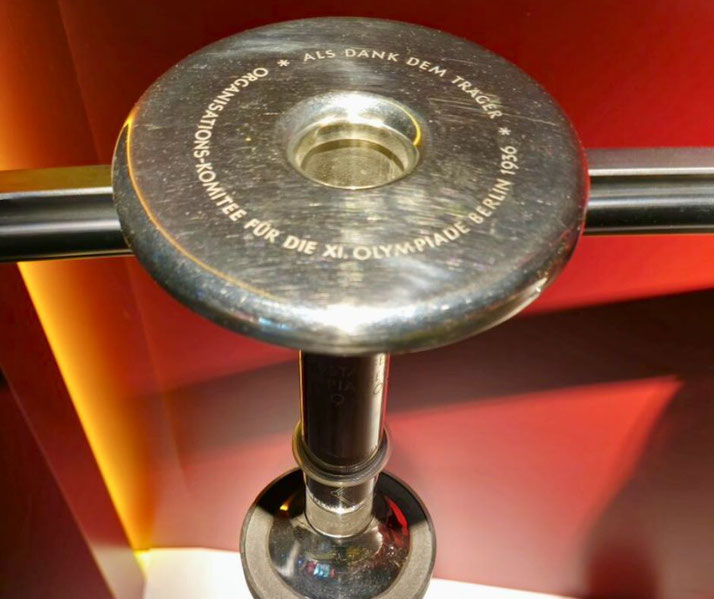
Importantly, Carl Diem introduced the now-famous torch relay, which carried a flame from Olympia in Greece to the Berlin stadium, and it linked ancient Greek traditions to Nazi symbolism.
Although it was entirely invented for the 1936 Games, the ritual proved effective because it framed the event as a continuation of noble European ideals.
Spectators and commentators largely accepted the ceremony as part of an authentic Olympic heritage, unaware of its political origins.
Simultaneously, Leni Riefenstahl directed a large-scale film project under the patronage of Goebbels, and she used the Games to produce Olympia, a documentary that changed sports filming.
Her techniques, such as slow-motion tracking shots and overhead angles, as well as experimental underwater footage, portrayed athletes as heroic and perfect figures, reinforcing Nazi ideals of physical perfection.
She had employed Zeiss telephoto lenses and had used cranes for aerial shots, and then she spent eighteen months on the edit of the footage into two parts.
Although technically new and influential, the film served the ideological purposes of the regime by excluding uncomfortable truths and glorifying the visual style of control.
Behind the scenes, the Propaganda Ministry closely monitored most reporting.
German journalists worked under strict censorship, and foreign correspondents who challenged the narrative risked losing access or receiving threats.
Even ordinary criticisms, such as complaints about accommodation or transportation, were often edited or suppressed.
As a result, the global image of the Games did not include much criticism, even as the regime prepared for future aggression.
The impact of Nazi racial superiority myths
During the track and field events, Jesse Owens delivered a performance that contradicted the racial ideas promoted by the Nazi regime.
On 3 August, he won the 100 metres sprint in front of a packed stadium and continued to dominate in the long jump and 200 metres, as well as anchoring the 4×100 metre relay.
Because he won four gold medals, Owens became the most successful athlete of the Games and an international sensation.
At one point during the long jump qualifying round, German competitor Luz Long reportedly offered Owens advice that helped him avoid fouling out.
The gesture was widely publicised after the Games and meant that the two walked together across the field after Owens’ victory, in a moment captured in photographs that embarrassed the Nazi press.
While no sources written at the time confirm the exchange, Owens maintained the story throughout his life.
Although the regime later claimed Long’s sportsmanship as evidence of Aryan honour, the image contradicted the very ideology it had sought to promote.
Despite his fame, Owens experienced racial discrimination upon his return to the United States.
He received no official White House recognition and struggled to earn a living from his athletic achievements.
In his later years, he remarked that he had received more respect from German spectators than from his own countrymen.
Even so, his dominance on the track weakened the credibility of Nazi propaganda.
The regime continued to manipulate public messaging about the Games, and German radio broadcasts often exaggerated the country’s medal count and left out references to Owens’ victories, though official Olympic records were not altered.
Hidden realities behind the glamour
Throughout the Games, the Nazi state largely concealed its repression behind a surface image of hospitality and high-quality organisation.
Jewish athletes in Germany had received invitations to train, and this group included Gretel Bergmann, who was a highly ranked high jumper, but they were barred from competition at the last moment.
In post-war interviews, Bergmann expressed her belief that the regime never intended to allow her to compete and had used her as a showpiece to calm critics.
Although Helene Mayer, who was a fencer of partial Jewish descent, was included in the team, she appeared alone and under close supervision.
During the medal ceremony, she gave the Nazi salute, a gesture that many observers still regard as controversial, and her presence served only as an empty gesture to turn away criticism from abroad.
Meanwhile, security services, which operated across Berlin, worked to ensure obedience to the regime’s image.
Tourists encountered a seemingly clean, modern city that was filled with public art and multilingual signs, and they moved through streets staffed by uniformed greeters.
However, SS and Gestapo agents monitored hotels and intercepted correspondence, and they also conducted background checks on foreign visitors.
The regime used the Games as a rehearsal for larger propaganda campaigns that would accompany Germany’s future expansion.
Some foreign journalists, who came from countries such as Sweden and the Netherlands, published critical reports after they returned home, but their voices remained limited in a press cycle dominated by spectacle.
By the time the Olympic flame was extinguished on 16 August, Hitler’s regime had largely succeeded in presenting itself as both stable and modern, a state that claimed an international good reputation.
Although athletes like Jesse Owens disrupted the racial narrative, the overall illusion of peace and efficiency remained intact.
The world had watched a carefully staged performance that hid the real nation from view.
As war approached, the 1936 Games came to be seen as both a triumph of propaganda and a warning about the dangers of ignoring the truth hidden behind spectacle.