
9 Worst Roman Emperors: Tyranny, Chaos, and Corruption
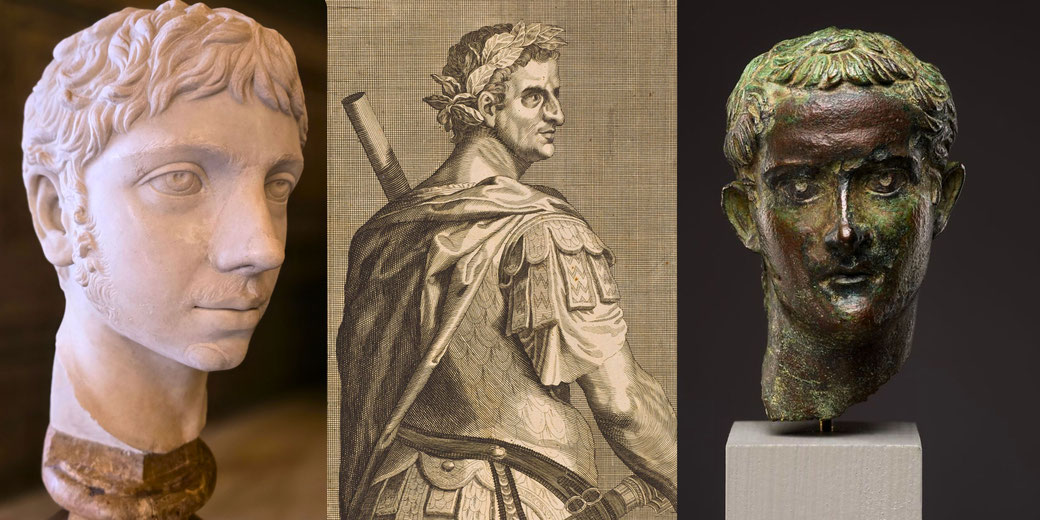
During the Roman Empire’s long imperial period, many emperors governed effectively, but some others caused lasting harm.
From the death of Augustus in AD 14 to the collapse of the Western Empire in the fifth century, certain rulers often indulged in cruelty, weakened stable institutions, and allowed disorder to spread across the provinces.
As Roman historians recorded episodes such as executions and betrayals that exposed theatrical absurdities, they left behind a record of men whose reigns largely weakened the dignity and organisation of Roman government.
1. Nero (54-68 AD): The bloodiest emperor
After the death of Claudius in AD 54, Nero took the throne at just seventeen. At first, the imperial government largely remained steady under the guidance of his tutor Seneca and the Praetorian Prefect Burrus.
For several years, these senior advisors had generally handled most decisions while Nero devoted himself to public performances that ranged from poetry recitals to chariot racing.
Eventually, Nero took full control, dismissed Burrus, and pushed Seneca into retirement.
Soon after, he reportedly ordered the murder of his mother Agrippina, who had once dominated imperial affairs.
After her death, Nero's cruelty intensified. He eliminated rivals, accused senators of treason to seize their property, and executed his wife Octavia so he could marry Poppaea Sabina.
He later forced Seneca to commit suicide and may have been responsible for the deaths of other prominent figures, such as the poet Lucan.
Then, in AD 64, a devastating fire destroyed large sections of Rome. Some contemporaries believed Nero had ordered the blaze to make room for his new palace, the Domus Aurea, which he constructed on land cleared by the fire.
The Domus Aurea featured an lavish rotating dining room and artificial lake, further angering the public.
To silence critics, he reportedly blamed Christians for the disaster and subjected them to brutal public punishments, including crucifixion and burning.
Tacitus, who had written decades later, had preserved one of the most detailed accounts of the fire, noting both its scale and the persecution that followed.
Over time, Nero’s focus had largely shifted to theatrical displays and personal luxury.
Instead, he continued to perform on stage and to compete in games, and he forced nobles to praise his talents.
As he became more withdrawn, the provinces began to rebel. In AD 68, after losing the support of the army and Senate, Nero fled and committed suicide at a villa outside Rome.
His death ended the Julio-Claudian dynasty and triggered the chaotic Year of the Four Emperors.

2. Caligula (37-41 AD): The most psychotic
When Tiberius died in AD 37, the Senate declared Caligula emperor with great enthusiasm.
As the son of the popular general Germanicus, Caligula had gained early fame, and his first acts as ruler included amnesties, public games, and generous donations.
Initially, many believed his reign would restore harmony after years of repression under Tiberius.
However, after a serious illness later that year, his behaviour changed drastically.
Some historians suspect this illness may have been caused by epilepsy or encephalitis, which could partly explain his sudden instability.
According to Suetonius and Dio Cassius, who wrote hostile accounts, he demanded to be worshipped as a god and ordered temples to install his statues.
He executed political opponents without trial, seized property, and taunted senators by inviting them to lavish dinners and then humiliating them publicly.
At times, he entertained the idea of appointing his favourite horse, Incitatus, as consul.
He also engaged in bizarre military campaigns, such as when he marched his army to the shore of the English Channel and ordered them to collect seashells as "spoils" from a supposed victory over Neptune.
He turned absurd actions into official policy, mocked Rome’s institutions, and damaged their reputation.
To fund his lavish spending, he apparently revived treason trials and sold public offices.
His personal life attracted scandal, including alleged incest with his sisters and sham marriages.
Eventually, the Praetorian Guard grew resentful of his unstable behaviour and formed a conspiracy with senators.
In AD 41, guards stabbed him to death in a palace corridor and executed his family members to prevent a succession crisis.
The officer Cassius Chaerea played a central role in the assassination.

3. Commodus (180-192 AD): The least successful
After the death of Marcus Aurelius in AD 180, Commodus inherited a secure and unified empire.
His father had spent nearly two decades defending Rome’s northern borders, during which he built alliances and reinforced military strength.
Upon becoming emperor, Commodus quickly reversed these efforts, and as a result he ended the Marcomannic Wars and returned to Rome, abandoning plans to establish permanent control over the Danube frontier.
Primarily focused on spectacle, Commodus spent large sums on gladiatorial contests, often entering the arena himself dressed as Hercules.
Surviving busts show him with a lion-skin headdress to support this image. He renamed months after himself, referred to Rome as "Colonia Commodiana," and erected statues portraying himself as a god.
Meanwhile, he largely allowed corrupt advisors such as Cleander to run the government.
Cleander sold public offices, manipulated grain supplies, and caused widespread unrest, leading to riots in AD 190 that ended with his execution.
As the emperor grew more paranoid, he executed senators and officials on flimsy accusations, and as a result, his withdrawal from governing and focus on self-promotion ultimately alienated the Senate and army alike.
In AD 192, after declaring that he would appear in public on New Year’s Day as a gladiator, he was assassinated in a plot involving his mistress Marcia, senior officials, and his wrestling partner Narcissus.
His death saw the collapse of the Nervan-Antonine dynasty and pushed the empire into civil war.
4. Elagabalus (218-222 AD): The most hated
After the death of Macrinus, Julia Maesa elevated her teenage grandson, who had the backing of eastern legions, to the throne.
Known to history as Elagabalus, he had previously served as high priest of the sun god Elagabal in Emesa.
When he arrived in Rome in AD 219, he brought the cult’s black meteorite and installed it as the centre of a new imperial religion.
He built a lavish temple on the Palatine Hill and forced senators to attend unfamiliar Syrian rituals.
He declared that Elagabal would absorb all other Roman gods, including Jupiter, and attempted to merge Roman religious practice with eastern traditions.
Public opinion rapidly turned against him. He married a Vestal Virgin, violating one of Rome’s most sacred taboos, and reportedly referred to himself as a woman in private documents.
Cassius Dio claimed that Elagabalus offered large sums to any physician who could surgically alter his body, though modern historians treat that as an exaggerated claim.
His sexual behaviour, frequent wardrobe changes, and unpredictable marriages reportedly shocked conservative Romans.
To make matters worse, he largely ignored imperial administration, dismissed experienced officials, and relied on favourites from his lovers.
Eventually, his grandmother recognised that he had lost the army’s support. In AD 222, she arranged for his cousin, Severus Alexander, to become heir.
Shortly after, the Praetorian Guard murdered Elagabalus and his mother and dumped their bodies in the Tiber.
Severus Alexander quickly reversed his predecessor’s reforms and restored traditional religious practices.

5. Caracalla (198-217 AD): The biggest failure
Initially, Caracalla had ruled alongside his father Septimius Severus and his younger brother Geta.
He became sole emperor in AD 211 after murdering Geta during a meeting in their mother’s presence, and he then launched a brutal purge that killed thousands of Geta’s supporters and removed his name from public records.
His paranoia increased as he removed advisors, feared conspiracies, and demanded total loyalty from those around him.
In AD 212, he issued the Constitutio Antoniniana, which granted Roman citizenship to nearly all free inhabitants of the empire.
Although framed as a unifying gesture, the move likely had more to do with expanding the tax base.
Meanwhile, Caracalla spent heavily on the army and built the large Baths of Caracalla, which may have accommodated over 1,000 bathers.
Modern estimates vary, but the baths remained one of the city’s most impressive architectural achievements.
Yet his military campaigns failed to deliver long-term results.
His invasion of Parthia achieved only brief victories. According to Dio Cassius, the campaign began after the Parthian king rejected Caracalla’s proposal to marry his daughter, which the emperor used as an excuse to start a war.
His rule became progressively unstable. By AD 217, during a journey in Mesopotamia, he was stabbed to death by a soldier in his own bodyguard.
Macrinus, who had arranged the assassination, seized power.
6. Tiberius (14-37 AD): The most ruthless
As the successor of Augustus, Tiberius began his reign with a reputation for military skill and administrative caution.
He maintained the outward forms of the Republic and initially allowed the Senate a degree of autonomy.
Over time, however, he withdrew from public life and became increasingly suspicious of others.
His retreat to the island of Capri in the final decade of his reign isolated him further from the daily workings of government.
From his residence at the Villa Jovis, he observed the sea for news of Rome and largely remained hidden from the people.
He had largely left much of the administration in the hands of Sejanus, who was commander of the Praetorian Guard.
Sejanus used this authority to conduct treason trials, execute rivals, and strengthen his personal control.
After discovering that Sejanus intended to seize the throne, Tiberius had him arrested and executed in AD 31.
Even after Sejanus’ death, Tiberius continued to authorise purges, and the system of informers remained active.
According to Tacitus and Suetonius, his final years reportedly showed cruelty and excess.
On Capri, he allegedly tortured prisoners, abused slaves, and engaged in disturbing pastimes, though such accounts may have been exaggerated by hostile sources.
When he died in AD 37, the Praetorian Guard ensured Caligula became emperor without interference from rivals.
Naevius Sutorius Macro, who was their commander at the time, had played a key role in securing the succession.
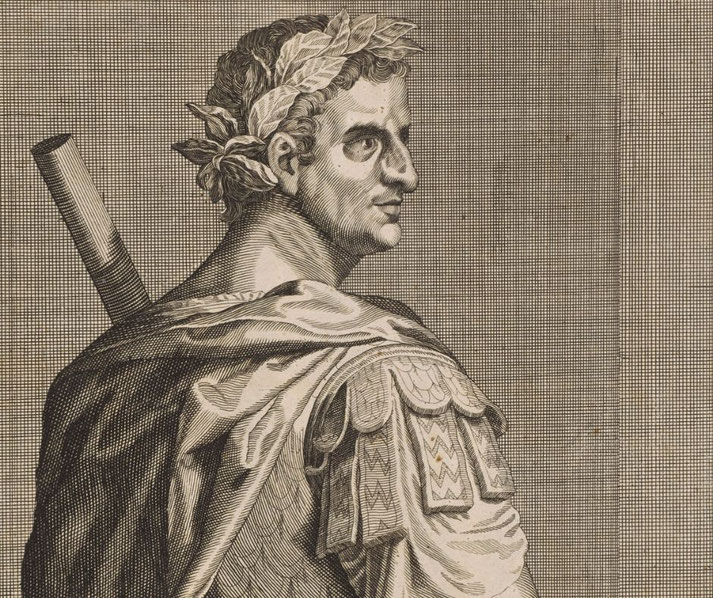
7. Domitian (81-96 AD): The egomaniac
After the deaths of Vespasian and Titus, Domitian assumed full power in AD 81 and quickly asserted control over all aspects of government.
He reorganised the court, centralised administration, and demanded divine honours.
Publicly, he styled himself as a just ruler. Privately, he punished criticism with death and surrounded himself with spies.
Though he carried out necessary building projects and defended the empire’s frontiers, including campaigns against the Chatti and construction of the Limes Germanicus,he put obedience above everything else.
Philosophers and rhetoricians were expelled, and senators feared involvement in public affairs.
Domitian’s intense demand for loyalty and grand displays largely created an atmosphere of repression, and his frequent use of treason trials made political survival dependent on flattery and silence.
By the mid-90s AD, even his closest supporters grew wary, and as a result, in AD 96, court officials conspired with his wife Domitia, according to some accounts, to murder him.
The freedman Stephanus played a direct role in the assassination. The Senate declared a damnatio memoriae, erasing his name from inscriptions and monuments.
8. Honorius (393-423 AD): The least remembered
As a child, Honorius became emperor of the Western Roman Empire after the death of Theodosius I.
For nearly a decade, the capable general Stilicho had managed imperial defence while Honorius resided in Ravenna.
After Stilicho’s execution in AD 408, the empire faced repeated invasions, as Honorius largely did not command armies or respond effectively to external threats.
In AD 410, Alaric and the Visigoths sacked Rome as Honorius remained in Ravenna and apparently showed no sign of personal alarm.
A later account by Procopius ridiculously claimed that Honorius had initially believed that his pet chicken, named "Roma," had died, a story most likely invented by later writers to ridicule his inaction.
His reign largely coincided with the empire’s failure to hold Britain, Gaul, and Hispania.
The so-called Rescript of Honorius in 410 instructed Roman cities in Britain to look to their own defence, effectively abandoning the province.
Later attempts to restore authority largely relied on weak commanders and court favourites.
By the time of his death in AD 423, the Western Empire had largely split into parts, and his reign had become a symbol of inaction.
9. Diocletian (284-305 AD): The most barbaric
After years of civil war and military chaos, Diocletian seized power in AD 284 and introduced wide-ranging reforms to restore order.
He created the Tetrarchy to divide imperial responsibilities and ensure stable succession.
As Augustus of the East, he controlled half of the empire and ruled alongside Maximian, with two junior emperors (Caesares) beneath them.
This arrangement allowed for better regional government and reduced the risk of rebellion.
He substantially reorganised the military, expanded the administration, and reformed taxation.
In AD 301, he issued the Edict on Maximum Prices to curb inflation, though it largely failed in practice.
Yet his drive for unity and order became violent. From AD 303, Diocletian ordered the destruction of Christian churches, scriptures, and communities.
He issued a series of edicts that outlawed Christian worship and ordered public sacrifices to the Roman gods.
Thousands were arrested, tortured, or executed during the Great Persecution because Diocletian apparently viewed religious uniformity as vital to Rome’s strength, and his brutality caused resistance and martyrdom.
The persecution did not end empire-wide until AD 311, although it largely ceased earlier in the Western provinces under Constantius and Constantine, and under his successor Galerius.
In AD 305, Diocletian abdicated and retired to his palace at Split, part of which survives today in modern Croatia.
He became the first emperor to voluntarily leave office. Many of his administrative changes endured, but his reputation largely stayed tarnished by the suffering he caused in the final years of his reign.