
What have the Romans ever done for us? The legacy of ancient Rome on the modern world
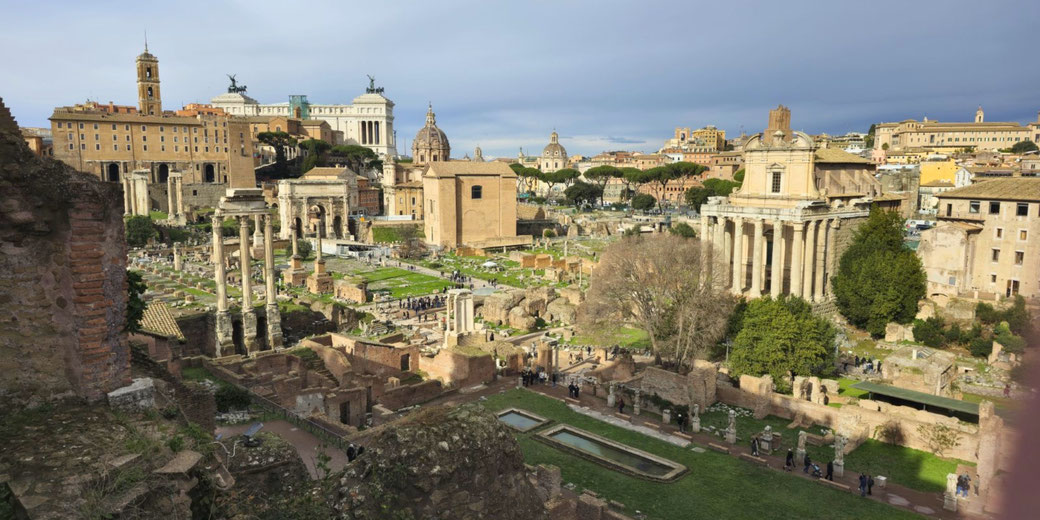
Concrete buildings, road signs, and legal contracts all come from ancient Rome. (Actually, while public toilets, though present in earlier civilisations like Minoan Crete, they became widespread civic infrastructure under Roman innovation.)
Nevertheless, across Europe, roads still follow Roman routes, while courtrooms echo Roman legal principles and church rituals repeat patterns that Roman religious life produced.
Although the Western Roman Empire collapsed in 476 CE, its systems and language continued to influence Europe’s development for more than a thousand years, and Roman ideas continued to influence legal and cultural practices.
As a result, you might be surprised at how much of modern life still carries the imprint of Roman civilisation.
1. They are responsible for how we talk...
Latin was the common language across the Roman Empire and influenced how people expressed ideas across legal practice and scientific writing, along with everyday communication.
It enabled officials, traders, and soldiers to move across provinces and to maintain shared terminology, which allowed the empire to operate across long distances.
Over time, Latin did not disappear, since it developed into spoken dialects that evolved into the Romance languages: Italian, French, Spanish, Portuguese, and Romanian.
Over centuries, these languages retained Latin roots and grammatical structures that underpinned much of their vocabulary.
Also, English, although Germanic in origin, absorbed thousands of Latin terms through the influence of Norman French, religious scholarship, and scientific writing.
For instance, words like justice, auditorium, manual, and verdict all stem from Latin usage.
Importantly, Latin stayed central to education and scholarship until the nineteenth century, as church officials, legal clerks, and academics wrote in Latin to reach international audiences and maintain consistency.
Later, humanist scholars had revived classical Latin to recover Roman ideas and to promote clearer public writing.
The distinction between Classical Latin and Vulgar Latin also reveals how formal and popular registers of language evolved in different directions, which led to literary preservation and to changes in the vernacular.
Finally, Latin remained the official language of the Catholic Church, although the Second Vatican Council in the 1960s permitted the celebration of Mass in vernacular languages.
2. They have taught us what is 'right' and 'wrong'...
Roman law provided the basic structure for many of the world’s legal systems. The Twelve Tables, developed by Roman lawmakers during 451–450 BCE, set clear expectations for citizens' rights and duties and specified punishments, which helped codify justice in written form for all citizens.
Later jurists expanded upon this foundation to create detailed categories of law involving property, contracts, citizenship, and family rights.
Over time, legal scholars developed arguments and interpretations that became formal legal principles.
Under Emperor Justinian I, those traditions were organised into the Corpus Juris Civilis, which preserved centuries of Roman reasoning and lawmaking.
That compilation had been produced between 529 and 534 CE and was later rediscovered in Western Europe.
It became the foundation for civil law traditions still used in countries such as France, Germany, and Spain, and was studied intensively at Bologna, traditionally regarded as Europe’s first university-level law school.
Today, legal systems still rely on Roman terms and categories. Terms like habeas corpus, subpoena, and pro bono reflect the continuity of Roman legal thought.
Equally, expectations about the fairness of judges, the right to a defence, and the ability to enforce contracts came from Roman ideas that treated law as a rational and public discipline.
Prominent jurists such as Gaius and Ulpian contributed important interpretations that continue to influence legal education and practice.
As such, Roman law helped move justice from tribal custom toward written civic rules.
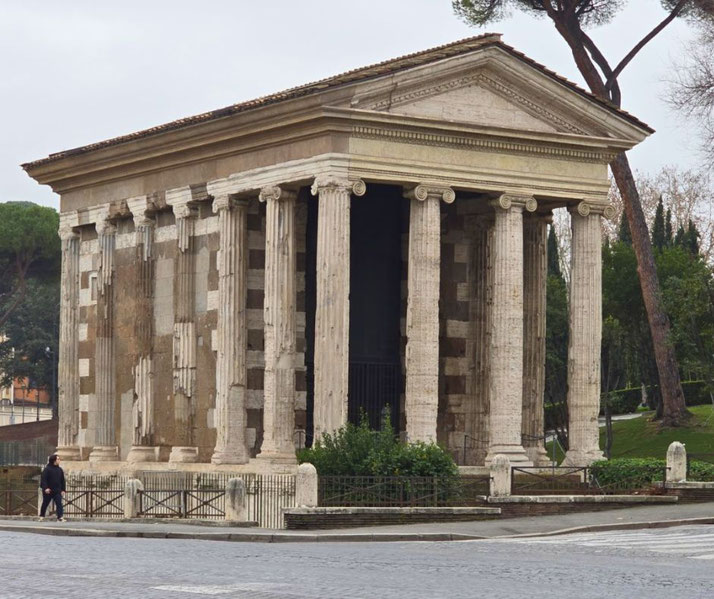
3. Thank the Romans for your house and roads...
Roman building methods changed how people constructed cities, public spaces, and private homes.
Roman engineers created concrete that could set underwater and support heavy loads, which they made from a material known as opus caementicium.
That discovery allowed architects to build multi-storey apartments, wide bridges, and monumental structures such as amphitheatres, aqueducts, and temples.
To improve strength and save resources, architects combined arches, vaults, and domes in new ways.
For example, the Pantheon in Rome, completed around 126 CE, used layered concrete and clever architectural techniques, such as graded aggregates and coffered ceilings, to create the largest unreinforced concrete dome ever built, which measured 43.3 metres in diameter.
It still stands today, which shows the remarkable accuracy of Roman engineering.
The writings of Vitruvius, which originated with a Roman architect and engineer, offered theoretical insights that influenced architectural design well into the Renaissance.
Equally important, Roman roads controlled how people and goods moved across Europe, North Africa, and the Middle East.
Engineers typically layered gravel, stones, and sand to create firm, durable surfaces that drained well and required little maintenance.
They generally built roads in straight lines, added milestones to help people find their way, and constructed rest stops and bridges where needed.
For example, the Via Appia, which had been begun in 312 BCE, still retains original paving stones in some parts of Italy.
As a result, modern highways and cities often follow Roman layouts, especially in Britain, Gaul, and the Iberian Peninsula.
4. The obsession with health and cleanliness...
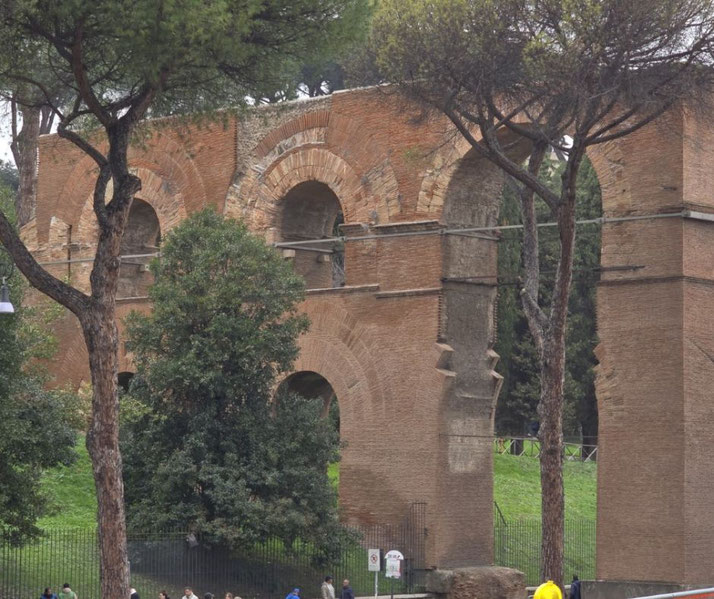
Clean water, sanitation, and public hygiene became priorities in Roman urban design, so engineers often built aqueducts that carried fresh water from mountain springs to cities across the empire.
By the second century CE, Rome alone had a network of over 400 kilometres of aqueducts, including branches and tunnels that supplied baths, fountains, homes, and public latrines with clean, pressurised water.
Bathhouses, which was part of daily routine in many Roman cities, combined leisure and hygiene as central elements of city life.
Large bathhouses such as the Baths of Caracalla offered hot and cold pools, saunas, gymnasiums, gardens, and libraries.
They operated as public utilities and showed that Roman authorities accepted responsibility for public health.
Sewers like the Cloaca Maxima, which had been first built in the sixth century BCE under King Tarquinius Priscus, had remained in operation for many centuries and had helped reduce disease in dense urban areas.
Military hospitals treated wounds, recorded symptoms, and experimented with surgical tools, which contributed to medical learning.
The medical writings of Galen, who served Roman emperors and wrote extensively on anatomy and treatment, greatly influenced later Byzantine and Islamic medicine, especially after his works were translated into Syriac and Arabic by scholars such as Hunayn ibn Ishaq.
As a result, Roman health infrastructure supported large, permanent urban populations, which earlier civilisations had struggled to maintain.
5. The ideal of military conquest and efficiency...
Roman military structure emphasised discipline and order that allowed rapid adaptation.
Legions, which were each typically made up of about 5,000 men, were divided into cohorts and centuries that followed a strict chain of command.
Each soldier trained in standard weapons, camp construction, and tactical formations, which allowed generals to move armies quickly and respond to conditions that changed.
Importantly, engineers and support personnel marched with the legions. As a result, Roman armies could often build roads, bridges, siege equipment, and fortified camps as they advanced.
Camps followed standard layouts, with defensive ditches, ramparts, and gates that mirrored city streets.
These became seeds for future towns when soldiers settled after service.
What is more, weapons such as the gladius and pilum were designed to support close, disciplined formations, with the gladius used in hand-to-hand combat and the pilum thrown just before engagement to disrupt enemy lines.
In campaigns such as Caesar’s conquest of Gaul or Trajan’s war in Dacia, soldiers followed strict timetables, maintained records, and enforced strict discipline.
Archaeological discoveries from sites like Vindolanda in Roman Britain have revealed letters, tools, and personal items that illustrate the everyday efficiency and organisation of Roman military life.
The Marian reforms of 107 BCE had already professionalised the army, linking service with land grants and further encouraging loyalty.
Military service often came with citizenship and land, which encouraged loyalty and helped spread Roman influence across new provinces.
6. How we think about religion and philosophy...
Religious tolerance and adaptation helped Rome absorb new beliefs. Traditional Roman religion involved rituals, prayers, and festivals honouring gods such as Jupiter, Mars, and Vesta.
However, when Rome encountered foreign cults, officials often included them rather than suppressing them.
This flexibility allowed the empire to manage religious diversity without losing political control.
Eventually, Christian communities began to spread within cities and along trade routes.
Although early emperors sometimes persecuted Christians, the religion continued to grow.
In 313 CE, Constantine issued the Edict of Milan, which allowed Christians to worship openly.
Later emperors promoted Christianity further, and by the late fourth century, it became the official religion of the empire under the Edict of Thessalonica in 380 CE.
Roman ideas about duty and order also influenced both pagan and Christian thought and influenced views of the cosmos.
Stoicism valued self-control and reason and appealed to Roman elites such as Seneca and Marcus Aurelius.
Their writings encouraged acceptance of hardship and a focus on virtue that supported commitment to civic life.
The principles of Stoicism entered Christian ethics and later influenced how Enlightenment thinkers discussed justice, personal freedom, and moral action.
A passage from Marcus Aurelius’s Meditations urged readers to accept what cannot be changed and act justly within the bounds of fate, a concept that influenced Christian and later philosophical traditions.