
The myth of the Trojan War: separating fact from fiction
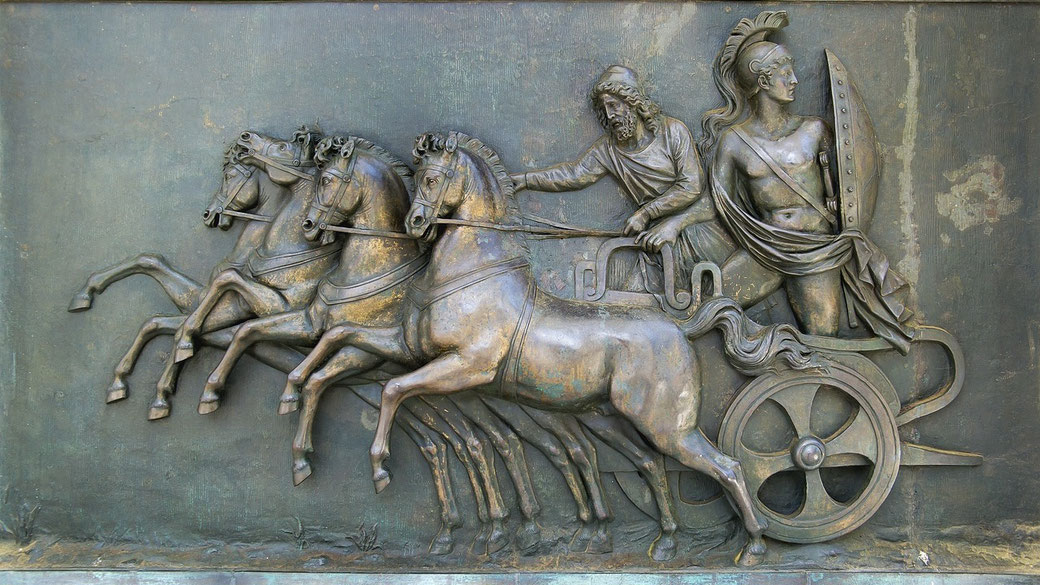
For centuries, the Trojan War has generally held a prominent place in both Greek cultural memory and Western historical inquiry.
Homer’s Iliad was first written down around the 8th century BCE and set the legend in a violent conflict between Achaeans and Trojans, framed by themes of honour and the wrath of the gods, together with a sense of heroic loss.
Although the epic is still regarded as a literary masterpiece, the modern search for a historical war behind the myth has mainly focused on archaeological discoveries at Hisarlik, Hittite diplomatic records, and patterns of warfare that suggest a real siege may have occurred around 1200 BCE.
The myth of the Trojan War
According to Homer, the war began when Paris of Troy abducted Helen, the wife of Menelaus of Sparta, and this prompted Agamemnon to rally dozens of Achaean kings into a military campaign meant as punishment.
Over a siege that was said to have lasted ten years, the Greeks and Trojans clashed in a series of set-piece battles and smaller skirmishes that sometimes took the form of formal duels, while gods intervened with unpredictable favour.
Heroes such as Achilles, Hector, Ajax, and Odysseus largely dominated the story, which tied personal conflict to the fate of nations.
Although the Iliad had focused on events within a short span during the war’s final year, later poets expanded the tale into a long and wide-ranging story.
Writers such as Apollodorus and Quintus Smyrnaeus added earlier and later episodes, which included the sacrifice of Iphigenia and the death of Achilles during the final destruction of the city.
The now-lost epics of the wider Trojan Cycle included works such as the Cypria and Aethiopis and they had once filled in narrative gaps between the major episodes and helped establish the overall pattern of the myth.
Over time, the Trojan War had evolved into a complete heroic cycle, passed down in fragments and retold across different genres.
By the fifth century BCE, Greek tragedians had adapted the story for performance, and they often used it to explore human suffering, political rivalry, and cruelty from the gods.
Euripides’ Trojan Women, Hecuba, and Andromache presented the destruction of Troy from the perspective of its survivors and reframed its themes to suit contemporary political critiques.
Herodotus wrote around 440 BCE and included Helen’s abduction among a series of kidnappings carried out as revenge that increased tensions between Greeks and Asiatics.
A generation later, Thucydides approached the war with scepticism, and he suggested that the expedition had likely occurred but was exaggerated in size and scope by storytellers who relied on oral tradition and poetic freedom.
Archaeology at Hisarlik and the search for Troy
In the 1870s, Heinrich Schliemann began digging at Hisarlik in northwestern Turkey, convinced that Homer’s city lay beneath the mound.
His early excavations uncovered fortified walls and damaged buildings, together with what he mistakenly identified as Priam’s treasure.
Schliemann smuggled this collection, which was later dubbed the “Treasure of Priam”, out of the Ottoman Empire and transported it to Greece.
After legal disputes, part of it was returned to the Ottomans. His widow later arranged for the remainder to be sold to German museums, and it was eventually taken by the Soviets in 1945 and held in Moscow.
Though Schliemann believed he had found Homeric Troy, modern archaeologists dated the treasure to Troy II, nearly a thousand years too early for the traditional date of the war.
Later analysis showed that Schliemann had misidentified the relevant layer, and the city he exposed predated the supposed war by centuries.
Decades later, Carl Blegen returned to the site with improved methods and dated the most likely destruction layer to Troy VIIa, around 1180 BCE.
The preceding city was Troy VI, and it showed signs of wealth and advanced fortifications but appeared to have been destroyed by an earthquake.
Troy VIIa, however, showed signs of hurried construction, crowded houses, and burn layers that included sling stones and arrowheads lying among human remains.
Together, these details suggested a sudden and violent end that may have stemmed from a siege or internal conflict.
Eventually, Manfred Korfmann’s work had significantly expanded the known size of the lower city and had shown that Troy, far from being a small outpost, likely operated as an important trade centre in the region near the Dardanelles.
Geophysical surveys such as magnetometry brought to light defensive ditches and structures outside the citadel walls, and this suggested that the population may have reached 6,000 to 10,000, including the lower town, though some archaeologists still question this estimate.
Its location, resources, and fortified structure made it a natural target for rivals who came by sea from the Aegean.
Therefore, although the scale of conflict was still uncertain, the evidence supported the idea that Troy experienced a siege or attack at the very time that Homer’s war supposedly occurred.
The Hittite records and the evidence from Anatolia
During the same period, excavations at Hattusa, the Hittite capital, uncovered tablets that contained royal letters, which referred to a western kingdom called Wilusa.
Many scholars have often connected this name to Ilios, a Greek term for Troy.
Hittite texts also mentioned Ahhiyawa, a land that many interpret as Mycenaean Greece.
In several letters, Hittite kings addressed the “king of Ahhiyawa” as an equal and stated that they had past disputes and shared interests.
In one example, the Tawagalawa Letter referred to military tensions over Wilusa and called for a resolution to prevent renewed conflict.
Another document identified a local ruler named Alaksandu, a name strikingly close to Alexandros: the Greek name for Paris.
Other texts, which included the Manapa-Tarhunta Letter, mentioned unrest in the same region, and this further suggested that there was ongoing conflict between Anatolian vassals and Aegean powers.
These references offered possible evidence that the region experienced political and military friction between Anatolian powers and Aegean kingdoms during the late 13th century BCE.
At the time, the Hittite Empire maintained loose control over several western Anatolian states, which often acted independently or rebelled.
Given Troy’s strategic position near the Hellespont, any disruption to its loyalty or neutral position would have affected trade routes and military access.
As a result, the Hittite texts strongly indicated that a city resembling Troy existed, held importance in the region, and may have been drawn into a larger conflict that eventually entered Greek oral tradition.
Fact, fiction, and the Greek heroic tradition
In Homer’s version, Greek kings ruled large domains, each commanding fleets of ships and elite warriors.
However, archaeological evidence from Mycenaean Greece presented a more fragmented political picture.
Palace-states such as Mycenae and Pylos controlled distinct territories together with nearby Tiryns, and they likely competed with one another as often as they cooperated.
No definitive structure resembling a Greek high kingship has appeared in the archaeological record, though some scholars have proposed that the Linear B texts contain hints of a figure who may have held limited authority over multiple regions.
Archaeologists found Mycenaean weapons and armour together with burial goods, which showed signs of wealth and military skill and power, and these items included bronze swords and distinctive boar-tusk helmets as well as chariot parts used for elite transport. S
ome of these matched Homer’s descriptions, but others did not. Linear B tablets from Pylos listed chariots in organised lists and mentioned military equipment, but the tablets primarily recorded their storage or repair rather than combat deployment.
Chariots were used primarily for transport rather than individual combat. For example, the epic often depicted chariots as platforms for one-on-one combat, but actual chariots from the period worked more as battlefield transport.
Homer’s highly staged duels and extended speeches followed storytelling habits rather than battlefield tactics.
Greek oral tradition prized memorable action and elevated language, supported by set phrases that audiences recognised, all of which shaped the way events were remembered.
Because of this, characters such as Achilles and Odysseus came to symbolise ideals (such as courage, loyalty, vengeance, or cunning) more than specific historical roles.
Over time, the mythic structure hardened into a familiar story arc that audiences expected, even if it bore only partial resemblance to actual military practice.
The wooden horse and the role of mythmaking
Later accounts described how the Greeks tricked the Trojans when they offered a giant wooden horse as a gift, and elite warriors waited inside it until the city had let down its guard.
Homer’s Odyssey alluded to the ruse, and earlier epics from the lost Trojan Cycle, such as the Little Iliad and the Iliou Persis, included fuller versions of the tale long before Virgil.
Roman writers, especially in the Aeneid of the first century BCE, adapted the story to position Rome as Troy’s heir, and they transformed Aeneas into the mythical founder of a new civilisation.
No evidence supports the existence of an actual wooden horse, and ancient warfare offers no clear precedent for such a tactic.
The earliest known depiction of the scene appears on a 7th-century BCE pithos from Mykonos, which shows warriors inside a large horse as the city falls.
Some scholars have suggested that the horse stood for an earthquake, a siege engine, or a ritual offering, though its meaning is still debated among scholars.
The image worked mainly as a literary tool, one that reinforced themes of betrayal and punishment from the gods that were bound up with ideas about fate.
Across generations, poets had repeatedly reworked the story of the war to match changing values and political needs.
During the Hellenistic period, the myth supported ideas of heroic ancestry and regional pride, and in Rome, the narrative justified imperial expansion.
Over time, the story of Troy had gradually taken on so many new meanings that people lost sight of any real historical starting point, and for this reason people kept telling the myth, for its usefulness to each new audience rather than for its factual accuracy.
Conclusion: A war remembered, not recovered
Available evidence now seems to point to a real settlement at Hisarlik that experienced destruction during the late Bronze Age and played a significant part in the balance of power in the region.
Hittite records appear to confirm the existence of Wilusa and suggested military tension between Anatolia and Achaean Greece, while archaeological finds uncovered a fortified city that lay near trade routes and saw conflict during a period of widespread collapse.
Homer’s account, however, belonged to a different tradition. It had grown out of centuries of oral storytelling and had added mythological details that were intertwined with cultural memory.
The war it described looked very different from the realities of Mycenaean warfare, and it captured something longer lasting: how societies used myth to explain violence and justify rivalry as well as help to preserve identity long after the facts had faded.