
The great betrayal: Why the famous Athenian leader Themistocles defected to Persia
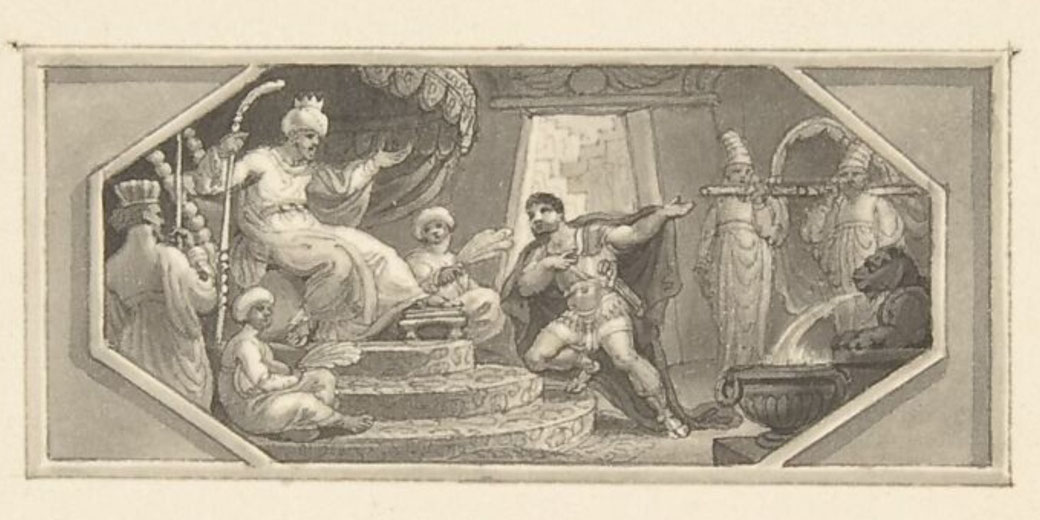
In 480 BC, Themistocles masterminded the Athenian naval victory at Salamis, which crippled the Persian fleet and helped to secure, at least for a time, the survival of Greece.
Within two decades, however, he appeared again in the Persian court rather than in Athens, and he offered his loyalty to the very empire that he had once helped to repel.
His defection stunned the Greek world and probably forced many of his countrymen to reconsider the price of political glory in a city in which reputation faded quickly and enemies gathered in silence.
How Themistocles became the hero of Athens
Around 528 BC, Themistocles was born in the coastal deme of Phrearrhioi, an outlying district of Attica that belonged to the Athenian political system.
His father was Neocles and held Athenian citizenship, but his mother came from outside the city, possibly a Carian or Thracian, which placed social limitations on his early political goals.
Some later sources identified her as Abrotonon, a foreign woman whose status excluded her son from full acceptance by the traditional elite.
Still, through rhetorical skill and practical intelligence, together with a tireless drive for recognition that never waned, he eventually carved out a place among the city’s political elite.
After the Persian invasion at Marathon in 490 BC, many Athenians had believed the threat had passed.
Themistocles disagreed. He foresaw a renewed attack and began to prepare the city for a major confrontation at sea instead of another land battle.
When he persuaded the assembly in 483 BC to invest the silver from the Laurion mines into a fleet of triremes, which eventually numbered close to 180 at Salamis, he created a naval force that would soon become one of Athens’ strongest defences and greatest assets.
That proposal, which turned possible personal profit into money for the state, became a turning point in Athenian military policy.
At the same time, he began work so that he could transform Piraeus, a natural harbour west of the city, into a fortified naval base.
Previously neglected in favour of the older port of Phaleron, which had shallower waters and weaker fortifications, Piraeus offered deeper water and stronger defences, and its walls would later protect Athenian grain supply lines during sieges.
With both a larger fleet and a secure port, Athens could now more confidently project force across the Aegean.
When Xerxes launched his full-scale invasion in 480 BC, Themistocles urged a defensive stand in the straits near Salamis.
He used trickery to mislead the Persian command, and he sent false messages that drew their ships into narrow waters where movement became impossible.
Though nominally under the Spartan commander Eurybiades, Themistocles took the strategic lead.
The allied fleet, outnumbered but better coordinated, struck with great effect in that battle.
As hundreds of Persian ships sank or fled, Themistocles became, in the eyes of many, the hero of the hour.
Soon after the battle, he received official honours in Athens. According to Plutarch, even Sparta rarely praised outsiders and awarded him a ceremonial crown and hosted him as a guest, though some later historians questioned the likelihood of such honours.
For a time, his fame surpassed that of every other Athenian politician, including Aristides and Cimon.
His influence reached into policy and diplomacy, and it transformed his public image as he stood at the peak of his career.
Why the Athenians exiled their war hero
Soon after peace returned, his influence had begun to attract suspicion. Many aristocrats disapproved of his populist tactics and resented his habit of pushing policy without first consulting the elite.
He built alliances with the lower classes and weakened long-standing traditions, and his assertive confidence increasingly turned many who valued continuity and restraint against him.
By the late 470s BC, his critics had begun to accuse him of personal arrogance and political recklessness, along with allegations of corruption.
Whether these charges described real wrongdoing or simple slander, they took root among the citizen body.
His style of leadership, which had proven effective in wartime, now appeared disruptive and dangerous.
Traditional leaders led a campaign to remove him from power. Although Cimon would later rise to prominence as a leading opponent of Themistocles' policies, he did not lead the ostracism himself.
Eventually, the people used ostracism to rid themselves of his presence. In 471 BC, Themistocles was exiled for ten years, a standard penalty that did not require proof of guilt but allowed the majority to expel a prominent figure for perceived threats to the state.
Citizens inscribed names on shards of pottery called ostraka, which were then counted to determine the result.
He left Athens and settled in Argos, where he continued to engage in politics and made contact with cities unfriendly to Sparta.
Meanwhile, the scandal surrounding Pausanias, the Spartan commander who had once led the Greek allies to victory at Plataea, raised fears of Persian collaboration.
Later accounts reported that he had sent messages to the Persian king in which he proposed an alliance.
With suspicion rising, Athenian and Spartan leaders began to look for more plotters.
Themistocles, who had once rivalled Pausanias in influence, became an easy target. Athens demanded his return for trial, and Sparta supported the accusation.
When he realised that no Greek city could now offer him safe refuge, he fled again.
From Argos, he travelled through Corcyra and Epirus, then moved on to Molossia, and, in the process, he narrowly avoided capture.
According to Plutarch, he stopped briefly at the court of King Admetus in Epirus, where he received protection before continuing his journey.
He eventually crossed into Asia Minor and surrendered himself to Persian protection.
The reason Themistocles defected to Persia
Under constant threat and unable to return to Athens without facing execution, Themistocles found himself without any allies among the Greek states.
His enemies controlled the story, and cities that had once honoured him now feared the consequences of offering him asylum.
Forced to rely on personal networks and quick thinking, he moved swiftly across the western territories of Greece before entering Persian-controlled lands near Lydia.
Upon arrival, he met Artaphrenes, satrap of Sardis, who received him warmly and passed him along to the royal court at Susa.
Xerxes had died, and his son Artaxerxes I now held the throne. According to Thucydides, Themistocles sent a letter announcing that he had previously helped Persia and could offer even greater assistance, and he requested time to learn the Persian language.
That message impressed the king, who recognised the political value of his change of sides.
Artaxerxes granted Themistocles protection and later gave him an important job.
The decision shocked Greeks across Asia Minor, who had long regarded Themistocles as the champion of liberty and the vanquisher of tyranny.
Now, the same man who had once called for resistance against barbarian domination accepted gifts and authority from the Persian monarch.
How Themistocles helped the king of Persia
After arriving at court, Themistocles received the governorship of Magnesia, a wealthy city on the Maeander River.
The king also granted him revenue rights from nearby cities, including Myus and Lampsacus.
Later sources, such as Plutarch, claimed that these produced an annual income of fifty talents, though modern historians suspect this figure may be exaggerated.
These special financial rights allowed him to live in comfort, and he governed Magnesia for the rest of his life as a Persian official.
During that period, his name appeared on coinage issued in Magnesia, which showed both his Persian status and his ongoing importance.
Some sources claimed that he advised the king on military matters or assisted in the preparation of a campaign against the Greeks.
However, Thucydides wrote that Artaxerxes intended to use him in future plans but had not yet acted before Themistocles died.
If he did delay or subvert those Persian strategies, then he may have done so to avoid taking up arms against Athens.
Several later accounts, including Plutarch's, claimed that he ended his own life after learning that he would be ordered to campaign against his homeland.
Other accounts, less dramatic but more plausible, suggested he died of illness or old age around 459 or 458 BC.
By then, his name had begun to pass into legend. His residence in Magnesia became the subject of guesswork and rumour, and generations of writers debated whether his final years showed honour or disgrace.
One tradition claimed that his body was secretly returned to Attica and buried at Piraeus, though this account, which relied on later sources, is still disputed.
How should Themistocles be remembered?
In later centuries, Themistocles remained a subject of fierce debate. Some remembered him as the man who saved Greece from Persian domination and transformed Athens into a naval power.
Others condemned him for accepting Persian favours and accused him of abandoning his city when it no longer benefited his interests.
By the time of Thucydides, a more mixed view had started to appear. The historian praised his intelligence and foresight and accepted that Themistocles had serious flaws, but still described his ability to respond to crisis as unmatched.
Few men in the fifth century BC probably matched his combination of charisma and skill, joined to a ruthless streak that intimidated allies and enemies alike.
At the heart of his story, for later readers, lies a warning about how quickly fame could disappear and the danger of political envy.
Themistocles achieved more than any of his peers during the Persian Wars, but his city turned against him the moment his influence threatened established power.
His fall did not arise from military failure but from political isolation.
Once exiled, he appears to have preserved his life and his influence by means of a transfer of allegiance to Persia, which he treated as a carefully planned escape from destruction rather than an act of treachery.
He remained, to the end, a strategist. Whether that makes him a hero who refused to surrender to his enemies or a renegade who betrayed his people depends on how one judges survival in the face of disgrace, and either way he left behind a reputation that refused to be erased.