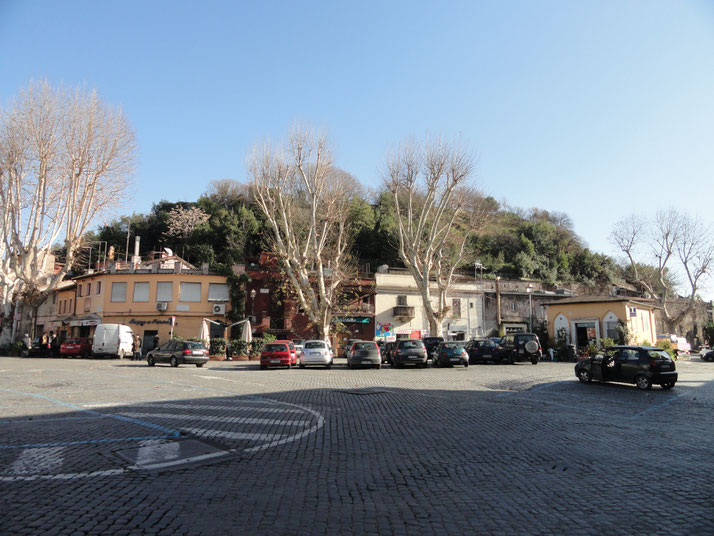
Monte Testaccio: Rome's extraordinary man-made hill of ancient pottery shards
Next to the modern apartment blocks and cobbled lanes of the Testaccio district in southeastern Rome, lies a silent monument to the logistics of empire.
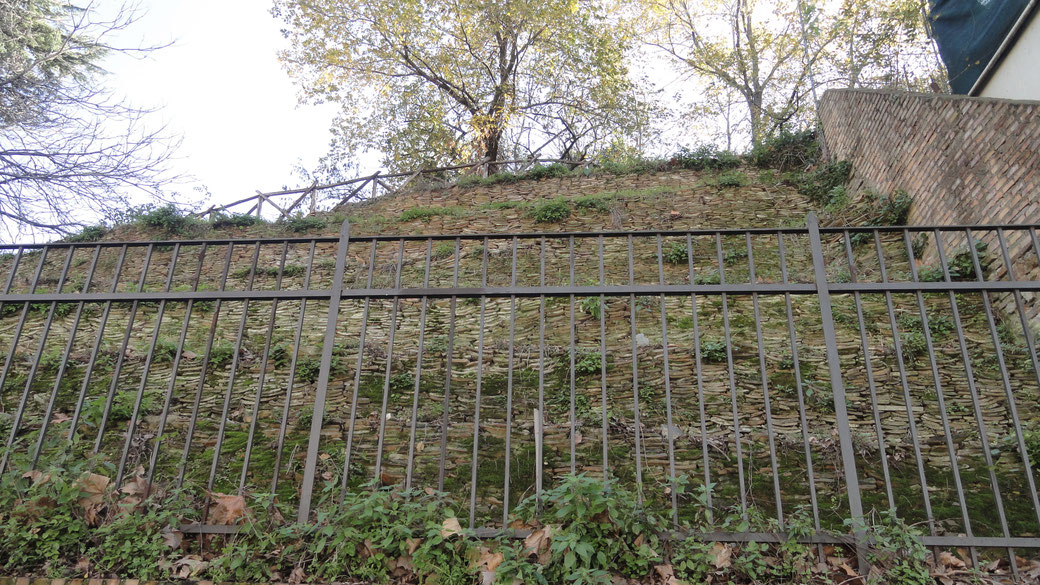
Known as Monte Testaccio, this 35-metre-high hill does not contain earth or stone but instead consists mainly of the shattered fragments of over 53 million amphorae used to import olive oil into the city during the first three centuries CE.
If each amphora had held approximately 70 litres, the total volume of oil once stored in the vessels would have exceeded 3.7 billion litres.
Unlike the Colosseum or the Forum, Monte Testaccio mainly shows the systems that fed the capital’s population and lit its streets and public buildings, rather than imperial spectacle or political authority.
The construction and purpose of Monte Testaccio
Around the early second century CE, Roman administrators began to oversee the construction of Monte Testaccio as what appears to have been a regulated dump for amphorae that had once carried olive oil, mostly from the province of Baetica in southern Hispania.
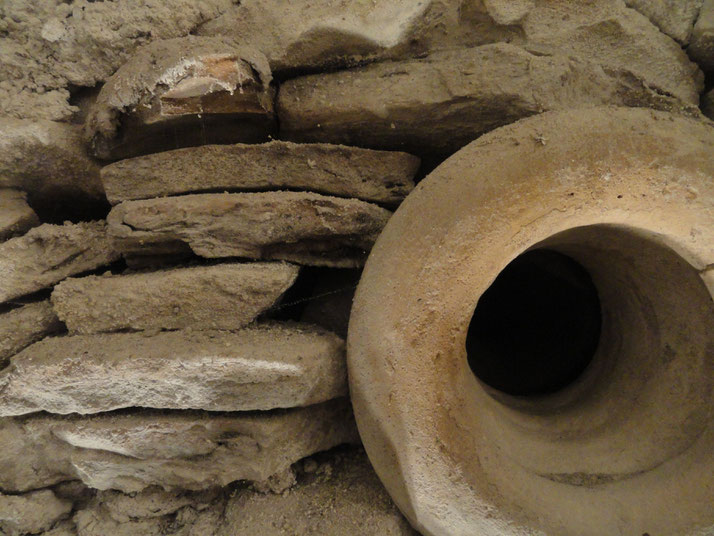
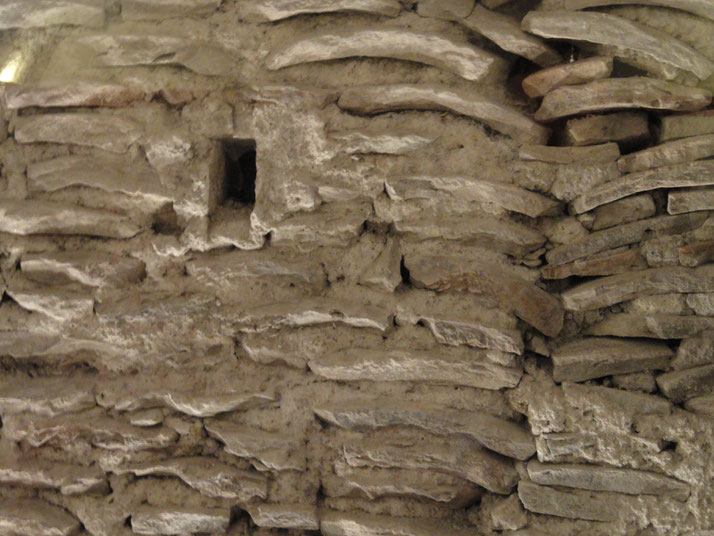
Rather than dispose of these large clay vessels carelessly, labourers usually arranged the broken fragments in a highly ordered pattern, which they layered with sand or lime to absorb the remaining oil residue and control odour.
As layers accumulated, walkways and retaining walls were added to stabilise the structure and maintain access.
Each amphora displayed markings known as tituli picti, particularly in the case of the Dressel 20 type.
Dressel 20 amphorae had a rounded base and thick walls that supported a pair of handles, and they had been fired in large kilns across Baetica and transported in bulk.
These painted or stamped inscriptions identified the producer, weight, point of origin, and often the names of the officials who verified the shipment upon arrival in Rome.
A typical titulus pictus might read "L. Valerius Vegetus ex praedio Faustini," which confirmed the sender and estate, as well as the verifying official.
After the amphorae were emptied at the nearby Horrea Galbae, a large group of warehouses adjacent to the Emporium river port, they could not be reused.
Oil residue soaked into the porous clay, which made thorough cleaning impossible, and regulations prohibited the reuse of such vessels for sanitary reasons.
To prevent blockages within the city, Roman officials coordinated the transfer of amphorae shards to the chosen site beside the Tiber.
The location lay south of the Aventine Hill and adjacent to the main river port, and it allowed for quick unloading from ships that came from Baetica.
Over the course of several generations, workers gradually expanded the mound with regular layering and sorting, which aligned with the logistical priorities of the annona, the imperial food and oil distribution system.
The annona generally supplied oil and grain to soldiers and state workers, with occasional distributions of wine to low-income citizens.
Since each layer had reflected annual delivery cycles, the hill itself became a layered record of imperial supply.
Evidence of Roman trade and bureaucracy
Across thousands of amphora fragments embedded within Monte Testaccio, archaeologists have found tituli picti that offer very detailed information about Rome’s supply chains and administrative methods.
For example, many inscriptions recorded not only the estate or merchant involved but also the exact volume of oil and the method of sealing the vessel, together with the name of the official who inspected it.
Amphorae were often sealed with pitch, cork, or cloth, and the tituli picti helped record both the sealing method and inspection status.
These details allow researchers to reconstruct the administrative system that ensured oil reached the capital from distant provinces.
In fact, the amphorae provide one of the relatively few surviving data sets that document the work of the procurator annonae, the imperial official charged with supervising the city’s food and oil supplies.
Many fragments name estates or shipping agents connected to senatorial families and imperial freedmen.
Well-documented estates such as Faustinus or Sextus Pompeius are identified in inscriptions that appear repeatedly across the hill.
As a result, Monte Testaccio demonstrates how commodities moved across the empire and how Roman law, labour, and accounting methods influenced the rhythm of that movement.
So far, archaeologists have identified what seems to be a clear transition within the hill’s layers.
The earlier strata contain amphorae almost exclusively from Baetica, especially from the Guadalquivir Valley near modern Córdoba and Seville, where production centres operated large kilns and exported in bulk.
However, later layers show gradually increasing numbers of amphorae from North Africa, particularly from Africa Proconsularis.
This shift likely began during the mid-third century CE, possibly in response to changes in provincial stability or the reorganisation of supply routes.
Archaeological discovery and excavation
During the 18th and 19th centuries, antiquarians had speculated about the artificial nature of Monte Testaccio, but careful study did not begin until the late 19th century.
Rodolfo Lanciani was a prominent Italian archaeologist of the time and correctly identified the mound as a pottery dump and drew attention to its economic and administrative importance.
However, it was not until the 1950s and 1960s that major excavations confirmed the mound’s origin, overall size, and internal structure.
Teams catalogued amphora types, measured stratigraphy, and documented the layering patterns that revealed decades of accumulation.
By the 1980s and 1990s, Spanish and Italian teams had expanded the investigation and traced the tituli picti to known estates and transporters in Baetica.
Researchers from institutions such as the CEIPAC project at the University of Barcelona were led by José Remesal Rodríguez and helped connect amphora data to rural excavation sites in Andalusia.
As such, the fragments tell a continuous story of logistics and regulation that shows how oil shipments were weighed, verified, and tracked from field to port when they are read in sequence.
Due to the consistent forms of the amphorae, researchers have also used Monte Testaccio to chart changes in amphora design, sealing methods, and packaging protocols over time.
Where most ancient trade leaves only scattered clues, the mound offers standardised and repeated data in a very large quantity.
Significance for understanding the Roman economy
In terms of economic history, Monte Testaccio offers very rare detailed information about how Rome’s annona system worked.
The amphorae deposited there represent only a fraction of the oil imported into the city, yet their standardised markings and systematic arrangement allow for rare numerical analysis.
When archaeologists combine weight measurements and shipment frequencies from the inscriptions, along with the names of supplying estates, they can estimate oil volumes with a level of accuracy that textual sources rarely permit.
Importantly, the hill strongly suggests that Rome managed its urban food supply through a closely connected and carefully checked network.
Officials assigned to the annona operated with legal oversight, documented each shipment, and coordinated deliveries from imperial storehouses such as the Horrea Galbae.
As oil arrived in bulk and was distributed to the army and state workers, as well as impoverished citizens, the broken amphorae created a growing logistical problem that Rome solved by creating a dedicated hill.
Unlike general rubbish heaps or domestic middens, Monte Testaccio contains almost entirely oil amphorae, which had carried olive oil.
That single focus suggests a specialised disposal system, run for record-keeping and sanitation rather than for convenience.
Since the amphorae could not be used again, and their contents were critical to the city’s infrastructure, the state ensured that the material left behind would not interfere with port operations, warehouse storage, or urban hygiene.
As a result, the hill became a partial mirror of the imperial economy in operation.
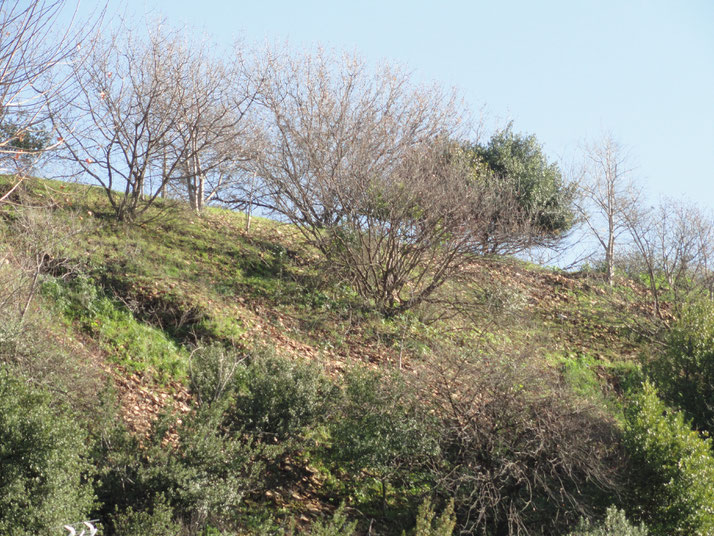
Preservation and modern importance
Although medieval and early modern Romans reused many ancient buildings as quarries, they largely ignored Monte Testaccio.
Since broken amphorae had little value and the hill stood outside the main urban zone, it survived almost entirely intact.
During the 19th century, locals carved cellars into its sides, and they used the hill’s cool interior to store wine and olive oil, and some of these vaulted chambers still exist and have been converted into event spaces or restaurants.
In recent decades, archaeologists have conducted only limited excavations in order to preserve the hill’s layered structure, and instead researchers have relied on digital mapping, surface sampling, and stratigraphic analysis to study the site in a way that did not damage it.
Conservation teams have made the slopes more stable and installed protections against erosion, ensuring that the mound continues to be an open-air record for future study.
Today, the Testaccio district includes the mound as part of its historical identity.
Street art and signage, together with local traditions, reference the hill and its origins, while cultural centres and museums promote its role in understanding Rome’s past.
Students and scholars, along with tourists, visit the area for its cuisine and to engage with one of the most striking pieces of evidence of imperial logistics.