
Marcus Atilius Regulus: The Roman who stayed true to his word ... even to gruesome death

During the First Punic War, when Rome confronted Carthage for control in the western Mediterranean, a Roman commander named Marcus Atilius Regulus became a symbol of firm duty that endured in Roman memory.
According to later accounts, he reportedly returned willingly to captivity and death after he had sworn an oath to his enemies, rather than compromise his personal honour or the integrity of the Roman Republic.
Although historians questioned the accuracy of certain details, the narrative became a powerful example of Roman fides, the solemn commitment to one’s word, even under threat of torture.
The consul and the war in Africa
At the height of the First Punic War in 256 BC, Regulus had held the consulship for the second time, alongside Lucius Manlius Vulso Longus.
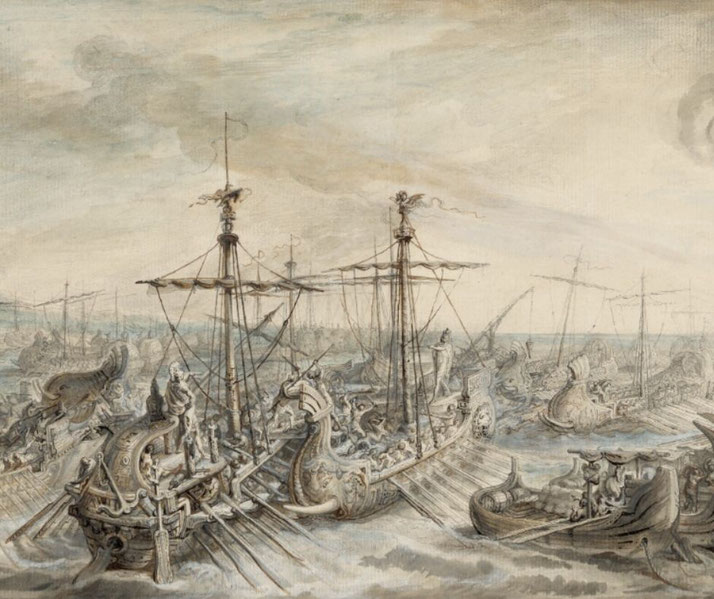
Together, they commanded a Roman fleet of over 330 warships, which sailed to engage the Carthaginian navy near Cape Ecnomus, south of Sicily.
Polybius claimed that more than 140,000 men took part in this engagement, and this number made it one of the largest naval battles in ancient history.
While this figure likely exaggerates the true size of the forces, it shows the battle's scale and significance.
During the battle, Roman ships advanced in a wedge formation that broke the Carthaginian line, and this advance led to a clear victory.
As a result, Rome gained the opportunity to land an invasion force on African soil for the first time.
Soon after they had landed near Aspis, on the coast of modern Tunisia, the consuls constructed a fortified camp and secured surrounding territory before Manlius returned to Rome.
Regulus remained in command of the African expedition, which pushed inland, captured more than a dozen settlements and seized food supplies while forcing local populations into submission.
At the Battle of Adys, fought on high ground that restricted Carthaginian mobility, Regulus’s infantry advanced uphill and appeared to overwhelm the enemy.
Ancient sources give no consistent account of the Carthaginian commanders who took part, though later traditions suggest names such as Hasdrubal and Bostar.
After the battle, Carthage asked for peace terms. Regulus presented terms so severe that they would have reduced Carthage to political dependence, which required the surrender of warships, territory, hostages, and prisoners without similar concessions in return.
As a result, Carthaginian leaders refused the offer and instead turned to the skills of Greek mercenaries and recalled a Spartan named Xanthippus.
He had trained in the Spartan phalanx system and introduced battlefield tactics that sharply contrasted with Roman methods, especially in his use of cavalry and elephants.
His reforms seem to have restored Carthaginian morale and prepared them to strike back.
Defeat and capture
By early 255 BC, Xanthippus had assembled a reorganised army that included disciplined infantry and mobile Numidian cavalry, supported by a large group of war elephants, which Polybius estimated at over 100.
Confident in his past victories, Regulus marched out to meet them near the Bagradas River with around 12,000 infantry and 500 cavalry.
However, the Roman formations proved poorly suited to counter the war elephants, which shattered their lines and caused panic.
While the Roman infantry stood firm for a time, the Carthaginian cavalry outflanked them and turned the tide of the battle.
After the battle, Carthaginian forces killed or captured thousands of Roman soldiers, while Regulus and about 500 survivors were taken prisoner.
In Rome, news of the disaster prompted Roman leaders to send a rescue fleet, which had recovered survivors but then suffered heavy losses during a storm at sea.
According to Roman sources, more than 250 ships were lost in the disaster, though the accuracy of this number remains uncertain.
Meanwhile, Regulus remained in captivity in North Africa, held by a city he had once threatened to destroy.
Eventually, as the war turned once again in Rome’s favour, Carthage attempted to negotiate.
According to later Roman accounts, Carthaginian leaders sent Regulus to Rome under oath to propose a prisoner exchange and request peace, with the condition that he would return if his mission failed.
The mission to Rome
When he reached Rome, Regulus addressed the Senate with the terms dictated by Carthage.
According to Roman tradition, he shocked the assembly when he urged them to reject the proposal outright.
He argued that Carthage remained weak and that surrendering prisoners would only strengthen the enemy’s forces.
Even more remarkably, he insisted that he no longer deserved to be exchanged, since he had failed in his command and had lived under the enemy’s control.
As a result of his speech, the Senate rejected the Carthaginian offer and refused to consider an exchange of prisoners.
Family members pleaded with Regulus to remain in Rome, and they pointed to his innocence and the cruelty he would face if he returned.
Nevertheless, Regulus insisted that he had taken a sacred oath and must uphold it, regardless of the consequences.
So, he left the city once again as a man bound by a promise to his enemies rather than as a soldier.
His final act stunned the Roman public and elevated him to the status of a moral icon, someone who would rather suffer death than compromise honour or break trust.

Torture and death
Upon his return to Carthage, Regulus met a cruel end. Although the exact method varied across sources, Roman writers generally claimed that the Carthaginians tortured him to death as punishment for his defiance.
Some claimed he was enclosed in a wooden crate lined with nails that pierced his skin with every movement.
Others said that soldiers cut off his eyelids and left his body to dry in the sun, or that they forced him to stay awake until his mind broke.
Such details appeared mainly in works that writers produced decades after the war, particularly during renewed conflict with Carthage, when Roman authors such as Valerius Maximus and Cicero tried to emphasise Carthaginian cruelty and glorify Roman endurance.
These accounts had persuasive aims rather than historical accuracy. In rhetorical schools and public speeches, his death became a cautionary tale and a moral lesson.
Writers used it to draw a sharp contrast between Roman virtus and the savagery of foreign enemies.
For that reason, the image of Regulus as a martyr of integrity spread rapidly.
Teachers cited him in classrooms to model good citizenship, and orators invoked his name when they argued against leniency for traitors or defeated generals.
His story offered both an ideal and a warning, and it showed what Rome expected from those who held its power.
Legacy and historical doubts
Over time, historians began to question the truth of the story. Polybius wrote the earliest surviving Roman history and said little about Regulus’s return or death.
Later authors, including Livy and Valerius Maximus, added dramatic elements that likely reflected Roman values more than eyewitness accounts.
As the tale grew more vivid, it became harder to separate historical fact from stories created for political reasons.
Still, the narrative endured, as later Roman writers who worked especially under Augustus and the early emperors held up Regulus as a model of discipline and sacrificial devotion to Rome’s values.
Early Christian authors such as Tertullian and Lactantius wrote in the third and fourth centuries AD and even compared his suffering to that of the martyrs, who also remained faithful under torture.
So long as Rome prized its Republican heritage, Regulus’s name seems to have remained part of its moral vocabulary.
Even if his oath and gruesome death formed the invention of later writers, the power of the story lay in what it taught.
The man who chose death over dishonour represented a vision of Rome at its most severe, unyielding, honour-bound, and loyal to death.
Regulus stays true to his promise
This act of self-sacrifice and devotion to the Roman state was further dramatized by Regulus's adherence to his oath to return to Carthage if the negotiations failed.
Despite pleas from his family and the Roman public, Regulus is said to have insisted on keeping his word, returning to Carthage where, according to Roman tradition, he faced a cruel fate.
Sources state that as punishment, Regulus was imprisoned in a narrow wooden box lined inside with sharpened nails.
Forced to stand inside it, he could not lean in any direction without causing himself intense pain, and eventually starved to death.