
Who was Helen of Troy, the most beautiful woman in Greece that started the Trojan War?
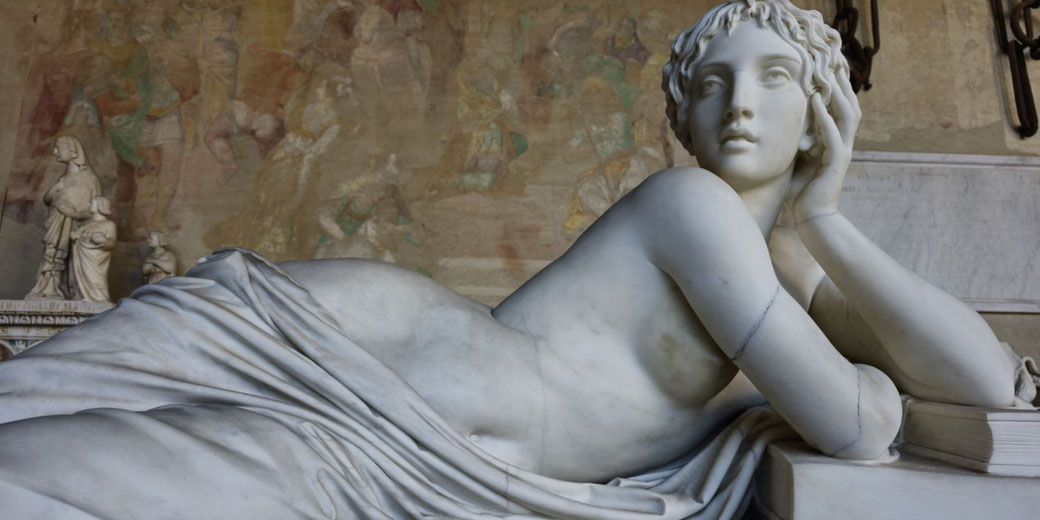
According to ancient Greek tradition, Helen of Troy was the daughter of Zeus and Leda and queen of Sparta, married to Menelaus, the king who led the Greeks to war.
Her departure from Sparta with the Trojan prince Paris, whether by choice or by force, had come to be seen as the event that sparked the ten-year siege that ended in Troy’s destruction.
Across Homeric epics and Athenian tragedy, as well as in later myth writers, she was remembered by many authors as the most beautiful woman in the world and as the cause of a conflict that devastated both Greeks and Trojans.
The mythical stories of her birth
According to the most widely accepted myth, Zeus seduced or assaulted Leda after he took the form of a swan, either beside the river Eurotas or within her bridal chamber.
That same night, she lay with her husband, King Tyndareus, which created confusion in later accounts about the true father of her children.
As a result, Helen and her siblings, Castor and Pollux along with Clytemnestra, were said to have been born from eggs, which suggested that they had a partly godlike origin.
However, not all traditions included Clytemnestra among the children born in this way.
Some alternate versions claimed that Nemesis, not Leda, was Helen’s mother, and that the gods had destined her beauty to cause disaster.

From a young age, Helen reportedly attracted heroic attention. According to Plutarch and Pseudo-Apollodorus, the Athenian king Theseus abducted her while she was still a child and hid her in Aphidna until she reached maturity.
Soon after, Castor and Pollux led an expedition into Attica and recovered their sister, then restored her to Sparta.
There, she came of age as a royal princess under the care of Tyndareus, and her reputation for remarkable beauty spread across the Aegean.
Fragments of the lost Cypria, a part of the Epic Cycle, referred to Helen's abduction and early fate.
Marriage to Menelaus
When Helen reached adulthood, many of the most powerful Greek kings and princes were said to have come to Sparta to compete for her hand.
Among them were Ajax, Diomedes, Odysseus, and Idomeneus, who each wanted the alliance that marriage to Helen could bring.
Tyndareus hesitated to make a choice, fearing that rejection might provoke war among the suitors.
At this point, Odysseus offered a solution that later mythographers recorded, and Pseudo-Apollodorus was among them.
He proposed that all suitors take an oath to uphold and defend the chosen husband, thereby removing the risk of revenge.
In exchange, Tyndareus helped Odysseus win the hand of Penelope. Tyndareus agreed and selected Menelaus, who had royal blood and also the wealth and status necessary to rule Sparta.
Menelaus married Helen and inherited the Spartan throne, and together they had a daughter who was named Hermione.
Some traditions named additional sons, whose identities varied across sources. As queen, Helen lived in a palace that received envoys and guests, along with other travellers from across the Greek world.
Among those who arrived at Sparta was Paris, a Trojan prince, who would soon alter the course of her life and the fate of two civilisations.
The Judgement of Paris and Helen’s Abduction
At the wedding of Peleus and Thetis, Eris, the goddess of discord, cast a golden apple among the guests.
On the inscription she had written, “for the fairest,” and the three goddesses who claimed the prize,
Hera and Athena together with Aphrodite, appealed to Zeus to settle the matter.
Instead of judging himself, Zeus ordered Hermes to take them to Mount Ida, where Paris, who tended his flocks, would act as the judge.
During their encounter, each goddess attempted to bribe Paris. Hera promised him royal power and Athena offered him victory in battle together with supreme wisdom.
Aphrodite tempted him with the love of Helen, a reward that appealed to his desire.
As Helen already lived as Menelaus’ wife in Sparta, Paris’ choice set the conditions for a future conflict.
Encouraged by Aphrodite’s promise, Paris travelled to Sparta as a guest on an official visit.
Soon after Menelaus had departed on a journey, Paris left Sparta with Helen, either by persuasion or abduction, and sailed back to Troy.
In doing so, he violated the sacred Greek law of xenia, the hospitality owed between host and guest, which made the insult worse.
The outbreak of the Trojan War
When Menelaus discovered that Helen had gone, he called upon the oath sworn by her former suitors.
Agamemnon, who was his brother and the king of Mycenae, took command of the expedition, and what poets described as more than a thousand ships assembled under the banners of Greece’s most famous warriors.
The Catalogue of Ships in Iliad Book 2 listed the groups from across the Greek world.
Among the leaders were Achilles, Odysseus, Nestor, Ajax, and Diomedes, who each brought their own soldiers and motives to the campaign.
Nestor, the king of Pylos, was widely known as the wisest of the Achaeans. Before their departure, the Greeks had gathered at Aulis and waited for favourable winds.
According to Euripides and other later sources, Agamemnon sacrificed his daughter Iphigenia to appease Artemis and allow the fleet to sail.
According to Homer’s Iliad, Helen lived within the palace of Priam during the final year of the war.
She had become the wife of Paris and later, after his death, married his brother Deiphobus, as later sources such as the Aeneid and Euripidean plays described.
She walked the walls with Priam and identified the Greek warriors to him, then expressed sorrow for the destruction surrounding her.
At several moments, she condemned herself as hateful and mourned her separation from her daughter and husband, however she made no move to escape or resist her new position.
Some sources mentioned that Aethra, the mother of Theseus, worked as Helen’s handmaid in Troy after being taken during her earlier abduction.
Despite her shame, she remained inside the city as the conflict reached its climax.
Helen after the fall of Troy
When the Greeks broke through the city walls and set fire to Troy, Menelaus fought his way to Helen.
According to Homer, he nearly killed her on the spot, but the sight of her beauty caused his anger to dissolve, and he led her back to the Greek camp unharmed.
She returned to Sparta with him and resumed her life as queen, as described in The Odyssey, where Telemachus found her and Menelaus as they held court in peace.
There, she offered him a draught of nepenthe, a drug of forgetfulness, which suggested that she had learned to soothe grief rather than stir it.
Alternate versions told her fate in different ways, and according to Herodotus, Helen never reached Troy, and the entire war had been fought over an illusion.
In this account, she landed in Egypt, where King Proteus kept her safely and with honour until Menelaus arrived.
Euripides later used this idea in his play Helen, a drama, where the real woman waited helplessly on the Nile while a phantom went to Troy.
Stesichorus, in his Palinode, claimed that he was struck blind after he had spoken badly about Helen and that he regained his sight after he had taken back his words and claimed that she had never gone to Troy.
The story of his blindness and recovery is known chiefly from later sources, and other writers claimed that the Greeks killed her during the sack, or that she later became immortal and joined the gods.
Euripides’ Orestes depicted her amazing escape from death and her final change.
legacy and meaning
Writers in antiquity seem to have struggled to agree on Helen’s role. In some portrayals, she acted with reckless freedom and chose Paris without care for the consequences.
In others, she behaved as a helpless pawn, manipulated by gods and fate, whose sorrow never faded.
Euripides presented both perspectives in separate plays and showed a Helen who wept for the war.
Homer kept a more unclear view, showing a woman torn by guilt and affection, weighed down by a quiet acceptance.
Over time, Helen became, in some places, a figure people worshipped. In the region of Laconia, the people honoured her and Menelaus with a shrine at Therapne, which was known as the Menelaion, where they believed she had ascended to divinity.
Pausanias described the site in his Description of Greece and claimed that locals told of Helen’s status as a local goddess.
Her story inspired many poets and historians throughout the Hellenistic and Roman worlds, and she continued to appear in art and literature, as well as in myth.
Roman authors such as Ovid imagined her in the form of letters in Heroides, giving voice to her inner thoughts.
As the woman whose beauty led to the deaths of heroes and the fall of a great city, Helen remained, for many later readers, a symbol of the fine line between desire and destruction, praised by some and condemned by others, but never forgotten.