
How did Hannibal cross the Alps with elephants?
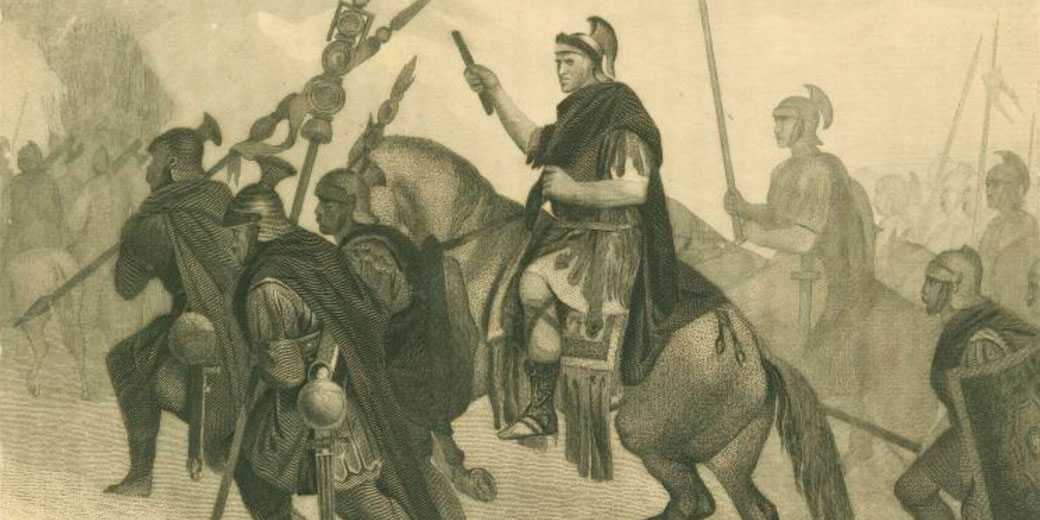
In October 218 BC, as Roman forces massed in Spain and Liguria to crush any Carthaginian advance, a shocking message reached the Senate in Rome.
Scouts claimed that Hannibal Barca had entered the Po Valley by crossing the Alps with infantry and cavalry, and even with war elephants.
Though Rome had witnessed elephants before, it had never expected to encounter them in the north, descending icy slopes from peaks where even pack animals struggled.
As shock turned into disbelief, generals scrambled to understand how one of the most dangerous barriers in Europe had been breached by a foreign army that should have died long before reaching the Italian frontier.
Planning the route through enemy territory
By choosing an overland invasion of Italy, Hannibal rejected the security of naval transport and instead relied on a blend of rapid movement and calculated deception that demanded extreme endurance from his troops.
After he had captured Saguntum in 219 BC, he positioned Spain as a secure base by placing Hasdrubal in command of Iberian defences, while leaving fortified cities that would protect his rear.
Then, in spring the following year, he led a mixed force of approximately 50,000 infantry and 9,000 cavalry, supported by around 37 elephants, across the Ebro River and into hostile territory.
This began a march that would span roughly 1,400 kilometres before reaching the Alpine passes.
Some sources claim he began with as many as 90,000 men, though this may have included forces left behind or lost before reaching Gaul.
As he approached the Rhône River, Roman patrols attempted to intercept him. To avoid a direct clash, he marched north along the river’s banks and crossed it upstream by using rafts that his engineers constructed on the spot.
Once his elephants had been floated across in specially reinforced platforms and his rearguard had repelled a Roman scouting force, he pushed inland toward the mountains.
At this point, his army had probably already suffered heavy losses due to constant skirmishes and illness among the men, as well as steady desertion from those who lost faith in the march.
Still, he pressed forward, because he knew that any delay would give Roman legions time to prepare defences in northern Italy.
He likely began the Alpine ascent in early October, because he aimed to pass before the worst of the winter snow.
Navigating the alpine terrain
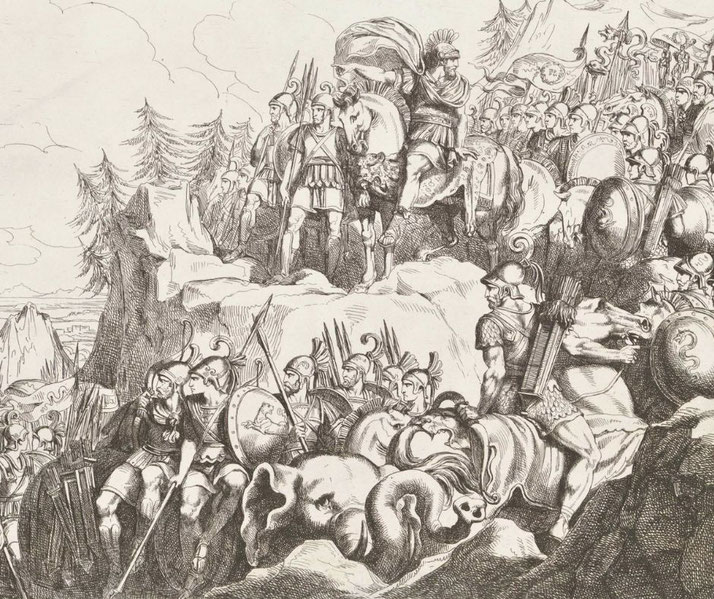
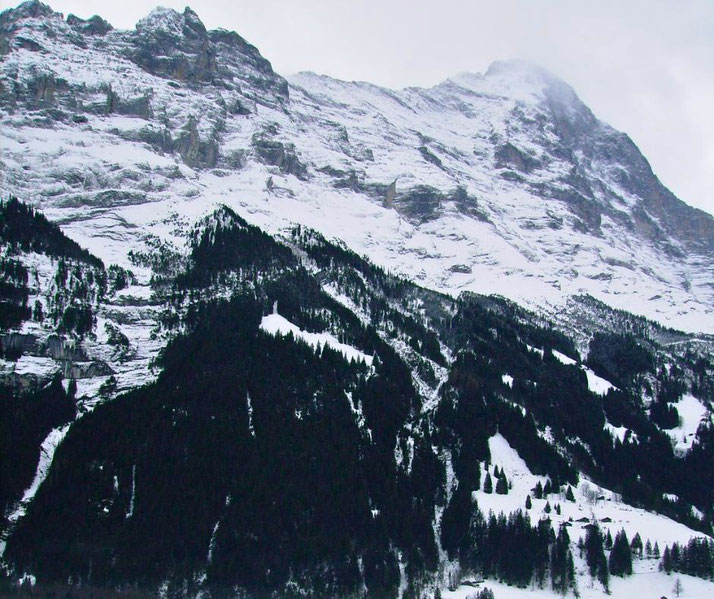
Soon after reaching the foothills, Hannibal encountered dangerous terrain and fierce resistance from local tribes who controlled narrow valleys and ambush points.
According to Polybius, some groups pretended cooperation, offering food and guidance before attacking Carthaginian supply lines and isolated units once the army entered narrow mountain passes.
To counter this, Hannibal had sent scouts ahead and deliberately waited until tribal festivals drew the warriors away from their watchposts.
Then he launched rapid advances through undefended territory before his enemies could return.
At one of the most dangerous sections, the army faced a path that had been blocked by landslides and exposed rock.
Here, Hannibal ordered fires built directly against the rock face, then poured vinegar over the heated stone to weaken it.
Once they had cracked, the cliffs were broken apart as soldiers used picks and levers, and this allowed his engineers to cut a path wide enough for pack animals and elephants to pass.
This technique was recorded by both Polybius (3.54) and Livy (21.37), and it is still regarded as one of the most discussed logistical achievements of the ancient world.
Though repeated in ancient sources, the story is widely questioned by modern historians due to the lack of archaeological evidence supporting such a method.
According to Livy, the men worked under freezing conditions, so that ice formed on their tools, and mules sometimes collapsed in the cold.
Still, the effort succeeded in creating a passable track.
Exact details of the route are still unclear, and many historians argue for the Col de la Traversette, based on terrain descriptions and modern geological studies, which included chemical analysis of ancient dung deposits.
These studies have shown evidence of large mammals passing the area, but they cannot clearly prove that Hannibal’s army used the route.
Others suggest the Col du Clapier or the Little St Bernard Pass, with Sir Gavin de Beer, who offered detailed arguments in favour of the Clapier route in the twentieth century.
Whichever route Hannibal chose, ancient sources stated the crossing had taken fifteen days, with nine spent ascending, followed by five descending, though some modern estimates suggest it may have taken longer.
During this time, constant snowfall, altitude sickness, starvation, and attacks from above probably caused hundreds to die on many days.
Regardless, with every kilometre they advanced, the Alps began to shrink behind them.
Managing the elephants
Of all the challenges faced during the crossing, the elephants presented the most visible and difficult burden.
Because they weighed several tonnes and required enormous quantities of food and water, they struggled on narrow paths and suffered badly from cold temperatures.
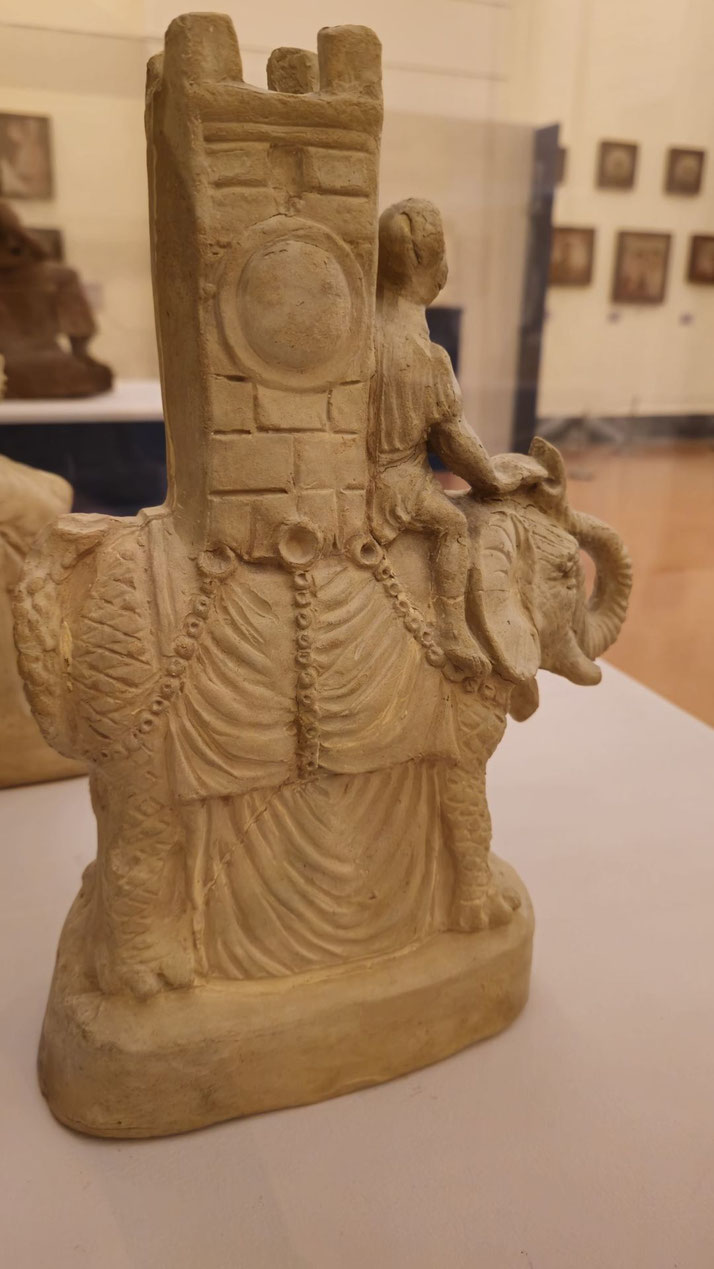
Most of Hannibal’s elephants came from North Africa, and they were likely forest elephants that were possibly a smaller variety such as the now-extinct subspecies Loxodonta africana pharaoensis.
They were smaller than those of India but still large enough to intimidate enemy troops and cause panic among enemy horses.
Handlers relied on ropes and levers, and they used wide platforms that guided the elephants along slopes and switchbacks.
In places where the track narrowed to a ledge, they carved wider paths into the rock or built temporary wooden walkways.
To feed the animals, the men searched for plants to feed them and had stored fodder in advance, though by the later stages of the crossing, supplies ran thin.
Many elephants died during the descent, with likely fewer than ten surviving by the time they reached the plains, and those that survived caused alarm when Hannibal reached the Gallic tribes in the plains below.
Their presence suggested that Hannibal’s army had endured more than any enemy expected, and that they had done so while maintaining their strength.
Surviving Roman sources generally highlight the mental impact that the elephants had once the army entered the Po Valley.
Though tactically limited in tight conditions, their symbolic power worried opponents and boosted the morale of Hannibal’s troops, who viewed their survival as a sign that the gods favoured their campaign.
Carthaginian doctrine valued elephants for battlefield disruption and for their capacity to terrify enemies unfamiliar with their sight and sound.
Outcome and historical significance
By the time Hannibal completed the crossing, only 20,000 infantry and 6,000 cavalry remained, along with a few elephants, and the achievement still overturned Roman assumptions about how wars would be fought.
Rome had stationed its main forces to defend the coasts and Spanish frontier, largely unaware that the main invasion would come from the north, through a natural barrier that no previous army had dared to use as a highway.
No Roman force had attempted a crossing of that size, and none would attempt such a feat until centuries later.
Shortly after arriving, Hannibal won a series of victories. First, at the Ticinus River, where he defeated a Roman cavalry force in a skirmish, then at the Trebia in December 218 BC, he used the terrain and his remaining cavalry to outmanoeuvre the Romans.
At Trebia, he lured Roman forces into a trap when he hid a detachment in reeds along the riverbank, and this allowed his brother Mago to strike from the rear.
Although the elephants did not play a major role in these battles due to exhaustion and exposure, they contributed to confusion on the flanks and slowed Roman advances in key moments.
Later Roman historians documented the feat as an almost legendary event.
Hannibal’s success, they agreed, arose from calculated risks and tight discipline, reinforced by constant adjustment, rather than from good fortune or recklessness.
He had prepared for each stage, outwitted multiple enemies, and endured hardship that in many respects equalled any later campaign he would face in Italy.