
The forgotten Crusades launched against Europe
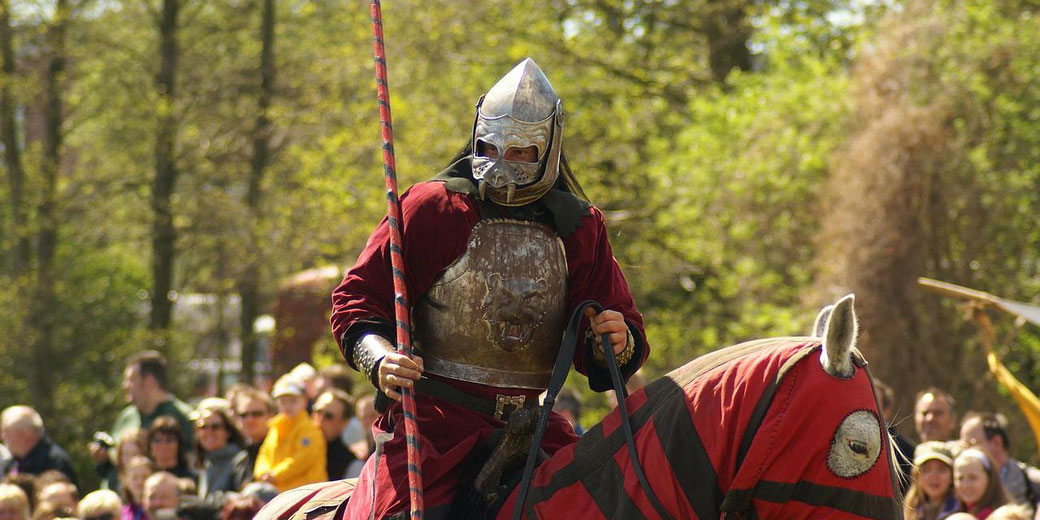
The medieval era has become well known for the Crusades, a series of religious wars that aimed to convert whole peoples to Christianity through armed campaigns.
The better-known campaigns went to the Holy Land, and other crusades targeted regions much closer to home.
From the shores of the Baltic Sea, where the Northern Crusades aimed to convert pagan tribes, to the heart of southern France, where the Albigensian Crusade raged against heretical beliefs, to the gates of the Ottoman Empire in the Crusade of Varna, crusading came to Europe itself.
The Wendish Crusade
After the unexpected success of the First Crusade the crusaders captured Jerusalem, and many people in Europe were shocked when Muslim forces took back the region of Edessa in the Holy Land in AD 1144.
In response, Pope Eugene III had called for a new crusade in AD 1145. This Second Crusade began in AD 1147, and soldiers who came from across Europe took part.
However, the northern German Saxons were unwilling to join the campaign to the Holy Land, and said they wanted to crusade against the nearby Wends instead.
The name "Wends" was often used as a collective term for a number of West Slavic tribes that lived along the southern Baltic Sea coast (mainly in what is now modern-day northern Germany and Poland).
These peoples were pagans, which meant that they worshipped many gods, and they had repeatedly resisted the advances of the Christian states of Germany and Denmark over many decades.
Pope Eugene III had approved this plan and had granted the same spiritual rewards for fighting the Slavic tribes known as the Wends as for participating in the Second Crusade in the Holy Land.
It was supported by prominent religious figures like Bernard of Clairvaux, who saw the mission as a way to direct the fighting focus of the European nobility towards a 'worthy' cause.
As a result, the Wendish Crusade took place in AD 1147. The crusade focused on religious conversion, and it also focused on securing the north-eastern frontier of the Holy Roman Empire.
This is because the Wendish territories were seen as a buffer zone that lay between Christian states and pagan neighbours, and the Christian states said that they needed control of these lands for the stability and growth of those states.
The crusaders mainly came from the German states and were led by Henry the Lion, Duke of Saxony, and Albert the Bear, Margrave of Brandenburg.
However, the campaign lacked unity and clear objectives from the start. While some wanted outright conquest, others aimed for tribute deals or the establishment of Christian settlements.
As a result, the success of the Wendish Crusade was mixed. While the crusaders managed to capture the stronghold of Dobin and establish Christian bishoprics in the region, the overall objective of converting the Wends in large numbers and the takeover of their territories by Christian rulers was not fully realised.
In fact, the Wends resisted fiercely, and many of the newly established Christian settlements were frequently attacked.
Moreover, the wide and challenging terrain of the Wendish lands made long campaigns difficult.
The crusade only officially lasted for one year, but the fighting continued for several decades.
The last of the significant Wendish resistance ended in AD 1187.
In the years after the Wendish Crusade, the process of Christianisation and Germanisation of the region continued, although at a slower pace.
Over the next few centuries, missionary activity continued, and colonisation and military campaigns then pushed the Wendish territories into the Christian world.
The Livonian Crusade
The crusade against the Wends was often seen as a success by the Catholic Church, and it was the first of a series of 'Northern Crusades', which took place in northern Europe.
The next Northern Crusade would also target the Baltic region. Again, the stated aim was to convert the pagan tribes in that area.
The Livonian Crusade targeted Estonia, Latvia, Lithuania, and parts of Russia, which were inhabited by pagan tribes such as the Livonians and Lithuanians, as well as the Old Prussians.
Early peaceful attempts to convert them to Christianity by missionaries like Meinhard of Segeberg in 1184 had failed, as they fiercely maintained their ancestral beliefs.
This led to calls for military action by nearby Christian territories. As a result, Pope Innocent III had issued an official papal letter after the death of Bishop Berthold of Hanover in 1198, which urged a crusade against the Livonians to protect Christian interests and secure German trade routes.
When Albert von Buxthoeven was appointed as bishop in 1199, he had assembled a large force and he established the settlement of Riga as the centre of Christian operations in 1201.
Then, in 1202, the same bishop founded the Livonian Brothers of the Sword, which was a Catholic military order.
It was made up of warrior monks, mostly drawn from northern Germany, who swore an oath to conquer and convert the pagan populations in the Baltic region.
The Brothers of the Sword became the main military force in the area, and it led a series of successful military invasions into the Baltic territories for the next 30 years.
However, after suffering a crushing defeat at the Battle of Saule in 1236, the order merged with the Teutonic Knights and became the Livonian Order.
The Teutonic Knights were a German military-monastic order that had initially been founded in AD 1198 in the city of Acre during the Third Crusade.
They had quickly grown to be a powerful force in their homelands of Germany as well.
Now, under the leadership of the Teutonic Knights, the Livonian Crusade grew, and this led to the establishment of the Monastic State of the Teutonic Knights.
During the course of the Livonian Crusade, which lasted until 1290, some pagan tribes were forcefully converted, while others chose to adopt Christianity to make alliances and protect their future.
The Lithuanians, for instance, constantly resisted the Teutonic Knights. It was only in 1387, under the reign of Grand Duke Jogaila, that Lithuania officially adopted Christianity.
This was mainly a political move that countered the Teutonic threat, and Lithuania formed a union with Poland called the Grand Duchy of Lithuania.
However, military conflict between the new alliance and the Teutonic Knights continued into the 15th century.
At the Battle of Grunwald in 1410, the Teutonic Knights were soundly defeated by the Polish-Lithuanian forces, which led to the signing of the Treaty of Toruń in 1411.
This finally brought an end to the fighting between the Teutonic Knights and the Kingdom of Poland-Lithuania.
The Prussian Crusade
The Teutonic Knights were also involved in another Northern Crusade, known as the Prussian Crusade.
This one was against the Old Prussians who lived in what is now modern-day northern Poland and the Kaliningrad Oblast of Russia.
The Old Prussians were unrelated to the later German state of Prussia and were a Baltic tribe that was known for their stubborn resistance to Christian influence.
Their valuable location along the Baltic coast made them a target for both Christian missionaries and neighbouring powers that wanted to expand their territories.
By the 13th century, the increasing moves by Christian missionaries and settlers into Prussian lands led to tensions and skirmishes.
The Teutonic Knights had been invited to the region by the Polish duke Konrad I of Masovia to assist in the Christianisation of the Prussians.
With papal blessings and privileges, the Knights launched a series of campaigns against them, and they began in the 1230s.
Their approach combined military conquest with the establishment of fortified towns and bishoprics, which ensured both religious and political control over the conquered territories.
However, the Old Prussians resisted fiercely. They employed hit-and-run tactics and took advantage of the challenging terrain of forests and swamps.
The crusade was a hard campaign, which experienced cycles of both successful Teutonic conquests followed by violent Prussian uprisings.
The most significant of these was the Great Prussian Uprising, from 1260 to 1274.
However, it was eventually crushed, which was the beginning of the end of Prussian paganism.
It took several decades for the Teutonic Knights to establish firm control over the region.
Ultimately, the Teutonic Knights had better organisation and military skill, and this eventually brought success.
By the end of the 13th century, the Old Prussian territories were largely under the control of the Teutonic Order.
To enforce their control, the Knights built large fortresses and established the Monastic State of the Teutonic Knights.
The end of the Prussian Crusade came with the Treaty of Melno, signed in 1422, which set a border that remained largely unchanged until World War I.
The Albigensian Crusade
However, not all European Crusades were part of the Northern Crusades in the Baltic region.
Perhaps the most famous of all of the crusades in Europe took place in the western country of France.
It was known as the Albigensian Crusade. Unlike other crusades that targeted distant lands or non-Christian populations, this campaign was directed against the Cathars, a Christian group which had grown in popularity in the heart of southern France.
The Cathars were often referred to as Albigensians due to their strong presence in the city of Albi, and they held beliefs that the Catholic Church called heresy.
Central to Catharism was a dual view of the world, which believed in the existence of two gods: a 'good god' of the spiritual world and an 'evil god' of the physical world.
This belief system clashed with official Catholic teaching.
By the late 12th century, Catharism had attracted such a significant following in the Languedoc region of southern France that the Catholic leadership decided to act.
The immediate spark for the Albigensian Crusade was the murder of the papal representative, Pierre de Castelnau, in 1208, an act blamed on the supporters of the Cathar cause.
Pope Innocent III was already concerned about the spread of Catharism, and he responded by calling for a crusade against the Albigensians.
The northern French nobles saw this as an opportunity to expand their territories and influence in the south.
The crusade officially began in 1209 and quickly became known for extreme violence and brutality.
Cities like Béziers and Carcassonne faced severe sieges, and many inhabitants who lived inside the walls were killed.
In particular, at the Massacre at Béziers on July 22, 1209, an estimated 20,000 people, both Cathar and Catholic, were killed without distinction.
The infamous words, "Kill them all, God will know His own," reportedly said during the sack of Béziers, show the violence of the campaign.
Over the next two decades, the crusaders were led by figures like Simon de Montfort, and they targeted step by step Cathar strongholds and leaders, and they also attacked the communities that sheltered them, and they aimed to wipe out the heresy.
By the mid-1220s, the military campaigns of the Albigensian Crusade had largely crushed the Cathar political and military resistance.
However, the heresy persisted in more hidden forms. In response, the Church established the Inquisition, a formal system to identify, try, and punish heretics.
Over the following decades, the Inquisition played a key role in the final suppression of Catharism.
In the aftermath of the Albigensian Crusade, the Languedoc region was brought firmly under the control of the French crown.
The Crusade of Varna
The Crusade of Varna ended in 1444, and it was one of the final attempts that European powers made to halt the expansion of the Ottoman Empire into the Balkans.
By the 15th century, the Ottoman Turks had established themselves as a major power in the eastern Mediterranean, and they had already captured large territories in Asia Minor and the Balkans, and their rule reached into parts of southeastern Europe.
Their rapid expansion posed a direct threat to Christendom in the eyes of many Christian leaders, and this led to calls for joint action to counter the Ottoman advance.
The start of the Crusade of Varna went back to the uneasy truce between the Ottomans and the Kingdom of Hungary after the Ottoman victory at the Battle of Kosovo in 1389.
As the 15th century progressed, Sultan Murad II led the Ottomans, and they continued their campaigns in the Balkans, and they captured the crucial city of Thessalonica and put pressure on the Byzantine capital, Constantinople.
In 1443, a Christian alliance was formed, mainly driven by Janos Hunyadi, the governor of Hungary, and Władysław III, the King of Poland and Hungary.
This coalition, which also included forces from the Papal States and Wallachia, with support from parts of the Holy Roman Empire, launched a campaign known as the 'Long Campaign' or the 'Crusade of the Long March'.
Initially, the Christian forces achieved some successes, and they pushed far into Ottoman territories, which prompted Sultan Murad II to propose a peace treaty in 1444.
The ten-year truce, however, was short-lived. The Pope encouraged the Christian alliance, and its leaders believed that a clear victory was possible, so the alliance decided to break the truce and confront the Ottomans once more.
This decision led to the final Battle of Varna on November 10, 1444.
The Christian forces, confident and eager to exploit the supposed weakness of the Ottomans, were met by a well-prepared and carefully placed Ottoman army.
The battle was fierce, but the tide turned decisively against the Christians when King Władysław III was killed, which led to a collapse in their morale.
The Ottomans emerged victorious, and the Crusade of Varna ended in a disastrous defeat for the Christian alliance.
The defeat severely weakened the position of European powers in the Balkans and raised the confidence of the Ottoman Empire.
This allowed the Ottomans to continue their campaigns in southeastern Europe. These campaigns ended with the major capture of Constantinople in 1453 and the final collapse of the Byzantine Empire.
The fall of Constantinople just nine years after the Crusade of Varna was seen as the final failure of European crusading efforts.