
Is the Donation of Constantine the greatest fraud in the history of the Catholic Church?
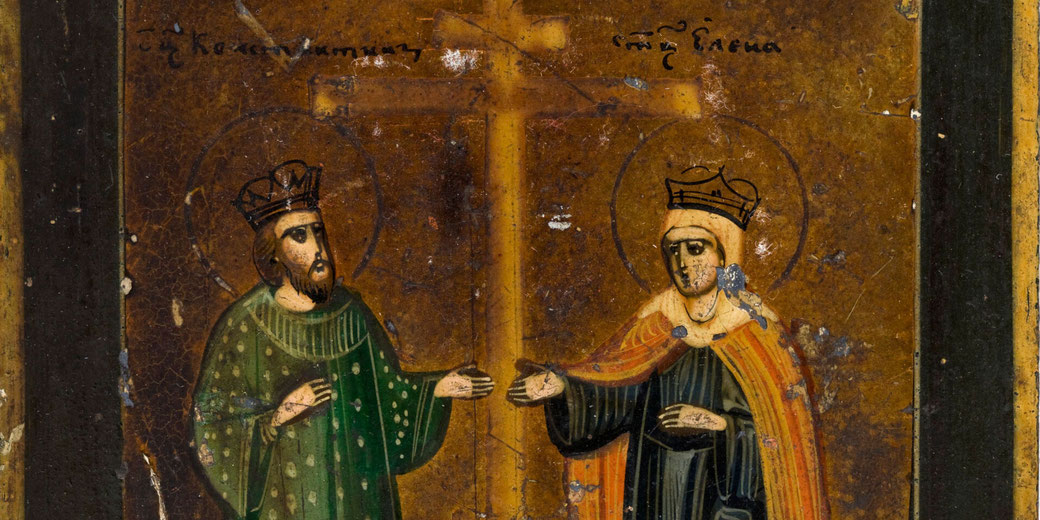
Likely forged sometime between the 750s and early 760s and widely accepted as authentic for nearly 700 years, the Donation of Constantine provided the papacy with legal and spiritual justification to claim supreme authority over secular rulers.
As it declared that Emperor Constantine had purportedly gifted rule of the Western Roman Empire to the pope, the document enabled the Church to wield temporal power across medieval Europe.
Yet once scholars in the Renaissance exposed it as a forgery, it forced a reassessment that raised serious doubts about the foundations of papal supremacy and the validity of the Church’s political claims throughout the Middle Ages.
The role Emperor Constatine played in the Church
After he had risen to power in 306 AD, Constantine I transformed the position of Christianity within the Roman Empire.
After he defeated rivals in a series of civil wars, he introduced policies that ended the persecution of Christians and granted them public status.
By 313 AD, when he issued the Edict of Milan with Licinius, he had legalised Christianity, ordered the return of Church property, and allowed Christians to hold official posts.
The Council of Nicaea convened in June 325 AD at Constantine’s invitation, which brought together around 300 bishops to address the Arian controversy, and ancient sources reported numbers ranging from 220 to 318.
To reinforce unity across his empire, Constantine intervened in doctrinal disputes that threatened to divide the Church.
In 325 AD, he convened the First Council of Nicaea, where bishops established belief in the Nicene Creed and rejected Arian theology.
Although he did not impose his own theology, Constantine supported efforts to encourage agreement among the clergy and provided the resources and protection that enabled Church expansion.
Later, he moved the imperial capital to Byzantium, which he renamed Constantinople, in an effort to strengthen power in the Eastern provinces.
Meanwhile, he continued to fund church construction, exempt clergy from taxation, and appoint Christians to senior positions.
His death in 337 AD followed his baptism, which occurred shortly before his death.
Over time, Christian accounts of Constantine’s reign added miraculous details, including claims of healing and conversion, which contributed to his image as a divinely guided ruler.
Those idealised accounts helped make later forgeries, such as the Donation, more believable.
During his papacy from 314 to 335, Pope Sylvester I, who was the supposed recipient of the Donation, remained largely uninvolved in secular politics and did not even attend the Council of Nicaea.
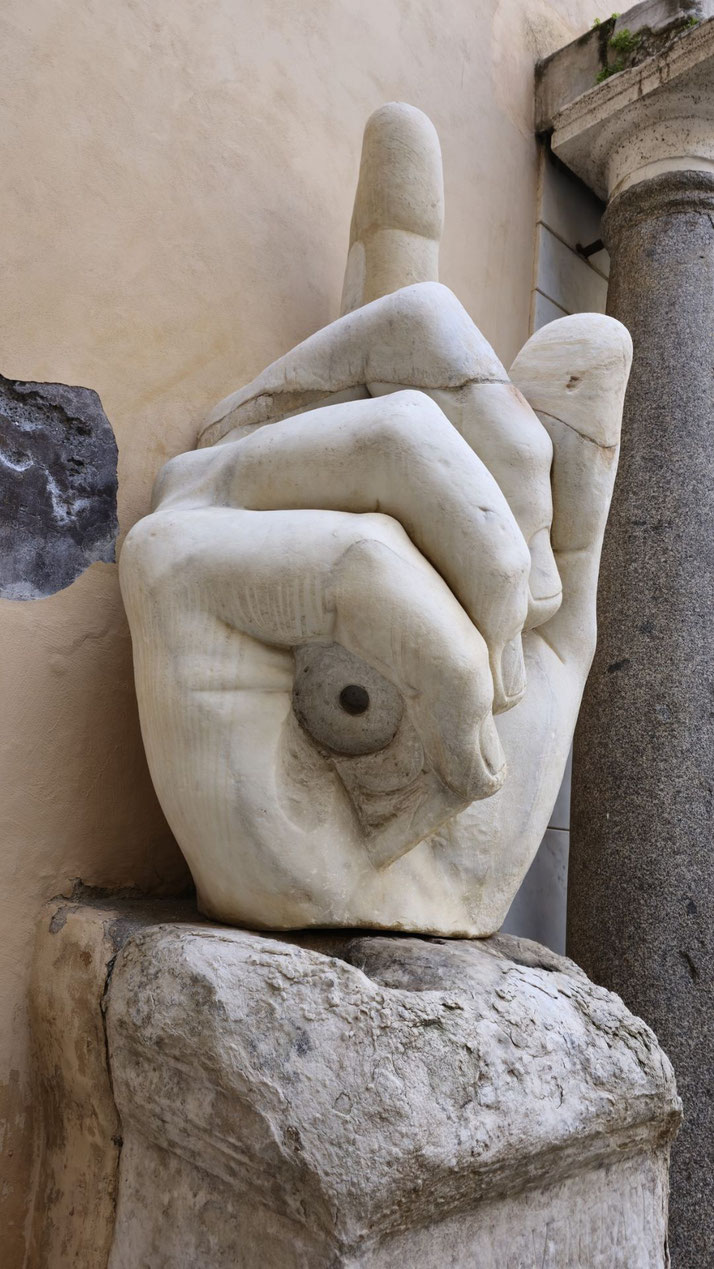
What was the Donation of Constantine?
According to the forged decree, Emperor Constantine granted Pope Sylvester I political rule over Rome, Italy, and the western provinces of the empire rather than only supremacy over all Christian bishops.
The document described how Constantine, who had been baptized and healed of leprosy by Sylvester, transferred authority to the pope and moved the imperial court to the East so that Rome would remain under ecclesiastical control.
By the mid-8th century, the Donation appeared to have started circulating within the papal office, likely during the papacy of Stephen II, who sought support from the Frankish king Pepin the Short.
The Donation was later included in the Pseudo-Isidorean Decretals, a larger collection of forged documents designed to enhance papal power during a period of political instability.
These Decretals, which were probably compiled in the 9th century, included over a hundred fabricated papal letters and conciliar canons aimed at strengthening episcopal independence and papal supremacy.
It contained legal language that would not have existed in the 4th century, such as feudal titles, later ecclesiastical offices, and references to Constantinople as the new imperial capital, which would not have made sense before its dedication in 330 AD.
Even so, the Donation was widely accepted as genuine, since few had access to earlier imperial records and the papacy guarded its archive carefully.
As it claimed that Constantine himself had purportedly conferred both spiritual and temporal power on the bishop of Rome, the text offered a powerful precedent for Church control over lands and kings.
For centuries, it remained a cornerstone of papal political thought. The forged Donation influenced Pepin the Short’s Donation beginning in 754 and reaffirmed in 756, which granted the pope land in central Italy, later confirmed by Charlemagne in 774 as part of the Carolingian alliance with the papacy.
How the Church used the document in the Middle Ages
From the 9th century onward, popes regularly used the Donation to justify increasing involvement in secular politics, as during conflicts with emperors and local rulers they cited it to support claims that the pope held supreme authority over the Western world rather than only over the Church.
When Pope Leo IX wrote to Patriarch Michael I of Constantinople in 1054 to assert Roman primacy, the Donation appeared in his arguments.
Soon after, the Investiture Controversy elevated the Donation’s status further. In 1075, Pope Gregory VII issued the Dictatus Papae, which outlined the pope’s ability to depose emperors, revoke episcopal appointments, and grant authority to princes.
Those declarations rested in part on the belief that Constantine had voluntarily transferred imperial rule to the pope.
Papal envoys used this logic during disputes with monarchs such as Henry IV of the Holy Roman Empire, asserting that secular power depended on papal blessing.
Over the following centuries, the Donation featured in Church legal texts such as Gratian’s Decretum, which became a foundational text widely used in medieval law schools.
It was quoted in papal bulls, diplomatic letters, and theological treatises. Often, it appeared alongside genuine imperial charters, which added to its believability.
It was also invoked at the Lateran Councils to support arguments about papal jurisdiction.
When conflicts erupted between popes and kings in France, England, or Germany, the Donation was used to assert that the papacy had a superior claim to ultimate jurisdiction.
As kingdoms developed more stable institutions, royal courts began to resist those assertions.
Yet the symbolic power of the Donation persisted because it framed the pope as a ruler by imperial grant rather than only by divine right, giving spiritual power a political foundation based in Roman history.
Dante Alighieri wrote in the early 14th century and condemned the Donation in his Divine Comedy, calling it the "bad acquisition," a phrase widely interpreted as referencing the Donation, that had corrupted the Church with temporal ambition.
How was it discovered to be a fake?
Humanist scholars in the 15th century began applying textual analysis to classical texts, which allowed them to detect inconsistencies in medieval documents.
Among them, Lorenzo Valla became the most influential voice in exposing the Donation.
In 1440, he composed De falso credita et ementita donatione Constantini, where he used language and historical evidence to prove the text could not have come from Constantine’s time.
To support his argument, Valla pointed out numerous historical errors. The Latin used in the Donation included terms such as feudum and satrapa, which did not exist in the 4th century.
It referred to concepts and Church structures that developed much later. The political geography it described made sense only in the 8th century.
Valla also highlighted the unlikelihood of Constantine’s supposed abdication of power, which had no precedent in Roman imperial practice.
His method combined careful study of the language with historical analysis, which became a model for later textual criticism.
Although Church officials had not immediately responded to Valla’s work, his findings spread widely because reformers such as Ulrich von Hutten and John Bale republished and expanded on Valla’s criticisms, and they used those criticisms to discredit the moral authority of the papacy during the early Reformation.
Over time, scholars and critics of the papacy, including Martin Luther and John Calvin, embraced his conclusions.
The Protestant Reformation transformed the Donation from a scholarly curiosity into a key example of ecclesiastical fraud.
For reformers, it became evidence that the Catholic Church had used false documents to justify its worldly authority.
Eventually, even Catholic historians had stopped defending the Donation as genuine, and during the 16th and 17th centuries papal documents no longer cited it.
By the mid-1500s, by the time of the Council of Trent, official Church documents had ceased citing the Donation, and it had disappeared from canonical collections such as the Corpus Juris Canonici.
By then, the damage to the Church’s moral and legal authority had already taken effect.
How the Church reacted to the revelations
At first, the Church offered no formal statement regarding Valla’s discovery. Papal archives had not released copies of the Donation, nor had Church leaders publicly addressed its authenticity in public declarations, and as a result they allowed the document to fade from use without defending it directly.
That silence signalled a quiet retreat from the claims it had once supported.
Gradually, the Church incorporated the forgery into scholarly discussions. By the 19th century, Catholic historians increasingly acknowledged that the Donation originated in the 8th century and had been used to strengthen papal authority during a time of political uncertainty.
Modern editions of canon law list the text among writings that were considered not genuine.
The Second Vatican Council made no mention of it, and current Church teachings no longer rely on it to explain papal jurisdiction.
Today, the Donation of Constantine is studied primarily as a historical document by mainstream scholars rather than a theological one, and it is a reminder of how written authority can influence institutions, even when based on fiction.
The Catholic Church never officially used it as doctrine, but it nonetheless played a powerful role in influencing the Church’s claims to temporal rule.
Its exposure as a forgery weakened those claims and demonstrated how religious authority can be bolstered by documents that collapse under scrutiny.