
How to become an ancient Roman emperor: Your essential step-by-step guide
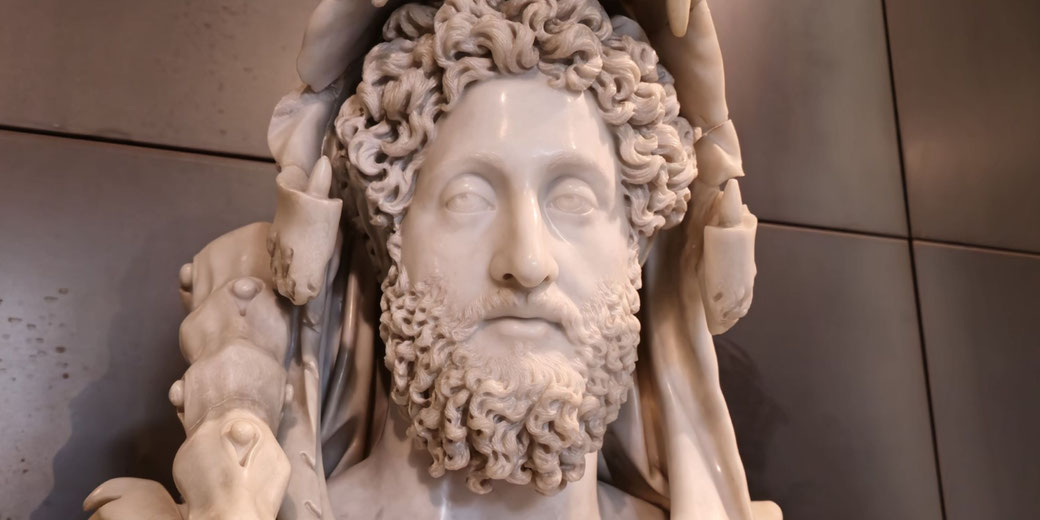
Throughout the Roman world, power was held by a single man and could change the fate of millions, which we refer to as 'the emperor'.
However, from the rise of the first emepror Augusts, to when the last, Romulus Augustulus, stepped down in 476 CE, more than eighty people claimed the supreme title of the empire.
Some rose through birth or adoption, while others seized the purple, which often occurred with a legion at their backs, a dagger in hand, or a god on their side.
So, how did someone actually get to be the emperor of Rome? Here are some strategies that could help you out...
How the role of emperor was developed
After the collapse of the Republic, Augustus presented himself in 27 BCE as princeps, meaning “first citizen”.
By collecting powers that had once been held by multiple magistrates, such as tribunicia potestas for legislative control and imperium maius for provincial command, he created a central role that appeared republican but operated as a monarchy.
Although he refused royal titles, the Senate and people referred to him as Imperator Caesar Augustus, and the name "imperator" gradually evolved into a permanent imperial title.
Later rulers generally built on Augustus' example. They inherited, strengthened, or seized his powers, and often increased their religious power by adopting titles like pontifex maximus.
The Emperor Tiberius received powers by adoption and Senate recognition, though Augustus also compelled him to adopt Germanicus, which strengthened family succession.
Others like Vespasian, who had led military campaigns, often established dynasties.
In many cases, the Senate’s role shifted from decision-maker to approving decisions without real power, while the army, Praetorian Guard, and imperial family determined succession through secret deals and threats of force.
By the second century CE, the position of emperor required more than birth or political favour: it typically required control of the treasury, loyalty from the provinces, and signs of divine support.
No official mechanism governed succession, and often candidates with determination seized sudden opportunities or used private networks to secure the imperial crown.
Over half of Roman emperors ultimately died violently, which showed how dangerous the office became.
Option 1: Legal and Traditional Pathways
From Augustus onward, adoption often provided a structured way to manage succession.
For example, Augustus adopted Tiberius in 4 CE and granted him tribunician powers and command of the provinces.
This generally allowed a smooth transfer of authority while preserving the appearance of a republican process.
Often, the heir took the title Caesar and gradually took on official duties because the Senate confirmed his powers after imperial approval became clear.
Emperors like Hadrian and Antoninus Pius relied on these strategies to secure transitions, particularly when natural sons were unavailable or unsuitable.
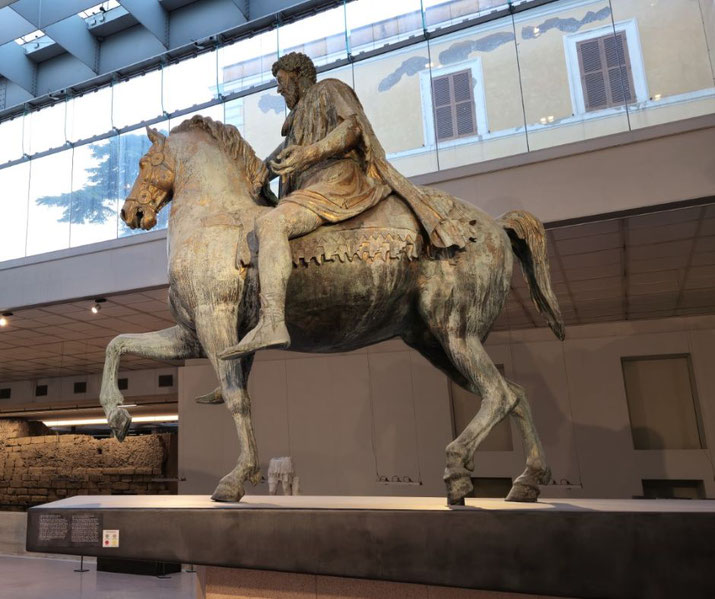
Sometimes, emperors attempted hereditary succession, as when Marcus Aurelius named his son Commodus as co-ruler.
However, hereditary rule did not guarantee competent leadership or popular support, as in several cases the Praetorian Guard or Senate plotted to remove incompetent heirs.
Legal succession offered predictability, but success required a plan that combined careful timing with long preparation and the decisive removal of rivals before an emperor’s death.
Option 2: Acclamation from the Legions
Across distant provinces, victorious generals often became emperors when their troops proclaimed them imperator.
Vespasian rose this way during the Year of the Four Emperors in 69 CE after his forces in Judaea declared him emperor and marched on Rome.
The chaos of that year had also seen Galba, Otho, and Vitellius each claim power in rapid succession.
Often, troops acted when central authority collapsed or lost its right to rule, and when they lifted a commander on a shield and swore loyalty, they made a public and political statement.
Their support typically came with expectations such as pay, promotions and land or favours.
If a commander failed to deliver, they could easily find another to follow.
During the third century CE, military crisis and almost continuous civil war made this method chaotic and unstable, since frequent changes of emperor, which were often caused by the army in border provinces, showed that leadership mattered more than legality.
For instance, Diocletian won the throne in 284 CE when his troops had assassinated the previous emperor, Carinus.
After he had secured power, Diocletian introduced the Tetrarchy in 293 CE, sharing imperial authority between two Augusti and two Caesars to address the challenges of succession and administration.
Acclamation, which let commanders act quickly, usually led to war against other claimants and frequent regime changes.
Option 3: Usurpation and Civil War
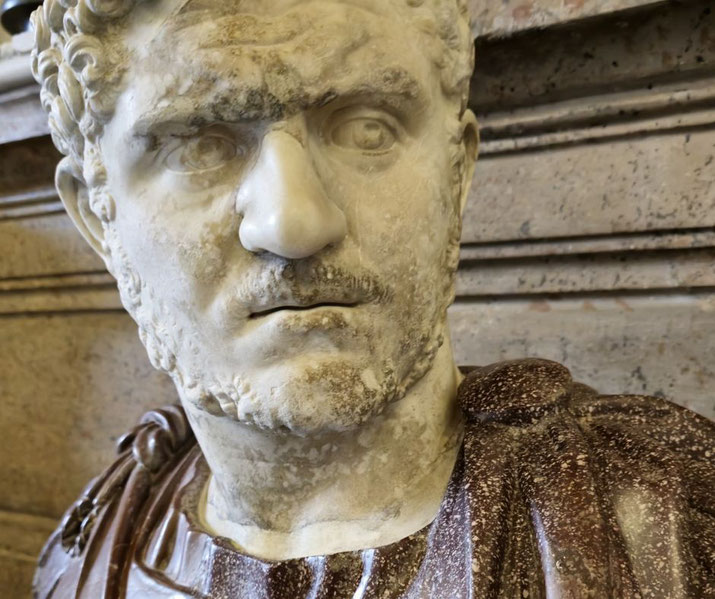
When no clear heir existed or the reigning emperor appeared weak, ambitious men often seized power by force.
A usurper typically needed troops, resources, and quick action. In 306 CE, Maxentius proclaimed himself emperor in Rome when he took advantage of public dissatisfaction with the existing Tetrarchy and gained the backing of the Praetorian Guard and Senate.
Often, usurpers said their actions were necessary and claimed divine approval.
Therefore, coins, inscriptions, and public speeches presented their taking of power as necessary and even destined.
Quick consolidation of power across major cities usually helped secure recognition, especially if the Senate gave in and local governors swore loyalty.
Civil war almost always followed, as when Septimius Severus fought and defeated two rival claimants, Pescennius Niger and Clodius Albinus, before gaining uncontested power in 197 CE.
His victory founded the Severan dynasty, which ruled until 235 CE. Success in these cases typically required military ability together with effective messaging, financial rewards, and severe punishment for opponents, which was necessary because usurpation brought risk, but victory could crown a new dynasty.
Option 4: Claim to be a god
From the earliest emperors, an appeal to the gods often became a political tactic.
Augustus promoted the deification of Julius Caesar, then styled himself as Divi Filius, “son of a god.”
This association allowed him to position his rule as divinely sanctioned without declaring himself a deity outright.
After death, most emperors received official deification by Senate decree, a practice known as consecratio.
Some later rulers made more assertive claims. Caligula reportedly demanded divine honours during his lifetime, while Domitian called himself dominus et deus and, according to later hostile sources, required officials to address him with religious titles.
While eastern provinces accepted such claims more readily, Romans in the West often viewed them as excessive or dangerous.
By the third century, emperors turned increasingly to solar and mystery cults to strengthen their claim to rule.
Aurelian promoted Sol Invictus as the empire’s patron deity and thereby aligned his authority with divine protection.
Then, in 312 CE, Constantine claimed to have seen a vision of a cross before battle, which led him to adopt Christian symbols and offer imperial support to the Church.
That vision preceded his victory at the Battle of the Milvian Bridge, where he defeated Maxentius and entered Rome as sole ruler of the West.
Religious association often made the emperor seem more legitimate, especially during political or military uncertainty.
Bonus Tip: Keep the Common People Happy
Public approval mattered greatly, especially in Rome. Augustus understood this and provided grain at reduced cost, sponsored gladiatorial games, and restored temples.
At one point, over 150,000 citizens received subsidised grain under his cura annonae programme, with numbers increasing under later emperors.
He had also held hundreds of games to maintain public support and ensure that any rival would need overwhelming military support to challenge him without risking revolt, and later emperors continued these policies.
Trajan constructed public baths, markets, and libraries, and held elaborate festivals after military victories.
Similarly, Hadrian toured the empire, funded provincial improvements, and engaged with city leaders.
Their efforts built trust and support, which helped prevent rebellion or conspiracies.
Physical monuments like the Ara Pacis further reinforced these messages with monuments that showed the emperor as a bringer of peace and prosperity.
Neglecting the people led to disaster, as in 64 CE, when Nero’s failure to respond effectively and his suspected involvement triggered widespread anger.
The mob lacked formal power and still influenced elite decisions, so an emperor who lost the support of the people often found his enemies encouraged.
What to do once you've gained power
After a new emperor seized power, he had to secure it, and the first step was removing rivals.
Claudius relied on the Praetorian Guard to take control and secure Senate recognition after Caligula had been assassinated in 41 CE before others could act.
Next, an emperor had to secure the army's loyalty with prompt donatives and public gestures of thanks, which is why emperors visited legions, approved promotions, and kept discipline.
Failure to do so risked mutiny or support for another claimant. This meant that military confidence created the stability needed for long-term rule.
Then, an emperor had to control what people heard about them, and coins, monuments, and public inscriptions declared his legitimacy.
For example, the res gestae of Augustus listed his achievements to influence how people remembered him. Inscriptions across the empire reinforced similar narratives.
To survive long term, an emperor usually needed careful planning: especially a loyal heir who had been carefully introduced and prepared could often reduce crises over who would succeed.
Most of all, an emperor had to remain constantly alert. Power in Rome often ended by blade, poison, or betrayal, and those who failed to act quickly rarely lasted long.