
When kittens defeated the mighty Ancient Egyptian army
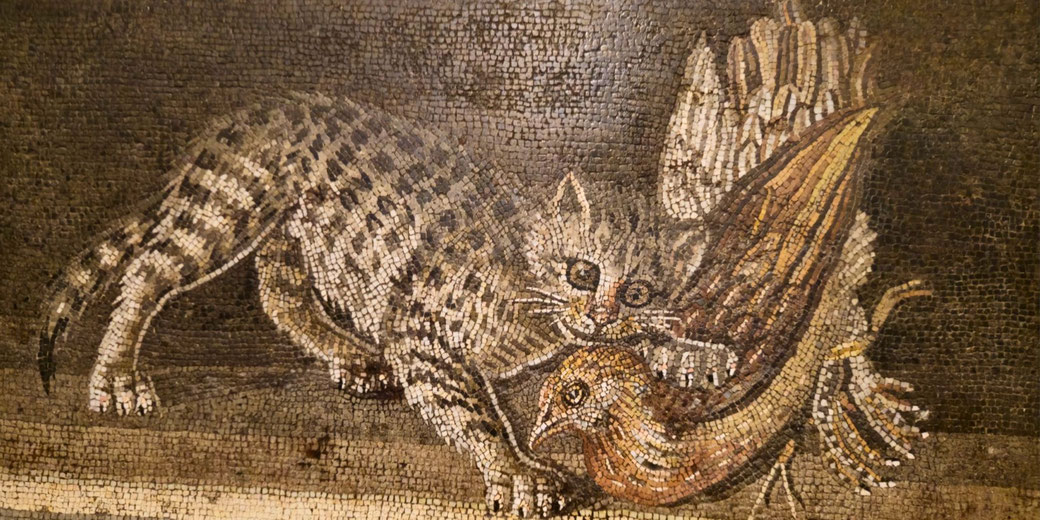
At the eastern edge of the Nile Delta in 525 BC, a clash between the Persian Empire and the Egyptian kingdom unfolded under unusual circumstances.
During the Battle of Pelusium, Persian forces, who were under Cambyses II, took advantage of a strange opportunity by using live cats to undermine the Egyptians’ willingness to fight.
As symbols of the goddess Bastet, cats held a widely recognised sacred status across Egypt, and the Persians used this belief with deadly effect.
The build-up to war between Persia and Egypt
During the final years of Cyrus the Great’s rule, the Persian Empire had taken control of many lands across Mesopotamia and Anatolia, as well as parts of Central Asia.
After Cyrus had died in 530 BC, his son Cambyses II assumed the throne and quickly prepared for a new campaign.
He targeted Egypt, which was then ruled by the newly crowned Pharaoh Psamtik III, both to expand Persian control and to punish the Egyptians for their past support of Babylonian rebels.
By then, Egypt had already experienced growing diplomatic tension with Persia in the years before the invasion, and Cambyses regarded its conquest as both a major strategic goal and a chance to complete his father’s unfinished goals.
Earlier, Psamtik III had inherited a powerful but vulnerable kingdom that had relied on coastal fortifications and mercenary troops, along with a series of fragile alliances.
He had only recently ascended the throne following the death of his father, Amasis II, and his reign would last less than a year.
Egyptian leadership had continued a policy of resisting Persian expansion by means of indirect wars that included their support for uprisings against Persian rule in other regions.
As a result, Cambyses gathered his forces and prepared to cross the Sinai Peninsula with the aim of striking directly at the Egyptian heartland.
He secured support from local Arabian tribes, who supplied water skins, which enabled his army to survive the desert crossing, a major logistical achievement noted by Herodotus.

The strategic importance of Pelusium
At the easternmost frontier of Lower Egypt, Pelusium held a key position as the first major fortified settlement along the land route that ran from the Levant.
For this reason, it became the site where Persian and Egyptian armies met.
Cambyses was aware of the difficulties posed by desert terrain and secured the support of local Arab tribes, who provided water skins and supplies, which allowed his army to cross the Sinai and reach the Nile Delta in fighting condition.
Egyptian forces gathered near Pelusium because they expected a direct confrontation.
Although the Egyptians had prepared for a traditional engagement, Cambyses planned a different approach.
He understood that military victory could be hastened by undermining the moral and spiritual foundations of his enemy.
In Egyptian society, cats held sacred associations with Bastet, the goddess of fertility and domestic protection, who was closely associated with joy.
Temples featured cat iconography, and households that valued their protection welcomed cats as guardians.
Entire industries had grown around the ritual mummification of the animals.
In fact, excavations at Bubastis and Saqqara have uncovered large numbers of mummified cats, which numbered in the tens of thousands, and this strongly suggests the scale of this respect and worship.
As a result, harming a cat, even accidentally, carried grave social and spiritual consequences.
The Persian use of sacred animals in combat
Before the battle began, Cambyses had ordered his soldiers to gather sacred animals, such as cats, and bring them to the battlefield.
According to later Greek sources such as Polyaenus, Persian warriors either painted cats onto their shields or physically carried the animals into combat.
Some versions of the story claimed the Persians released herds of cats toward the Egyptian lines, while others described soldiers who held the animals out in front of them as they advanced.
Although people still argue about how accurate these accounts were, the tactic succeeded according to Greek authors who wrote centuries later.
Faced with the frightening idea of harming sacred creatures, many Egyptian soldiers refused to fire arrows or advance against the enemy.
Greek writers such as Diodorus Siculus recorded that even accidentally killing a cat could provoke execution, which showed how serious this religious rule was.
Some soldiers panicked or fell into confusion, unsure how to fight without breaking religious law.
Persian troops seized the opportunity to breach Egyptian formations and rout their lines.
As chaos spread, discipline collapsed, and the Egyptians began to retreat.
The collapse of the Egyptian defence
Soon after their defeat at Pelusium, the Egyptian army withdrew toward Memphis, where Psamtik III hoped to gather his forces again and resist.
Cambyses pressed his advantage, marched on the capital, and besieged the city.
After a brief struggle, Persian forces captured Memphis and took Psamtik prisoner.
Initially, Cambyses allowed him to live, but after Psamtik had attempted to incite rebellion, the Persian king ordered his execution.
As a result, Egypt lost its independence and entered a new political era. The fall of Memphis marked the end of the Twenty-Sixth Dynasty and the beginning of the Twenty-Seventh Dynasty, which was the first period of Achaemenid rule over Egypt.
Cambyses adopted pharaonic titles, participated in temple rituals, and ruled as a foreign king over a conquered land.
However, Egyptian records from later periods treated Cambyses as a figure of blasphemy, often accusing him of disrespecting the gods and defiling sacred traditions.
After the conquest, he appointed Aryandes as satrap of Egypt and launched further expeditions southward that included a failed campaign into Nubia.
Why the battle still seems so strange
At face value, the story that tells of cats defeating an army sounds more like myth than fact.
Ancient sources, however, often described Cambyses’ careful use of Egyptian religious beliefs.
While the physical use of animals in battle may have been made more dramatic by Greek writers such as Polyaenus, the basic strategy showed a sharp understanding of enemy thinking in many situations.
Cambyses seems to have known that religious law limited Egyptian behaviour in ways that could be turned to his advantage.
Eventually, archaeological evidence and later inscriptions confirmed the rapid conquest of Egypt in 525 BC.
Although no Egyptian text directly recounts the battle, likely due to the humiliating outcome, Persian records identified Egypt as part of the empire by the reign of Cambyses.
Greek writers such as Herodotus and Diodorus added extra story detail that shaped later accounts, but the core fact still remained clear: Pelusium had fallen, and Egypt had surrendered.
Herodotus wrote about the campaign and did not mention the cats directly, which suggests that elements of the story may have developed later.