
The ancient Greeks believed the god Asclepius gave curious medical advice in their dreams
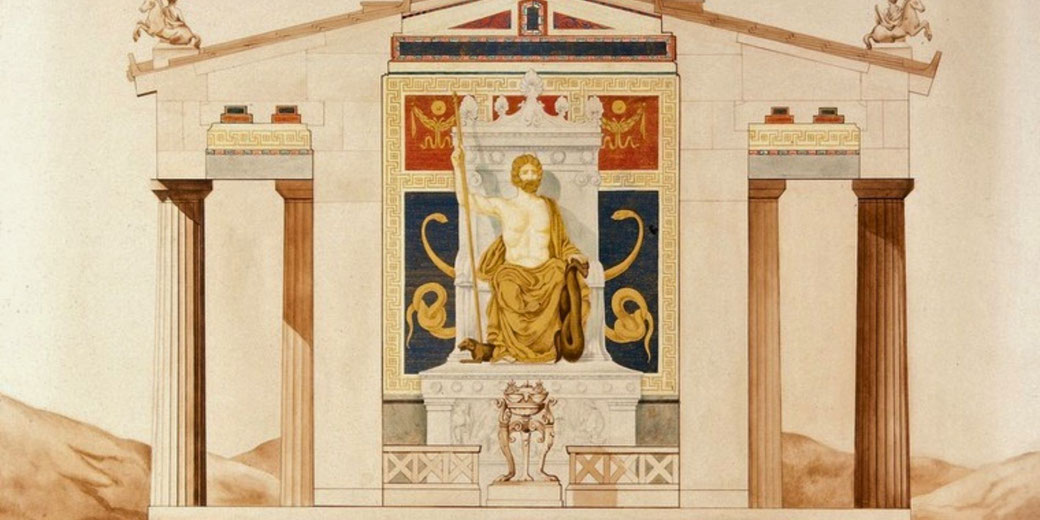
In the ancient Greek world, a sick person could travel to a sacred sanctuary, where they would fall asleep in a darkened hall and wake with the expectation of having received a medical prescription from a god.
For hundreds of years, from the sixth century BCE through the Roman imperial period, thousands of people participated in a ritual that was called incubation (enkoimesis), in which they slept overnight in temples that were dedicated to the healing god Asclepius.
The answer to whether the Greeks believed their gods sent medical advice through sleep is unambiguous: they absolutely did, and this belief arguably underpinned one of the most widespread healthcare systems in the ancient Mediterranean.
The rise of Asclepius and his healing sanctuaries
According to Greek mythology, Asclepius was the son of Apollo and a mortal woman who was named Coronis, and he learned the art of medicine from the centaur Chiron.
By the sixth century BCE, a formal cult had developed around his worship, and purpose-built sanctuaries that were known as Asclepieia began to appear across the Greek world.
The most famous of these was located at Epidaurus, a small polis on the northeastern coast of the Peloponnese in the region of Argolis, which was believed to be the birthplace of Asclepius himself.
Over time, the network of Asclepieia expanded considerably, as major sanctuaries were established at Pergamon in Asia Minor as well as on the island of Kos.
Each of these centres attracted pilgrims from across the wider Mediterranean.
The cult received a significant boost in Athens during the fifth century BCE, when a citizen who was named Telemachus imported the worship of Asclepius from Epidaurus around 420 BCE, likely in response to the devastating plague that had struck the city a decade earlier.
Athens built two sanctuaries in the god’s honour: one on the south slope of the Acropolis and another in the port city of Piraeus.
By the Hellenistic period, Asclepieia existed in dozens of locations, and the cult had spread to Rome, where a temple was built on Tiber Island in 293 BCE after the Romans imported the cult from Epidaurus during a severe plague of their own.
What happened inside the abaton?
The most important part of each Asclepieion was a structure that was called the abaton (which means “inaccessible”), a sacred dormitory that was reserved exclusively for patients who had completed the required preparatory rituals.
Before entering, those seeking healing had to undergo purification by bathing in sacred springs and observing a period of fasting, which could last several days.
At Epidaurus, patients also made animal sacrifices at the altar of Asclepius and left votive offerings, sometimes including clay models of the body part that they needed healed, so that the god would know where to direct his attention.
Once purified, patients were led into the abaton at nightfall, where they lay on stone benches in complete silence.
The hall at Epidaurus was a long, narrow structure approximately 70 metres in length and 10 metres wide, and it featured both Ionic and Doric columns along its facade.
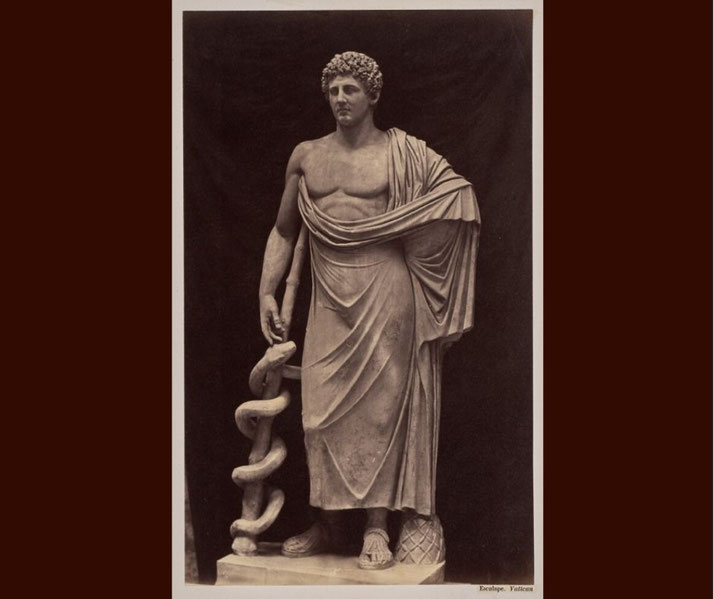
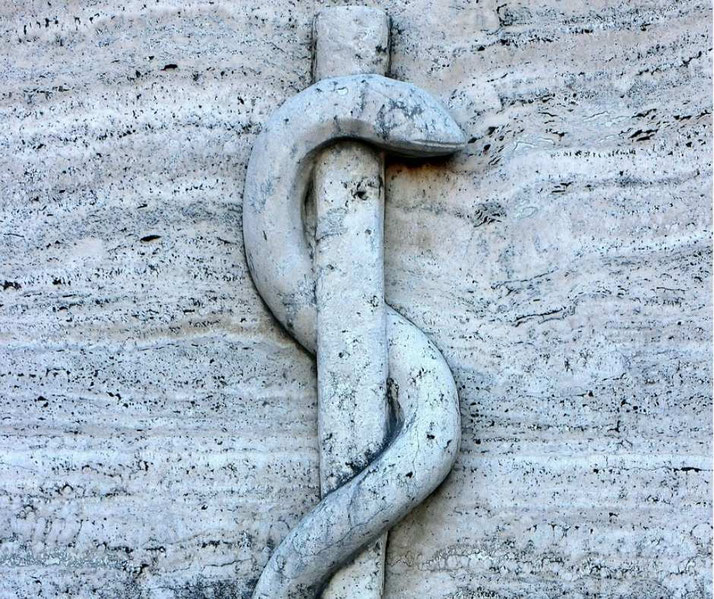
Non-venomous snakes were considered sacred to Asclepius and moved freely through the space, as the snake-entwined staff that was known as the Rod of Asclepius was the god’s primary symbol and is still used as the emblem of medicine today.
Temple priests supervised the process throughout the night, and dogs were also present in the abaton, since both animals were believed to channel the god’s healing power.
The central belief was straightforward: during sleep, Asclepius himself would visit the patient in a dream.
In some accounts, the god appeared in radiant human form and touched the affected area with his staff, and he healed the patient on the spot.
In others, he gave spoken instructions for treatments to follow after waking.
Patients who did not receive a direct visitation would report their dreams to the temple priests the following morning, and the priests would interpret the dream’s meaning and prescribe an appropriate course of treatment, such as herbal remedies or dietary changes.
Patients who failed to receive a cure were generally told they had not prepared themselves adequately, which reinforced the idea that successful healing required genuine faith and proper ritual conduct.
What did the healing inscriptions record?
Some of the most valuable evidence for the incubation ritual comes from stone inscriptions that were called iamata (singular: iama), which means “cures” or “healings.”
Archaeologists unearthed a significant collection of these inscriptions at Epidaurus, which date primarily to the fourth century BCE.
The iamata were written in the Doric dialect and recorded in the third person, and they documented the names of individuals who had been cured as well as their places of origin, along with descriptions of both their ailments and the manner of their healing by Asclepius.
Many of the Epidaurian iamata describe miraculous cures that occurred during sleep.
One account tells of a boy from Aegina who had a growth on his neck and was cured when a sacred dog licked the affected area during the night.
Another inscription describes a woman who was named Aristagora of Troezen, who suffered from a tapeworm and dreamed that the sons of Asclepius cut off her head and removed the parasite before they reattached it.
A particularly instructive case involves a man who was named Hermon of Thasos, who had been cured of blindness but failed to send the required thank-offerings to Epidaurus: the god struck him blind again as punishment, and only after Hermon had returned to the sanctuary and had slept there a second time did Asclepius restore his sight.
Since the iamata were displayed publicly within the sanctuary where arriving pilgrims could read them, they likely worked as both records of gratitude and promotional material for the cult, which encouraged new visitors to trust in the healing power of Asclepius.
A devoted patient: Aelius Aristides and the Sacred Tales
One of the most detailed personal accounts of dream-based medical treatment comes from the second century CE, nearly six hundred years after the Epidaurian inscriptions had been carved.
Aelius Aristides was a prominent Roman-era orator who was born around 117 CE in Mysia (in modern-day Turkey), and he suffered from chronic illness that disrupted his rhetorical career for decades.
After conventional medicine had failed to provide relief, he travelled to the Asclepieion at Pergamon around 145 CE and spent approximately two years living within the sanctuary grounds.
During his stays at the sanctuary, Aristides kept a diary of the dreams he received from Asclepius, and he later composed a six-volume work that was known as the Sacred Tales (Hieroi Logoi), which he began around 171 CE.
In these texts, Aristides described how the god prescribed specific treatments through nocturnal visions, including unusual dietary restrictions and periods of fasting alongside more uncomfortable procedures such as bloodletting and bathing in frigid rivers.
The god also gave Aristides advice about his career as an orator, which demonstrated that incubation was understood as a channel for guidance that covered far more than physical health alone.
A notable difference existed between the earlier Epidaurian accounts and Aristides’ experience at Pergamon.
In the fourth-century BCE iamata, Asclepius typically operated directly on patients during their dreams, and he performed surgery or healed them with a single touch.
In the second-century CE accounts of Aristides, the god instead gave instructions, which were then interpreted with the assistance of trained physicians and temple staff who had become a more visible part of the sanctuary environment by this period.
How did temple medicine relate to Hippocratic thought?
The cult of Asclepius flourished during the same centuries that produced some of the Greek world’s most important medical thinkers.
Hippocrates of Kos lived in the fifth and fourth centuries BCE and is traditionally considered the founder of rational medicine, and the Hippocratic Corpus emphasised natural-cause explanations for disease rather than supernatural ones.
The Asclepieion on Kos was where Hippocrates may have trained, and it operated simultaneously as a religious healing centre and a place where physicians developed naturalistic medical theory.
For the ancient Greeks, there was generally no inherent contradiction between religious healing and rational inquiry, as a patient might consult a physician during the day and sleep in an abaton at night, and they treated both experiences as legitimate parts of the healing process.
Archaeological evidence supports this overlap: surgical instruments such as scalpels and lances have been found at Epidaurus alongside the votive offerings and iamata inscriptions, which indicates that temple staff both performed physical procedures and facilitated dream incubation.
As the centuries progressed, the relationship between temple-based and physician-based medicine became increasingly collaborative.
By the time of Aelius Aristides in the second century CE, the Asclepieion at Pergamon had a fully integrated system in which dreams from the god were interpreted by trained doctors who then prescribed treatments that were grounded in medical knowledge.
The cult of Asclepius continued to attract devotees into the late Roman period and was eventually adopted by certain Christian sects, who transferred the incubation ritual to the churches of healing saints such as Cosmas and Damian.
In this way, the ancient Greek belief that gods could deliver medical advice through sleep persisted well into the medieval era, and it adapted to new religious contexts across the Mediterranean world.