
How the ancient Greek doctor, Hippocrates, changed medicine forever

In the fifth century BCE, on a small Greek island in the Aegean Sea, a physician began to argue that disease had nothing to do with the anger of the gods.
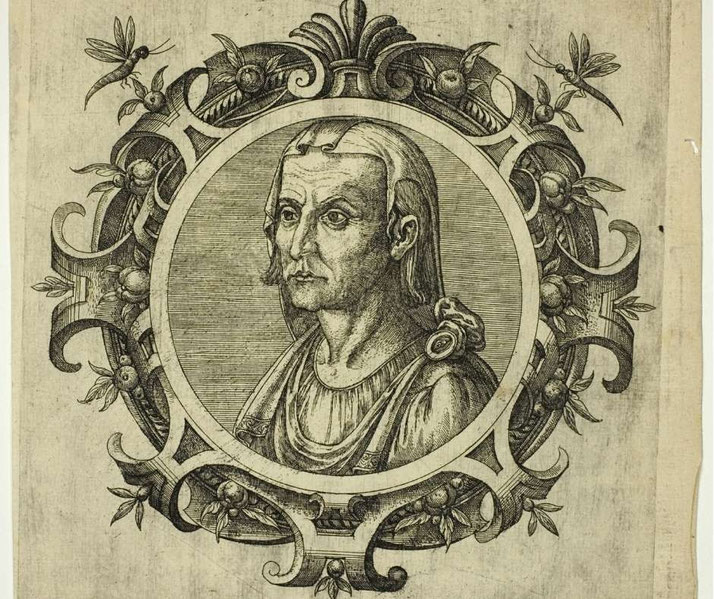
Hippocrates of Kos was born around 460 BCE and proposed that illness had natural causes that could be observed and treated through rational methods rather than prayer or ritual.
His approach to medicine, which prioritised clinical observation and evidence-based reasoning, arguably created the intellectual foundation on which Western medical science would eventually be built.
What was ancient medicine like before Hippocrates?
Before Hippocrates began teaching his ideas in the fifth century BCE, the Greek understanding of disease was inseparable from religion.
When a person fell ill, most Greeks believed that a god or spirit had inflicted the sickness as a form of punishment, and the standard response was to visit a temple or consult a priest rather than a physician.
Asklepieia were the healing temples that were dedicated to the god Asklepios, and they operated across the Greek world as centres of treatment, where patients slept overnight in sacred halls in the hope that the god would visit them in a dream and prescribe a cure.
In practical terms, medical treatment before Hippocrates relied heavily on rituals and purification ceremonies rather than on any systematic study of the human body.
Physicians did exist in pre-Hippocratic Greece, and some practised surgery or administered herbal remedies, but they lacked any unified framework for understanding why people became ill.
As a result, medical knowledge was fragmented and inconsistent, and it was passed down through individual family traditions rather than through any organised school of thought.
The philosopher Alcmaeon of Croton was a Pythagorean thinker from the sixth century BCE and had begun to suggest that health depended on a balance of forces within the body, but his ideas belonged to philosophy rather than to any established medical tradition.
Rejecting the gods as a cause of disease
One of the most important texts that are associated with Hippocrates is On the Sacred Disease, which was written around 400 BCE and dealt specifically with epilepsy.
In ancient Greece, epilepsy was known as “the sacred disease” because most people believed it was caused by possession or punishment from the gods.
The author of the text directly attacked this idea and argued that epilepsy had a natural cause that was located in the brain and was no more sacred than any other illness.
He dismissed the priests and healers who claimed to cure epilepsy through magic and purification as “charlatans and quacks” who used superstition to conceal their own ignorance.
Because the author located the cause of epilepsy in the brain and attributed it to an excess of phlegm that entered the blood vessels, he proposed a physical explanation for a condition that had been treated as a supernatural event for centuries.
The significance of On the Sacred Disease arguably went well past epilepsy itself, because the text established a general principle: that all diseases had natural causes and required naturalistic explanations.
For physicians who were trained in the Hippocratic tradition, this meant carefully observing and recording symptoms rather than appealing to the gods for answers.
On the Sacred Disease also identified heredity as a contributing factor and noted that the condition appeared to run in certain families, an observation that was remarkably accurate for its time.
The four humours and clinical observation
As part of his effort to explain disease in natural terms, Hippocrates developed a theory based on four bodily fluids that were known as the 'humours'.
According to the Hippocratic text On the Nature of Man, the body contained blood and phlegm alongside yellow bile and black bile, and a healthy person had all four in proper balance.
Disease occurred when one humour became excessive or was lacking, and physicians who had been trained under Hippocrates believed their primary task was to restore this balance through changes in diet and daily routine rather than through surgical intervention or religious ritual.
The theory of the four humours was incorrect by modern standards, as it did not accurately describe how the human body works.
It did, however, encourage physicians to observe their patients closely and to think systematically about the causes of illness.
Hippocrates insisted that physicians should examine a patient’s environment and daily habits, and he required them to keep detailed written records of each case from the first symptoms through to recovery or death.
The practice of clinical observation involves systematically recording a patient’s condition over time and using those records to predict the likely course of a disease, and it is probably one of Hippocrates’ most significant contributions to modern medicine.
His contemporary Plato mentioned him in the dialogues Protagoras and Phaedrus, and Aristotle later referred to him as “the Great Hippocrates”, a title that indicated the high regard in which Greek intellectuals held his methods even during his own lifetime.
What the Hippocratic Corpus contained
The body of medical writing that is associated with Hippocrates is known as the Hippocratic Corpus, a collection of approximately sixty texts that were written in ancient Greek between the fifth and third centuries BCE.
Scholars have long debated how many of the texts Hippocrates himself actually wrote, and the general consensus is that the collection was the work of multiple authors over several centuries.
Among the most important texts are On the Sacred Disease and Airs, Waters, Places, which examined how environmental factors such as climate and water quality affected the health of populations.
Airs, Waters, Places is now generally considered one of the earliest works on human ecology, as it argued that geography and seasonal change had a direct impact on the types of diseases that appeared in a given region.
Another significant text in the collection is the Epidemics, which contained detailed case studies of individual patients who were observed during outbreaks of disease in specific Greek cities.
In these case studies, the physician recorded the patient’s symptoms day by day and noted changes in temperature and breathing patterns as well as shifts in skin colour.
Many of these cases ended in death, and the physicians recorded these outcomes with the same methodical care, without attempting to conceal their failures.
For the first time in the history of Western medicine, patient records existed as a tool for learning, which allowed later physicians to compare cases and identify recurring patterns.
The Roman physician Galen wrote in the second century CE and built much of his own medical system on the foundation of the Hippocratic Corpus, and Galen’s great respect for these texts helped to ensure their survival into the medieval period.
An ethical code for physicians
Among the most famous texts in the Hippocratic Corpus is the Hippocratic Oath, a document that established a set of ethical guidelines for the medical profession.
The Oath required physicians to swear before the gods that they would treat patients to the best of their ability and avoid causing harm.
It also demanded that physicians maintain confidentiality about what they observed during treatment, and it included a commitment to pass medical knowledge on to the next generation of students through formal instruction.
Since its creation in the fifth century BCE, the exact wording of the Hippocratic Oath has been modified many times, and the version that is used in modern medical schools differs significantly from the ancient Greek text.
The core ethical principles of the Oath included the commitment to doing no harm and to respecting patient confidentiality, and they have persisted for more than two thousand years and continue to underpin medical ethics around the world.
By establishing the idea that physicians had specific moral obligations to their patients, Hippocrates helped to transform medicine from a loosely organised craft into a profession with clear standards of conduct.
Hippocrates himself is believed to have died around 370 BCE in Larissa, a city in Thessaly, but the system of medical thinking that he had founded continued to influence how physicians understood and treated disease for centuries after his death.