
Historical sources on the expansion of the Inca Empire
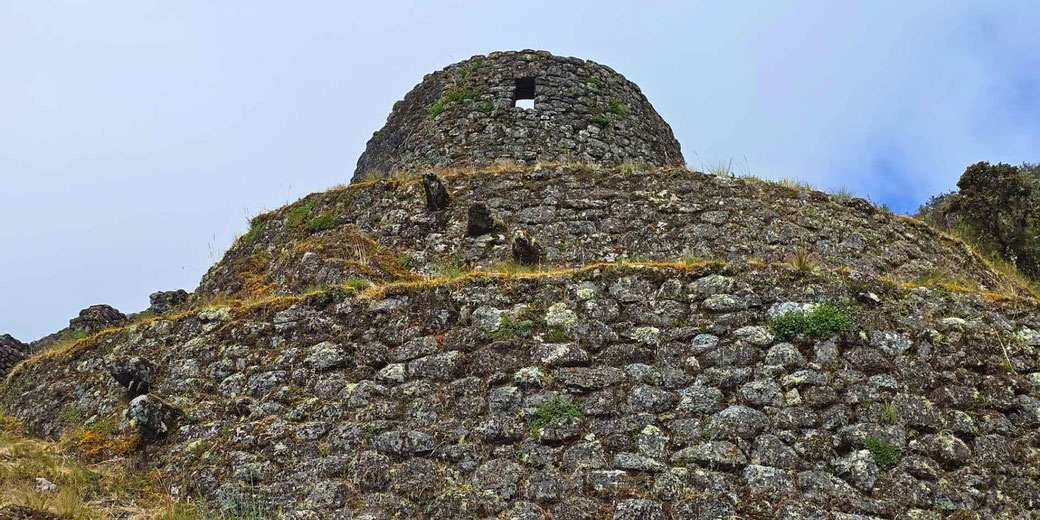
The sources on this page examine the origins, expansion, and administration of the Inca Empire through the writings of early historians and Spanish chroniclers.
They describe how Inca traditions traced the foundation of Cuzco to the legendary figures of Manco Capac and Mama Oello, who supposedly brought agriculture, weaving, and social order to the peoples of the Andes.
The extracts also explore how the Incas expanded from a small regional kingdom into one of the largest empires in the Americas through conquest, diplomacy, and military campaigns led by rulers such as Topa Inca Yupanqui and Huayna Capac.
Source 1
Extract A
"According to the tradition most familiar to the European scholar, the time was, when the ancient races of the continent were all plunged in deplorable [dreadful] barbarism; when they worshipped nearly every object in nature indiscriminately; made war their pastime, and feasted on the flesh of their slaughtered captives. The Sun, the great luminary [light-giving body] and parent of mankind, taking compassion on their degraded [debased] condition, sent two of his children, Manco Capac and Mama Oello Huaco, to gather the natives into communities, and teach them the arts of civilized [orderly and advanced] life. The celestial [heavenly] pair, brother and sister, husband and wife, advanced along the high plains in the neighbourhood of Lake Titicaca, to about the sixteenth degree south. They bore with them a golden wedge, and were directed to take up their residence on the spot where the sacred emblem should without effort sink into the ground. They proceeded accordingly but a short distance, as far as the valley of Cuzco, the spot indicated by the performance of the miracle, since there the wedge speedily sank into the earth and disappeared for ever. Here the children of the Sun established their residence, and soon entered upon their beneficent mission among the rude inhabitants of the country; Manco Capac teaching the men the arts of agriculture, and Mama Oello initiating her own sex in the mysteries of weaving and spinning. The simple people lent a willing ear to the messengers of Heaven, and, gathering together in considerable numbers, laid the foundations of the city of Cuzco."
Extract B
"The same mists that hang round the origin of the Incas continue to settle on their subsequent annals [historical records]; and, so imperfect were the records employed by the Peruvians, and so confused and contradictory their traditions, that the historian finds no firm footing on which to stand till within a century of the Spanish conquest. At first, the progress of the Peruvians seems to have been slow, and almost imperceptible [too gradual to notice]. By their wise and temperate policy, they gradually won over the neighbouring tribes to their dominion [rule], as these latter became more and more convinced of the benefits of a just and well-regulated government. As they grew stronger, they were enabled to rely more directly on force; but, still advancing under cover of the same beneficent [kind and generous] pretexts employed by their predecessors, they proclaimed peace and civilization [ordered society] at the point of the sword. The rude nations of the country, without any principle of cohesion [unity] among themselves, fell one after another before the victorious arm of the Incas."
Extract C
"Yet it was not till the middle of the fifteenth century that the famous Topa Inca Yupanqui, grandfather of the monarch who occupied the throne at the coming of the Spaniards, led his armies across the terrible desert of Atacama, and, penetrating to the southern region of Chili, fixed the permanent boundary of his dominions at the river Maule. His son, Huayna Capac, possessed of ambition [a strong desire to conquer] and military talent fully equal to his father's, marched along the Cordillera towards the north, and, pushing his conquests across the equator, added the powerful kingdom of Quito to the empire of Peru."
Contextual information:
William H. Prescott (1796–1859) was an American historian who specialised in the history of Spain and its empire in the Americas. He wrote History of the Conquest of Peru in 1847, drawing on manuscript sources held in Spanish royal archives and in the collection of the Real Academia de la Historia in Madrid. He worked from transcriptions made by agents on his behalf, as his eyesight was severely impaired for most of his adult life.
Bibliographical reference:
Prescott, W. H. (1847). History of the conquest of Peru, with a preliminary view of the civilization of the Incas (Vol. I, pp. 6–8, 17–18). Harper & Brothers.
Copyright: Public domain.
Source 2
Extract A
"When Manco Capac had seen what had happened to his brothers, and had come to the valley where now is the city of Cuzco, the Orejones [Inca nobles, literally meaning 'big ears', a reference to their large ear ornaments] say that he raised his eyes to heaven and, with great humility, besought [asked earnestly] the Sun that he would favour and aid him in forming the new settlement. Then turning his eyes towards the hill of Guanacaure he addressed the same petition to his brother, whom he now held and reverenced [deeply respected] as a god. Next he watched the flight of birds, the signs in the stars, and other omens, which filled him with confidence, so that he felt certain that the new settlement would flourish, and that he would be its founder and the father of all the Incas who would reign there. In the name of Ticiviracocha, and of the Sun, and of the other Gods, he laid the foundation of the new city. The original and beginning of it was a small stone house with a roof of straw that Manco Capac and his women built, to which they gave the name of Curicancha, meaning the place of gold. This is the place where afterwards stood that celebrated and most rich temple of the Sun, and now a monastery of monks of the order of St. Domingo. It is held for certain that, at the time when Manco Inca Capac built this house, there were Indians in large numbers in the district; but as he did them no harm and did not in any wise molest [disturb] them, they did not object to his remaining in their land, but rather rejoiced at his coming."
Extract B
"It should be well understood that great prudence was needed to enable these kings to govern such large provinces, extending over so vast a region, parts of it rugged [rough and rocky] and covered with forests, parts mountainous, with snowy peaks and ridges, parts consisting of deserts of sand, dry and without trees or water. These regions were inhabited by many different nations, with varying languages, laws, and religions, and the kings had to maintain tranquillity [peace] and to rule so that all should live in peace and in friendship towards their lord."
Contextual information:
Pedro de Cieza de León (c. 1518–1554) was a Spanish soldier and chronicler who travelled throughout South America from 1532 and arrived in Peru in 1547. He interviewed surviving Inca nobles in Cuzco, including a grandson of Huayna Capac named Cayu Tupac, through interpreters arranged by the city's Spanish administrator. The Second Part of his Chronicle of Peru was written c. 1550–1554 but remained in manuscript until 1880; this English translation by Sir Clements Markham was published by the Hakluyt Society in 1883.
Bibliographical reference:
Cieza de León, P. de. (c. 1550–1554). The second part of the chronicle of Peru (C. R. Markham, Trans., 1883; pp. 22, 36). Hakluyt Society.
Copyright: Public domain.