
Historical sources on the North Africa theatre of WWII
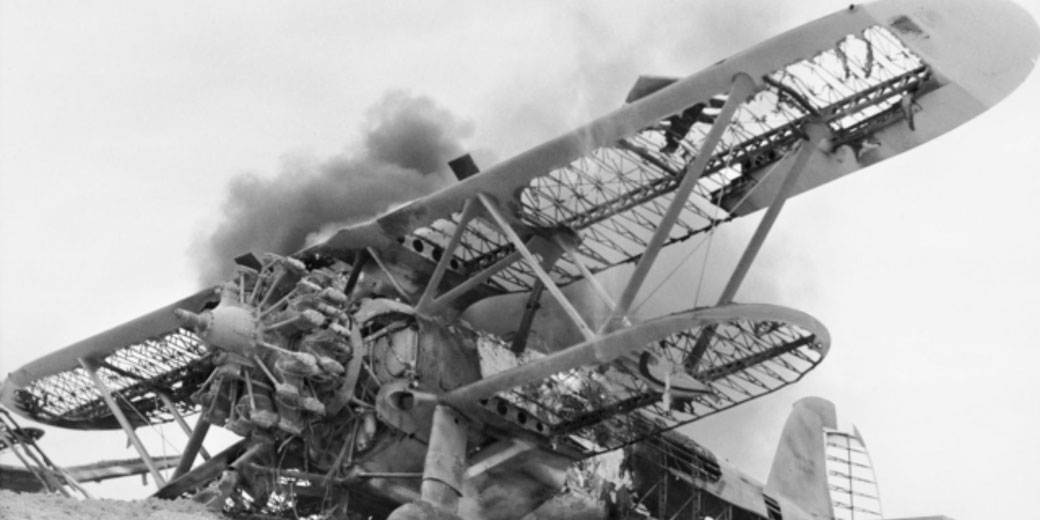
The North African campaign of the Second World War was fought across the deserts of Libya and Egypt between 1940 and 1943, drawing in the armies of Italy, Germany, Britain, and, eventually, the United States.
Italy's entry into the war in June 1940 opened a new front against British forces defending Egypt, and the arrival of Rommel's German Afrika Korps in early 1941 transformed the contest into one of the most mobile and demanding campaigns of the entire war.
The fate of Egypt, the Suez Canal, and Allied communications to the broader war in Asia all hung on the outcome of fighting in the Western Desert.
The sources on this page were produced by participants and official historians from several nations and span the full arc of the campaign, from its opening moves to the decisive Allied victory at El Alamein in late 1942 and the planning of Operation Torch.
Source 1
Extract A
"Axis involvement in the Mediterranean theater of war likewise mounted from small beginnings and after periodic inventories of the general military situation. Since the German Fuehrer, Adolf Hitler, had precipitated the war much earlier than the Duce, Benito Mussolini, had agreed to be ready, Italy remained a nonbelligerent until June 1940, and participated then very briefly in the attacks which led to French surrender. The Mediterranean escaped major hostilities during this period of Italian preparations. Italian forces were assembled in eastern Cyrenaica for an eventual attack on Egypt in conjunction with an attack from the south to be launched from Ethiopia, while British forces were gathered to defend Egypt. But actual conflict was deferred."
Extract B
"One large aviation unit (X. Fliegerkorps) received orders to shift to southern Italy in December 1940 and a small armored force began crossing from Naples to Tripoli in February. There it was to be combined with Italian mobile units under the command of Generalleutnant Erwin Rommel in an aggressive rather than a static defense. Rommel was subordinated to the Italian Commander in Chief Libya (Commandante del Comando Superiore Forze Armate Libia), Generale d'Armata Italo Gariboldi, who replaced Graziani in early February 1941. Rommel's command, the German Africa Corps (Deutsches Afrika Korps), shortly reinforced by the addition of an armored division, received general directives from Hitler only after Mussolini had approved them, for the German forces were considered as agents of Italian military policy within the Axis partnership."
Extract C
"The German Africa Corps prepared for its eastward thrust toward Egypt while other German troops extended their hold over the Balkans and prepared to subjugate Greece. Some of the limited British forces in northern Africa were diverted to Greece to aid its defenders, but not enough to prevent the Peloponnesus from being swiftly overrun in April 1941, while almost simultaneously Rommel's force swept across Libya with surprising speed to the Egyptian border. Only the port of Tobruk remained in British possession in the rear of the Axis units, where it was a continual threat to their long line of supply."
Contextual information:
George F. Howe was a professional historian employed by the Office of the Chief of Military History in the United States Department of the Army. He wrote this volume as part of the official U.S. Army history of World War II (the "Green Book" series), which was commissioned to provide a thorough and authoritative record of American military operations during the war.
Bibliographical reference:
Howe, G. F. (1957). Northwest Africa: Seizing the initiative in the West (United States Army in World War II: Mediterranean Theater of Operations, CMH Pub 6-1, pp. 4–7). Office of the Chief of Military History, Department of the Army.
Copyright: Public domain. This is a United States Government work and is not subject to copyright protection under 17 U.S.C. § 105. Full text available at https://www.ibiblio.org/hyperwar/USA/USA-MTO-NWA/USA-MTO-NWA-1.html
Source 2
Extract A
"When the United States entered World War II in December 1941, the British had been fighting German and Italian armies in the Western Desert of Egypt and Libya for over a year. In countering an Italian offensive in 1940, the British had at first enjoyed great success. In 1941, however, when German forces entered the theater in support of their Italian ally, the British suffered severe reversals, eventually losing nearly all their hard-won gains in North Africa."
Extract B
"In early 1942 the key to Allied control of this vital region lay in Egypt. The British Mediterranean Fleet based its operations in Alexandria, the British Middle East Command maintained its headquarters in Cairo, and the Suez Canal provided an essential Allied line of communications to the CBI and Pacific Theaters of Operations. All of these facilities would have been vulnerable to Axis control had the Afrika Korps and the Italian Army been able to push the British out of northern Egypt."
Extract C
"Even though the United States had not yet entered the war as an active combatant, by the time General Field Marshal Erwin Rommel, commander of the German Army's Afrika Corps, began his offensive against the British Eighth Army in Libya in March 1941, the American and British air chiefs were already discussing American support for the British Eighth Army."
Contextual information:
Clayton R. Newell was a military historian at the U.S. Army Center of Military History in Washington, D.C. He wrote this campaign brochure as part of a series commissioned by the Army to commemorate the 50th anniversary of World War II, with the aim of educating Americans about each major campaign in which U.S. forces participated.
Bibliographical reference:
Newell, C. R. (1993). Egypt-Libya, 11 June 1942–12 February 1943 (U.S. Army Campaigns of World War II, CMH Pub 72-13, pp. 3–4). U.S. Army Center of Military History.
Copyright: Public domain. This is a United States Government work and is not subject to copyright protection under 17 U.S.C. § 105.
Source 3
"Fighters of land, sea and air, Blackshirts of the revolution and of the legions, men and women of Italy, of the empire and of the Kingdom of Albania, listen! The hour destined by fate is sounding for us. The hour of irrevocable decision has come. A declaration of war already has been handed to the Ambassadors of Great Britain and France. We take the field against the plutocratic and reactionary democracies who always have blocked the march and frequently plotted against the existence of the Italian people."
Contextual information:
Benito Mussolini, the Fascist dictator of Italy, delivered this speech from the balcony of the Palazzo Venezia in Rome on the evening of 10 June 1940. The speech announced Italy's entry into the Second World War on the side of Nazi Germany, with hostilities formally commencing at midnight (i.e., 11 June 1940).
Bibliographical reference:
Mussolini, B. (1940, June 10). Italy enters the war [Speech transcript]. Vital Speeches of the Day, 6, 516.
Copyright: Public domain.
Source 4
Extract A
"But General Wavell did not intend to leave the initiative with the Italians a day longer than necessary. As far back as 11th September, when their first move across the Egyptian frontier was being awaited hourly, he had initiated a study of the whole problem of advancing into Cyrenaica, with particular attention to methods of supply. At this time his orders to the Western Desert Force were to conserve its strength in the opening stages of an Italian advance, but to counterattack if the enemy extended himself so far as to try to reach the Matruh area."
Extract B
"The concentration began on December 6th with the move of 4th Indian Division from Maaten Baggush to Bir Kenayis, forty miles out from Matruh along the Siwa track. On December 7th the troops were told that this was not a second training exercise; it was the real thing. The assault would take place early on December 9th."
Contextual information:
Major-General I.S.O. Playfair was a British military officer and historian who served as the principal author of the official British history of the Mediterranean and Middle East campaigns. This volume was commissioned by the British government's Cabinet Office Historical Section as part of the official record of British military operations in the Second World War.
Bibliographical reference:
Playfair, I. S. O., et al. (1954). The Mediterranean and Middle East, Volume I: The early successes against Italy (to May 1941) (History of the Second World War, United Kingdom Military Series, Chapter XIV, pp. 259–264). His Majesty's Stationery Office.
Copyright: UK Crown Copyright, published 1954. The original Crown Copyright has expired (more than 70 years since publication).
Source 5
"Between April and August 1941 around 14,000 Australian soldiers were besieged in Tobruk by a German–Italian army commanded by General Erwin Rommel. The garrison, commanded by Lieutenant General Leslie Morshead, consisted of the 9th Division (20th, 24th, and 26th Brigades), the 18th Brigade of the 7th Division, along with four regiments of British artillery and some Indian troops. It was vital for the Allies' defence of Egypt and the Suez Canal to hold the town with its harbour, as this forced the enemy to bring most of their supplies overland from the port of Tripoli, across 1500 km of desert, as well as diverting troops from their advance. Tobruk was subject to repeated ground assaults and almost constant shelling and bombing. The Nazi propagandist Lord Haw Haw (William Joyce) derided the tenacious defenders as 'rats', a term that the Australian soldiers embraced as an ironic compliment."
Contextual information:
This article was produced by the Australian War Memorial, a Commonwealth government institution established by the Australian War Memorial Act 1980. The Australian War Memorial maintains the national military archive and produces authoritative reference material on Australia's involvement in armed conflicts.
Bibliographical reference:
Australian War Memorial. (2023, October 31). Siege of Tobruk. Encyclopedia. Australian War Memorial. https://www.awm.gov.au/articles/encyclopedia/tobruk
Source 6
"In mid-August, when the British shook up their command in the Middle East, their army received two new general officers who were to prove as successful ground commanders as Coningham and Tedder were air commanders. Auchinleck had resisted Rommel's first assault on the Alamein line but had used up his own reinforcements in attempting to drive his adversary out of Egypt by an abortive series of attacks which he opened on 21 July. The replacements were Gens. Harold L. Alexander, who took over the theater command, and Bernard L. Montgomery, who assumed command of the Eighth Army after the untimely death of Lt. Gen. W. H. E. Gott. Montgomery's influence was felt at once. The Eighth's morale improved with rest, with better rations, and upon the new commander's making clear that he planned no further retreats, that the battle for Egypt would be fought out at Alamein."
Contextual information:
Wesley Frank Craven and James Lea Cate were academic historians at the University of Chicago who were commissioned by the U.S. Air Force to write the official history of the Army Air Forces in World War II. This seven-volume work was produced under the authority of the Office of Air Force History and represents the authoritative record of American air operations in the war.
Bibliographical reference:
Craven, W. F., & Cate, J. L. (Eds.). (1949). The Army Air Forces in World War II, Vol. II: Europe: TORCH to POINTBLANK, August 1942 to December 1943 (Chapter 1). Office of Air Force History.
Copyright: Public domain. This is a United States Government work and is not subject to copyright protection under 17 U.S.C. § 105.
Source 7
Extract A
"I have never promised anything but blood, tears, toil and sweat. Now, however, we have a new experience. We have victory — a remarkable and definite victory. The bright gleam has caught the helmets of our soldiers and warmed and cheered all our hearts."
Extract B
"General Alexander, with his brilliant comrade and lieutenant, General Montgomery, has gained a glorious and decisive victory in what I think should be called the Battle of Egypt. Rommel's army has been defeated. It has been routed. It has been very largely destroyed as a fighting force."
Extract C
"Now, this is not the end. It is not even the beginning of the end. But it is, perhaps, the end of the beginning."
Contextual information:
Winston Churchill, the British Prime Minister, delivered this speech at the Lord Mayor's Luncheon at the Mansion House in London on 10 November 1942. He was speaking in the immediate aftermath of the British victory at the Second Battle of El Alamein (23 October – 4 November 1942), which had driven Rommel's forces into full retreat from Egypt.
Bibliographical reference:
Churchill, W. S. (1942, November 10). Speech at the Mansion House, London [Speech transcript]. New York Times, November 11, 1942.
Copyright: Public domain.
Source 8
"But this Battle of Egypt, in itself so important, was designed and timed as a prelude and a counterpart of the momentous enterprise undertaken by the United States at the western end of the Mediterranean, an enterprise under United States command and in which our army, air force and, above all, our navy are bearing an honourable and important share."
Contextual information:
This is from the same Churchill speech at the Mansion House on 10 November 1942 (see Source 7). In this passage, Churchill refers to Operation Torch, the Anglo-American landings in Morocco and Algeria that commenced on 8 November 1942, just two days before the speech was delivered. Churchill does not name "Operation Torch" directly in the speech, as the codename was classified at the time.
Bibliographical reference:
Churchill, W. S. (1942, November 10). Speech at the Mansion House, London [Speech transcript]. New York Times, November 11, 1942.
Copyright: Public Domain.
Source 9
"American and British CCS members in London began planning the entrance of the United States Army into the Mediterranean area, an operation named TORCH. After receiving the views of both sides, President Roosevelt selected Lt. Gen. Dwight D. Eisenhower to be Commander in Chief, Allied Force."
Contextual information:
Charles R. Anderson was a military historian at the U.S. Army Center of Military History. He wrote this campaign brochure as part of the same 50th anniversary commemorative series as the Egypt-Libya brochure (Source 2), covering the initial Anglo-American landings in French North Africa on 8–11 November 1942.
Bibliographical reference:
Anderson, C. R. (n.d.). Algeria–French Morocco, 8 November 1942–11 November 1942 (U.S. Army Campaigns of World War II, CMH Pub 72-11). U.S. Army Center of Military History.
Copyright: Public domain. This is a United States Government work and is not subject to copyright protection under 17 U.S.C. § 105.