
Historical sources on the Cold War Space Race
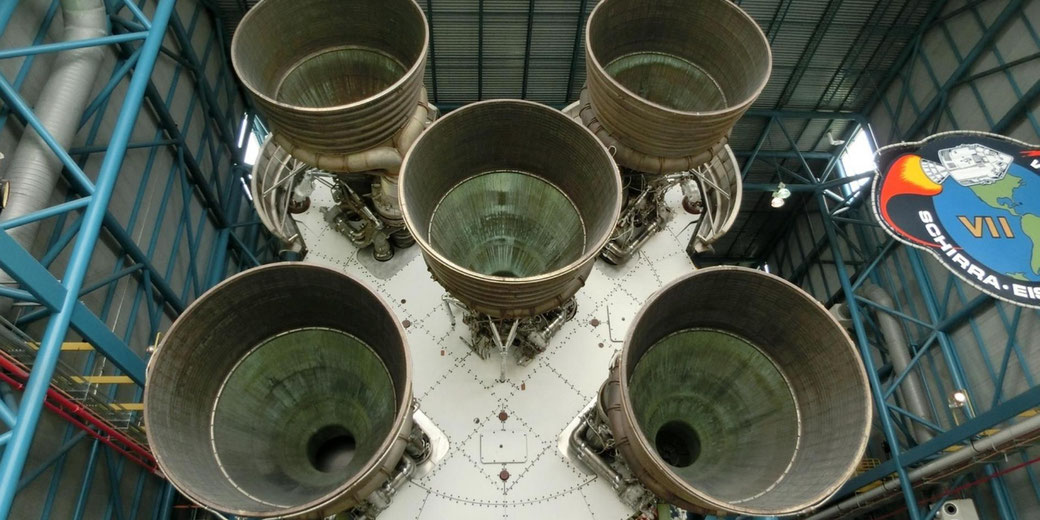
During the Cold War, the United States and the Soviet Union competed fiercely for technological and ideological prestige.
One of the most visible arenas for this rivalry was space exploration. In 1957, the Soviet Union startled the world with the launch of the first artificial satellite, Sputnik I, which demonstrated that rockets capable of reaching orbit also possessed the potential to deliver nuclear weapons across continents.
Over the following decade, each superpower attempted to surpass the other through increasingly dramatic achievements, from Yuri Gagarin’s historic orbital flight in 1961 to the American Apollo 11 Moon landing in 1969.
The following sources trace this intense technological and political competition, revealing how scientific breakthroughs, propaganda victories, and international diplomacy combined to create what became known as the Space Race.
Source 1
“For several years scientific research and experimental design work have been conducted in the Soviet Union on the creation of artificial satellites of the earth. As already reported in the press, the first launching of the satellites in the USSR were planned for realization in accordance with the scientific research program of the International Geophysical Year. As a result of very intensive work by scientific research institutes and design bureaus the first artificial satellite in the world has been created. On October 4, 1957, this first satellite was successfully launched in the USSR. According to preliminary data, the carrier rocket has imparted to the satellite the required orbital velocity of about 8000 meters per second. At the present time the satellite is describing elliptical trajectories around the earth, and its flight can be observed in the rays of the rising and setting sun with the aid of very simple optical instruments (binoculars, telescopes, etc.). [...] The satellite has a spherical shape 58 centimeters in diameter and weighs 83.6 kilograms. It is equipped with two radio transmitters continuously emitting signals at frequencies of 20.005 and 40.002 megacycles per second. [...] The successful launching of the first man-made earth satellite makes a most important contribution to the treasure-house of world science and culture.”
Contextual Information:
This announcement was published in Pravda on 5 October 1957, the day after the Soviet Union successfully launched Sputnik I into orbit. TASS (Telegrafnoye Agentstvo Sovetskogo Soyuza) was the official news agency of the Soviet government, and this press release was its formal declaration of the satellite’s launch to the world.
Bibliographical Reference:
Telegraphic Agency of the Soviet Union. (1957, October 5). Announcement of the first satellite [Press release]. Pravda. Translated and reprinted in F.J. Krieger, Behind the Sputniks (pp. 311–312). Public Affairs Press. Archived by NASA History Division, NASA Headquarters, Washington, D.C. https://www.nasa.gov/history/sputnik/14.html
Copyright: Public domain.
Source 2
“On April, 12th, 1961 in the Soviet Union the first-ever space ship-companion “Vostok” with a person onboard was put into orbit round the Earth. The pilot-cosmonaut of the spaceship-satellite Vostok is the citizen of the Union of the Soviet Socialist Republics the pilot Major GAGARIN Yury Alekseevich. Launch of the space multistage missile occurred successfully, and after reaching the first cosmic velocity and separating from the last stage of the carrier rocket the spaceship-satellite has begun free flight on an orbit round the Earth. According to preliminary data, the orbital period of the spaceship-satellite round the Earth is 89,1 minutes; the minimum distance from the surface of the Earth (perigee) is 175 kilometers, and the maximum distance (apogee) is 302 kilometers. [...] At 10:25 Moscow time, after circling the globe according to the set program, braking started and the spaceship-satellite with the pilot-cosmonaut major Gagarin has started to descend on a trajectory for a landing in the preset area of the Soviet Union.”
Contextual Information:
TASS issued this announcement on 12 April 1961, during and immediately after Yuri Gagarin’s orbital flight aboard Vostok I. The broadcast was made via Radio Moscow while Gagarin was still in flight, passing over South America. This was the first official confirmation that a human being had orbited the Earth.
Bibliographical Reference:
Telegraphic Agency of the Soviet Union. (1961, April 12). Announcement of the first human spaceflight [Press release]. Translated text courtesy of Roscosmos via Orbital Focus. https://www.orbitalfocus.uk/Diaries/Vostok/VostokTASS.php
Copyright: Public domain.
Source 3
“Sputnik 1, launched on 4 October 1957 from the Soviet Union’s rocket testing facility in the desert near Tyuratam in the Kazakh Republic, proved a decidedly unspectacular satellite that probably should not have elicited the horrific reaction it wrought. An aluminum 22-inch sphere with four spring-loaded whip antennae trailing, it weighed only 183 pounds and traveled an elliptical orbit that took it around the Earth every 96 minutes. It carried a small radio beacon that beeped at regular intervals and could by means of telemetry verify exact locations on the earth’s surface. [...] The Soviet success with Sputnik 1 raised in a very fundamental way the question of American technological virtuosity, and questioned American capability in so many other areas already underway that setbacks in this one was all the more damaging to the American persona.”
Contextual Information:
Roger D. Launius served as Chief Historian of NASA from 1990 to 2002. This essay was published as part of NASA’s official historical archive on the Sputnik satellite and its impact on the American space programme. It provides the institutional perspective on how the Soviet satellite launch affected U.S. policy and public confidence in American technological leadership.
Bibliographical Reference:
Launius, R. D. (n.d.). Sputnik and the origins of the Space Age. NASA History Division. https://www.nasa.gov/history/sputnik/sputorig.html
Copyright: Public domain.
Source 4
“The Sputnik launch on October 4, 1957, changed everything. As a technical achievement, Sputnik caught the world’s attention and the American public off-guard. [...] On January 31, 1958, the United States successfully launched Explorer 1. This satellite carried a small scientific payload that showed the existence of the magnetic radiation belts around the Earth, named after principal investigator James Van Allen. The Explorer program continued as a successful ongoing series of lightweight, scientifically useful spacecraft. The Sputnik launch also led directly to the creation of NASA. In July 1958, Congress passed the National Aeronautics and Space Act (commonly called the “Space Act”), which created NASA from the National Advisory Committee for Aeronautics (NACA) and other government agencies.”
Contextual Information:
This passage is drawn from NASA’s official historical overview of the early Space Age, archived on its History Division website. It documents the sequence of events from the Sputnik launch through to the American response, including the successful launch of the Explorer I satellite and the creation of NASA as a civilian space agency.
Bibliographical Reference:
National Aeronautics and Space Administration. (n.d.). Dawn of the Space Age. NASA History Division. https://www.nasa.gov/history/dawn-of-the-space-age/
Copyright: Public domain.
Source 5
“Finally, if we are to win the battle that is now going on around the world between freedom and tyranny, the dramatic achievements in space which occurred in recent weeks should have made clear to us all, as did the Sputnik in 1957, the impact of this adventure on the minds of men everywhere, who are attempting to make a determination of which road they should take. [...] Now it is time to take longer strides—time for a great new American enterprise—time for this nation to take a clearly leading role in space achievement, which in many ways may hold the key to our future on earth. [...] I therefore ask the Congress, above and beyond the increases I have earlier requested for space activities, to provide the funds which are needed to meet the following national goals: First, I believe that this nation should commit itself to achieving the goal, before this decade is out, of landing a man on the moon and returning him safely to the earth. No single space project in this period will be more impressive to mankind, or more important for the long-range exploration of space; and none will be so difficult or expensive to accomplish.”
Contextual Information:
President Kennedy delivered this address to a joint session of the United States Congress on 25 May 1961, six weeks after Soviet cosmonaut Yuri Gagarin became the first human to orbit the Earth. In the speech, Kennedy framed the space programme as part of the broader ideological contest between the United States and the Soviet Union, and he issued the challenge for America to land a human on the Moon before the end of the 1960s.
Bibliographical Reference:
Kennedy, J. F. (1961, May 25). Special message to the Congress on urgent national needs [Speech transcript]. The American Presidency Project, University of California, Santa Barbara. https://www.presidency.ucsb.edu/documents/special-message-the-congress-urgent-national-needs
Copyright: Public domain.
Source 6
“The most significant and enduring result, for world public opinion, of the launching of the first earth satellite by the USSR was a revolutionary revision of estimates of Soviet power and standing. Prior to the launching of Sputnik I there was very general belief that the Soviet Union was a long way from offering a serious challenge to the US lead in science, technology, and productive power. Sputnik and subsequent Soviet space achievements appeared as a dramatic demonstration that the USSR was able to challenge the US successfully in an endeavor where US pre-eminence had been widely taken for granted. [...] Sensitivity to military implications is marked, and has produced strong concern over the possibility that the USSR now enjoys military superiority over the West, and a belief in some quarters that this is a fact. The US and the USSR space programs are generally assessed as competitive efforts, and there is notable concern regarding the need to limit the dangers seen in this rivalry. Soviet successes in space have produced a major revision in the image of the USSR and to some degree of the Soviet system, and lent greatly enhanced credibility to Soviet propaganda claims.”
Contextual Information:
This classified intelligence report was produced by the U.S. Information Agency’s Office of Research and Analysis in July 1959, two years after the Sputnik launch. It assessed how space achievements by both the United States and the Soviet Union were affecting international perceptions of each nation’s power, military capability, and political system. The report is now declassified and held at the Dwight D. Eisenhower Presidential Library.
Bibliographical Reference:
U.S. Information Agency, Office of Research and Analysis. (1959, July 7). Impact of U.S. and Soviet space programs on world opinion. U.S. President’s Committee on Information Activities Abroad (Sprague Committee) Records, 1959–1961, Box 6, A83-10. Dwight D. Eisenhower Library, Abilene, Kansas. Archived by NASA History Division. https://www.nasa.gov/history/sputnik/july59.html
Copyright: Public domain.
Source 7
“At 10:56 P.M. EDT, Sunday, July 20, Astronaut Neil A. Armstrong, spacecraft commander of Apollo 11, set foot on the moon. His descent from the lowest rung of the ladder which was attached to a leg of the lower stage of the Lunar Module (LM), to the footpad, and then to the surface of earth’s only natural satellite constituted the climax of a national effort that began in 1961. It was an effort that involved, at its peak, more than 300,000 people in industry, the universities and in government. As he took his epochal step, Armstrong commented “Thats one small step for a man, one giant leap for Mankind.” Sharing this electric moment with Armstrong and Edwin “Buzz” Aldrin, the LM pilot, were an estimated half-billion TV watchers in most of the earth’s nations.”
Contextual Information:
This passage comes from NASA’s official Public Affairs Office report on the Apollo 11 mission, which was compiled immediately following the mission’s completion in July 1969. The report provides a detailed narrative account of the entire mission, from launch through to splashdown, and was produced for public release by NASA’s communications staff.
Bibliographical Reference:
National Aeronautics and Space Administration. (1969). Apollo 11 mission report (Public Affairs Office). NASA History Division. https://www.nasa.gov/history/alsj/a11/A11_PAOMissionReport.html
Copyright: Public domain.
Source 8
“States Parties to the Treaty undertake not to place in orbit around the earth any objects carrying nuclear weapons or any other kinds of weapons of mass destruction, install such weapons on celestial bodies, or station such weapons in outer space in any other manner. The moon and other celestial bodies shall be used by all States Parties to the Treaty exclusively for peaceful purposes. The establishment of military bases, installations and fortifications, the testing of any type of weapons and the conduct of military manoeuvres on celestial bodies shall be forbidden. The use of military personnel for scientific research or for any other peaceful purposes shall not be prohibited. The use of any equipment or facility necessary for peaceful exploration of the moon and other celestial bodies shall also not be prohibited.”
Contextual Information:
The Outer Space Treaty was opened for signature on 27 January 1967 by the United States, the United Kingdom, and the Soviet Union, and it entered into force on 10 October 1967. It was negotiated through the United Nations and remains the foundational legal framework for international space law. Article IV, quoted above, contains the treaty’s key arms control provisions restricting the placement of weapons of mass destruction in Earth’s orbit.
Bibliographical Reference:
United Nations. (1967). Treaty on principles governing the activities of states in the exploration and use of outer space, including the moon and other celestial bodies. United Nations Office for Outer Space Affairs. https://www.unoosa.org/oosa/en/ourwork/spacelaw/treaties/outerspacetreaty.html
Copyright: Public domain.